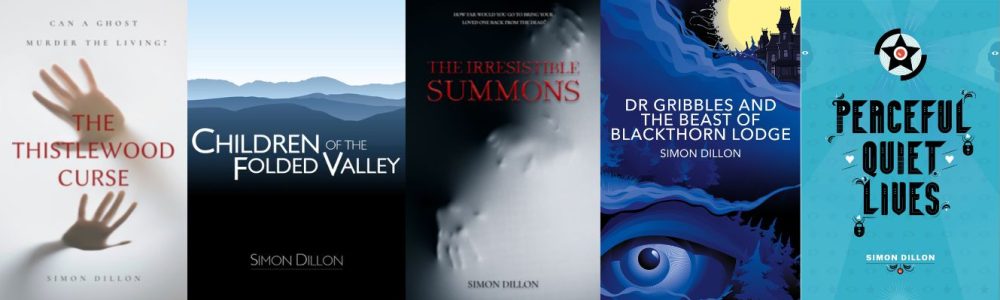
As regular readers of this blog (and indeed my novels) will know, I absolutely love a good gothic brew of mystery, melodrama, thrills and horror. To date I have written five novels of this kind, including The Birds Began to Sing and The Thistlewood Curse, as well as The Spectre of Springwell Forest, which is the next book I intend to publish.
Here are five classic gothic mysteries that I return to endlessly, that have proved a huge inspiration and influence. NOTE: Although undoubted gothic classics, for this list I have deliberately ignored Dracula and Frankenstein, since those are less mysteries and more full-throttle horror.

Rebecca (Daphne Du Maurier) – I adore Daphne Du Maurier, and this one remains top of my gothic influences list. For instance, how many other novels have their own variations on the manipulative, vindictive, psychopathic housekeeper Danvers? The central narrative is great too, with the famously unnamed, tormented protagonist living in the shadow of her husband’s dead wife. It also has one of the greatest gothic mystery plot twists of all time, and an appropriately fiery climax.

Jane Eyre (Charlotte Bronte) – This moody, brooding romance features one of the most iconic gothic subplots in the history of English literature (ie the classic, oft-imitated mad-woman-in-the-attic). A rich, melancholy, menacing work, brimming with vivid description, dangerous passions, and many other gothic touchstones (like Rebecca, this one ends in purging flames).

The Hound of the Baskervilles (Arthur Conan Doyle) – I tend to think of this Sherlock Holmes story as a spinoff into gothic horror, rather than belonging in the main Holmes crime fiction canon. The quality of the suspenseful prose remains unsurpassed, not just in obviously scary sections, but in little moments, such as Watson’s unsettling first night in Baskerville Hall. The oozing dread and menace drips from every page.

The Woman in Black (Susan Hill) – Despite the popularity of the long-running stage show and a successful film adaptation, the source novel is still one of the finest, most bone-chilling ghost stories ever written. The superbly abrupt, genuinely shattering ending (significantly different from the film) has lost none of its ability to shock.

Coma (Film) – I’m referring here to Michael Crichton’s superb film version of Robin Cook’s novel, rather than the novel itself. The premise – a possible conspiracy in a Boston hospital whereby patients are being deliberately placed in irreplaceable comas – is a masterclass in escalating unease and paranoia, building to full blown suspense set pieces that are pure modern gothic. Genevieve Bujold makes a fantastic imperiled heroine, and Michael Douglas is also good as her is-he-or-isn’t-he-in-on-it boyfriend. A real nail-biter.
 Simon Dillon Books
Pingback: 2018 in review | Simon Dillon Books