
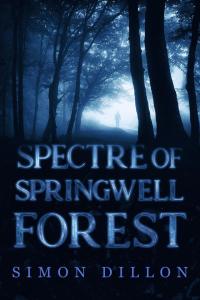
 For all their supernatural shenanigans, I try to keep an air of realism (if not reality) in my horror stories, and my most recent novel Spectre of Springwell Forest is a case in point. To that end, I have tried to base the story locations on real places with which I am familiar. I have also conducted whatever research is necessary to try and maintain this illusion of realism.
I have had it pointed out to me that Springwell Forest is a real place in Northern Ireland. However, my Springwell Forest is not based there but in the south-west of Britain, in Devon near Plymouth, on the southern outskirts of Dartmoor. The village of Springwell draws inspiration from sleepy hamlets and villages such as Hemerdon and Sparkwell, which are located near where I live. It is also partly based on Aston in Oxfordshire, one of the places I lived as a child.
Springwell Forest is inspired by the woods near my house where I often go walking (deer are regularly seen there), but the abandoned railway tunnel is inspired by an area in Plymbridge woods, slightly further from where I live. I have never discovered magic mushrooms in these woods, but I undertook research into hallucinogenic fungi for the novel (no, not that kind of “research”).
Another question I am often asked concerns the subject of witchcraft, and how much research I did for those elements of the story. The simple answer is very little (at least, for this novel). The witchcraft element of the narrative is mostly made-up (and as far as I know, there is no secret society called the Pridwen Order in real life). However, because I wanted the story to have that afore-mentioned air of realism, I researched a few related subjects, such as differences between Wicca and witchcraft, and a handful of other elements that I won’t bore you with here.
Spectre of Springwell Forest is out now. Pick up your copy here (in the UK) and here (in the US).
 Simon Dillon Books
Pingback: Spectre of Springwell Forest: Summary of Recent Articles | Simon Dillon Books