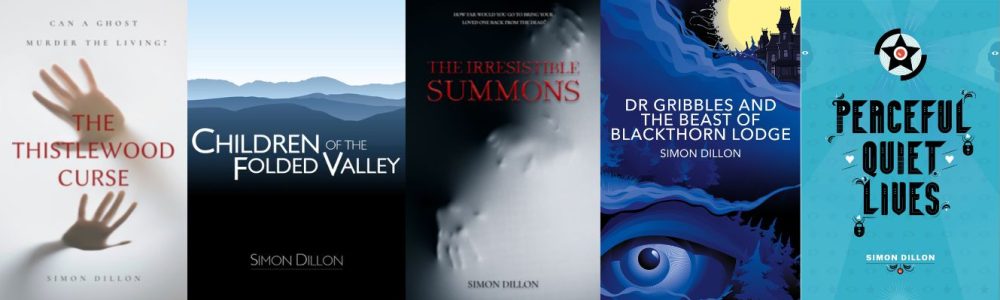


Many of my novels draw on history for their narratives, particularly the local history of where I live, in southwest England. Here are three examples of more fascinating historic footnotes that I appropriated, and massaged a little, for inclusion in my stories. The first two are from novels presently available, and the last one is from a manuscript I am holding on to for the time being.
The Dissolving of Buckfast Abbey (referenced in Uncle Flynn)

The facts: Henry VIII went about dissolving many Catholic monasteries during his reign. One of these was Buckfast Abbey, in the village of Buckfastleigh, on the southern borders of Dartmoor, which is a short distance east of where I live. The Abbey was dissolved by Sir William Petre, who in 1539, under instructions from the King, seized considerable amounts of gold which were subsequently taken to the Tower of London. William Petre later retired to the south-west. The Abbey was restored in the 1800s.
My fiction: In Uncle Flynn, the protagonist, eleven-year-old Max, and his mysterious adventurer uncle (who apparently has the police on his tail), uncover clues to hidden treasure written by a monk at the time of the dissolution. He supposedly took a vast amount of the Abbey’s gold, along with priceless Catholic library manuscripts, and buried them in a secret location on Dartmoor. This local legend is supported by William Petre’s supposed obsession with trying to locate this treasure that slipped through his fingers during the dissolution. It also explains why he chose to retire in the southwest.
Slaves of Lundy Island (referenced in The Thistlewood Curse)

The facts: Lundy Island is a tiny island on the Bristol coast, about three miles long and half a mile wide. It is sparsely populated, with limited local amenities, including a church, the Marisco Tavern, and a small airstrip where helicopters can land. Lundy Castle has since been divided into holiday homes. Electricity is only available at certain times of day, and there is no mobile phone signal (though there is a radio in the tavern).
Lundy has a rich and fascinating history, but one episode informed The Thistlewood Curse more than any other. Thomas Benson was an MP for Barnstaple when he owned Lundy in the 18th century. He also traded from the North Devon port of Bideford after inheriting a family fortune. His vessels transported tobacco, but he also kept a slave workforce on Lundy procured from convicts he was supposed to transport to America. After getting involved in smuggling, Benson’s misdeeds were discovered but managed to escape justice by fleeing abroad.
My fiction: Thomas Benson becomes Henry Thistlewood in my novel. As per real life, he secretly holds convicts intended for transportation to Virginia and uses them as slaves on the island. However, I devised the background for a ghost story: One slave, Jeremiah Adams, is executed with medieval barbarity after allegedly raping Thistlewood’s wife Cora. Whilst enduring death agonies, Adams curses the Thistlewood family line, swearing he will return to wipe them out.
In the present day, Henry Thistlewood’s descendant, Charles Thistlewood, son of Lord Alfred Thistlewood, mysteriously drops dead, having suffered an inexplicable heart attack. His wife Sally is an old friend of protagonist Detective Laura Buchan. Despite the doctor claiming Charles’s death is an open and shut case of tragic heart attack, Sally suspects foul play and asks Laura to come and secretly investigate, during Charles’s funeral. Laura brings along another childhood friend of theirs, paranormal investigator Lawrence Crane, who uses astral projection to try and discover the truth.
I won’t say anything more about the plot as I wouldn’t want to spoil it, but I will add that in my novel Lundy Castle is still occupied by the Thistlewoods, not divided into holiday homes.
Oliver Cromwell’s Head (referenced in The Balliol Conspiracy)

The facts: During the English Civil War, Balliol College in Oxford had its silver taken by the Roundheads and melted down for Oliver Cromwell’s New Model Army. After Cromwell’s death, when the monarchy returned, Charles II had Cromwell’s body dug up, put on trial, hanged, drawn, and quartered. His head was placed on a spike in London as a warning against anyone who’d seek to overthrow the monarchy again. Here’s where the facts get bizarre: Oliver Cromwell’s head was stolen, preserved, and changed hands multiple times (at one point it was hidden stuffed up a chimney), before supposedly being buried in Sidney Sussex College, Cambridge. Exactly where is unknown.
My fiction: My as-yet-unpublished novel The Balliol Conspiracy involves the above facts, though I tweak them by pretending Cromwell’s head was buried in Oxford. I won’t say any more about the plot, as the novel is strictly under wraps, suffice to say it’s a treasure hunt adventure for grown-ups, with a spy thriller element and a romantic element. I’ve not penned anything else quite like this, and it took quite some effort to rein in my gothic horror sensibilities whilst writing, to keep the narrative to PG levels. But I was determined that, for once, I’d write a novel that my mother could enjoy.
Uncle Flynn is available from Amazon here (in the UK) and here (in the US).
The Thistlewood Curse is available from Amazon here (in the UK), here (in the US), and here (from Smashwords).
The Balliol Conspiracy will be released at some point in the future. Watch this space.
 Simon Dillon Books
You must be logged in to post a comment.