
NOTE: The following is a revised version of an article originally published on Medium, where I’ve published a number of writing advice pieces.
In August 2020, I took voluntary redundancy from a staff job I’d had in television for over twenty years. It was a difficult decision, made in an exceptionally tough set of circumstances, complicated by a global pandemic. Nonetheless, it was the right time to leave for all sorts of reasons. Besides, it gave me the shove I needed to make the leap into pursuing a career as a full-time writer, something I’d wanted to do for many years.
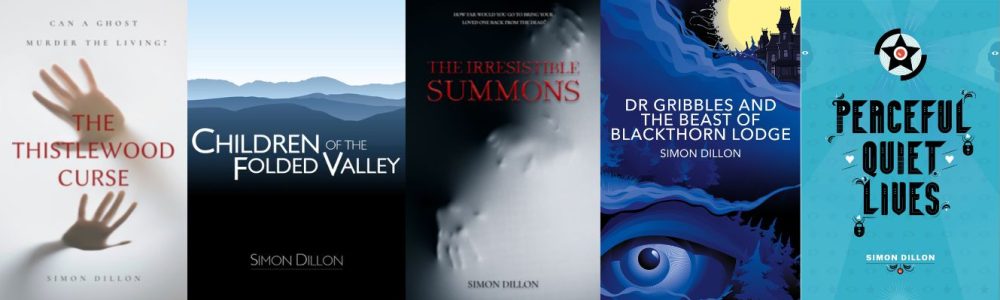
However, I had worked on writing as a side project for over twenty years. I wrote film reviews, short stories, and novels, as well as blog articles on books, writing, television, and promotional pieces for my stories. Whilst holding down a demanding full-time job that involved running a department with staff in multiple timezones, I also managed to self-publish several novels, and had three traditionally published by a small US-based indie publisher.
The question I got asked again and again was: How did I find time for writing? People believed I had a secret that enabled me to live a smugly insufferable life of perfect productivity that also made time for everything and everyone. Not true. There is no magic formula to juggling the pressures of writing and a day job. I cannot manipulate the space-time continuum and create extra writing hours. My existence was a deliberate, calculated burning of the candle at both ends that may well not work for everyone. That said, here’s the honest truth of how I did it.
Make time for what is important to you
No matter how busy they claim to be, people always make time for what is important to them. Those who were surprised I had time to write commented from the perspective of their own lives, which were often full of social engagements. By contrast, I carefully stripped out everything non-essential that ate into writing time. I prioritised my wife and children, and any other spare time went into writing or visiting the cinema.
Speaking of cinemas, when my wife was pregnant with our first, a colleague taunted me, saying that I’d no longer be able to go. When I told my wife what he said, she laughed and said: “Of course you’ll still go to the cinema, because it’s important to you. It isn’t important to him, which is why he stopped going.” She was proved correct. My regular cinemagoing continued, although for a while I did go at more offbeat times. But I made time for what was important to me.
The same was true of my writing. That meant consistently getting up early at weekends to write, staying up late in the evenings, and obsessively grabbing whatever time I could to pen a few more sentences. Juggling the demands of the children often meant writing at unusual times, but the point is I did write in those times, rather than spend hours surfing the internet.
Lunch break writing
I am sure several writers on this platform juggle writing and day jobs. I’ve encountered many who write during their lunch breaks, and this is exactly what I did for the better part of two decades. The key is consistency. One hour per day may not seem like much, but knowing I had limited time gave me extraordinary focus. I would typically thunder through a thousand words per lunch break. Add to that at least two thousand words per day on weekends, and on a particularly productive streak, I could write a novel in two to three months (not counting the planning, research, character outlines, etc prior to starting the first draft).
Yes, I appreciate this might not be an option for those who have micromanaging middle management bosses breathing down their necks, or those unable to find a place to sit and write in their lunch breaks. However, I was fortunate in this respect. I could easily get up with my personal laptop, squirrel myself away, and spend a concerted hour writing my novels. Sometimes I may have gone a little over that time, but on the other hand, during busy periods it could prove necessary to work through lunch, so it all balanced out. Again, the important thing was consistency. Needless to say, I wasn’t known as a sociable person at work, which brings me to my next point.
Balance is overrated
I was often asked how I managed to write and maintain a healthy balance in life. I didn’t, because I consider balance overrated. Nothing great was ever achieved by balance. Besides, I didn’t feel as though I had a choice. The voices in my head clamoured for attention, and the only way to silence them was to get them on paper. To do that required significant sacrifices. For about the first fifteen years of my married life, I didn’t really have close friends, as I didn’t make time for them. That sounds harsh, but my writing came first.
Work colleagues and acquaintances often urged me to “broaden my horizons”, suggesting I take an interest in other hobbies and activities. I didn’t — not because I wasn’t interested or didn’t want to, but because I was more interested in writing consistently and effectively. Sometimes this sacrifice was painful. You could argue it was unwise or unhealthy, and from a logical perspective, I would agree. But ultimately, it yielded a large body of work alongside instructive and valuable learning experiences. If I had been “balanced”, I would have pursued other hobbies, joined church groups, gone to the pub with friends, and spent far more time watching television and surfing the internet.
Final thoughts
In conclusion, many factors came into play with my obsessive pursuit of writing whilst holding down a full-time job. Frankly, I’m amazed I managed to do so for as long as I did, as I imagine exhaustion would have set in sooner or later. It also helped that my obsessive and introverted personality had a side effect of allowing immense focus. Not everyone is like me, and my life is not a formula. I certainly don’t recommend following my example for the sake of lunatic productivity levels. What I will say is that some of my experience illuminates how writing and working full-time is possible, depending on how much one is prepared to sacrifice, and for how long.
 Simon Dillon Books