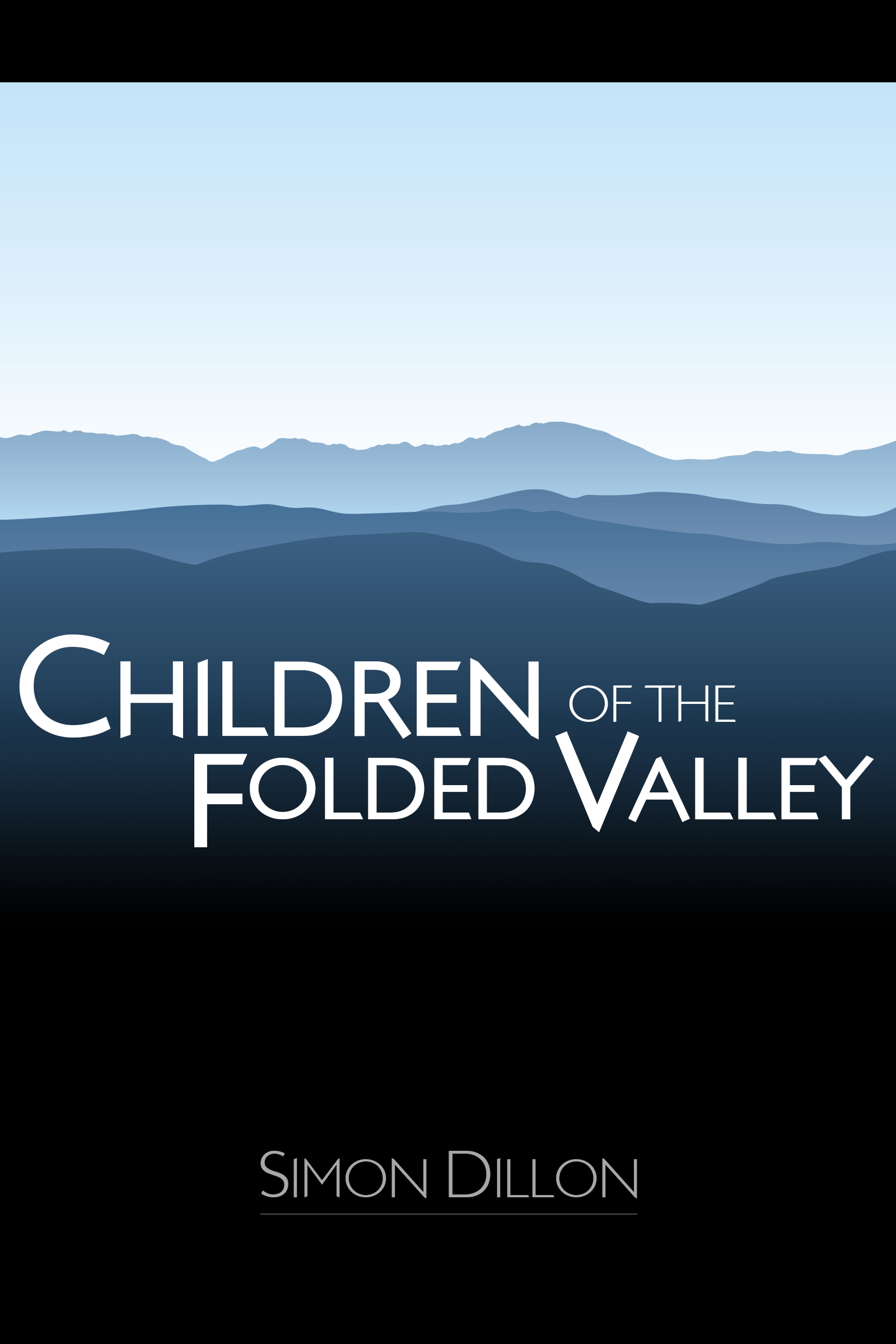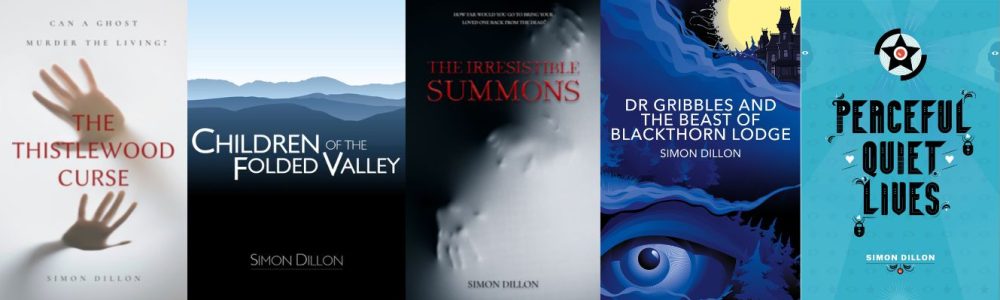
Children of the Folded Valley – initial reviews

My latest novel Children of the Folded Valley has had a number of very positive reviews, including some raves, from those who have read it. Here’s a brief sample from those on Amazon:

“A dystopian treasure! I have lived in this valley for the last few days due to the author’s skill at world-building. I have watched the characters come alive, and have experienced a mind-boggling mystery come to light. This is storytelling! You will be left with wanting more…” – Kathy, Amazon.

“I don’t usually leave reviews but I felt so strongly about encouraging people to read this fantastic book. It had me captured from start to finish. At one stage in the book I actually thought it was a true story.” – Paul Taylor, Amazon.

“Creepy and unnerving… Kept me gripped the whole way through.” – Lucyboo, Amazon.

“Draws the reader from a seemingly normal world into the horrific.” – Olga, Amazon.

“Readers will be gripped by the anguish of a community coming to terms with what is going on behind closed doors…” – Al Gibson, Amazon.

“I can’t put it down.” – Andre Pena, Amazon.

Children of the Folded Valley is currently available FREE from Amazon, Smashwords, Barnes and Noble, Goodreads, Kobo and various other places in various downloadable formats (including Kindle).

Print copies are available from Lulu.com: http://www.lulu.com/shop/simon-dillon/children-of-the-folded-valley/paperback/product-21732639.html

Here is the blurb from the back of the book:

During a journey to visit his estranged sister, James Harper recalls his childhood in a mysterious valley cut off from the outside world, where he grew up as part of a cult called the Folded Valley Fellowship.

In this seemingly idyllic world, the charismatic Benjamin Smiley claimed to be protecting his followers from an impending nuclear apocalypse.

But the valley concealed a terrifying secret.

A secret that would change Smiley’s followers forever.

Sexism in children’s book marketing

I generally stay out of debates about sexism, but I recently heard something that even I can’t let pass. Apparently Roald Dahl’s Matilda has been reissued with a pink cover that visually implies that this is not a book for boys.

109059

To say Roald Dahl’s novels are for all children is to state the bleeding obvious. In the specific case of Matilda, the book – and also Danny De Vito’s film – is just as enjoyable for both genders. Again, this is obvious. So why the pink cover marketing the book exclusively to girls?

As an aside, why indeed is pink so horribly ubiquitous in marketing to girls in any case? Many toy companies are guilty of doing things that never happened “in my young day”. For example, when I was a boy, Lego was always gender neutral. Why not today?

Leaving aside that bigger question, I do accept that some stories are more likely to appeal to one gender or another. But that is emphatically not the case with Matilda. Boys and girls throughout the decades have enjoyed it equally. Beyond the fact that the story has a female protagonist, I can see no reason whatsoever that it should be marketed in a gender specific way. By that logic, the Harry Potter books should only be marketed to boys and the Hunger Games books only to girls.

In short, this trend of reducing mass appeal children’s stories to “blue” or “pink” demographics is utterly dismaying.

Do you have to suffer to be a good writer?

“What do you have to write about? You’re not oppressed. You’re not gay.”

  • Bud Brumder, Orange County.

It’s a long debated question: do you have to suffer in order to be a good writer (or any kind of artist for that matter)? I think the answer to that question is “not necessarily”. Certainly if you have suffered, you have something to write about. But obviously suffering is relative. Anything I have suffered in life is nothing compared with, say, what the Jews suffered under the Nazis in World War II – or what Christians are presently suffering in Iraq (I’m still reeling from an article I just read about Christian children supposedly being beheaded out there).

I think the important thing for a writer to have is experience, rather than suffering per se. I wrote about religious cults in my novel Children of the Folded Valley because I have experienced them. Some of that experience might be termed suffering, but not necessarily all of it.

Folded Valley cover

Furthermore, it is important to emphasise that what I experienced does not necessarily appear in the novel at all. Indeed, it should be obvious that most of what the novel contains is nothing more than science fiction. But writing a novel based on experience isn’t always about conveying the factual veracity of true events – at least, not for me. Writing Children of the Folded Valley was about conveying how religious oppression feels, but within a science fiction backdrop containing all manner of exaggerations and outrageous situations necessary for the needed dramatic impact.

In a similar way, the battle scenes in The Lord of the Rings ring are informed by Tolkien’s experiences fighting in World War I. Obviously The Lord of the Rings is not a factual story, but the experience Tolkien brings to the writing makes an already masterful piece of work even more resonant.

Wars and religious cults may be negative things to have experience of, but plenty of authors write of good experiences they have had, and their work is enjoyed by millions. Sticking with Tolkien for a moment, the Aragorn/Arwen romance in The Lord of the Rings very much mirrors how he met his own wife Edith. Again it appears experience rather than suffering is the key thing here.

Having two children eventually led me to write Dr Gribbles and the Beast of Blackthorn Lodge and Uncle Flynn. The latter was inspired in part by a news report I saw about mollycoddled children, but mostly by the endless walks I have taken on Dartmoor with my eldest son. That can hardly be described as suffering.

Then again, Harry Lime, as brilliantly depicted by Orson Welles in The Third Man, obviously disagrees with me.

“In Italy for 30 years under the Borgias they had warfare, terror, murder and bloodshed, but they produced Michelangelo, Leonardo da Vinci and the Renaissance. In Switzerland they had brotherly love. They had 500 years of democracy and peace, and what did that produce? The Cuckoo Clock.”

  • Harry Lime, The Third Man.