George goes to Neptune out this October

This October, I am releasing the third and final novel in the George Hughes series, George goes to Neptune. It is available to pre-order from Amazon here.

GGTN 1600 x 2400

For me, this is the best George Hughes novel yet. I hope you enjoy it.

Here is the blurb from the back of the book:

In this spectacular sequel to George goes to Mars and George goes to Titan, George Hughes faces his most dangerous adventure yet.

Following the Titanian invasion, a deadly and very personal threat forces George to undertake a voyage to a top secret Martian research base on Neptune.

On this remote outpost, he uncovers a diabolical plot. But George is too late to prevent the catastrophe.

A catastrophe that will change his life forever…

George goes to Neptune is released on the 25th of October on Kindle. Pre-order your copy now!

Print copies will be available from the 31st of October. Details to follow soon.

Love vs Honour Q & A

I’ve had a few questions and comments about my latest novel Love vs Honour that I thought it would be good to address on the blog.

LvsHonour 1600 x 2400

When and where did you get the idea for the novel?

Sometime in 2005, on a bus in a traffic jam. The start and end downloaded into my consciousness from the inexplicable ethereal void known as “sudden inspiration”. The mid-section, whereby Johnny and Sabina pretend to convert to different religions as an elaborate parental appeasing ruse, occurred to me a little later. It wasn’t until mid-2006, after I moved to Devon, that I decided to write it and set it amid my new surroundings.

Why write something so clearly outside your usual genres?

I can only plead the afore-mentioned “sudden inspiration”. Teen romantic drama is a long way outside my so-called “comfort zone”. Yet the novel deals with themes similar to those found in my other works – rebellion, religious oppression, abuse of power, and so on.

What is the target readership?

Teenagers. But grown-ups have also told me they found it thought-provoking, gripping and moving.

Is Johnny based on you?

No, but there are elements of me in him, as there are, inevitably, in many of my characters.

Is Sabina based on a real person?

Sort of.

Is Johnny’s family’s troubled religious background based on my own?

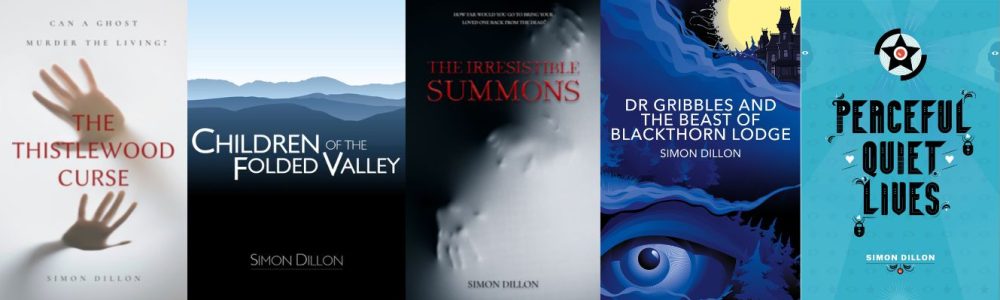
Yes, to a point. It is actually closer to my own experiences than the fictional cult activities in Children of the Folded Valley.

Did you base the story on a real life relationship deception?

No. But who knows? Perhaps it has happened before, somewhere.

Is Love vs Honour pro-Christianity or pro-Islam?

Neither. It simply depicts characters from both faiths, and their differing views and convictions.

But surely you must have your own beliefs?

Of course. But I have not consciously used Love vs Honour as a vehicle for them. It is intended as a gripping romantic drama first and foremost.

It gets quite dark towards the end, doesn’t it?

Yes. I make no apology for that. The subject matter is challenging, and I tried to explore some big ideas as fearlessly and honestly as possible.

I didn’t expect that ending.

Good. But I hope you’ll agree it was the right ending.

Love vs Honour can be downloaded here. Print copies are available here.

Here is the blurb from the back of the book:

Two Religions. Two Deceptions. One Love.

When Johnny meets and falls in love with Sabina, their bond proves stronger than a teenage holiday fling.

Fearing the disapproval of their strict Christian and Islamic families, they undertake an elaborate deception to continue seeing one another. Johnny pretends to convert to Islam whilst Sabina pretends to covert to Christianity to appease their parents. 

But how long can this deception last before it unravels?
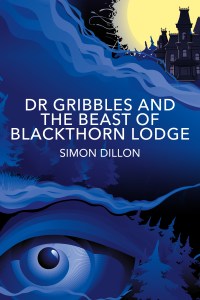
Download Dr Gribbles and the Beast of Blackthorn Lodge FREE – for five days only!

For five days only, you can download my novel Dr Gribbles and the Beast of Blackthorn Lodge absolutely FREE from Amazon.

DrGibbles_1600x2400_front cover

Dr Gribbles and the Beast of Blackthorn Lodge is a gripping and scary tale involving spies, monsters, haunted houses, mad scientists and lots more besides, with action and thrills to spare. It was actually inspired by the nightmares of my youngest son, and the book is duly dedicated to him.

Here is the blurb from the back of Dr Gribbles and the Beast of Blackthorn Lodge:

September 1987.

Curiosity lands Tim Rawling in a world of secrets, spies and a desperate race against time.

The haunted house, the monster and the mad scientist are only the beginning of a terrifying adventure.

Dr Gribbles and the Beast of Blackthorn Lodge is not just for children. Grown-up readers have commented on political cynicism and distrust of government apparently lurking between the lines (which of course I could not possibly confirm or deny). The ending caught a number of readers by surprise too, but don’t take my word for it. Check it out for yourself.

Print copies (alas, not free) are available to order here.

Breaking away from writing in the middle of a…

studies

I am between novels at present, so having just been on holiday, I was be able to do so without the complications and character arcs of act two rumbling in the back of my mind.

Breaking away from in-depth writing is always difficult, and conventional wisdom dictates that a clean break is best, ie between novels, as outlined above. However, given that this isn’t always possible, how best to proceed? Finish the chapter or section one is writing?

Surprisingly, I would advise the exact opposite. I always leave each writing session in the middle of a section I am enjoying or finding easy to write – for example, in the middle of a conversation, or amid a crucial dramatic moment. It sounds like madness, but the truth is upon re-reading I find I immediately get excited about what I am writing, remember why I decided to write it, and throw myself into it afresh with renewed enthusiasm.

By contrast, I find finishing a chapter or key section of the drama makes it harder for me to get back into it next time I sit down to write. If I reach the end of a chapter, I always write a chunk of the next before stopping, just to break the ice, so to speak. Chapter beginnings are always psychologically difficult, and it helps to at least have those first few paragraphs.

The psychological challenge of actually beginning a novel is even more intense, but that’s a subject for another post.