Good vs Evil in my novels

I have sometimes discussed the recurring themes in my novels on this blog. For example religious oppression and abuse of power are mainstays in all my work. Children of the Folded Valley is perhaps the most obvious example.
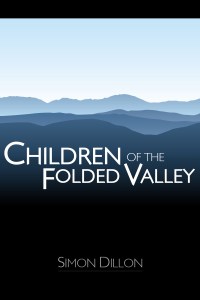
Folded Valley cover

Another key factor in my books is good versus evil. Inevitably this is born out of my Christian worldview, and since it is Easter perhaps now is a good time to reflect on this a little. For example, if I ever decide to explore the idea of good and evil being two sides of a coin, then I would prefer to think of Michael and Lucifer rather than God and Lucifer, as the afore-mentioned beings are of the same equivalent power. God by contrast is (in my worldview) far more powerful than either.

Themes of good versus evil are found in many of my favourite films and novels. Watership Down is about the price of fighting evil. The Untouchables is about refusing to compromise in the face of evil. With one key character (Snape), the Harry Potter series explores the motivations of why people stand on the side of good or evil. Then of course Star Wars and The Lord of the Rings are not only about overcoming external evil, but about overcoming the evil in oneself – or not, as the case may be.

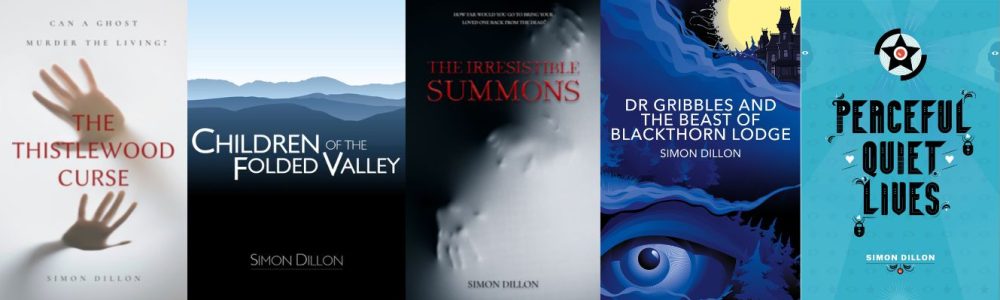
In my own work, this latter point is something I have examined certainly in certain novels. The arc from bully to hero by one key character in the second and third novels of the George Hughes trilogy is an example. The descent into religious fundamentalism by certain characters in Love vs Honour, and the Faustian descent into murder depicted in my upcoming novel The Thistlewood Curse stand in stark contrast to this.

GGTT  GGTN 1600 x 2400  LvsHonour 1600 x 2400

Although I write antagonists with shades of grey, and include motivations, ultimately I do write from a worldview of good standing against evil, whatever the context. As I explained earlier this worldview is essentially a Judeo-Christian one, which I know stands at odds with writers who take a more anti-theist or moral relativist position. I must confess that whilst I admire many works written by such writers, I could never write like that myself, simply because it would not sound convincing. I can only write what I believe.

In short, in virtually all my stories, there is a clash of sorts between good and evil. I can’t see that changing any time soon.

The George Hughes trilogy: Hidden meanings?

Sometimes I don’t fully understand what my novels are about, deep down, whilst writing them.

Obviously I know about the story and characters, but because I don’t want to come off as preachy, I do not consciously include any “message” in my stories whilst they are being written. I often don’t understand what kind of point I am making, deep down, until after the fact.

Some might claim this makes me a bad writer, but if so I am clearly in good company. JRR Tolkien had this to say about why he wrote The Lord of the Rings: “As for any inner meaning or ‘message’, it has in the intention of the author none. It is neither allegorical nor topical. The prime motive was the desire of a tale-teller to try his hand at a really long story that would hold he attention of readers, amuse them, delight them, and at times maybe excite them or deeply move them. As a guide I had only my own feelings for what is appealing or moving.”

Later, Tolkien acknowledged that the novel did in fact have a number of things to say, regarding friendship, growing up, the treatment of the environment, the nature of war, and his own Christian faith, amongst others. Indeed, there are a great deal of “messages” and “ideas” in The Lord of the Rings. However, these were messages and ideas that were not consciously intended.

That summarises how I approach my own writing.

For example, in the case of the George Hughes trilogy, I wrote those purely because I wanted to write an exciting science fiction adventure story that children (and intelligent adults) would enjoy. The first in the series, George goes to Mars, simply launched the whole “boy inherits Mars” premise, and at the time was intended as a one-off novel.

GGTM_600px

However, subsequently readers expressed interesting ideas about what George goes to Mars was actually about, under the surface. Apparently the novel can be read as an allegory about the dangers of religious fundamentalism, and also contains strong feminist undertones. It is also, some have claimed, a parable about the need for responsible leadership. Here I must confess I did intend for George to have a character arc whereby leadership is thrust upon him, but merely as a character arc to provide a satisfying plot, not to make any great statement about the evils of corrupt leadership.

The immediate sequel, George goes to Titan, I have been told is about everything from bullying to civil rights and slavery, as well as metaphysical stuff like faith.

GGTT cover GGTN 1600 x 2400

The final novel, George goes to Neptune, I have been told is about heavy stuff like post-traumatic stress, overcoming fear, coming to terms with grief and growing up.

Again, I didn’t deliberately intend any particular message in these books, but in retrospect I have to concede that all of these readings are valid, and that in some cases, given what I was going through in my personal life when I wrote them, these interpretations make sense.

Taglines

In the past taglines were generally used for movies. Science fiction films in particular often feature very memorable taglines. Off the top of my head I think of Close Encounters of the Third Kind (“We are not alone”), Dune (“A world beyond your experience, beyond your imagination”), Total Recall (“They stole his mind, now he wants it back”), Jurassic Park (“An adventure 65 million years in the making”), and Alien (“In space, no-one can hear you scream”).

In recent years novels seem to be increasingly released with taglines. For example, Anthony Horowitz employed them with his Alex Rider and The Power of Five series. “Adrenaline, action, adventure” is a tagline used for the entire Alex Rider series, whilst “Darkness waits on the other side” is the tagline for Raven’s Gate, the first instalment of The Power of Five.

Some articles I’ve read claim taglines are a must for authors, as they are “like a publicist that never sleeps”. However, I’ve only released one book so far with a tagline, Love vs Honour, last year. Perhaps because that novel was so far removed from the genre fiction I normally write, it hasn’t been very successful so far, although those who have taken the time to read it have enjoyed it.

LvsHonour 1600 x 2400

The tagline for Love vs Honour is “Two Religions. Two Deceptions. One Love”. This essentially summarises the premise, with a boy and a girl from Christian and Islamic backgrounds respectively falling in love, and undertaking an elaborate deception designed to placate both sets of disapproving parents, whereby one pretends to convert to Islam and the other to Christianity.

I quite like this tagline. However, in my case it has hardly been a “publicist that never sleeps”. Indeed, my most successful novel to date by far, Children of the Folded Valley, had no tagline. Will I use taglines in the future? If I can think of a good one, yes. But I certainly don’t expect them to act as a magic spell for success.