Grown-Up Scooby Doo

I once wrote a ghost story short film for a friend to direct, which he affectionately dubbed “Grown-up Scooby Doo”. This phrase recently returned to my consciousness when attempting to describe some of my supernatural thriller novels.

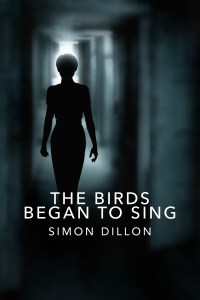
For example, The Birds Began to Sing definitely falls into this category, because whilst it is emphatically for grown-ups, many of the Scooby Doo conventions are contained therein.
The Birds Began to Sing_1600x2400_Front Cover

For a start, The Birds Began to Sing features a central (possibly) ghostly mystery, and a plucky protagonist determined to get to the bottom of it. Solving said mystery involves a great deal of suspenseful creeping around shadowy corridors. This activity in any spooky setting, whether gothic mansion (as in The Birds Began to Sing) or even a modern London office building (as in my as yet unreleased novel The Irresistible Summons) is an essential component of Grown-up Scooby Doo (as opposed to “Adult Scooby Doo” which has altogether different connotations).

Other conventions of Grown-up Scooby Doo include the obligatory unmasking of the villain. Although the villains of The Birds Began to Sing and The Irresistible Summons are not literally unmasked, their position as villains are essentially unconfirmed until late in the narrative, much like any whodunit, but more importantly, much like Scooby Doo.

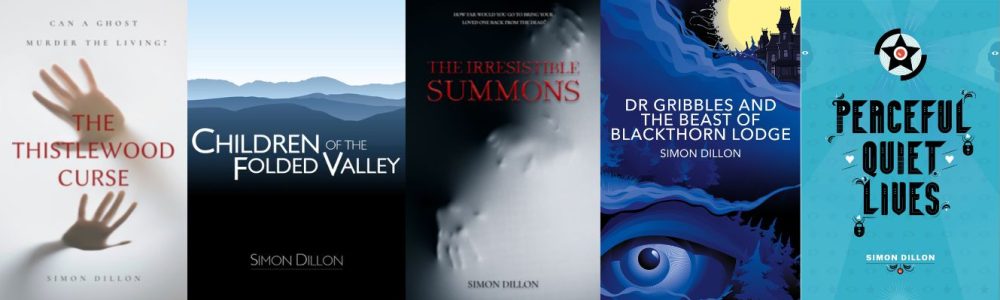
My soon to be released novel The Thistlewood Curse might be a detective story/supernatural thriller/horror hybrid, but again it unquestionably falls within the purview of Grown-up Scooby Doo, a term which I feel really now ought to be an official subgenre. Describing a novel as “Grown-up Scooby Doo” informs the reader that whilst the novels may contain more disturbing or serious elements, the mechanics at least will be puzzling, gripping and fun.

Download Love vs Honour FREE

For five days only, you can download Love vs Honour for FREE from Amazon Kindle!

LvsHonour 1600 x 2400

I wrote Love vs Honour almost ten years ago and sat on it for some time, as it lay outside my usual genre fiction writing. Certainly young adult romantic drama isn’t something I specialise in, yet the story felt so strong in my mind, I had no choice but to ultimately release the novel.

It begins as a boy meets girl story, with a potentially controversial religious twist. It then evolves into a drama of deception, with many twists, turns and ironies, before a much darker finale which has taken some readers by surprise. I must emphasise that this novel is as much for grown-ups as teenagers, as the subject matter is not just romantic but embraces a number of complex and hopefully thought-provoking themes and ideas. I cannot say too much more for fear of spoilers.

Here is the blurb from the back of the book:

Two Religions. Two Deceptions. One Love.

When Johnny meets and falls in love with Sabina, their bond proves stronger than a teenage holiday fling.

Fearing the disapproval of their strict Christian and Islamic families, they undertake an elaborate deception to continue seeing one another. Johnny pretends to convert to Islam whilst Sabina pretends to covert to Christianity to appease their parents.

But how long can this deception last before it unravels?

Here are a few review snippets:

“This book is one of the few that made me cry. I love it.” – Splufic, Goodreads.

“The premise of a Christian and a Muslim pretending to convert to each other’s religion to be with each other for the sake of pure, unadulterated love creates a strangely addictive narrative.” – Graeme Stevenson, Amazon.

“The ending of the book really made the whole thing. I kept wondering where this was headed, if it was an apologist piece or would go to a more realistic place. I won’t spoil the ending except to say, read this book. It is surely worth your time!” – DM Miller, author The Religion of the Heart and The Agony of the Heart.

If you want to purchase a print copy of Love vs Honour, you can order from here.

Post book blues

studies

When putting the finishing touches to a novel, I experience a brief moment of euphoria, followed by an alarming feeling of emptiness. This occurred again recently, as I finished the second draft of my most recent novel, The Deviant Prophet.

I call this feeling post book blues, and I expect the feeling applies to all artists, not just writers. Having put your heart and soul into a project, having undergone a lengthy mental journey with imaginary characters, one suddenly has to say goodbye to these characters. The problem is, by then I have often fallen in love with them, and don’t want to say goodbye.

There is, however, a cure: go onto the next project as soon as possible. I normally have my next three novels lined up in any case, but I appreciate some writers do not operate that way. I have a great deal of sympathy for anyone in such a predicament. Mercifully, I don’t typically have that problem. Otherwise, I think might sink into despair. Writing can be so addictive. Writing is like heroin.

Ultimately, if experiencing post book blues, I have to ask the question, why do I write? In my case, it is to silence the voices in my head by putting them on paper. Furthermore, it is because I have a pathological need to entertain. There is no better feeling in the world than knowing your story has brought pleasure to the reader (or even displeasure, because if so you have nevertheless got under the skin of the reader).

In such cases, a book can be like a gift that keeps on giving. That is the author’s greatest reward.

What have I been up to lately?

rewrite

Some of you might be wondering when I am releasing my next book, or what I am currently working on. My apologies for the lack of news on that front lately. The problem with writing is it sometimes occupies the mind at the expense of remembering to communicate properly on the blog.

At any rate, besides writing obvious April Fool posts about giant spiders, I have been working on a new novel, tentatively entitled The Deviant Prophet. I have almost finished a second draft. It is a grown-up fantasy tale, tonally akin to something like Pan’s Labyrinth. Other influences I would cite include Coraline, Alice in Wonderland and Spirited Away. It has been a very interesting novel to write, as it functions as a kind of companion piece to Children of the Folded Valley on a thematic level, if not a genre level.

I am about to start work on my second novel for 2016, something that has been gestating in my consciousness for since late 2012. All I will say at this stage is that it is a contemporary thriller for grown-ups, and involves mysterious suitcases, a treasure hunt, a love story, Oxford and Oliver Cromwell’s New Model Army.

The next novel I plan to release is still The Thistlewood Curse. Blending elements of detective story, supernatural thriller and horror, this Lundy Island set nail-biter occupies a similar space to my previous novel The Birds Began to Sing, though it is decidedly heavier on the horror aspects. I hope to have release dates and a proper announcement very soon, so watch this space.