Inspiration: The Birds Began to Sing

Whether writers care to admit it or not, much of what they pen is influenced – consciously or unconsciously – by other works. In my case, I am happy to acknowledge influences, but like any other writer hope my own work stands out in its own right.

With that in mind, I have decided to write a series of articles detailing influences and inspirations for my own books, starting with six key texts that influenced my mystery thriller The Birds Began to Sing.
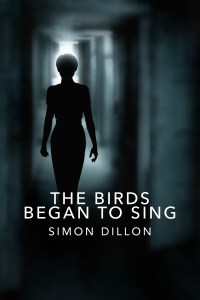
The Birds Began to Sing_1600x2400_Front Cover

Rebecca (Daphne Du Maurier) – An obvious gothic touchstone, given that my story contains a Danvers character of sorts. The central mystery is also very Du Maurier-esque. Indeed, one person who read my novel at one point forgot I had written it and thought she was reading Du Maurier. I take that as a very high compliment given that Du Maurier is certainly the strongest influence on The Birds Began to Sing.

Jane Eyre (Charlotte Bronte) – Another obvious gothic influence, chiefly because of the mad wife in the attic angle, which my own novel pays homage to. Like Du Maurier’s Rebecca, Jane Eyre contains a climactic fire that also acts as a symbolic purging metaphor, as all good gothic mysteries should. The Birds Began to Sing continues this tradition.

The Hound of the Baskervilles (Arthur Conan Doyle) – Another obvious influence, and not just because of the Dartmoor setting. The structure of the novel – with the first act in London and the rest of the story in a remote and sinister setting – was a formula I definitely followed. Also the atmosphere of subtle, uncanny menace, particularly during Watson’s first night in Baskerville Hall, proved a huge influence.

Sleeping Murder (Agatha Christie) – The splendidly eerie opening of this story, with its hints of repressed memories, hauntings and insanity, was a definite tonal inspiration. A recently married young woman buys a house and decides she wants to make various decorative changes. As the renovations get underway, the very changes she requested to doors, steps, types of wallpaper and so on are discovered mysteriously hidden beneath the current décor.

The Woman in Black (Susan Hill) – The deeply unsettling spectral appearances throughout Susan Hill’s horror masterpiece proved a big influence on my story, though obviously in my case the ghostly apparitions have a rather different explanation.

Coma (Robin Cook) – Here I must confess the film as much as the novel was an influence. This absolutely nail-biting medical conspiracy thriller contains many elements that are found in my own story, chiefly the tropes of the imperilled heroine who may or may not be paranoid, and her is-he-or-isn’t-he-in-on-it love interest.

You can download The Birds Began to Sing from Amazon Kindle here, or else buy a print copy here.

Religion, Agony and Secrets… The novels of DM Miller

On Valentine’s Day I normally favour a bit of counter-programming on this blog, rather than slavishly adhere to calendar observance. However, this year I think it is worth promoting fellow author DM Miller, who has written an unusual romantic trilogy. The Religion of the Heart, The Agony of the Heart and Secrets of the Heart are not the kinds of novels I would normally choose to read. However, because the novels centre around interfaith romance, I was interested purely because I have explored this territory a little myself (in my novel Love vs Honour).

DM Miller’s novels are radically different to Love vs Honour, but nonetheless raise many fascinating religious and political questions, in their fearless examination of the challenges faced by those in interfaith marriage.

The main plot appears simple enough, with Catherine and Abdul, Jewish and Arab respectively, meeting and falling desperately in love. In any love story there must be a blocking force, and here the blocking force is less religion but more culture, tradition and in some cases entrenched prejudice, most of which stems from relatives on both sides of their families. The third monotheistic religion, Christianity, is also cleverly woven into the mix, due to Catherine having been partly raised by her strict Christian adoptive father Dan. Incidentally Dan himself, for reasons too complicated to detail here, enters into an interfaith marriage of sorts in the course of the story.

Obviously the primary purpose of this kind of romantic novel is to provide an exhilarating emotional rollercoaster with dizzying highs and crushing lows, with a certain degree of escapism, and the trilogy contain these in spades. For example, Abdul’s rich family background is definitely a romantic escapist element popular in this kind of fiction. However, despite this escapism, intriguing religion based dilemmas are delved into throughout, and it is these that ground the novels, making them provoke thought as well as tug at heartstrings.

Whilst the first novel explores the considerable obstacles that stand in the way of Catherine and Abdul getting married, as well as some surprising family revelations, the second novel concerns complications that ensue post marriage once children enter the mix.  Catherine and Abdul are complex, fully rounded protagonists who elicit sympathy and occasionally irritation, thus making them more believable. The supporting characters are interesting too, particularly Dan.

Some might criticise the novels for being melodramatic, but since melodrama is a genre staple here to say that is to miss the point. Besides, melodrama is not necessarily a dirty word, as I have pointed out elsewhere on this blog. Again, I emphasise that whilst this kind of romantic fiction is not a genre I generally indulge in, DM Miller’s trilogy certainly goes to some interesting places. So far I have read the first two novels in the trilogy, and I look forward to reading the third.

His Dark Materials – A Reassessment

SPOILERS AHEAD for His Dark Materials.his-dark-materials

In the past I have written extensively of Phillip Pullman’s His Dark Materials trilogy. I have spoken of how it is a spectacular feat of imagination that almost equals The Lord of the Rings. I have also spoken at length regarding its anti-Christian themes, and it is regarding this that I wish to offer something of a reappraisal.

For those who have not read the novels, or may only have seen the damp squib film version of the first novel Northern Lights (aka The Golden Compass, the US title, which was used for the film), the His Dark Materials trilogy is set in an elaborate parallel universe, which subsequently expands to other universes, including our own. In the universe where the story begins, each human has a “daemon” that takes the form of an animal, from which they are inseparable. Essentially they are like spirit animals. The heroine, Lyra, along with Will, a boy from our universe, have a series of extraordinary adventures that include witches, armoured polar bears, mysterious spectres that kill only adults, as well as the even more mysterious “Dust”. Along the way, traditional notions of good and evil are challenged, as the Church from Lyra’s universe seeks to control and dominate, initially represented by the villainous Mrs Coulter. At the same time, the enigmatic Lord Asriel seeks to fight the Church, though his methods prove equally diabolical in many respects. This all comes to a head in an extraordinary confrontation between beings from multiple universes – including the angelic realm – as a war takes place against God himself.

Or does it?

The sticking point for certain Christian readers has always been the apparently anti-Christian, anti-God stance of the novels. Indeed, this article is not a complete recanting of what I have stated previously, as to be fair the novel does go to great lengths to dismiss the Christian notion of heaven, hell and the afterlife in general. Moreover, Pullman’s “God” character (referred to as “the Authority”) turns out to be the first angel created by Dust. This angel then lied to the other angels and told them he was God, leading to centuries of deception and oppression. However, whilst Pullman undoubtedly has an atheist viewpoint, it is worth considering the following.

Firstly, has not Pullman inadvertently reinvented God in the form of Dust? He seems to have hit the classic atheist dilemma, in that God cannot be disproved in much the same way as he cannot be proved. The brilliance of the Dust concept is that it can be read as “The Big Bang” or even “God” if you wish. Pullman is wise enough to know he has to leave wriggle room.

Secondly, Pullman’s own experience of organised religion is clearly a deeply negative one, and frankly mine has been too, on the whole. I cannot blame him for using his writing as a means of expressing this. I have also written of oppressive religious systems, both real and imagined, on multiple occasions (most notably in my novels Love vs Honour and Children of the Folded Valley). To complain that Pullman has it in for Christianity (and monotheism in general) is foolish, as his exploration of religious corruption is valid, and even though I do not subscribe to a simplistic view that all religion is bad, historically Christianity does have a lot to answer for, bad as well as good.

Finally, my past objections to Pullman centred around his responsibility as an author, specifically my concerns that he would put children off the idea of God entirely. Whilst it is true that books can contain powerful, worldview shaping ideas, and that authors do have a responsibility for what they write, I am increasingly convinced, even as a Christian believer, that “protecting” children against novels like His Dark Materials is misguided. I believe in engagement and discussion, not blanket prohibitions that lead to “forbidden fruit” curiosity.

My own faith has led me to conclude that God has a way of turning up in people’s lives and confounding their expectations of him. Phillip Pullman himself may even discover this himself one day, but in the meantime I would argue his extraordinarily imaginative tales should not be feared by Christians. Despite his views, Pullman is asking honest, difficult, painful questions and this is not a bad thing.

Of course, some Christians will still insist the novels are dangerous, and I agree. All good writing is potentially dangerous. That includes the Bible. Over the centuries those texts have been twisted and perverted to all manner of insidious ends, justifying everything from the Crusades to the Spanish Inquisition and the Ku Klux Klan. At this point in history, I don’t think His Dark Materials can lay quite the same claim, but yes, it is good to bear in mind that like all good writing, it is potentially dangerous. Does that mean we should get hot under our dog-collars and engage in book burning lunacy (as some have done this week to JK Rowling in protest of her views on Donald Trump)? Absolutely not.