Genre blending

Blending genres can be a fiendishly tricky exercise yet sometimes it can work brilliantly, against the odds, even if conventional wisdom says these genres would mix like oil and water.

The film Colossal is a good recent example of this. It blends indie drama elements with that of the monster movie tin a surprisingly effective way. TV series Twin Peaks is another genre blender, and one that is very difficult to define in conventional terms. The programme contains elements of soap opera, offbeat dark comedy, whodunit detective drama and supernatural horror with an avant-garde surrealism that is continually pulls the rug out from under the viewer in ways that both delight and infuriate.

I have a personal passion for films that start out in one genre, but then evolve into full blown horror. Kill List begins as social realist hitman thriller but becomes Grand Guignol occult horror. Bone Tomahawk is essentially a western that gets gatecrashed by cannibal horror. Most effectively of all, the massively underrated Angel Heart begins as private detective noir but ends in Faustian horror.

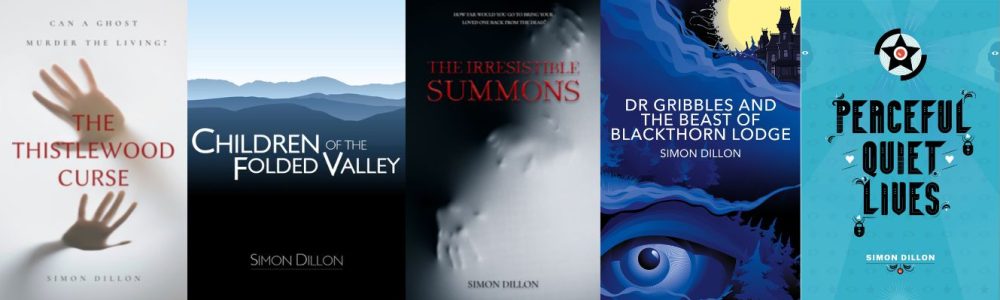
My recent novel, The Thistlewood Curse, attempts to emulate this genre evolution, from detective whodunit, to supernatural thriller and then full-on horror, hopefully in a fairly gradual build-up. There are risks of course. It can be difficult to categorise and promote. But ultimately the story is what it is. I hope readers take a risk and give it a go regardless. So far the feedback I have heard has been very positive.

THE THISTLEWOOD CURSE Cover (JPG Print version)

You can download or buy print copies of The Thistlewood Curse from Amazon here.

The Thistlewood Curse: What’s it really about?

Over the past few weeks, I’ve talked at length about my latest novel The Thistlewood Curse; what inspired it, the history behind it, short excerpts, discussion on the cover, and so forth.

THE THISTLEWOOD CURSE Cover (JPG Print version)

This article will focus on the themes of the story. What was I trying to explore, or to say, in The Thistlewood Curse?

The most honest answer would be nothing at all. I don’t believe any story should be written with an intentional message. Such endeavours tend to come off as tedious, condescending sermons. Instead, the primary motive for writing the novel was to create a suspenseful, gripping tale of supernatural mystery and horror.

That said, what is important to any writer will be inherent in the stories they tell. I had initially thought The Thistlewood Curse to be a tale of terror, but as the writing progressed it became less deliberately frightening and bloody (although there is still plenty of that), and more reflective, more melancholic, more sombre and ultimately more a tale of faith and coming to terms with grief in the face of the inexplicable.

The novel also flirts with contemporary concerns such as human trafficking, although more as a springboard exploring how the sins of past generations can be revisited upon the present in classic Greek tragedy style, rather than a deep expose of a very serious current problem. Themes of witchcraft also crop up, though again more as a plot device rather than a serious look at what goes on in covens. I doubt very much that astral projection could be used in real life the way it is used in The Thistlewood Curse, but who knows?

In subsequent drafts, the story evolved further, adding an element of religious oppression into the mix in a backstory I had originally intended to keep a mystery. However, my amazing and brilliantly honest wife persuaded me that these elements were needed to provide stronger emotional context for what was otherwise a clever but somewhat cold supernatural whodunit. I was happy to add these chapters into a now extended act one, because religious oppression is a key recurrent theme in my work in any case, and I can now see that keeping that part out for the sake of getting to the main plot quicker would have been a mistake. In fact, the reverse is true. I believe with this element now in the novel it makes the mystery all the more compelling, because the reader now cares far more about the two main characters.

Here is the blurb from the back of The Thistlewood Curse:

Can a ghost murder the living?

Lawrence Crane’s powers of astral projection are put to the ultimate test when he and his lifelong friend Detective Laura Buchan investigate a mysterious death on Lundy Island.

Sensing a dark power at work, they attempt to identify a human assassin under the control of supernatural evil.

But can they escape a terrifying, centuries-old curse?

You can download or buy print copies of The Thistlewood Curse from Amazon here.

Some facts behind The Thistlewood Curse

Following on from my recent post about what inspired my latest novel The Thistlewood Curse, here are some points of interest on the history, geography and other facts that are either directly or peripherally relevant to the novel. Obviously to avoid spoilers I won’t explain exactly how these tie into the supernatural narrative, but as with Uncle Flynn and various other (as yet unpublished) novels, local history and geography provided a fertile ground for my imagination.

THE THISTLEWOOD CURSE Cover (JPG Print version)

Lundy Island is a real place in the Bristol Channel, about twelve miles off the north coast of Devon. The island is small – about 3.5 miles long and 1.5 miles at its widest point. It has a population of about thirty, and many visitors who go to see the wildlife, especially puffins and other birds. The Oldenburg is a real vessel that ferries passengers to and from the island on a regular basis.

Lundy-island

As per the novel, the island is bereft of trees, and most of the settlements lie in the south, including the Marisco Tavern and Lundy (or Marisco) Castle, both of which are real places. However, in the novel Lundy Castle is substantially larger and privately owned, whereas in real life the castle has been broken down into self-catering accommodation. The history of the castle as described in the novel (involving Henry III and so forth) is also mostly true. Surrounding the island are spectacular cliffs, which can be better appreciated on boat trips. The only place to land a boat safely is in the south.

devon - Marisco Castle

Both lighthouses mentioned in the novel are real, along with Quarter wall, Halfway wall and Three-Quarter wall. It is true that supplies of electricity are only in use during certain hours, and that mobile phone signal is all but non-existent. Also, there really is a Tibbet’s Hill on the island, possibly a location where people were indeed hanged, which brings me neatly onto my next point.

As per the novel, the history of Lundy includes tales of pirates and slave traders, and it proved a very difficult place to govern. For example, Barbary Pirates from the Republic of Sale occupied Lundy from 1627 to 1632. These North African invaders, under the command of renegade Dutchman Jan Janszoon, flew an Ottoman Empire flag over the island. They captured Europeans and held them on Lundy before sending them to Algiers as slaves.

Finally, on a more arcane note, the Lundy cabbage is a genuine vegetable (see yellow flowered plant below), though I am fairly certain it has not been used as an ingredient for deadly poison. That however is sailing very close to spoiler territory, so I’ll just leave it there for now…

166660362

Here is the blurb from the back of The Thistlewood Curse:

Can a ghost murder the living?

Lawrence Crane’s powers of astral projection are put to the ultimate test when he and his lifelong friend Detective Laura Buchan investigate a mysterious death on Lundy Island.

Sensing a dark power at work, they attempt to identify a human assassin under the control of supernatural evil.

But can they escape a terrifying, centuries-old curse?

You can download or buy print copies of The Thistlewood Curse from Amazon here.

What inspired The Thistlewood Curse?

What inspired my latest novel, The Thistlewood Curse?

THE THISTLEWOOD CURSE Cover (JPG Print version)

A colleague of mine told me of a paranormal experience she once had. This experience gave me an intriguing story idea which would combine a conventional mystery whodunit with supernatural themes, including astral projection. I wrote a brief outline of the plot (the big twist ending was foreseen from the outset), but wondered about where to set it.

Subsequently, when my mother-in-law visited Lundy Island, she returned to show me her extensive photographic survey, along with the various guidebooks and maps she had picked up. I then realised I had the ideal setting for my novel, which would evolve from detective story to supernatural mystery thriller, culminating in an under siege horror finale, as the characters are trapped on the island in the midst of a fierce night storm.

As I set about writing the novel, there were various influences in the back of my mind, including Sherlock Holmes short stories like The Speckled Band and Agatha Christie’s Sleeping Murder, as well as films like Angel Heart, The Exorcist and television series Twin Peaks. However, I do hope the novel is distinctive and original in its own right too.

Here is the blurb from the back of The Thistlewood Curse:

Can a ghost murder the living?

Lawrence Crane’s powers of astral projection are put to the ultimate test when he and his lifelong friend Detective Laura Buchan investigate a mysterious death on Lundy Island.

Sensing a dark power at work, they attempt to identify a human assassin under the control of supernatural evil.

But can they escape a terrifying, centuries-old curse?

You can download or buy print copies of The Thistlewood Curse from Amazon here.