Out of Context

I recently noticed Goodreads and Amazon contain features that allow readers to highlight quotes from my novels. Seeing these snippets out of context is interesting, because in some cases they cease to be the thoughts of my characters and become statements of belief or insights into life.

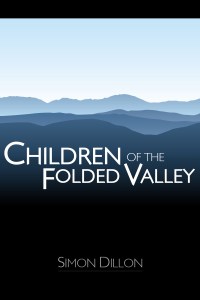
Folded Valley cover

For example, in the case of my most popular novel to date, Children of the Folded Valley, here are some out context thoughts:

On school:

“It was the culture of school I took a great disliking to; the idea that academic study is the be-all and end-all, and that to fail is to fail at life.”

On adolescence:

“When you feel the whole world wants you to act like an adult, but it continues to treat you like a child, you no longer trust the adult world.”

On selfishness:

“People often use childhood or adolescent trauma as an excuse for selfish decisions they take, and I for one refuse to offer such a simplistic explanation.”

On nostalgia:

“I do not long for the past, yet nor do I think of it as exclusively bad. I don’t ever want to go back, but I want things that are trapped there, lost forever.”

If any authors reading this have had a similar experience, by all means drop a few of your own out of context one-liners in the comments.


Plot Twists versus Unexpected Plot Turns

I have noticed some people confuse plot twists with unexpected plot turns. Here I shall attempt my own definitions of each, to explain the difference.

Earlier this year, I was most amused by a “bad” review of my novel Love vs Honour on Goodreads. The reviewer took great exception to the third act, stating the following:

“No…just No….
I hate such endings..
Wtf….
When the story got interesting then the author has to shock us?
No…
That’s bad..”

Obviously the reader is entitled to their opinion, and I am pleased that my writing got under her skin, but I maintain (and this is supported by many others who have read the novel) that the third act of Love vs Honour is not a pointless exercise in shock tactics but an outcome that was hinted at throughout – indeed the very first chapter clearly telegraphs where this is all going to end up.

LvsHonour 1600 x 2400

That said my intention in writing that novel was to create an unexpected plot turn, despite the hints that had been dropped. The third act should still feel like a shock, even though in hindsight it ought to seem inevitable. This was not a twist, but a new and unexpected narrative direction. However, an unexpected plot turn does not mean earlier events are viewed in a different light. In Love vs Honour, the first two acts are not open to drastic reinterpretation as a result of the third act.

By contrast a plot twist, particularly a final act plot twist, turns the entire story on its head, providing a rush of insight that causes the reader to see all events and characters in completely new terms. Said twists must be cleverly woven into the narrative in such a way that they come out of left field, and yet like unexpected plot turns, also seem inevitable in hindsight, causing the reader to wonder how on earth they didn’t see it coming.

In a number of my novels – including Uncle Flynn, The Birds Began to Sing and most recently The Thistlewood Curse – there are big, final act twists which mean the entire story has to be reassessed in light of the new information. How well these big twists work is of course up to readers to decide, but for better or worse, the events in those finales do mean the entire plots of those books are turned on their heads, hopefully in an entertaining and enjoyable way.

To conclude, a good example of the difference between the above narrative devices occurs in Alfred Hitchcock’s film Psycho. The notorious shower stabbing is an unexpected plot turn, whereas the finale in the cellar (when the nature of Norman’s “mother” is revealed) is a plot twist.

Here are some other examples of both from books and movies (I will tip-toe around spoilers):

Harry Potter and the Philosopher’s Stone – The man with two faces finale is a big plot twist.

One Day – The bike accident late in the novel is an unexpected plot turn.

The Sixth Sense – Bruce Willis’s final discovery about himself is a justly famous plot twist.

His Dark Materials: The Amber Spyglass – The upshot of the romance between Will and Lyra, as a result of the difficult choice they are forced to make, is an unexpected plot turn.

Planet of the Apes – Charlton Heston’s final discovery on the beach is a plot twist.

Great Expectations – The demise of Miss Havisham is an unexpected plot turn.

The Empire Strikes Back – Darth Vader’s big revelation is a plot twist, one that turns the entire story of not just that film but also the previous film completely upside down.

Million Dollar Baby – What happens to Hilary Swank’s character following the sucker-punch is an unexpected plot turn.

Les Diaboliques – The nail-biting bath finale is a plot twist.

Dead Poets Society – What happens to Neil after he performs in A Midsummer Night’s Dream is an unexpected plot turn.

Tinker Tailor Soldier Spy – The identity of the mole in MI6 is a big twist.

Sherlock Holmes: A Scandal in Bohemia – Irene Adler’s escape is an unexpected (and unconventional) plot turn.

Murder on the Orient Express – The finale is one of the most famous whodunit resolutions of all time, and one of the biggest twists.

Kind Hearts and Coronets – The delicious irony of why the protagonist finally gets arrested is a particularly amusing unexpected plot turn in this sublime black comedy.

I could go on and on, but hopefully that clarifies my definition.
Download Uncle Flynn FREE – for five days only!

For five days only, my debut novel Uncle Flynn is available to download FREE from Amazon Kindle.

Uncle Flynn was received very positively. On the surface it is a properly old-fashioned treasure hunt adventure, but it contains underlying themes about overcoming fear and the dangers of mollycoddling. The book is dedicated to my eldest son, and was largely inspired by our many excursions over Dartmoor, as well as a bit of local history.

Here is the blurb from the back of Uncle Flynn:

When timid eleven year old Max Bradley embarks on a hunt for buried treasure on Dartmoor with his mysterious Uncle Flynn, he discovers he is braver than he thought.

Together they decipher clues, find a hidden map and explore secret tunnels in their search. But with both police and rival treasure hunters on their tail, Max begins to wonder if his uncle is all he seems…

Here are a few reviews from various readers:

“Harking back to the wonderful adventure stories of Arthur Ransome, Uncle Flynn is a welcome return to the excitement of outdoor exploits in wild surroundings. Excitement, tension and peril combine in a well-written tale where The Goonies meets Swallows and Amazons. The evocative descriptions of treasure seeking on Dartmoor will have you longing to visit and explore for yourselves. Action-packed puzzle-solving pleasure for children and adults alike, with a neat twist in the tale to keep you guessing.”

Mrs Alice R Brewer, Amazon.co.uk

“A treasure for all ages. Kids and teenagers would love this fast-paced adventure story. Most adults would also find it a light and enjoyable read.”

B Fraley, Amazon.com

“Don’t pass this one by. I have been burning through the free NOOKbooks and this is the absolute BEST. Doesn’t matter what type of fiction you like to read, I can imagine this would capture just about anyone’s attention – and heart.”

willreadanything, Barnes and Noble.

“Could not put the book down, so enjoyed the journey. Recommended it to my 12 year old grandson who now wants me to be his book reading adviser. Loved by three generations.”

Brinney, Barnes and Noble.

“What a wonderful book for young readers and anyone else who loves a book with a great twist on an amazing story of courage over fear.”

Beansie47, Barnes and Noble.

“I’m an 83 year old woman. Your book was a joy to me. I felt I was having all the adventures myself at this ripe old age. Your book was like a cold drink of water on a hot day. Thank you.”

Joan McLaughlin, commenting on the Uncle Flynn blog.

“I downloaded the book for my boys to read, and thought I’d just read the first few lines… Needless to say I read to the end! Well written and most enjoyable – great adventure with life lessons woven into the story.”

Cecile Weyers, commenting on the Uncle Flynn blog.

Uncle Flynn is available to download FREE here. Print copies are also available (not free) here.

Managing Metaphors

Sometimes metaphors in novels can seem crass and unwieldy. Other times they can be sublime. But what is the difference between good and bad use?

Folded Valley cover

My general rule of thumb is that deliberate metaphors should only be included if they are also a vital part of the narrative. For example, in my novel Uncle Flynn, when Max is stalked by the panther, it is an essential ongoing element of the story, without which the plot would fall apart. But the panther is also a metaphor for Max’s fears, and his responses to the panther illustrate his progress in this respect.

In Children of the Folded Valley, the trains form an equally essential part of the story. Without them the plot would simply cease to exist. And yet, the trains take on an increasingly metaphorical role as the novel progresses; lost childhood, the passing of time, the end of an era and so on.

There are a number of excellent metaphors in JK Rowling’s Harry Potter series that adhere to my above principle. For example, in Harry Potter and the Prisoner of Azkaban, Dementors are essential to the plot, but are also a metaphor for depression. In the same novel, the hippogriff Buckbeak, unjustly sentenced to death, is a metaphor for another character who has also suffered a miscarriage of justice. Again, Buckbeak is pivotal in the climax. In the final novel, Harry Potter and the Deathly Hallows, one character’s silver doe patronus symbolises their ongoing love for a deceased character – a very poignant metaphor. Patronuses are, of course, an ongoing and vital part of the series.

There are exceptions to the above rule from time to time, but generally I get irritated when a metaphor takes me out of the story and draws attention to itself when the plot could exist perfectly well without it. When that happens, I feel as though the author is deliberately popping up in the middle of the narrative to announce how clever they are. I have had many an eye-roll for this reason, often when reading critically acclaimed high-brow literature.