In the shadow of Nineteen Eighty-Four: Writing my current novel

71Y5qibEolLI have recently re-read George Orwell’s dystopian milestone, Nineteen Eighty-Four. As ever, I came away from it stunned by the satirical and chilling narrative, and deeply alarmed at its prophetic insights. However, I also experienced something I hadn’t expected: Intimidation. This book has been called one of the greatest novels of the twentieth century, and sometimes the greatest. The bar for this kind of fiction has been set very highly indeed, not just with Nineteen Eighty-Four but also other classic dystopias like The Handmaid’s Tale, Brave New World, Fahrenheit 451, A Clockwork Orange and so on. Therefore, what business does an upstart like me have trying to write a dystopian future shock novel? Can I really add anything of value in this genre?

Whatever moments of George McFly Syndrome I may experience along the way, I honestly believe I can. I am about two-thirds of the way through what has become one of the most challenging and exciting novels I have ever undertaken. I have no idea if the finished product will be brilliant, terrible, or something in between, but nonetheless I am writing it with a passion unprecedented even by my standards.

The title remains a secret for now, but the story is set a little way into the future, in America. It is, broadly speaking, a dystopian drama about the so-called culture wars, satirising both sides and their various subcultures. The “religious right” and “liberal left” are equal targets of my ire, and common sense is utterly disregarded by both during the events of the story.

This makes it sound like I have an axe to grind, and perhaps, for once, I do. But I don’t intend to lash out at the reader in despair. Nor is this intended as a political statement of any kind (heaven forbid). What I hope for this book is that it will be gripping and dramatic; at times darkly comic, absurd, thoughtful, moving, tragic, and perhaps yes, a little bit angry. But I hope the overall feeling the reader is left with is sympathy for the plight of the protagonist, rather than a sense that they are being preached at. After all, in the past I have been very vocal about what can happen when writing a story with a conscious agenda. The last thing I ever want to sound like is condescending, finger-wagging or preachy.

More on this novel once it is finished, polished, and finally published. Watch this space.

Love vs Honour – Did I fail?

LvsHonour 1600 x 2400In 2006, I wrote Love vs Honour, which I then self-published nearly ten years later, in 2015. The novel is a sideways step outside of my usual world of thrillers, horror, science fiction, fantasy and children’s adventures. Teenage romance isn’t something I dabble in, but when the premise of Love vs Honour occurred to me whilst stuck in traffic during an interminable bus journey, I felt the story was too good to ignore.

A tale of star-crossed teenage lovers with a religious twist, Love vs Honour begins as a conventional romance, with a holiday attraction leading to something more serious. Then it takes an unusual turn, as protagonists Johnny and Sabina try to appease their religious parents by pretending to convert to Islam and Christianity respectively. A tangled web of deception ensues, building to a much darker final act.

Reviews have been mostly positive. However, at least a couple of people have told me there is a big, gaping flaw in the centre of the story: Johnny is not likeable enough.

Romantic fiction is not my area of expertise, and it seems this factor was a colossal oversight. The typical male lead in romantic fiction is handsome, dashing, charming, intelligent, perhaps roguish and flawed in some way, but above all he should be desirable. By contrast, I wrote Johnny as a realistically conflicted, angst-ridden teenager. He has a dark past that colours his view of the present, sometimes in negative ways. Like many teenagers he can be selfish, sulky and not entirely sympathetic. His statements are sometimes exaggerated, and are very much his side of the story (for example, he is quite scathing of his parents who, despite their more extreme religious viewpoints, are kind and generous people). Obviously he isn’t without redeeming features either, and as the novel gradually reveals dark elements from his past, he perhaps becomes a person with whom it is a bit easier to sympathise.

However, I think my critics might have a point. Even if Johnny is a realistic and believable character, he simply isn’t likeable enough as a conventional male romantic lead. By contrast, I think Sabina is far, far more appealing, and whilst it is plausible that intelligent girls like her would fall for someone like Johnny, in a romantic novel it can lead to a feeling of the story being unbalanced. I think in retrospect I was wrong to strive for realism, and should have erred more on the side of genre convention.

I’m still very proud of Love vs Honour as I think it does contain interesting characters and thought provoking scenarios. In that sense, it is best viewed as a drama rather than a romance. I also stand by my ending, which provoked a little controversy as well. However, if I were writing the book now, I would make Johnny a much more appealing character. Experience is a great teacher, and in the unlikely event I try my hand at teenage romance again, I will bear in mind what I have learned.

Check out Love vs Honour here, if you are curious.

My Five Favourite Gothic Mysteries

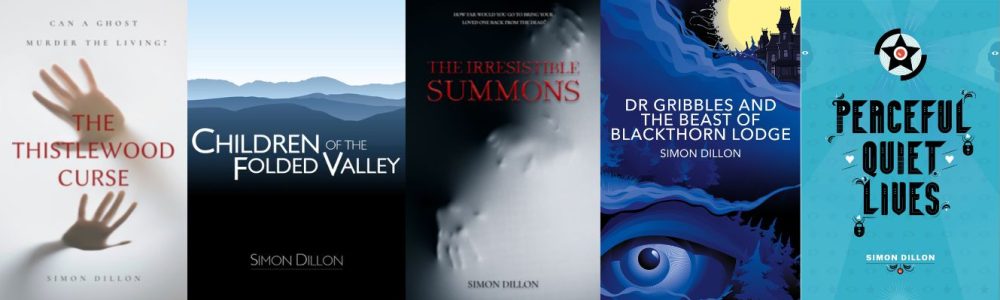
As regular readers of this blog (and indeed my novels) will know, I absolutely love a good gothic brew of mystery, melodrama, thrills and horror. To date I have written five novels of this kind, including The Birds Began to Sing and The Thistlewood Curse, as well as The Spectre of Springwell Forest, which is the next book I intend to publish.

Here are five classic gothic mysteries that I return to endlessly, that have proved a huge inspiration and influence. NOTE: Although undoubted gothic classics, for this list I have deliberately ignored Dracula and Frankenstein, since those are less mysteries and more full-throttle horror.

rebecca1

Rebecca (Daphne Du Maurier) – I adore Daphne Du Maurier, and this one remains top of my gothic influences list. For instance, how many other novels have their own variations on the manipulative, vindictive, psychopathic housekeeper Danvers? The central narrative is great too, with the famously unnamed, tormented protagonist living in the shadow of her husband’s dead wife. It also has one of the greatest gothic mystery plot twists of all time, and an appropriately fiery climax.

41TMi-MjSHL._SX290_BO1,204,203,200_

Jane Eyre (Charlotte Bronte) – This moody, brooding romance features one of the most iconic gothic subplots in the history of English literature (ie the classic, oft-imitated mad-woman-in-the-attic). A rich, melancholy, menacing work, brimming with vivid description, dangerous passions, and many other gothic touchstones (like Rebecca, this one ends in purging flames).


doyleartetext02bskrv11a


The Hound of the Baskervilles (Arthur Conan Doyle) – I tend to think of this Sherlock Holmes story as a spinoff into gothic horror, rather than belonging in the main Holmes crime fiction canon. The quality of the suspenseful prose remains unsurpassed, not just in obviously scary sections, but in little moments, such as Watson’s unsettling first night in Baskerville Hall. The oozing dread and menace drips from every page.


woman-in-black


The Woman in Black (Susan Hill) – Despite the popularity of the long-running stage show and a successful film adaptation, the source novel is still one of the finest, most bone-chilling ghost stories ever written. The superbly abrupt, genuinely shattering ending (significantly different from the film) has lost none of its ability to shock.


7916


Coma (Film) – I’m referring here to Michael Crichton’s superb film version of Robin Cook’s novel, rather than the novel itself. The premise – a possible conspiracy in a Boston hospital whereby patients are being deliberately placed in irreplaceable comas – is a masterclass in escalating unease and paranoia, building to full blown suspense set pieces that are pure modern gothic. Genevieve Bujold makes a fantastic imperiled heroine, and Michael Douglas is also good as her is-he-or-isn’t-he-in-on-it boyfriend. A real nail-biter.