Opening lines of my novels: Do you want to read on?

“Never open a book with weather” is advice often given to novelists. I’m not sure where to attribute said quote, although it is the first of Elmore Leonard’s ten tips for writers. I’m not sure how seriously to take it either. I can name a few classic novels that open with weather (Jane Eyre, for instance).

At any rate, I thought I’d give you the opportunity to judge some of my novels by their opening lines as well as their covers (it’s a myth that people don’t judge books by their covers – they absolutely do, when choosing what to read).

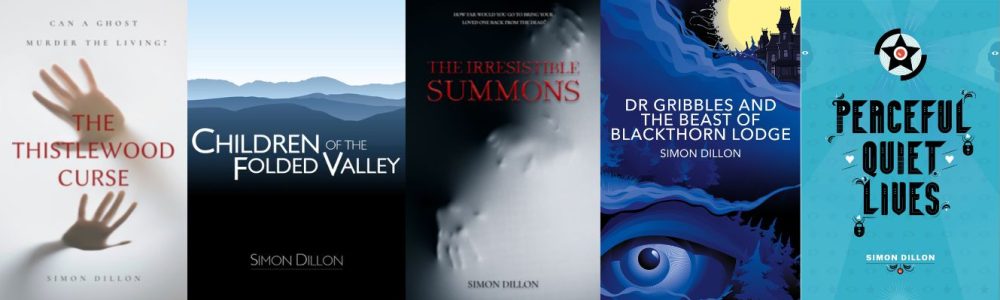
Glancing back over these, I like some, and slightly cringe at others. For instance, I think the opening to Children of the Folded Valley – still by far my most popular novel – is a tiny bit literary fiction try-hard, and I’d probably opt for something more immediately gripping these days. Still, it establishes the melancholy tone, as protagonist James Harper looks back on his childhood growing up amid a mysterious cult.
Folded Valley cover“We spend our adult lives trying to regain what we lost in childhood.

I do not claim to be unique in that respect. Whilst it might be argued that I lost more than some, we all, I think, chase after what we once had or never had. What we lost cannot be replaced, but we chase after it nonetheless.

Some think of what they lost with romantic rose-tinted spectacles, whilst others are more pragmatic. Some deny it, others get angry about it, others still accept it and seek help from friends, family, lovers, therapists, priests, gurus or anyone else who will listen. But I cannot do that. I can never tell my friends, my colleagues, my wife or my children what happened to me in the Folded Valley.”

Children of the Folded Valley is available here (in the UK) and here (in the US).

Onto something a bit more instantly gripping, here is the opening of The Thistlewood Curse. The reader is thrown headfirst into an investigation that has ended badly, which establishes the two main characters DS Laura Buchan, and paranormal consultant Lawrence Crane.

THE THISTLEWOOD CURSE Cover (JPG Print version)“In spite of the peculiar circumstances surrounding the death of Jacob Price, Detective Sergeant Laura Buchan had all but convinced herself there was no foul play. That he died as the result of a bizarre accident had become the accepted version of events for her and most of her colleagues. Only the senior investigating officer, Detective Inspector Ethan Roland, had any further inkling that Price’s demise was in any way suspicious.

Laura kept pinching the bridge of her nose in a nervous reflex. The questioning of her lifelong friend and occasional colleague Lawrence Crane should have been mere formality; an interview that would establish beyond all doubt that he had no involvement in Price’s death. But Roland kept treating him like a criminal. No doubt he considered his actions thoroughness, but Laura thought he was just being rude. Through the two-way mirror Laura watched as Roland continued to question Crane in the interview room.

‘Are you glad he’s dead?’”

The Thistlewood Curse is available here (in the UK) and here (in the US).

Phantom Audition concerns a grieving actress whose actor husband committed suicide in mysterious circumstances. This opening goes for the emotional jugular, establishing the novel’s themes of grief and what it can do to the mind.
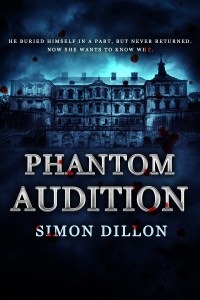
PHANTOM AUDITION“What Mia noticed most was the silence.

She kept expecting to hear Steven’s voice, or the insistent thud of his feet, as he rehearsed his lines, pacing up and down. She expected to hear him on the phone to his agent, publicist, or to a director.

In the mornings, she no longer heard his absurd singing in the shower. His seat at the breakfast table stood empty. Mia would avert her eyes, unable to bear staring at the space he should occupy. He should be sipping his tea, scrolling through his phone, crunching his cereal… Silence chewed the room instead, like wind and rain gnawing an eroding landscape.

At nights, Mia would awaken and roll over, hoping to warm herself on his body. But Steven wasn’t there, and he wasn’t coming back. He had been replaced with the same terrible silence that screamed, clawed, and tore at her mind whenever she entered the rooms that still had his smell. The memory of her husband had stained the entire house.”

Phantom Audition is available here (in the UK) and here (in the US).

Onto some of my novels aimed at younger readers (and the young at heart). Here is the opening of Uncle Flynn. This treasure hunt adventure mystery concerns eleven-year old Max. His crippling panic attacks are established in the opening chapter, ahead of the introduction of his mysterious uncle, and the main narrative. Themes of overcoming fear and the dangers of mollycoddling ensue, and Max’s character arc develops in ways that are hinted at in this opening segment.
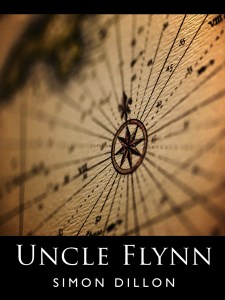
Uncle Flynn_Cover_600px“Max Bradley didn’t like to climb trees.

It wasn’t that he didn’t want to climb trees. He longed to do as his friends did and climb high into the branches of the great horse chestnut that stood at the foot of Gavin Bainbridge’s large garden. But every time he tried, he became dizzy after ascending just a few feet, and the idea of climbing higher frightened him. This was a continual frustration, since all eleven-year old boys could usually climb trees.

Max, Gavin, and Gavin’s cousins Jenny, Paul, Mark, and Katie had been playing a game of football, but Mark had kicked the ball into the upper branches of the tree. No amount of hurling sticks or stones had dislodged it, and the only way to retrieve the ball was for someone to climb up and get it.

Ordinarily, Gavin would have nipped up and retrieved it, but he was in one of his awkward, showing-off moods. He knew of Max’s fear of climbing and began to tease him.

‘Why don’t you go up and get the ball?’”

Uncle Flynn is available here (in the UK) and here (in the US).

Dr Gribbles and the Beast of Blackthorn Lodge is another action-packed children’s adventure story which well and truly throws the reader in at the deep end. Chapter one alone features a haunted house, a monster, and mad scientist.DrGibbles_1600x2400_front cover
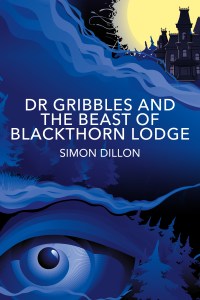
“Being trapped inside a haunted house was turning out to be every bit as terrifying as Tim had feared. He sat on the moth-eaten hallway carpet leaning against the crumbling plaster walls, putting his hands over his ears to shut out the horrible muffled roars.

Tim desperately tried to think of a way out, but his options were limited. The front door was blocked shut, as was the back door. That left the downstairs windows, but they were boarded up; as were most of the upstairs windows, except the small bathroom window on the top floor. But getting to it would mean climbing the dusty wooden staircase and it didn’t look particularly stable…”

Dr Gribbles and the Beast of Blackthorn Lodge is available here (in the UK) and here (in the US).

Finally, here’s the opening of Echo and the White Howl. My youngest son begged me for a story about wolves, so I wrote this novel about a wolf pack in Alaska. It’s a vivid, thrilling tale of betrayal, exile, and vengeance, with a touch of the supernatural. I am particularly pleased with this one, even though writing animal fiction is way out of my “comfort zone” (if you’ll forgive my use of an obscenity) and is something I’ll almost certainly never attempt again. We join protagonist Echo and the rest of his pack during an elk hunt, establishing the bleak, unforgiving landscapes, and the main characters.

“The pack stalked the bull elk in the forest. Having successfully separated the beast from his herd, the wolves finally closed in for the kill.

Echo crouched in the snow behind a rock, a short distance above the elk, on a steep slope. He anticipated the imminent pounding thrill that would course through his veins when the attack signal came. He could practically smell the blood on the icy air. Every sense in his body tingled, and he longed to sink his teeth into the succulent flesh. But still he waited. Aatag, the Alpha and his father, would make his move soon.

The elk had spotted Aatag, some twenty yards away, lurking next to a large pine tree. Aatag no longer hid himself but stared down his prey, attempting to both intimidate and distract the elk from the danger at either side. To the right, Echo and his brothers Malakai and Puyak, both of whom lurked behind trees, waited high on the slope. To the left, Echo’s mother Kiana remained concealed in the undergrowth with Copper, Aatag’s fiercely dutiful second-in-command, as well as sly and clever Imalik.

Presently Puyak broke his cover and trotted across to Echo. Irritated at his brother’s impatience, Echo cocked his head, indicating for him to get back under cover. But Puyak disregarded this and eventually shuffled up next to Echo.

‘This is getting boring,’ said Puyak. ‘Why can’t we just attack?’”

Echo and the White Howl is available here (in the UK) and here (in the US).

Gothic Mystery Podcast Interviews

The release of my last three gothic mystery novels – Spectre of Springwell Forest, The Irresistible Summons, and Phantom Audition – were each accompanied by a podcast interview with yours truly, conducted by the excellent Samantha Stephen – my co-host on The Tangent Tree podcast.

Throughout the three interviews, Samantha grills me on a variety of subjects in her inimitable manner, on everything from influences and twist endings, to why I have a thing for tenacious imperilled heroines creeping around haunted houses, spooky labyrinths, and other don’t-go-there places.

They aren’t too long, so why not head over to the Dragon Soul Press website and have a listen here.

Tempus, Time Travel, and Tall Tales: An interview with Claus Holm

From time to time, I interview other authors on this blog whose work I admire. Claus Holm’s Tempus series gripped and thrilled me, so naturally I sought him out for the Dillon Inquisition. Now he must answer for keeping me up at night, desperately wanting to know what happens next…

Claus Holm

Please give a short overview of the Tempus series.

Tempus Investigations is a supernatural detective agency in San Francisco run by Jim Corrigan; a 1930’s cop with a bad case of immortality. He doesn’t age, any damage to his body heals, and he can see and communicate with the spirits of the dead.

As such, he helps both the San Francisco PD and private clients when the supernatural comes knocking at the door. His friends and co-workers all contribute to the case solving in various ways; some with superpowers, others with investigative skills, tech knowledge, or pure heart.

Over the course of the series are everything from psychotic angels to time travel, Native American totems in human form, and real-life serial killer The Zodiac. The books are written to read like a Netflix-show, in terms of style and narrative. There are three in the series, with book three being published in 2020.

Tempus season oneHow did you come up with the character of Jim Corrigan?
By mixing traits from myself with some of my favorite fictional heroes. There’s a bit of Conner MacLeod from Highlander, a bit of Fox Mulder from The X-Files, a bit of the private detective Philip Marlowe, and a bit of Captain Malcolm Reynolds from Firefly all mixed together with myself and my own wishes (well – hopes!) for how I would act and talk if I was in situations like this.

I originally came up with him as a character for a role-playing game, but he changed a lot. He’s a lot nicer in the books. I found the concept I originally had of a completely unchanging man for over a century just didn’t work. He had to want to change, but he needed someone to pull him into the modern world and ground him. Which is, I suppose, the one story-line that runs through all three books – his growth as a character and as a person.

Jim is a slightly difficult man. He has very set opinions and he’s stubborn as hell, which are all traits that come straight from me. I would like to think I’m a little nicer to hang out with than Jim, though.

I particularly enjoyed the strong characters in Tempus, and their often amusing interactions. Do you think readers of this genre are more drawn to strong characters or strong stories?

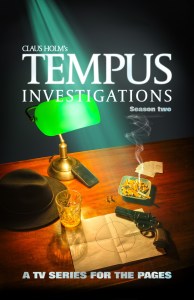
Tempus season twoAs the books were written to emulate the feeling of watching TV shows like Buffy, Angel, and Supernatural, I would say that it’s the characters that have to be the biggest draw. If you connect with the characters in a TV show, you tune in week after week. Even if you miss an episode, they’re still there and you still care about them. They become your friends, and when a show ends, it can feel like losing a friend (or several friends) if they are well-written and connect with you. I’m not saying the plot doesn’t need to be there, but I think if you enjoy spending time with the characters, you would read a chapter or watch a show of just them sitting around and talking to each other.

A strong story is needed to draw you in, but once you’re in, I think you stay for the friends you’ve made.

In your writing, I detect an undercurrent of scepticism towards the Judeo-Christian worldview. To what extent am I reading too much into your writing?

For a long time in my life, I did hold a very sceptical attitude towards religion in general and Christianity in particular. I should add that this attitude was specifically aimed at the branch of Christianity I will (for lack of a better word) call “American Christianity” – the kind where you go to a mega-church, are super-self-righteous, believe every word in the Bible should be taken literally, and think that you are better than those of a different faith or denomination, just because your pastor has told you so.

I’m born in Denmark and was raised Danish Protestant, which is probably the most laid-back version of Christianity you can find. We were told by our priest that the Bible was all symbolic and probably didn’t happen the way it was stated, but that it’s a matter of philosophy and belief in something bigger than yourself. That is something I can agree with. To this day, I can still feel annoyed by people in real life, as well as in books and films, who act holier-than-thou due to their faith, and I can get downright angry when I see religion used as a weapon (again, both in fiction and in real life.)

When I created Jim, I felt like he would be a good way of expressing these emotions. Jim was killed and woke up from the dead, but his beloved wife, who was with him at the time and was also shot, did not wake up. Where is the justice in that? Why would a benevolent God allow this to happen to him, but not to her? That sort of question, I thought, might drive a man not only to hate God but to hate religion in general. When you on top of this have him living in a world where he knows there are things bigger than us (he encounters spirits, half-deities, and other things far more powerful than him) he would suspect that there actually was a God somewhere that took delight in hurting him and letting him live forever without the woman he loved. That would also drive him to hate that God.

I thought it would be an interesting characteristic in a hero – especially as a counterpoint to someone like Dan Brown’s Robert Langdon, who is a very spiritual man that embraces the divine in a sort of sceptical way. So yes, Jim hates religion, because I have a distaste for some parts of religion.

As for myself, I believe that there is something bigger than us. But I am also quite sure none of the organised religions have hit a home run. To me, it’s more about a philosophy and about aspiring to be a better person.

(As a minor spoiler for book three – in that book, we actually find out why Jim was made immortal. And the reason isn’t what you think.)

Some of your stories are torn from historic fact (for example the Zodiac serial killer which comes into one of the stories in the second Tempus volume). How much research do you do, and how much of this research sparks new creative directions in your writing?

In the case of Zodiac, the research actually came before the writing, because I read two books about him and decided that I wanted to add him to my fictional universe. However, it meant I had to be creative, as I had already established Jim didn’t live in San Francisco during the time of his murders. So in the book, Jim is only passing through San Francisco at that point and gets drawn into the case. I guess you could say that it sparked some creativity, as I had to come up with a character that the Zodiac could be.

I did a lot of research on the city of San Francisco itself, including taking a trip there between writing books two and three. I wanted to walk the streets my characters lived on. That made me realise the San Francisco I knew from books and movies was very different from the real one.

Generally, I try to do just enough research that the book doesn’t feel like a textbook. To me, the story and the characters are more important than the details of the background, but I also don’t want to screw things up and say something completely wrong. What I do try, though, is to always get the geography right. If you took my book in your hand and walked around the city of San Francisco, you could find most of the places the story takes place. I even put a bunch of pictures on Instagram under #TempusTourSF where you could see the real places. This is generally why I only write about cities I’m familiar with, and why so many of my other stories take place in Tucson. I don’t want to bore my reader with a bunch of facts, but I also want to make it feel real – so I guess the answer is that I do a fair bit of research but not all of it ends up in the books.

Have you ever had a supernatural experience yourself?

On a couple of occasions, I’ve seen what is referred to as “Shadowmen” – black figures with glowing eyes. Once when I was a young boy, and once as an adult. Both times only very briefly, because… well, because I ran like hell.

I’ve also had a more kind and benevolent experience: When my maternal grandfather died, I felt him on many times “coming back to check” on me. He had a very distinctive smell of tobacco and aftershave, and I would sometimes smell that, very strongly, in my apartment for a brief time – perhaps a minute. I always took that as a sign that he was looking in to see how I was doing. I think it happened five or six times and eventually it stopped. My grandfather was an author like me, and he was very proud of the fact that I started writing, so perhaps that’s the reason he dropped in.

Besides Tempus, you’ve written some short story collections. Tell us a bit about them.

My other books Dreams and Awakenings, Between Above and Below, Introduction to Isolation and The Tucson Time Traveler are all collections, albeit the stories are of different length. Between Above and Below are actually more like novellas, four stories in one book, while the others are shorter and more normal short story length. The short ones are what I like to call “Twilight Zone Fiction” by which I mean dark stories with a twist ending. The Tucson Time Traveler crossed more into the sci-fi world, so I suppose the TV show Black Mirror is a closer analogy than the old Twilight Zone. I like to see if I can do the unexpected in a story, so the twist might be big or small but it’s always there. I like the short story as a medium; because you’re allowed to do stuff you can’t do in a novel without upsetting the reader.

Between Above and Below though, was something different for me. Those stories are mostly not scary but go deeper into the people I tell about. One is a psychological thriller, one is a love story, and one is a story about angels and demons – and then, yes, there’s one scary one about a monster, just because I couldn’t help myself. The stories in that book are the most personal and (in my own opinion) the best I’ve ever written, which is why that one was also the one I published in Danish. When I did that, I ended up cutting the monster story and writing a new, non-scary one instead. That one I put on my website for free in English, so you could read it even if you’d already bought the English version. It’s called The Birthday Bike. (You can find it here.)

To what extent (if at all) do you agree with the statement “write what you know”?

I don’t agree with it at all. If I only wrote what I knew, it would be some very boring books. I think imagination is the key. You need to think yourself into a different place, into a different person. Looking at the world through your character’s eyes can be cathartic in many ways. I like to read books with supernatural elements, fantasy, space opera, and that sort of thing. I am pretty sure none of those authors have been to space or fought vampires. Stephen King was a schoolteacher in a little town in Maine when he wrote some of the best horror short stories ever, and sure, he added bits and pieces from his own experiences (like the textile mill in Graveyard Shift) but mostly it was make-believe. I’m a big believer in make-believe.

Which writers inspire you?

Stephen King is my greatest inspiration. I could say I’ve loved everything he’s ever written, but that would be a lie. But I’ve read everything he’s ever published (even the hard to find stuff) and I’ve learned from it. I don’t copy him, but I get inspired.

Two Danish authors – Dennis Jürgensen and Knud Holten – were the ones that made me want to write stories back when I was young, and I owe it to them that I became an author. I had the opportunity to meet both of them and they were amazing people.

Last but not least, a German children’s author named Michael Ende, who wrote Momo and The Never-ending Story. That was the first time I remember being sucked into a book so deeply that I cried when it was over, because I identified so much with the main character. Ever since then, I can read his books and be inspired by his language and his imagination (although I’m not sure how his language works in the English translation).

What are your future writing plans?

I’m publishing a book of love stories called Lover’s Moon in the summer or fall of 2020. It’s a “love mosaic” – 12 stories that take place in the same normal Friday evening in Copenhagen, about how love happens in 12 different ways. Old love, new love, parental love, chased love, love for your pet, love of God… It’s a very different book than I have ever done before, and I’m very keen on finding out what my long-time readers think about it. The book will be available in both Danish and English.

And of course, the third volume in the Tempus Investigations will also be out this summer. I think it’s the best of the bunch. I haven’t quite decided what I’ll write next, but I’m leaning towards a book of longer science fiction stories about how the technology impacts our daily life. I’ve already written a couple of them.

What advice would you give someone who tells you they want to be a writer?

Read a lot. Write a lot. Keep writing, even if what you’re doing sucks, as long as it makes you happy to do so. You will get better in time. Listen to criticism from beta readers and/or editors – they want to help you get better. And last, but not least, realise that while you might not become the next J.K. Rowling or Dan Brown and sell a billion copies worldwide, making millions in the process – every time just ONE person reads your book, you touch that person. They live for a little while in a world you made up, and that should be all you ever require.

Check out Claus Holm’s published works here and his blog here.