Authors: Be Offensive on Purpose

Photo by freestocks.org from Pexels

NOTE: The following is a revised version of an article originally published on Medium, where I’ve published a number of writing advice pieces.

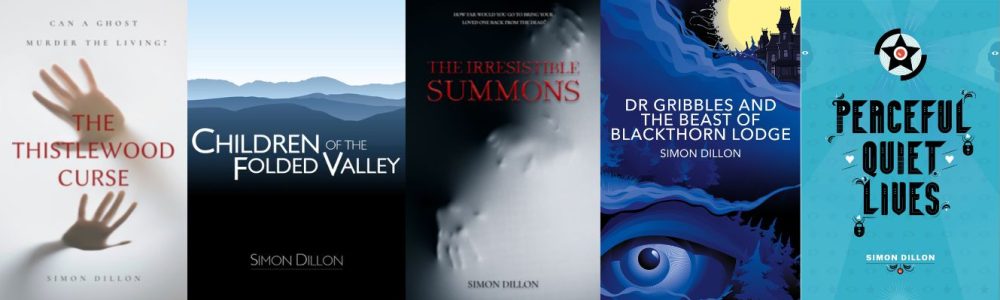
As someone who deliberately jabbed raw nerves on both sides of the American political divide with my dystopian novel Peaceful Quiet Lives, I have a few thoughts to share on tackling contentious subject matter in a story. I’ll freely admit I’m hardly a famous author, but I’ve had a few questions on my process of handling controversial issues in fiction, so I thought I’d answer them with this article.

Peaceful Quiet Lives is a dystopian romantic satire, about a couple who fall foul of extremist laws in both nations that rise from the ashes of America’s second civil war. Writing the novel was a huge challenge, as I didn’t mean to pen a political polemic. The intention was to satirise the absurdity of extremist fears on both sides of the so-called culture wars in America.

As a Brit, I knew I was opening myself wide open to criticism as someone looking at America from the outside, so that initially gave me pause. On the other hand, sometimes an outsider’s perspective can be more objective, so I stepped away from my usual gothic mystery oeuvre, took a deep breath, and wrote the novel. Afterwards, in preparing the book for public consumption, I undertook this three-step process, which I humbly offer for consideration, hoping it might prove useful to other authors.

Be Brave and Write It

First, have the guts to write it. Let rip and be as ruthless, honest, graphic, and contentious as you please. Do not censor yourself. Write almost as though it were a stream of consciousness that only you will see. Yes, it may reveal dark and ugly things about yourself. It may also reveal prejudices and biases (we all have them) but for now, don’t question them. Just write the first draft, knowing you will never show this raw, unpolished version of your narrative to anyone.

After you finish, leave it to one side for a while. I’d recommend a full year (my first draft of Peaceful Quiet Lives was written in early 2018), but at least wait a few months. This will give you distance from the story and make you more objective. Do not give this first draft to anyone else.

Rewrite It

After the waiting period is over, read your story again. It may need redrafting for a multitude of other reasons — plot problems, bad dialogue, unconvincing characters, prose needing polish, an infestation of adverbs — but it will almost certainly need redrafting to clarify your intentions. If dealing with contentious subject matter such as religion, racism, sexism, politics, sexuality, and so forth, you might wish to reword certain elements. Or if your story contains graphic sex, violence, and bad language, you might want to tone some of this down (or up).

In Peaceful Quiet Lives, I removed some of my protagonist’s darker sexual impulses because they were inconsistent with his character. I also removed certain contentious references to the ongoing gender debate, because I realised my novel wasn’t really about that, and I didn’t explore the subject in any detail. This stage brought focus, and I realised that whilst I wanted to explore extremist ideologies, I couldn’t cram in every extremist social or political ideology. I had to narrow my focus. On the other hand, revising this first draft also led to the enhancement of subjects I’d only touched on minimally. For example, the final version has a lot more about incel culture than originally intended. Indeed, it became pivotal to the narrative.

Where the first draft has revealed biases and prejudices, these can also be addressed, to give the novel more honesty. At this point, you might enhance certain elements you want to be more contentious, pushing the envelope further. With Peaceful Quiet Lives, I added a reference to post-birth abortion (flippantly termed a “cooling off period”) as a legal procedure in one of the two nations, because it created a more appropriately extreme satirical alternative to the laws in the other, where abortion was punishable by the death penalty.

Following this polish (or as many as are necessary), the time has come to give the manuscript to beta readers.

Get Feedback

At this stage, it is important to get feedback from people you trust, who know you well, and understand your intentions. It is important to see whether your contentious material is provoking in the way you hoped it would, or whether it is being misunderstood. I should add that interpretations and perspectives you didn’t expect may reveal themselves at this point. That isn’t necessarily a bad thing. Just because you didn’t intend something doesn’t make it an invalid interpretation. But you have to decide whether it is an interpretation you wish to allow for.

I am generally dubious of sensitivity readers, especially if this is mandated by publishers without authorial veto. That’s censorship as far as I’m concerned. However, it is possible to use a sensitivity reader to find blind spots, especially if said sensitivity reader is someone known and trusted. I had someone proof Peaceful Quiet Lives who knows me very well, and she was able to point out moments where I gave accidental offence instead of deliberate offence, often through poor wording. It became a simple case of: “You don’t really mean this, do you?” and was easily tweaked.

Here’s the key point: Offend by all means, but do so intentionally. Causing accidental offence is an amateur mistake. For that reason, a sensitivity reader may root out weeds that spoil an otherwise bracing, challenging work.

An Aside: Punching Down

A word on so-called “punching down”: One hears this phrase often, as a guideline to avoid hurting minorities. However, I think it is important to distinguish between marginalised individuals and social or political organisations claiming to represent them. Sometimes the latter can be militant, unreasonable, and hypocritical. As such, it makes said organisations prime candidates for satire. Stripping bare their sanctimonious attitudes and behaviour is entirely legitimate.

To illustrate this point, as a Jewish person by descent (via my maternal grandmother) I get particularly irritated when lobbying groups claim a “Jewish joke” is offensive, piously claiming to speak on behalf of all Jewish people. To me, context is everything. Not every joke about Jewish people is anti-Semitic. Personally, I think there’s nothing inherently wrong with laughing at cultural absurdities, stereotypes, and cliches, nor do I subscribe to the notion that, for instance in the case of Jewish jokes, a person has to be Jewish to make them. Again, intent and context are everything. What annoys me is the blanket assertion that “all Jewish people” would find such jokes offensive as though we are a homogenous, Borg-like collective. Some won’t. Some might. But a claim like that — especially one made by a non-Jewish person making a professionally offended statement by proxy — is absurd.

There are no Jewish lobbies discussed in Peaceful Quiet Lives, but I use the above point to explain why I sometimes consider lobbying groups claiming to speak for oppressed groups ripe for a satirical poke. I don’t consider this “punching down”, but obviously not everyone will agree. That’s fair enough, as needless to say, I am pro-free speech.

Conclusion: Brace for impact

Having taken your story through the above process, it becomes a simple case of releasing it — via a traditional publisher or self-publishing — into the world for people to find offensive or otherwise. Peaceful Quiet Lives raised a few eyebrows on both sides of the US political spectrum, and some of the criticism — of the what-the-hell-does-this-armchair-pundit-Brit-think-he’s-doing variety — was entirely expected. Both sides of the political divide have claimed the satire of their side to be implausible. Again, this is exactly what I expected. I knew I had a good, compelling tale, but I knew it would irk different people at different points.

To reiterate my main “takeaway” (a term that makes me and many other fellow Brits think of pizza, curry, or Chinese food, by the way): The important lesson with any contentious novel is to offend deliberately, not accidentally.

Writing Whilst Holding Down a Full-Time Job

Photo by Yi Liu on Unsplash

NOTE: The following is a revised version of an article originally published on Medium, where I’ve published a number of writing advice pieces.

In August 2020, I took voluntary redundancy from a staff job I’d had in television for over twenty years. It was a difficult decision, made in an exceptionally tough set of circumstances, complicated by a global pandemic. Nonetheless, it was the right time to leave for all sorts of reasons. Besides, it gave me the shove I needed to make the leap into pursuing a career as a full-time writer, something I’d wanted to do for many years.

However, I had worked on writing as a side project for over twenty years. I wrote film reviews, short stories, and novels, as well as blog articles on books, writing, television, and promotional pieces for my stories. Whilst holding down a demanding full-time job that involved running a department with staff in multiple timezones, I also managed to self-publish several novels, and had three traditionally published by a small US-based indie publisher.

The question I got asked again and again was: How did I find time for writing? People believed I had a secret that enabled me to live a smugly insufferable life of perfect productivity that also made time for everything and everyone. Not true. There is no magic formula to juggling the pressures of writing and a day job. I cannot manipulate the space-time continuum and create extra writing hours. My existence was a deliberate, calculated burning of the candle at both ends that may well not work for everyone. That said, here’s the honest truth of how I did it.

Make time for what is important to you

No matter how busy they claim to be, people always make time for what is important to them. Those who were surprised I had time to write commented from the perspective of their own lives, which were often full of social engagements. By contrast, I carefully stripped out everything non-essential that ate into writing time. I prioritised my wife and children, and any other spare time went into writing or visiting the cinema.

Speaking of cinemas, when my wife was pregnant with our first, a colleague taunted me, saying that I’d no longer be able to go. When I told my wife what he said, she laughed and said: “Of course you’ll still go to the cinema, because it’s important to you. It isn’t important to him, which is why he stopped going.” She was proved correct. My regular cinemagoing continued, although for a while I did go at more offbeat times. But I made time for what was important to me.

The same was true of my writing. That meant consistently getting up early at weekends to write, staying up late in the evenings, and obsessively grabbing whatever time I could to pen a few more sentences. Juggling the demands of the children often meant writing at unusual times, but the point is I did write in those times, rather than spend hours surfing the internet.

Lunch break writing

I am sure several writers on this platform juggle writing and day jobs. I’ve encountered many who write during their lunch breaks, and this is exactly what I did for the better part of two decades. The key is consistency. One hour per day may not seem like much, but knowing I had limited time gave me extraordinary focus. I would typically thunder through a thousand words per lunch break. Add to that at least two thousand words per day on weekends, and on a particularly productive streak, I could write a novel in two to three months (not counting the planning, research, character outlines, etc prior to starting the first draft).

Yes, I appreciate this might not be an option for those who have micromanaging middle management bosses breathing down their necks, or those unable to find a place to sit and write in their lunch breaks. However, I was fortunate in this respect. I could easily get up with my personal laptop, squirrel myself away, and spend a concerted hour writing my novels. Sometimes I may have gone a little over that time, but on the other hand, during busy periods it could prove necessary to work through lunch, so it all balanced out. Again, the important thing was consistency. Needless to say, I wasn’t known as a sociable person at work, which brings me to my next point.

Balance is overrated

I was often asked how I managed to write and maintain a healthy balance in life. I didn’t, because I consider balance overrated. Nothing great was ever achieved by balance. Besides, I didn’t feel as though I had a choice. The voices in my head clamoured for attention, and the only way to silence them was to get them on paper. To do that required significant sacrifices. For about the first fifteen years of my married life, I didn’t really have close friends, as I didn’t make time for them. That sounds harsh, but my writing came first.

Work colleagues and acquaintances often urged me to “broaden my horizons”, suggesting I take an interest in other hobbies and activities. I didn’t — not because I wasn’t interested or didn’t want to, but because I was more interested in writing consistently and effectively. Sometimes this sacrifice was painful. You could argue it was unwise or unhealthy, and from a logical perspective, I would agree. But ultimately, it yielded a large body of work alongside instructive and valuable learning experiences. If I had been “balanced”, I would have pursued other hobbies, joined church groups, gone to the pub with friends, and spent far more time watching television and surfing the internet.

Final thoughts

In conclusion, many factors came into play with my obsessive pursuit of writing whilst holding down a full-time job. Frankly, I’m amazed I managed to do so for as long as I did, as I imagine exhaustion would have set in sooner or later. It also helped that my obsessive and introverted personality had a side effect of allowing immense focus. Not everyone is like me, and my life is not a formula. I certainly don’t recommend following my example for the sake of lunatic productivity levels. What I will say is that some of my experience illuminates how writing and working full-time is possible, depending on how much one is prepared to sacrifice, and for how long.

Ironic Character Arcs

Photo by Connor Danylenko from Pexels

NOTE: The following is a revised version of an article originally published on Medium, where I’ve published a number of writing advice pieces.

Warning: Contains spoilers for Born on the Fourth of July, Rain Man, Schindler’s List, Indiana Jones and the Last Crusade, Treasure Island, Five on a Treasure Island, Moonfleet, The Treasure of the Sierra Madre, Breaking Bad, The Witch, The Wizard of Oz, Romeo and Juliet, The Catcher in the Rye, Macbeth, and The Hitch Hiker’s Guide to the Galaxy.

Alanis Morissette famously complained that rain on a wedding day was ironic, when in fact that was just bad luck. However, she isn’t alone in her confusion regarding the nature of irony. Despite the standard definitions of verbal, situational, and dramatic irony, it’s a tricky concept to explain, and even trickier to consciously nail in fiction (some of the ironies in my own novels have been happy accidents). However, ironic stories are extremely satisfying to read or watch when the concept is properly understood.

One method of crafting an ironic story is to create a central protagonist with a convincingly ironic character arc. For the best results, I recommend first figuring out where you want your character to end up, and working backward from that point, weaving irony into the narrative. For example, a rich man systematically bankrupts himself to save lives. What ironic events would bring him to that point? I’ll come back to this question in a moment.

Ironic character arcs are best defined in two ways: Firstly, by what they aren’t, and secondly, because irony is by nature slippery and difficult to define, with examples. Irony isn’t sarcasm, bad luck, coincidence, or ambiguity, as some have claimed. A sarcastic character isn’t ironic for that reason. Simple bad luck or coincidence does not provide the deep rush of profound insight inherent in an ironic story. There is nothing ambiguous about irony either. Ironic character arcs communicate a crystal-clear truth to the reader or viewer, leaving them in no doubt. Furthermore, they typically come in two forms: redemptive and punitive.

Redemptive ironic character arcs

Redemptive ironic character arcs can be roughly defined this way: The protagonist pursues goals initially esteemed and greatly valued, perhaps obsessively. These goals can be financial, career, or love life-related. They can be politically, socially, or spiritually motivated. However, the compulsion to realise these goals drives the protagonist to the verge of despair and self-destruction.

Any intelligent audience is aware of the character flaws that drive the protagonist on their obsessive quest because they have the self-awareness and objectivity the protagonist lacks. However, in the redemptive ironic character arc, the protagonist eventually experiences an epiphany that brings about profound change, wherein they have a moment of clarity, look at themselves in the mirror, disregard their original goals, and achieve something far greater.

Films like Born on the Fourth of July, Rain Man, and Schindler’s List are good examples of this storytelling principle. Ron Kovic begins Born on the Fourth of July as a gung-ho Vietnam War recruit but is wounded in combat and paralysed from the mid-chest down. He returns home, still driven by patriotic fervour, but gradually changes his views as he degenerates into political disillusionment, self-pity, and rage. Eventually, after PTSD moves him to confess to a friendly fire incident, Kovic emerges as an anti-war activist; a role ironically requiring the same courage he displayed on the battlefield, as protestors clash with riot police.

Tom Cruise is excellent as Kovic and equally excellent as Charlie Babbit in Rain Man, where he plays a ruthless, selfish car dealer. Following the death of his estranged father, Charlie is furious to discover his inheritance goes to his autistic brother Raymond; a brother he never knew he had. Charlie in effect kidnaps Raymond and takes him on a road trip, hoping to leverage a deal with the lawyers so he’ll get a chunk of the inheritance. But as time passes, Charlie bonds with his long-lost brother, and by the time the lawyers are ready to make a deal, he no longer wants to be parted from him. The money ceases to matter to him. He wants the relationship with his brother instead.

Schindler’s List features another redemptive ironic character arc, one alluded to in my introduction: A rich man systematically bankrupts himself to save lives. What ironic events would bring him to that point? Oscar Schindler was a member of the Nazi party and a profiteer of slave labor, yet a crisis of conscience at the treatment of the Jews in wartime Poland caused him to systematically bankrupt himself to save as many lives as he could. His original goals are sacrificed in favor of a greater moral imperative, giving him a redemptive ironic character arc.

Treasure hunt narratives

Another good example of the redemptive ironic character arc is often found in treasure hunt stories. The protagonist obsessively searches for treasure, yet ultimately the greatest treasure is not the object of the quest, but something else more important gained along the way. The treasure turns out to be a side benefit to a greater reward ultimately received by the protagonist, or in some cases, the protagonist does not retain the treasure at all.

In Indiana Jones and the Last Crusade, Henry Jones Sr spends his life in an obsessive pursuit of the Holy Grail. For forty years he meticulously chronicles endless clues, to the exclusion of all else, including his son. As a result, Indy is estranged from his father for years. But when the Nazis attempt to uncover the Grail and Henry is kidnapped, Indy rescues him. They try to find the Grail before the Nazis, and in the process, both gain something far greater: The restoration of their relationship.

Other famous treasure hunt stories follow this pattern, including Robert Louis Stevenson’s Treasure Island, probably the most famous treasure hunt story of all time. Jim is excited by his quest, but his relationships with the other colourful characters, especially Long John Silver, are what drives his character arc. Yes, the heroes ultimately keep the pirate treasure, but Jim’s rite of passage to manhood is the more interesting aspect of the tale, and his experiences are his greatest gain.

Another example is Enid Blyton’s Five on a Treasure Island. It features a treasure discovering narrative that rescues George’s parents from pseudo-middle-class poverty, so they can send George to a posh private school. This rather laughable call on reader sympathy and its subsequent resolution is not the most satisfying upshot for George and the other children. Instead, George’s character arc from an angry, distrustful loner to someone with close friends is the ultimate reward for her endeavours.

Punitive ironic character arcs

By contrast, punitive ironic character arcs often involve falls from grace. For example, sticking with treasure hunt narratives, an inverted principle comes into play when such tales have a darker, more tragic side, especially when characters become unduly obsessed with the treasure they seek. Fred Dobbs in The Treasure of the Sierra Madre or Elzevir in Moonfleet are good examples. It can be equally satisfying to see these characters obtain the treasure (often temporarily) whilst losing everything that actually matters.

The punitive ironic character arc can be roughly defined this way: The protagonist pursues what they believe is a noble goal through dubious means, unaware of their own flaws and hypocrisy. They increasingly believe their self-justification and lies, and this lack of self-awareness makes them vulnerable to the very kinds of behaviour and action they condemn.

Again, these stories can centre around financial gain, career, love life, politics, criminality, religion, and so forth. At a critical point, the protagonist reaches a similar crisis that mirrors that in the redemptive ironic arc, only this time rather than pull back from the abyss, they tip over the edge, committing acts that directly contradict the very values they profess.

Shakespeare’s Macbeth is an obvious example. Macbeth’s actions are set in motion as a result of his consultation with the witches. Had he disregarded their prophecies, his ambitions and desires would have been fulfilled in any case, since King Duncan already favoured him, naming him Thane of Cawdor and heir to the throne. Instead, the famous bloody tragedy ensues.

Television series Breaking Bad is another excellent case in point. Walter White’s descent into evil is bone-chilling and darkly funny. A law-abiding citizen fatally flawed by pride, Walter starts secretly manufacturing crystal meth to pay medical bills and provide for his family after a cancer diagnosis. However, the audience recognizes something Walter takes five series to admit: he’s doing this for his own gratification. Walter gradually deteriorates into full-blown megalomania, allowing for a rich vein of irony in his character arc as hospital bills become irrelevant, and he loses the family he originally wanted to support.

Horror film The Witch provides another fascinating example of punitive irony. A family of Puritan settlers too uptight for regular Puritans believes they are being targeted by a witch in the forest. The father is completely obsessed with the idea of sin, and forces strict religious ideology on his charges, especially his teenage daughter, who he comes to believe is a witch. As the hysteria escalates, the daughter, who had no intention of becoming a witch, ends up becoming a witch, demonstrating the ironic truth that the more religious people are obsessed with their ideas of sinfulness, the more likely they are to manifest it. One only has to look at the various scandals in the church for evidence.

Conclusion: Irony adds value

In conclusion, embracing irony in fiction is difficult but worthwhile, especially when writing a protagonist with an ironic character arc. You will probably find multiple methods to organically evolve ironic themes as you plan the narrative, and even more, in the writing process itself. For example irony in the plotting, will make any story sparkle. The fearsome wizard in The Wizard of Oz turning out to be a fraud is a superb ironic plot turn. The tragic irony at the end of Romeo and Juliet, where Romeo commits suicide thinking Juliet is already dead, is another powerful example.

At the very least, irony can add humour. Just look at Holden Caufield’s flippant attitude to the tumour in his brain in The Catcher in the Rye. Or the ridiculous intergalactic bureaucracy in The Hitch Hiker’s Guide to the Galaxy, wherein Arthur Dent protests that his house is due to be destroyed to make way for a bypass. He is greeted with bureaucratic indifference by the construction foreman: “The plans have been on display in the council for over a year. It’s not my fault you don’t take an interest in civic affairs.” Shortly afterward, Earth discovers it is to be destroyed by the Vogons to make way from an intergalactic bypass. The Vogon Commander states the plans have been on display at Alpha Centauri for over a year, and it isn’t his fault if humans don’t take an interest in civic affairs.

On that amusing note, as you write, may the irony be ever in your favour.

Not Suitable for Grown-ups?

Photo by Yaroslav Shuraev from Pexels

NOTE: The following is a revised version of an article originally published on Medium, where I’ve published a number of writing advice pieces.

Warning: Contains spoilers for The Witches.

One of my as-yet-unpublished children’s novels is a very dark fairy tale. A horror story for children. The scariness envelope is deliberately pushed to the absolute limit.

I was intrigued to note the reaction from adult beta readers versus child beta readers. The adult readers were horrified, greatly disturbed by some of the imagery and events in my story, and insisted it was far too scary. By contrast, the child readers loved it, but also made some merciless criticisms, including that it wasn’t scary enough!

Writing children’s fiction is exceptionally tricky. My children’s novels are pitched at the Harry Potter/Alex Rider demographic, so they aren’t aimed at the very young. However, it becomes even trickier when generating a gripping, satisfying narrative around darker subject matter. When done well, it will engage child readers, and hopefully grown-up readers too — even if they find it more alarming.

Here are four important principles I follow in crafting dark children’s tales.

Don’t condescend

The worst thing to do to children is to talk down to them. Don’t be afraid of strategically including more advanced vocabulary. To quote JRR Tolkien:

“A good vocabulary is not acquired by reading books written according to some notion of the vocabulary of one’s age group. It comes from reading books above one.” — JRR Tolkien, The Letters of JRR Tolkien.

This is a principle that many modern schoolteachers seem unable to grasp, to my immense frustration. They have often refused permission for my children to read certain books considered above their reading level. When my children returned home and informed me of this, I would present them with my own copies. If they find words they don’t understand, they ask or look them up. Children should never be discouraged from reading above their ability level.

No subject matter off-limits

On a related note, I don’t believe any subject matter is inappropriate for children. It is the treatment of the subject, not the subject itself, that is important. Children’s fiction can be every bit as incisive, incendiary, challenging, and thought-provoking as grown-up fiction. Often more so.

Difficult subjects covered in children’s fiction include terminal illness and repressed guilt (A Monster Calls), racism and prejudice (Ghost Boys, To Kill a Mockingbird), the Holocaust (The Boy in the Striped Pajamas, Maus), autism (The Curious Incident of the Dog in the Night-Time), wrongful imprisonment (Holes), corrupt religious authority, abuse of power, and sexual awakening (His Dark Materials). Countless great children’s novels deal with death (Charlotte’s Web, Watership Down, the Harry Potter novels). The novels of Jacqueline Wilson cover everything from mental illness to adoption and divorce.

In the case of my own aforementioned novel, the plot concerns a thirteen-year-old girl in denial over her parent’s marital crisis, after she overhears a phone call between her father and what could be his mistress. Within the framework of the horror/dark fairy tale genre, the scary, supernatural events that ensue provide the protagonist a cathartic character arc that (I hope) resonates with any child of divorced parents, helping them come to terms with their situation.

Include material that isn’t necessarily PG-rated

When the subject matter calls for it, don’t be afraid to step outside the “PG-rated” envelope. Edgier content can be fully justified depending on the genre and context. For example, you might think the f-word has no place in a children’s story, but The Curious Incident of the Dog in the Night-Time proves otherwise. The placement of those words is hugely important regarding the consistent voice and character of Mark Haddon’s protagonist, Christopher Boone (and also the adults in that story who try not to swear, but are driven to out of frustration due to Christopher’s actions).

Some of the greatest children’s stories, from the Grimm fairy tales to the Goosebumps series, are scary and gruesome. In my experience, children are morbidly curious about gore, love to be scared, and should be allowed to explore frightening stories, rather than have their curiosity squashed. Yes, temperament, personality, and upbringing are complicating factors, but on the whole, I believe scary stories are good for children’s mental health. They are important childhood rites of passage.

Sometimes endings that are dark and cruel to adults make complete sense to children. As a child, I remember thinking the ending of Roald Dahl’s The Witches was perfect. After being turned into a mouse, the unnamed boy protagonist wonders how long mice live. After discovering it’s about as long as his beloved grandmother will live, he is quite content, as she is his only surviving family member after his parents died in a car crash, and he doesn’t want to outlive her in any case. This downbeat, melancholy conclusion only became more upsetting to me with age.

Sometimes a children’s story needs to be not merely scary but flat-out terrifying. Neil Gaiman’s Coraline is a case in point. The nightmarish buttons-for-eyes parallel universe is a vital crucible through which Coraline must journey, as she gradually learns to appreciate her own dull but decent parents. This is a moral lesson implied, rather than stated outright, which brings me to my final point.

Don’t preach

Editorialising, preaching, or consciously grinding the message axe is to be avoided in any work of fiction. In a children’s novel, multiply that factor by ten. The moment children detect a sanctimonious, finger-wagging authority figure telling them what they must do or think, for their own good, they switch off.

That isn’t to say moral messages can’t be included in children’s fiction. Indeed, certain children’s stories are practically hellfire sermons (Pinocchio for instance). But these messages must be inherent in the story, as in the example of Coraline.

There are rare exceptions. Roald Dahl’s Charlie and the Chocolate Factory is a good example, as it features spoiled children getting their just desserts, accompanied by amusing Oompa Loompa rhymes. But unless you have Dahl’s outrageous wit, inserting a po-faced moral message into a children’s novel is a guaranteed way to kill a potentially good story.

Conclusion: Remember the delirious thrill of being scared as a child

As a child, after reading The BFG, I had nightmares about giants snatching me from my bed and eating me alive. Yet I read it again and again and absolutely loved it. I was also thrilled by many other scary novels and movies (PG-rated films in those days could be a far more frightening experience, as anyone who saw Indiana Jones and the Temple of Doom at the cinema as a child will tell you).

Whilst writing scary stories for children, it is important to return to that mindset, when being scared was so much fun, even if it meant nightmares. It is also important to approach such writing with a smidgen of subversive glee, knowing you may incur the wrath of disapproving parents. But write them anyway. To quote Marty McFly in Back to the Future: “Your kids are gonna love it.”