Writing horror for children

The term “horror for children” might appear to be an oxymoron. However, I am personally of the opinion that no subject matter or level of scariness should be off limits to children, provided the treatment is appropriate.

I am currently writing a very dark fairy tale aimed at “the Harry Potter demographic”, although I suspect many will categorise it as horror. Think Neil Gaiman’s Coraline and you’ll get an idea of the tone.

Coraline

My novel is, without question, the scariest book I have written that is primarily aimed at children. I think open-minded adults will enjoy it too, even if some are uneasy or disapproving – hopefully for all the right reasons.

Frankly, all good fairy tales should make parents uneasy – or else I question their parental veracity. Wherever we find abused, traumatised or terrorised children in literature, in everything from Oliver Twist to Hansel and Gretel, children often identify with the journeys taken by these characters, whereas parents are rightly predisposed to be appalled by their treatment.

However, just because something is dark, scary and difficult does not necessarily mean it should be out of bounds to children. I accept that parents are always the final arbitrator in these matters, as they know best the temperaments of their offspring, but children know when they are being patronised, and talking down to children is a terrible mistake.

The thing to bear in mind when writing horror for children is to keep the treatment appropriate. No subject matter should be off limits, but how this subject is approached is what makes the difference. Here is one simple principle: depict all horrifying events through the eyes of your child characters. That way, you can place them in the most terrifying situation imaginable, and it will still read in an honest and innocent way. Example: the Holocaust. How do you tackle that darkest of subjects in a way appropriate to children? The Boy in the Striped Pyjamas manages, by depicting events through the eyes of a child protagonist. By contrast, horror for adults that features children is generally seen through the eyes of adult protagonists, with all their terrible knowledge of what the world is really like.

By the way, viewing events through the eyes of a child doesn’t necessarily mean keeping blood and gore out of it – quite the contrary in fact, since children often have a lurid fascination with such things (witness the enduring popularity of the Horrible Histories series if you don’t believe me).

Finally, and most importantly, horror stories for children are about confronting difficult truths in a way that is ultimately empowering. The afore-mentioned Coraline – both the book and Henry Selick’s film adaptation – provide excellent examples of this principle. Amid all the scariness, that story is about encouraging children not to take their parents for granted, whatever their shortcomings.

By contrast, horror stories for adults do not necessarily offer such empowerment. One could hardly accuse Stephen King’s The Mist of being particularly empowering. Adult horror can also contain political allegory or satire often lost on children, or else it is designed to shake the reader/viewer out of their apathy with dire warnings of one kind or another. For example Threads – a 1984 BBC television production about nuclear war – is quite possibly the most frightening and horrific warning of any kind I have ever witnessed.

Ultimately horror, like romance, weepies and even comedy, is about catharsis. These genres all offer a way for the reader to identify with something they would never want to go through in real life and leave them either laughing, crying or shaking with terror. Or, because the reader has unfortunately been through a similar situation in real life, they identify with events all the more – even if they are metaphorical (such as last year’s horror film The Babadook, which is essentially about coming to terms with grief).

As a consequence, the reader (or viewer) feels alive. Children are no different, and can experience a similar catharsis, often a very empowering one, in spite of their innocence. That is the power of storytelling and that is why – for me at least – a horror story for children is not an oxymoron.

Slow isn’t necessarily boring

A slow pace doesn’t necessarily mean a story is boring.

For some, this is an anathema. But should all stories zip by at a relentless pace; twisting, turning and generally behaving as if the audience or reader has the attention span of a goldfish?

To which I reply, it all depends.

Obviously in a certain kind of thriller, a fast pace is an important aspect of the genre. Also adventure stories and often children’s stories require a fast, attention grabbing pace that carries the reader or viewer along for a thrilling ride.

Yet frenetically paced stories – in film, onstage or in print – can sometimes come off as rushed, inconsequential and above all boring. This is what I like to call the Michael Bay effect. One hundred miles per hour is not necessarily the kind of pace required for a story like, say, The Remains of the Day, which is an utterly fascinating and gripping tale in both film and print. However the gentle, gradually getting under the skin approach is vital to the success of the story.

200px-KazuoIshiguro_TheRemainsOfTheDay

Sticking with film for a moment, many great movies – including Lawrence of Arabia, 2001: A Space Odyssey and The Assassination of Jesse James by the Coward Robert Ford – have a very slow, deliberate pace. Yet every frame of those movies, especially if seen in the cinema, arrests the attention of the viewer. Well, they certainly arrested my attention, at any rate. Obviously tastes differ, but the point remains: slow does not necessarily mean boring.

Even if you are dealing with an adventure story, sometimes a slow build and a decent set-up of the characters will make the dangerous predicament of the protagonist all the more palpable. Life of Pi is a good example. Or Batman Begins, wherein the first appearance of Batman comes over an hour into the film.

Even a fast slapstick comedy needs to be properly paced. There’s a climactic point about halfway through What’s up Doc? so funny that director Peter Bogdanovich was probably in danger of actually injuring his hysterical, laughter-gripped audience. So he allows them a brief romantic interlude before throwing them back into the relentlessly funny fray.

In my own work, I try to maintain an appropriate balance, depending on the subject matter and genre. Even in a fast paced adventure like Dr Gribbles and the Beast of Blackthorn Lodge (which features a monster, a mad scientist and a haunted house in the opening chapter alone) I try to make sure the reader doesn’t become too exhausted by the frantic plot developments, allowing breathing spaces and time for the characters to develop.

DrGibbles_1600x2400_front cover

Other books I have written – such as Love vs Honour, which I plan on releasing later this year – have a much more slow-burn approach, gradually building to what I hope is a climax that will satisfy and reward the patience of the reader.

In any event, I reiterate that slow and boring are not necessarily words that belong together.

Choosing an ending

I always know how a story ends before I write it. Only when I have that ending do I then work backwards, trying to find the best and most dramatic way to arrive there.

When endings are very clear cut – for example, the answer to whodunit – writing becomes all about how you make the big reveal; what details should emerge first, how the mystery should build to this crescendo that will hopefully wrong-foot and delight the reader.

However, when the ending is more esoteric – for instance, when it is about a character’s emotional and spiritual journey – choosing the specifics of a satisfying emotional and spiritual resolution can be much trickier.

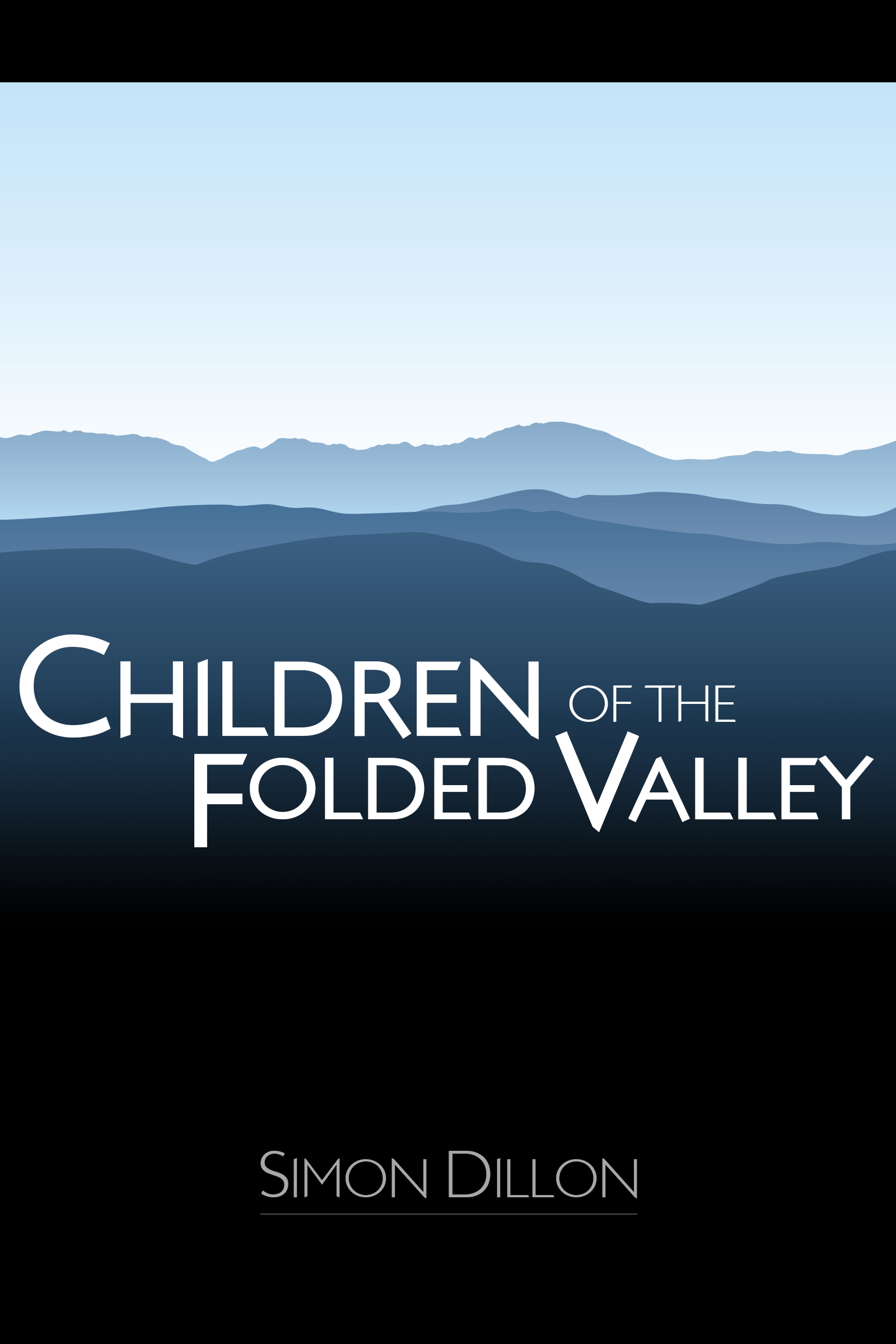
As a case in point, my novel Children of the Folded Valley presented me with a serious dilemma in early outlines. I always knew what would happen to the protagonist James Harper inwardly, but I was stuck between three different act three scenarios that would demonstrate how it happened.

(SPOILERS FROM THIS POINT FOR Children of the Folded Valley)

My earliest idea involved having James buy his model train from an older man who turned out to be Paul Crow’s long lost father. They would share a mutual catharsis in that James would explain what happened to Paul, whilst the old man presented James with the long lost train set of his childhood he had sought for so long. In this version, Paul had a much more active role in the uprising prior to the destruction of the Folded Valley, and died heroically in the fiery horror of that sequence.

I rejected this version of the ending because it placed too much emphasis on Paul Crow, who is a secondary character. Thus, he had a reprieve and survived the Folded Valley apocalypse.

I then prepared a version of the ending more or less as it is now, but shorn of the supernatural elements. Arthur Lord was not an ambiguous figure, but definitely human. However, whilst this ending worked, it still didn’t feel quite right to me. I realised that however far-fetched it might seem, my own belief in the supernatural meant the ending required something a little more mysterious.

Subsequently I arrived at the ending as it is now, which can be read a number of ways. I do not presume to offer any correct interpretation, as I designed it so the reader can make up their own minds. This element of the plot was a big worry to me initially, but given how much readers have embraced the novel it seems I was correct in devising an ambiguous ending with an air of the mysterious and supernatural.

Children of the Folded Valley is available from Amazon for Kindle.


Print copies can be ordered from Lulu.com: http://www.lulu.com/shop/simon-dillon/children-of-the-folded-valley/paperback/product-21812308.html

George goes to Neptune delayed

Regular readers of this blog will know I had planned to release the final novel in the George Hughes series, George goes to Neptune, in the early part of this year.

However due to various circumstances, some of which are beyond my control, George goes to Neptune will now be released later in the year, in or around the month of October.

I am very sorry if you were waiting for this book. I can confirm the novel is finished and ready to go. so rest assured that it will be released this year. You’ll just have to wait a little longer to find out exactly what that epilogue at the end of George goes to Titan was all about.

Are you a “process” writer or a “product” writer?

My wife, who is a knitting enthusiast, recently made me aware of an article that asked whether people were a process or product knitter. The point being, do people knit to achieve the end product, or for the joy of the process itself.

That got me wondering whether or not the same was true for writers. Do I write because I love the process or because I am keen to have a finished product?

I imagine the answer will be different for every writer, and in many cases it will be a mixture of both. For me, I write because I feel an addiction to the process. Yet at the same time, I am always keen for the process to be finished, particularly the first draft. Although I do enjoy the process, I prefer to write quite quickly, otherwise nagging self-doubt and what I call George McFly syndrome (“what if they think I’m no good? I just can’t take that kind of rejection”) sets in.

After I have written something I am particularly pleased with, I miss the characters and worlds I have created, and am loathe to say goodbye to them. Obviously I do want people to enjoy the finished product, and I am very happy when they do (for instance, the success of Children of the Folded Valley was most gratifying), but once I have finished a story it isn’t long before I begin the next.

The process, as I said earlier, is just too addictive, too compulsive, too much fun for me to stay away from for any length of time. I suppose overall that makes me a process writer, although that isn’t to say I’m not proud of an ever growing product pile.

Research: How far is too far?

Some writers have, in the course of their careers, reached a terrifying and occasionally impassible point when they realise they have nothing left to say. I’m not merely talking about writer’s block. I’m talking about the inability to write or even get fired up about any future project.

Truman Capote is a particularly stark example of someone who reached the end of himself in this respect. The book that provoked this (to my mind) horrifying state of affairs was In Cold Blood, published in 1966. Why after penning such a seminal text was Capote unable to write another full length book? There were short stories that followed, the odd television screenplay, and attempts at longer works (with one early novel published posthumously), but it is definitely true to say that he was never the same man after In Cold Blood. The question is why?

5274238266_210f7d4470_z-1gphpwo

In Cold Blood details the appalling true story of the how the Kansas Clutter family were murdered and the killers subsequently tried and executed. The events are known to the reader from the outset, so what keeps the reader interested is the rather grisly and ghoulish knowledge that at some stage the killers – mainly Perry Smith – will spill the gory details of their senseless massacre.

It was this interaction with the killers – particularly with Perry Smith – that Capote considered essential research for the book he was writing. A great book ensued, obviously. But what was the cost to him personally? Capote became increasingly obsessed with Perry. Furthermore, Capote emotionally exploited Perry to get him to talk. As a homosexual it is possible Capote felt an attraction, and used that to draw out the details he desired. Yet in spite of his feelings for Perry, Capote also knew the only thing that could bring closure to the story was the eventual execution of the killers – an event he felt compelled to witness, again for research purposes. His ambivalence over his feelings for Perry on the one hand and his obsession with completing his masterpiece on the other permanently scarred Capote, and he never wrote another book.

(Incidentally, much of this story is covered in the film Capote, for which the late, great Phillip Seymour Hoffman won an Oscar).

The lesson to be drawn from this is simple: research can be taken too far. In the same way that Lawrence Olivier took serious issue with Dustin Hoffman’s method acting during the filming of Marathon Man (when he famously quipped “Why not try acting dear boy?”), I have a similar issue with “method” research. For example, is it really necessary to become a prostitute in order to write about one? I believe it is possible to take research too far, and experience for experience’s sake will not necessarily provide any greater depth of knowledge and insight for the reader in the end product.

Besides, as can be observed from the experiences of Truman Capote, the price of such dedication can be very high. In his later life, Capote fell into a spiral of depression, turning to drink and substance abuse. He increasingly despaired of life, right up until his death in 1984.

Children of the Folded Valley FREE from Amazon Kindle – for five days only!

Get Children of the Folded Valley absolutely FREE on Kindle from Amazon – for five days only!

Starting today, my most successful novel to date can be downloaded for precisely zero pence. But hurry! You only have until the 11th January.

Here is the blurb from the back of the book:

During a journey to visit his estranged sister, James Harper recalls his childhood growing up in a mysterious valley cut off from the outside world, as part of a cult called the Folded Valley Fellowship.

In this seemingly idyllic world, the charismatic Benjamin Smiley claimed to be protecting his followers from an impending nuclear apocalypse.

But the valley concealed a terrifying secret.

A secret that would change Smiley’s followers forever.

Here is a sample of the many raves reviews (mainly from the Amazon page):

“I don’t usually leave reviews but I felt so strongly about encouraging people to read this fantastic book. It had me captured from start to finish. At one stage in the book I actually thought it was a true story.” – Paul, Amazon.

“The use of re-written religious doctrine to control, govern and frighten is particularly chilling… Full marks to Simon Dillon for this creative and highly readable novel.” – Around Robin, Amazon.

“Creepy and unnerving. Kept me gripped the whole way through.” – Lucyboo, Amazon.

“I couldn’t put it down.” – Bukky, Amazon.

“Really well written, well thought through, compassionate… Full of empathy.” – Over, Amazon.

“So well written, you could believe it was a memoir.” – Shelley, Amazon.

“A perturbing and very original story… The ending is magnificent.” – Joan, Goodreads.

Of course, if digital books aren’t your thing, print copies can be ordered here: http://www.lulu.com/shop/simon-dillon/children-of-the-folded-valley/paperback/product-21812308.html

Enjoy!

Happy New Year

2015 New Year celebration

What does 2015 hold? Well, as far as my writing and publishing plans are concerned, quite a bit.

First I am planning to release the third George Hughes adventure, George goes to Neptune, probably in March. The precise date will be confirmed on this blog very soon.

I spent much of last year writing George goes to Neptune, and I think it’s pretty good. Those who enjoyed the previous stories, George goes to Mars and George goes to Titan will definitely enjoy this finale, which brings George’s adventures to a close. It is as action packed as the previous books, but this one is a little bit darker and deeper, with George faced with his greatest challenge yet.

I am 99 percent certain there will be no further instalments in the George Hughes series. I may yet choose to pen a spin-off with different characters set in the same universe, but I make no promises on that score.

What I do promise however, is that I will finally release a novel I have had on my shelf since I wrote it in 2006, entitled Love vs Honour. Like Children of the Folded Valley, this is another story that came frustratingly close to mainstream publication, and I have held on to it for some time as a result – mainly, as with Children of the Folded Valley, out of George McFly style nerves.

Love vs Honour is a complete departure for me: a romantic drama aimed at the Fault in Our Stars young adult market (though not about terminal illness). It resides well outside my comfort zone in terms of subject matter, and could also prove controversial to some readers, for reasons that will be revealed later this year.

Obviously I will also continue to write in 2015, and aim to complete another two novels that I have begun to scribble a few outlines for. The first is a dark fairy tale involving, well, fairies. The second is a supernatural horror thriller more aimed at grown-ups, and all I am prepared to reveal at this point is that it will provide a variation on the haunted house genre to which I am somewhat partial.

Don’t forget you can download or get print copies of all my previous novels – Uncle Flynn, George goes to Mars, George goes to Titan, Dr Gribbles and the Beast of Blackthorn Lodge, Children of the Folded Valley and The Birds Began to Sing. Just click the About the Books tab at the top of this page for more information.

Happy New Year!

Christmas Presents! FREE E-BOOKS for five days only!

Since its Christmas, I have made three of my novels FREE for download on Kindle at Amazon – for five days only! This offer is available in all markets, so whatever part of the world you are from, check out your local Amazon page (the links below are to the UK site).

The FREE novels are:

1) The Birds Began to Sing – a gripping thriller that draws inspiration from Agatha Christie, Daphne Du Maurier, Sir Arthur Conan Doyle, Susan Hill, the Bronte Sisters and Michael Crichton, but also unique in it’s own right – at least according to early reviews. One reader at Barnes and Noble praised it thus: “Mystery, drama, conspiracy theory, and some supernatural intrigue. A real page turner!”

From the back of the book:

When aspiring novelist Alice Darnell enters a competition to write the ending for an unfinished manuscript by late, world famous author Sasha Hawkins, it appears she might have her big break at last.

However, upon arrival at Sasha’s former home – the sinister Blackwood House – Alice is unsettled by peculiar competition rules, mysterious dreams and inexplicable ghostly visions. She begins to question her sanity as she is drawn into a terrifying web of deceit, revenge and murder.

2) Dr Gribbles and the Beast of Blackthorn Lodge – a gripping and scary tale involving spies, monsters, haunted houses, mad scientists and lots more besides, with one reviewer at Barnes and Noble calling it a “fantastic read”.

From the back of the book:

September 1987.

Curiosity lands Tim Rawling in a world of secrets, spies and a desperate race against time.

The haunted house, the monster and the mad scientist are only the beginning of a terrifying adventure.

3) Uncle Flynn – a thrilling treasure hunt adventure that’s “for adults too” (Simon Smith, Amazon).

From the back of the book:

When timid eleven year old Max Bradley embarks on a hunt for buried treasure on Dartmoor with his mysterious Uncle Flynn, he discovers he is braver than he thought.

Together they decipher clues, find a hidden map and explore secret tunnels in their search. But with both police and rival treasure hunters on their tail, Max begins to wonder if his uncle is all he seems…

Head over to Amazon, and download your FREE Kindle books now! But make sure you do it before the 29th.

Happy Christmas from Simon Dillon Books!

2014 in review

I hope this post doesn’t come off as smug and annoying, but I can’t help but feel a little pleased at what I’ve achieved from a writing perspective this year. I am the kind of writer who sets very clear, long term goals, and whilst I don’t always achieve them, it is great when I do.

Folded Valley cover

Back in January, on New Year’s Day to be precise, I said I would release two, possibly three novels this year. I ended up releasing three, because I finally summoned the courage to cut the umbilical from Children of the Folded Valley, my first “grown-up” novel, and without a doubt my most “personal” work to date.

Children of the Folded Valley was an unexpected success (in relative terms), proving again that sometimes it is best to trust one’s instincts. This was a novel that came close to mainstream publication, though in the end that didn’t quite come off, partly due to certain compromises I wasn’t prepared to make. Furthermore, I had great doubts over the subject matter, first person narrative and ambiguity of the finale, all of which kept me clinging onto the manuscript, fearing what people might think of it. Yet in the end, all such George McFly style worry proved ill-founded. Given the fantastic reviews on the Amazon page, it seems readers have well and truly embraced the novel.

The Birds Began to Sing_1600x2400_Front Cover

Of course, Children of the Folded Valley wasn’t my only output this year. Dr Gribbles and the Beast of Blackthorn Lodge and The Birds Began to Sing were also released – the former a scary, outrageous adventure for young and old alike, and the latter a gripping mystery thriller for grown-ups.

DrGibbles_1600x2400_front cover

In between these releases I have been writing in earnest and have penned another two novels, including the (probably) final entry in the George Hughes series, George goes to Neptune, which will be released next year.

I also wrote The Thistlewood Curse, a supernatural mystery for grown-ups that takes place entirely on Lundy Island. I am not sure whether I will submit this one for mainstream publication or release it myself, but I will probably decide one way or the other next year.

So that was my 2014, writing wise, in a nutshell. Perhaps it did sound a bit smug in the end. As for what I am up to in 2015, watch this space…