Quality vs Quantity

To_Kill_a_Mockingbird

How important is it to be prolific?

For some, one great novel is enough. Harper Lee’s To Kill a Mockingbird is an obvious example. But if you are writing as a career, just one novel isn’t going to put food on the table. What then? Should everything you write be considered a masterpiece?

Agatha Christie and Enid Blyton were both hugely prolific. Was everything they wrote gold? No, but some of it was. I wonder just how much of the great stuff would have emerged had they not been as prolific (and therefore practiced) as they were. Although they both enjoyed writing, they wrote for a living, to survive. William Shakespeare was the same. He churned out play after play to pay the bills.

No-one argues the greatness of Shakespeare, but I despair of the snobby attitude some display towards Blyton and Christie – not just because they wrote genre fiction, but because they churned it out so regularly. Personally, I consider Five goes to Smuggler’s Top (Blyton) and Murder on the Orient Express (Christie) amongst the best books ever written.

Obviously all writers are different. Some have a sparser body of work, others write more. But being prolific does have one big advantage: whatever your successes or failures, you continually improve as a writer.

In Defence of Genre Fiction

I have never been able to abide the snobbery that exists in some literary circles regarding genre fiction. For example it dismays me that anyone can dismiss The Lord of the Rings because of some pretentious, elitist literary ideal that completely disregards Tolkien’s extraordinary, ground-breaking achievement. Even if you hate The Lord of the Rings, it is undeniably a landmark of literary fiction. It is a masterpiece.

lotr

Yet in certain elite circles there still seems to be snootiness not just about fantasy writing but genre storytelling in general. In the same way that Oscar voters often disregard genre movies and typically pick winners that are worthy but dull, Booker prize winners are sometimes (but not always) of a similar ilk. By contrast, an examination of the bestselling books of any given year will provide a list that includes many genre writers – many of whom have also been dismissed by the so-called literary elite – that are clearly beloved by the general public.

In my view, genre writing at its best is just as important as any so-called serious literary endeavour – if not more so. Authors who master genre bring just as much piercing insight into the human condition. The difference is they often do so far more entertainingly and therefore far more effectively.

Sticking with The Lord of the Rings as an example, that novel is not just about a bunch of hobbits trying to chuck a ring into a volcano to destroy an evil Dark Lord. It contains profound insights into the horrors of war, the nature of good and evil, friendship and – in my opinion most importantly – growing up. There is more “truth” in The Lord of the Rings than in many non-genre texts that these elitists seem to prefer.

Germaine Greer once dismissed The Lord of the Rings as “Nazi tosh” on the BBC. She was then challenged by the presenter as to whether she had actually read the book, and forced to admit she hadn’t. Leaving aside the fact that Greer’s ridiculous comment can be disregarded because she hadn’t read the book, accusing Tolkien of being a Nazi sympathiser is profoundly offensive to the memory of the great man. This is particularly galling considering his own well-documented condemnation of Hitler as a “ruddy ignoramus” and the way he told publishers that a German version of The Hobbit could “go hang” because he refused to sign a piece of paper saying he had no Jewish relatives.

Yet this kind of smear, not to mention snobbery about texts like The Lord of the Rings, still seems to persist in these elite literary circles. Other fantasy authors besides Tolkien have suffered a similar fate, with JK Rowling being particularly singled out by some, in spite of the fact that her Harry Potter canon is unquestionably an extraordinary achievement. This snobbery isn’t just directed at the fantasy genre either. Romance, thrillers, whodunnits, science fiction, horror and other subgenres are also routinely dismissed as lowbrow by the literary elite.

Of course, in one sense this doesn’t matter. Genre fiction remains as popular as ever, and the authors are justifiably rewarded. Yet this snobbery really sticks in my craw. Somehow when the literary elite have a go at one of my favourite books (such as The Lord of the Rings), it feels like they are having a go at a friend. Therefore I feel honour bound to go on the defensive.

Incidentally, my most recent novel The Birds Began to Sing touches on the power of the written word in general, and the power of genre writing specifically. Click on the link below to order on Kindle from Amazon.

Print copies are also available from Lulu.com:

http://www.lulu.com/shop/simon-dillon/the-birds-began-to-sing/paperback/product-21878694.html

The Birds Began to Sing – Print copies now available

Print copies of my new novel, The Birds Began to Sing, are now available from Lulu.com. Click below to place an order.

http://www.lulu.com/shop/simon-dillon/the-birds-began-to-sing/paperback/product-21878694.html

The Kindle version can also be bought at Amazon:


Various other downloadable formats are available from Smashwords FREE for a limited time:

https://www.smashwords.com/books/view/487865

The Birds Began to Sing is page-turning mystery novel influenced by the likes of Agatha Christie, Daphne Du Maurier and Sir Arthur Conan Doyle, with a dash of Susan Hill, the Bronte Sisters, Michael Crichton and obviously a lot of yours truly.

Once more, here is the blurb from the back of the book:

When aspiring novelist Alice Darnell enters a competition to write the ending for an unfinished manuscript by late, world famous author Sasha Hawkins, it appears she might have her big break at last.

However, upon arrival at Sasha’s former home – the sinister Blackwood House – Alice is unsettled by peculiar competition rules, mysterious dreams and inexplicable ghostly visions. She begins to question her sanity as she is drawn into a terrifying web of deceit, revenge and murder.

The Birds Began to Sing – OUT NOW

My new novel, The Birds Began to Sing, is now available for Kindle from Amazon. Check out the link below.

It is also available from Smashwords, in various downloadable formats:

https://www.smashwords.com/books/view/487865

Print copies will be available from the 2nd of November.

The Birds Began to Sing is my second novel for grown-ups. It is a mystery thriller that draws upon the rich history of the genre and its key writers (Agatha Christie, Sir Arthur Conan Doyle and so forth), whilst hopefully representing something interesting and original in its own right. Essentially I just wanted to write an unpretentious, page-turning mystery that grabs the reader and doesn’t let go.

Here again is the blurb from the back:

When aspiring novelist Alice Darnell enters a competition to write the ending for an unfinished manuscript by late, world famous author Sasha Hawkins, it appears she might have her big break at last.

However, upon arrival at Sasha’s former home – the sinister Blackwood House – Alice is unsettled by peculiar competition rules, mysterious dreams and inexplicable ghostly visions. She begins to question her sanity as she is drawn into a terrifying web of deceit, revenge and murder.

I hope you enjoy the book.

The Birds Began to Sing – Dedication

The Birds Began to Sing_1600x2400_Front Cover

Most of my books are dedicated to individuals, normally family members. My new novel The Birds Began to Sing is dedicated to my wife, Zara – mainly because of her love for mystery thrillers, and also because she puts up with all my artistic hissy fits, “George McFly” moments and generally because she is fantastic.

As I have explained previously, the novel draws inspiration from a number of genre writers, including Agatha Christie, Daphne Du Maurier and Sir Arthur Conan Doyle, as well as horror stories such as Susan Hill’s The Woman in Black and the gothic romances of the Bronte sisters. But I believe it is also a unique story in its own right, and obviously I hope you enjoy it. I know Zara did, so that in itself is a high recommendation.

Here’s the blurb from the back of the novel:

When aspiring novelist Alice Darnell enters a competition to write the ending for an unfinished manuscript by late, world famous author Sasha Hawkins, it appears she might have her big break at last.

However, upon arrival at Sasha’s former home – the sinister Blackwood House – Alice is unsettled by peculiar competition rules, mysterious dreams and inexplicable ghostly visions. She begins to question her sanity as she is drawn into a terrifying web of deceit, revenge and murder.

The Birds Began to Sing is released on the 27th of October in various downloadable formats. It can be pre-ordered from Amazon (see link below).

Print copies will be available from the 2nd of November.

An excerpt from The Birds Began to Sing

The Birds Began to Sing_1600x2400_Front Cover

Here is an excerpt from my upcoming novel The Birds Began to Sing. This scene takes place in chapter 5, after aspiring writer Alice Darnell is offered the chance to enter a mysterious writing competition by her new agent, Isaac King.

“Isaac sat at his desk and indicated for Alice to sit on the chair opposite.

‘Alice, thank you for coming in today. Before I proceed, I’m afraid I have to ask you to sign this non-disclosure agreement. Everything we discuss today must be considered confidential until it is officially announced to the press.’

‘I understand,’ said Alice.

Isaac handed Alice a piece of paper which she read hurriedly. It seemed to be a standard non-disclosure contract, explaining that the business they were about to discuss was not to be revealed to any journalists and so forth. Alice wondered what all the secrecy was about and why a simple competition would be considered newsworthy. This wasn’t going to be televised surely? She hoped she hadn’t got herself into some kind of reality television programme for wannabe writers.

After signing the paper, Isaac began to explain in more detail about the competition.

‘Alice, I take it you have heard of Sasha Hawkins?’

‘Of course.’

‘She was our most lucrative client. Her death was a tremendous blow both to this agency and to Ravenhead Publishing.’

‘I can imagine.’

Sasha Hawkins had died just over a year ago in a car accident somewhere in the West Country. Alice remembered when this tragedy had been splashed all over the news. It had come as a huge shock, as Sasha Hawkins had been the most popular bestselling author of recent years, but had died aged just 30. She had sold her first book at 22, and had published at least one book per year since, churning out some of the most widely read and enjoyed thrillers of the last two decades. Alice had read several of her novels, and had recently even re-read some, as research during the composition of Deceitful and Wicked.

‘When she died, Sasha had almost finished her latest book, but it needed a final act to resolve the story,’ Isaac explained.

‘And now there’s to be a competition for someone to write the ending,’ said Alice.

‘Precisely. Elliot Farnham, CEO of Ravenhead, has promised the winner will get their own book published, plus obviously the Sasha Hawkins book with their new ending attached.’

‘What’s the book about?’

‘I am not allowed to tell you that yet.’

‘Why not?’

‘There are some very clear rules that have been laid out for this competition. If you wish to enter, you are not allowed to question them, but you must obey them completely and to the letter.’

Alice listened, intrigued.

‘The first of these rules is that the unfinished Sasha Hawkins manuscript will only be given to competitors under very specific circumstances. Namely, all competitors must stay as guests in the Hawkins family estate – Blackwood House on the edge of Dartmoor. Here they will have two weeks to read the book and write the ending of their choice. The best ending will be picked, and the competition will be over.’

‘Can’t you even tell me the title?’

‘The manuscript is untitled at this point.’

‘So, we have to stay at Blackwood House for two weeks, read the story and write our ending. Wow. Sounds a bit odd.’

‘Odd or not, those are the rules. Throughout the two week period of the competition, you are not permitted to leave Blackwood House or its grounds, for any reason whatsoever. If you do, you will be disqualified.’

‘What if there’s an emergency, like a family member dies or something?’

‘If you leave the grounds, you will be disqualified.’

‘That hardly seems fair.’

‘Nevertheless, those are the rules.’

‘What if you finish the ending before the two weeks are up?’

‘Then you can explore the extensive grounds to your heart’s content, or partake in any of the indoor entertainments that will be laid on for guests, but you cannot leave until the deadline expires, or you will be disqualified.’

‘Any other rules I need to know?’

‘Yes. You are not permitted any contact with the outside world for the two week duration. That includes phones, internet access and anything of that nature.’

‘But if we are supposed to write an ending, we might need to do research.’

‘You will have access to a very extensive library within Blackwood House, which should fulfil any such needs. All research will have to be done the old-fashioned way, with real books.’

Isaac smiled.

‘That’s fine by me,’ said Alice. ‘I always prefer to do that anyway. The internet and portable reading devices are all very well, but I’d rather feel and turn physical pages. Anything else I need to know rule-wise?’

‘You can receive written messages from outside, but you are not allowed to respond to them. Anything you suddenly and legitimately require, such as medication, will be sent for and delivered by courier. There will be an on site doctor, but if anyone gets seriously ill they will have to withdraw from the competition. Obviously all expenses will be covered, and food will be laid on.’

Alice sat silently for a moment, taking in what she had heard. It all sounded utterly baffling, but also fascinating. Why were the publishers going to such extraordinary lengths to set up this competition? Why not simply commission a writer to finish the unpublished Sasha Hawkins book? It would cost a lot less, and would still be a guaranteed bestseller.

‘I’ll have to book the time off work,’ Alice said presently. ‘Can you give me the exact dates?’

‘Not yet,’ said Isaac. ‘But it will almost certainly take place in the first two weeks of December.’

‘That shouldn’t be a problem. What is Blackwood House like?’

‘It’s a large mansion situated at the edges of Dartmoor around Okehampton. The family have maintained it for centuries, although the Blackwood family name disappeared around 1870, as Lord Sebastian Blackwood had no sons. However his daughter Catherine married into another substantial family fortune when she wed James Hawkins, the Earl of Somerset. He moved into Blackwood House, and since that time there has always been a Hawkins in residence.

‘Blackwood House was originally built in medieval times, before being knocked down and almost completely rebuilt in the seventeenth century. It has been meticulously restored over the centuries. The estate does look beautiful, but it also has a slightly sinister reputation. Some even claimed to have seen ghosts within its walls.’

‘A haunted house?’

‘I don’t believe in such things. But there have been alleged sightings of ghostly apparitions. Its spooky reputation probably appealed to Sasha Hawkins given her penchant for the macabre. No doubt that was why she chose to stay there with her parents rather than move out. Perhaps she thought she could contact the ghosts herself, or at the very least be inspired by her surroundings. The Hawkins family didn’t think they needed all that space for themselves though, and the estate is very expensive to maintain. That’s why they opened the house to the public and only live in one small wing.’”

Here’s the blurb from the back of the novel:

When aspiring novelist Alice Darnell enters a competition to write the ending for an unfinished manuscript by late, world famous author Sasha Hawkins, it appears she might have her big break at last.

However, upon arrival at Sasha’s former home – the sinister Blackwood House – Alice is unsettled by peculiar competition rules, mysterious dreams and inexplicable ghostly visions. She begins to question her sanity as she is drawn into a terrifying web of deceit, revenge and murder.

The Birds Began to Sing is released on the 27th of October in various downloadable formats. It can be pre-ordered from Amazon (click link below).

Print copies will be available from the 2nd of November.

George goes to Neptune – update

People continue to ask me when the next novel in the George Hughes series will be released. To reiterate, the third – and almost certainly final – instalment in the series will be released early next year. I will announce a precise date in January.

George goes to Neptune follows George goes to Mars and George goes to Titan, rounding off what has become an unexpected trilogy. The first book was originally planned as a standalone piece, but with each sequel I have found new ideas and ways of continuing George’s adventures that people seem to have enjoyed. I hope this third novel proves every bit as exciting.

I still have a few very minor tweaks to make to the manuscript, but the bulk of the work is done and I am looking forward to releasing the finished product.

George goes to Neptune features the return of George, as well as series regulars Meredith and Giles. Most of the supporting characters will also return, though some in larger roles than others. There are also some new characters, but I will remain tight lipped on that subject for now.

As for the plot, that is also very much under wraps at present. However, here’s a brief summary of what I said last time, plus a couple of new titbits. The plot will obviously involve a voyage to Neptune, but the reasons for George’s journey are very different this time. The plot will feature Martians and yes, there will be a new alien race that George and our heroes discover. The tone is perhaps a little darker, especially towards the end of the story. George is going to face his toughest adventure yet – one that involves him confronting not only a deadly enemy but his own darkest fears.

However, rest assured that the book contains just as much action as the previous two, and that if you enjoyed them, I believe you will enjoy this one just as much.

You can catch up with the previous two installments in this series at Amazon, with George goes to Mars available FREE at Amazon.co.uk.

George goes to Mars:

George goes to Titan:

The Birds Began to Sing – About the cover

Here is the cover for my upcoming book, The Birds Began to Sing.

The Birds Began to Sing_1600x2400_Front Cover

For the design, Charles Bown – who I interviewed earlier in the year on this blog – presented me with a number of striking options, but I eventually settled on the image of a woman’s silhouette in a dark corridor as it immediately conveyed the mysterious and sinister mood of the novel. The story does feature a few sequences involving the protagonist creeping down an important sinister corridor, so that was obviously another reason for my choice.

The other options offered included stylised exteriors of Blackwood House on Dartmoor, where the bulk of the plot takes place. These images also struck the appropriate tone. However, one of my favourite designs – a stark graphic of black birds on a white background – I rejected because to me it said “highbrow, Booker Prize baiting endeavour” rather than “page-turning genre piece”. People quite understandably judge books by their cover, and it was not my intention to mislead anyone into thinking I had literary delusions of grandeur.

For the full interview with Charles Bown from earlier this year, check out the link below:

https://simondillonbooks.wordpress.com/2014/04/24/charles-bown-interview/

Also, you follow Charles on Twitter here:

@FederalCreative<https://twitter.com/FederalCreative&gt;

In addition to the cover, here is the blurb from the back to whet your appetite:

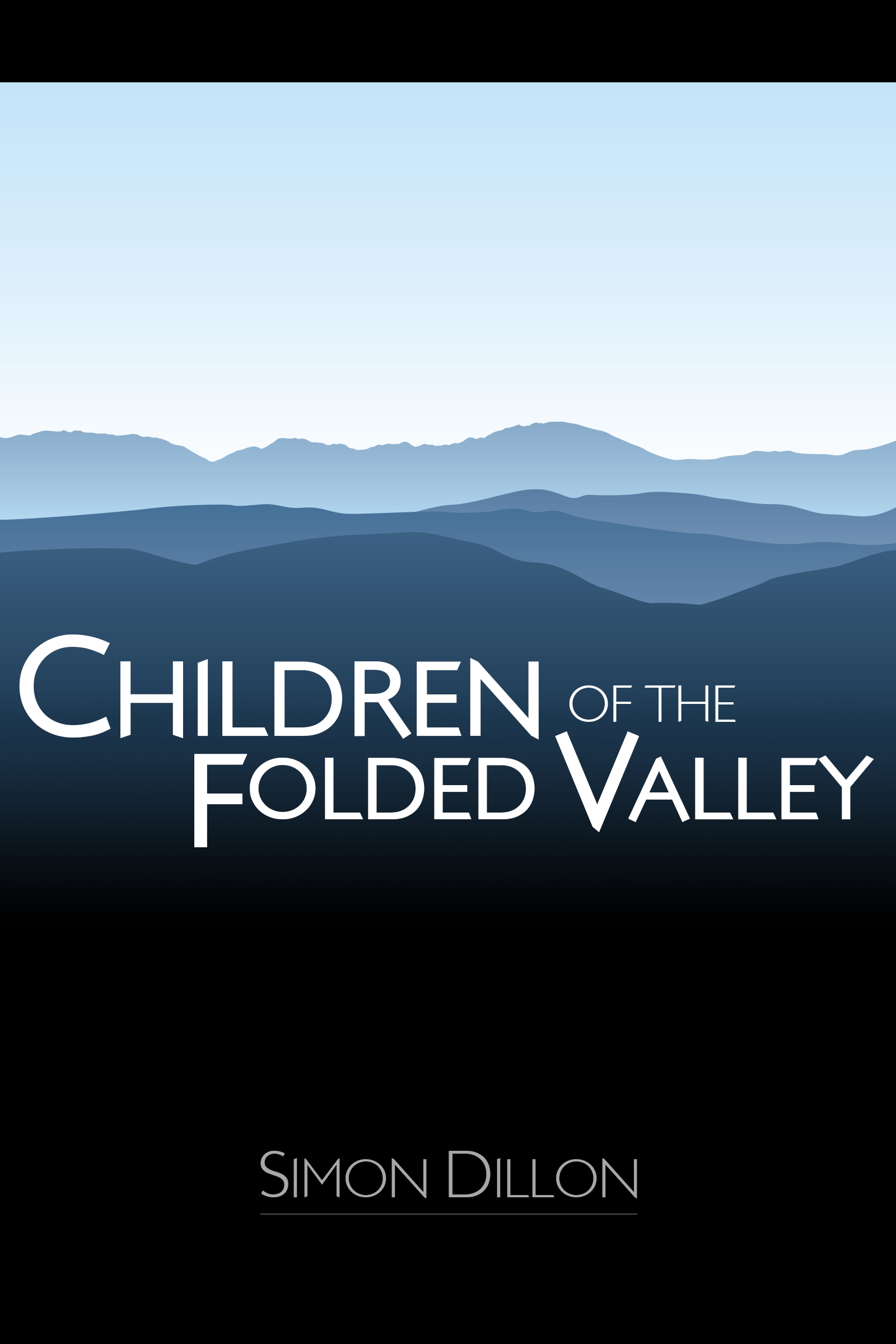
From the author of Children of the Folded Valley…

When aspiring novelist Alice Darnell enters a competition to write the ending for an unfinished manuscript by late, world famous author Sasha Hawkins, it appears she might have her big break at last.

However, upon arrival at Sasha’s former home – the sinister Blackwood House – Alice is unsettled by peculiar competition rules, mysterious dreams and inexplicable ghostly visions. She begins to question her sanity as she is drawn into a terrifying web of deceit, revenge and murder.

The Birds Began to Sing is released on the 27th of October in various downloadable formats. It is currently available to pre-order at Amazon.

Print copies will be available from the 2nd of November.

When is a book finished?

Manuscript-Editing4

I’ve read a lot of posts on other writing blogs – some of them excellent – on how vitally important it is to keep polishing work prior to submission to agents and publishers, or prior to publication if you are self-publishing. The underlying message is that however ready you might think your work is, the chances are it isn’t ready yet.

All of which is well and good, but there does come a point when tinkering is only going to make the writing worse. The trick is to know when that point is.

I think the answer is somewhat complex, as there are so many levels on which writing needs to be polished – story, characters and dialogue for starters. That’s before getting into the really detailed edit of making sure it reads well, eliminating unnecessary words and repetition, making sure adjectives are used not too much or little, eliminating adverbs except where they serve an important purpose, grammar, punctuation, etc.

The only answer I can offer is that a novel can never be perfect. The trick is to get it as close to perfection as you possibly can without going insane. Then it has to be submitted or released, regardless of what overlooked warts remain. In some cases these can be corrected subsequently (for instance, one can upload revised text to online versions), but in the end you have to move on.

Before reaching this point however, there are two very obvious things to do when you can’t see the wood for the trees. One is to get feedback from trusted people. The other is to allow a period of time to pass before you pick up your work again. I find the latter method in particular to be very effective, as the distance of time provides perspective and you can redraft with a fresh eye. Of course, the downside to this is that you cannot expect to write a novel and release it within a short space of time. You have to be prepared for your novel to sit on the shelf, perhaps for years, waiting for the moment it is finally ready for release.

I have several novels – some of which were written over ten years ago – waiting for that moment when I will be happy to finally let go of them. Others I have turned around in a relatively short space of time, simply because experience has taught me not to make the mistakes I made ten years ago that necessitated holding back my work. But if a novel simply isn’t ready, it is always better to hang on to it until the right time – whether you’ve worked on it for six months or six years.

There does come a time though, when all rewriting must end and a book must either be released or abandoned, regardless of the inevitable imperfections that remain.

NEW NOVEL ANNOUNCEMENT: The Birds Began to Sing – available for pre-order!

This October I am releasing another novel, The Birds Began to Sing. It is available to pre-order from Amazon (see link below).

This is the second book I have released aimed at grown-ups, and represents the closest I’ll ever get to an Agatha Christie, murder-in-a-country-house type story.

Here is the blurb from the back of the book:

When aspiring novelist Alice Darnell enters a competition to write the ending for an unfinished manuscript by late, world famous author Sasha Hawkins, it appears she might have her big break at last.

However, upon arrival at Sasha’s former home – the sinister Blackwood House – Alice is unsettled by peculiar competition rules, mysterious dreams and inexplicable ghostly visions. She begins to question her sanity as she is drawn into a terrifying web of deceit, revenge and murder.

The Birds Began to Sing draws inspiration not only from Agatha Christie, but also Sir Arthur Conan Doyle’s Sherlock Holmes stories, gothic romances from the Bronte sisters (especially Jane Eyre), Daphne Du Maurier (particularly Rebecca), as well as ghost stories such as Susan Hill’s The Woman in Black and conspiracy thrillers from authors like Michael Crichton.

I thoroughly enjoyed writing with this book, as it was a joy tinkering with the conventions of the genre whilst crafting a mystery thriller that is hopefully original and interesting in its own right.

The Birds Began to Sing is released on the 27th of October in various downloadable formats. Pre-order your copy now!

Print copies will be available from the 2nd of November.