Download the entire George Hughes Trilogy FREE – for five days only!

The George Hughes trilogy is a thrilling, action-packed space tale set just over a hundred years in the future. Each story is a stand-alone adventure, but I recommend reading the novels in order nonetheless, as they do follow on from one another.

All three can be downloaded FREE from Amazon Kindle during the next five days.

Also, I must emphasise, these books are not just for children. Adult readers have found plenty to enjoy too (especially those who have picked up on some of the subtexts).

Here is the blurb from the back of George goes to Mars:
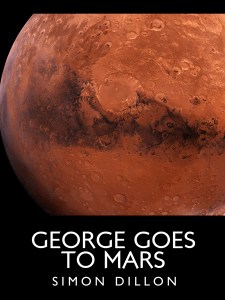
GGTM_600px

When George Hughes discovers he has inherited the planet Mars, he goes from poverty to becoming the richest boy on Earth overnight.

Accompanied by his new guardian, a mysterious secret agent and a crew of astronauts, George voyages to Mars to sell land to celebrities wanting to build interplanetary holiday homes. But sabotage, assassination attempts and the possibility of an alien threat plunge him into a deadly adventure…

Here is the blurb from the back of George goes to Titan:

GGTT cover

The thrilling sequel to George goes to Mars…

A year on from his adventures on Mars, George Hughes faces an even deadlier peril as he travels to Titan on an urgent rescue mission. The mysterious Giles returns to help him, but assassins are once again on his tail, and a new, far greater alien menace lurks in the shadows waiting to strike.

Here is the blurb from the back of George goes to Neptune:

GGTN 1600 x 2400

In this spectacular sequel to George goes to Mars and George goes to Titan, George Hughes faces his most dangerous adventure yet.

Following the Titanian invasion, a deadly and very personal threat forces George to undertake a voyage to a top secret Martian research base on Neptune.

On this remote outpost, he uncovers a diabolical plot. But George is too late to prevent the catastrophe.

A catastrophe that will change his life forever…

Here are a couple of reviews from adults:

“A thoroughly enjoyable read” – Mark, Amazon.

“Reading like a cross between one of Edgar Rice Burroughs’ pulpy Mars adventures and a Robert Heinlein ‘juvenile’, this improbable yarn (just how many “saved in the nick of time” coincidences can one novel contain?) about a rags-to-riches-to-hero boy named George was nonetheless page-turningly entertaining. Perfect rainy day/sick day reading.” – Elizabeth Olson, Goodreads.

And here some thoughts from the target audience (at least I assume so, given the tone of their reviews):

“This was totally amazing! Involves space ships, aliens and more! A totally exciting adventure you’ll love!” – Anonymous, Barnes and Noble.

“Pure awesomeness! Packed with suspense and adventure, as well as LOTS of action!” – Anonymous, Barnes and Noble.

“Best book ever!” – Anonymous, Barnes and Noble.

The George Hughes trilogy can be downloaded FREE here (book 1), here (book 2), and here (book 3). Print copies (not free, alas) can be ordered here (book 1), here (book 2) and here (book 3).
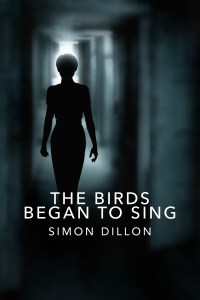
The Birds Began to Sing FREE to download on Amazon Kindle – for five days only!

For five days only The Birds Began to Sing is available to download FREE from Amazon Kindle.

The Birds Began to Sing_1600x2400_Front Cover

The Birds Began to Sing is a gripping, page-turning mystery novel. I drew inspiration from Agatha Christie, Daphne Du Maurier, Sir Arthur Conan Doyle, Susan Hill, the Bronte Sisters and Michael Crichton but I hope you will agree it is also singular and original in its own right.

Here is the blurb from the back of the novel:

When aspiring novelist Alice Darnell enters a competition to write the ending for an unfinished manuscript by late, world famous author Sasha Hawkins, it appears she might have her big break at last.

However, upon arrival at Sasha’s former home – the sinister Blackwood House – Alice is unsettled by peculiar competition rules, mysterious dreams and inexplicable ghostly visions. She begins to question her sanity as she is drawn into a terrifying web of deceit, revenge and murder.

Some review snippets:

“Mystery, drama, conspiracy theory, and some supernatural intrigue. A real page turner!” – Anonymous, Barnes and Noble.

“An excellent psychological thriller…” – Steve B, Amazon.

“Well written, poetic in places, funny at times and with a plot that will keep you turning the pages…” – Al Gibson, Amazon.

“Properly chilling…” – Alice R Brewer, Amazon.

“This was really a great read and I loved the twist. Did not expect it at all.” – Jennifer, Amazon.

The Birds Began to Sing can be downloaded FREE here. Print copies (not free, alas) can be ordered here.


The Thistlewood Curse delayed

Delays are dull things to have to announce. Nonetheless, with regret my new novel The Thistlewood Curse isn’t quite ready to be unleashed on the world as soon as I had hoped. I do however still hope to have it ready for release at some point in 2016.

A supernatural thriller set almost entirely on Lundy Island, The Thistlewood Curse begins with an unofficial investigation into a mysterious sudden death, before evolving into a tale of astral projection, witch covens and ghosts. I am hesitant to label the novel as horror for fear of turning off potential readers, but by the time act three is reached, it has become a horror story.

The main reason for the delay is I have decided that whilst the book is in pretty good shape, I would like to take one final pass at the text and that will require a little more time. Obviously I don’t like to release my novels until I am fully satisfied with them, so I hope you will forgive me.

In the meantime, if you fancy a gripping gothic mystery, albeit a shade less horrific than The Thistlewood Curse, check out my earlier novel The Birds Began to Sing from Amazon. Print copies can be ordered from Lulu.

The Birds Began to Sing_1600x2400_Front Cover

Here is the blurb from the back cover:

When aspiring novelist Alice Darnell enters a competition to write the ending for an unfinished manuscript by late, world famous author Sasha Hawkins, it appears she might have her big break at last.

However, upon arrival at Sasha’s former home – the sinister Blackwood House – Alice is unsettled by peculiar competition rules, mysterious dreams and inexplicable ghostly visions. She begins to question her sanity as she is drawn into a terrifying web of deceit, revenge and murder.

Horror or Supernatural Thriller?

The Birds Began to Sing_1600x2400_Front Cover

I often hear the words “I don’t like horror” when actually what the person means is they don’t like films such as Hostel, Saw and so forth. Horror is actually a very broad category with multiple subgenres, and many stories not classed as horror contain elements of these. Of course, the horror genre has always been disreputable to a certain extent, though I observe that over time stories initially considered beneath contempt by a certain elite, or by moral guardians, can eventually become classics.

One only has to cite novels such as Dracula or Frankenstein to support this argument. Horror novelists such as Stephen King are also a case in point. In movies, the likes of Sam Raimi’s Evil Dead or William Friedkin’s The Exorcist, both banned in the UK during the video nasties scare, are now considered classics of the genre.

So what is horror? Some would say any story that horrifies can be considered horror, but I don’t agree. For example, a drama about the Holocaust would not be classed as horror, but I can’t think of anything more horrifying. Does that make Schindler’s List or Son of Saul horror movies in the genre sense? I would say not.

Like film noir, horror has a certain atmosphere and particular iconography that defines it as a genre. But the overall emotion experienced by the reader or viewer, regardless of whether the outcome is positive or negative, must be an escalating and suspenseful sense of fear or dread. It does not, however, necessarily mean the story will contain buckets of gore (although it sometimes can), and again whenever I hear the “I don’t like horror” line, often that is what is being objected to.

I suppose my frustration with those who dismiss the horror genre outright comes from the knowledge of what they are missing. For example, The Babadook – my favourite film of 2014, and the best horror film this decade to date – has so much power, catharsis and compassion for those suffering with guilt and grief that I hate not being able to recommend it to certain people.

However, I have discovered there is a way out of this predicament. In certain cases, these stories could equally be labeled as different genres. For example, Psycho, or more recently Green Room, could easily be classed as thrillers. Alien could be classed as science fiction. William Friedkin famously claimed The Exorcist was not a horror film, but a supernatural drama, and I would fervently argue that case could also be made for The Babadook or The Sixth Sense.

I have written a number of novels I intend to release over the next few years – including my soon to be announced The Thistlewood Curse – which could easily be lumped in the horror category. But I don’t want to unfairly limit my readership, especially as I genuinely think they would fit better under the “supernatural thriller” label; a category which also applied to my earlier novel The Birds Began to Sing, though that does also contain horror elements.

To date, those who have read and enjoyed The Thistlewood Curse do not think I should limit my readership by describing it as “horror”, even though it is ultimately, in my mind at least, a horror story. As I discuss the novel in the upcoming weeks on this blog, I shall try to be careful to clarify what I mean in this respect.

Grown-Up Scooby Doo

I once wrote a ghost story short film for a friend to direct, which he affectionately dubbed “Grown-up Scooby Doo”. This phrase recently returned to my consciousness when attempting to describe some of my supernatural thriller novels.

For example, The Birds Began to Sing definitely falls into this category, because whilst it is emphatically for grown-ups, many of the Scooby Doo conventions are contained therein.

The Birds Began to Sing_1600x2400_Front Cover

For a start, The Birds Began to Sing features a central (possibly) ghostly mystery, and a plucky protagonist determined to get to the bottom of it. Solving said mystery involves a great deal of suspenseful creeping around shadowy corridors. This activity in any spooky setting, whether gothic mansion (as in The Birds Began to Sing) or even a modern London office building (as in my as yet unreleased novel The Irresistible Summons) is an essential component of Grown-up Scooby Doo (as opposed to “Adult Scooby Doo” which has altogether different connotations).

Other conventions of Grown-up Scooby Doo include the obligatory unmasking of the villain. Although the villains of The Birds Began to Sing and The Irresistible Summons are not literally unmasked, their position as villains are essentially unconfirmed until late in the narrative, much like any whodunit, but more importantly, much like Scooby Doo.

My soon to be released novel The Thistlewood Curse might be a detective story/supernatural thriller/horror hybrid, but again it unquestionably falls within the purview of Grown-up Scooby Doo, a term which I feel really now ought to be an official subgenre. Describing a novel as “Grown-up Scooby Doo” informs the reader that whilst the novels may contain more disturbing or serious elements, the mechanics at least will be puzzling, gripping and fun.

Download Love vs Honour FREE

For five days only, you can download Love vs Honour for FREE from Amazon Kindle!

LvsHonour 1600 x 2400

I wrote Love vs Honour almost ten years ago and sat on it for some time, as it lay outside my usual genre fiction writing. Certainly young adult romantic drama isn’t something I specialise in, yet the story felt so strong in my mind, I had no choice but to ultimately release the novel.

It begins as a boy meets girl story, with a potentially controversial religious twist. It then evolves into a drama of deception, with many twists, turns and ironies, before a much darker finale which has taken some readers by surprise. I must emphasise that this novel is as much for grown-ups as teenagers, as the subject matter is not just romantic but embraces a number of complex and hopefully thought-provoking themes and ideas. I cannot say too much more for fear of spoilers.

Here is the blurb from the back of the book:

Two Religions. Two Deceptions. One Love.

When Johnny meets and falls in love with Sabina, their bond proves stronger than a teenage holiday fling.

Fearing the disapproval of their strict Christian and Islamic families, they undertake an elaborate deception to continue seeing one another. Johnny pretends to convert to Islam whilst Sabina pretends to covert to Christianity to appease their parents.

But how long can this deception last before it unravels?

Here are a few review snippets:

“This book is one of the few that made me cry. I love it.” – Splufic, Goodreads.

“The premise of a Christian and a Muslim pretending to convert to each other’s religion to be with each other for the sake of pure, unadulterated love creates a strangely addictive narrative.” – Graeme Stevenson, Amazon.

“The ending of the book really made the whole thing. I kept wondering where this was headed, if it was an apologist piece or would go to a more realistic place. I won’t spoil the ending except to say, read this book. It is surely worth your time!” – DM Miller, author The Religion of the Heart and The Agony of the Heart.

If you want to purchase a print copy of Love vs Honour, you can order from here.

Post book blues

studies

When putting the finishing touches to a novel, I experience a brief moment of euphoria, followed by an alarming feeling of emptiness. This occurred again recently, as I finished the second draft of my most recent novel, The Deviant Prophet.

I call this feeling post book blues, and I expect the feeling applies to all artists, not just writers. Having put your heart and soul into a project, having undergone a lengthy mental journey with imaginary characters, one suddenly has to say goodbye to these characters. The problem is, by then I have often fallen in love with them, and don’t want to say goodbye.

There is, however, a cure: go onto the next project as soon as possible. I normally have my next three novels lined up in any case, but I appreciate some writers do not operate that way. I have a great deal of sympathy for anyone in such a predicament. Mercifully, I don’t typically have that problem. Otherwise, I think might sink into despair. Writing can be so addictive. Writing is like heroin.

Ultimately, if experiencing post book blues, I have to ask the question, why do I write? In my case, it is to silence the voices in my head by putting them on paper. Furthermore, it is because I have a pathological need to entertain. There is no better feeling in the world than knowing your story has brought pleasure to the reader (or even displeasure, because if so you have nevertheless got under the skin of the reader).

In such cases, a book can be like a gift that keeps on giving. That is the author’s greatest reward.

What have I been up to lately?

rewrite

Some of you might be wondering when I am releasing my next book, or what I am currently working on. My apologies for the lack of news on that front lately. The problem with writing is it sometimes occupies the mind at the expense of remembering to communicate properly on the blog.

At any rate, besides writing obvious April Fool posts about giant spiders, I have been working on a new novel, tentatively entitled The Deviant Prophet. I have almost finished a second draft. It is a grown-up fantasy tale, tonally akin to something like Pan’s Labyrinth. Other influences I would cite include Coraline, Alice in Wonderland and Spirited Away. It has been a very interesting novel to write, as it functions as a kind of companion piece to Children of the Folded Valley on a thematic level, if not a genre level.

I am about to start work on my second novel for 2016, something that has been gestating in my consciousness for since late 2012. All I will say at this stage is that it is a contemporary thriller for grown-ups, and involves mysterious suitcases, a treasure hunt, a love story, Oxford and Oliver Cromwell’s New Model Army.

The next novel I plan to release is still The Thistlewood Curse. Blending elements of detective story, supernatural thriller and horror, this Lundy Island set nail-biter occupies a similar space to my previous novel The Birds Began to Sing, though it is decidedly heavier on the horror aspects. I hope to have release dates and a proper announcement very soon, so watch this space.

Good vs Evil in my novels

I have sometimes discussed the recurring themes in my novels on this blog. For example religious oppression and abuse of power are mainstays in all my work. Children of the Folded Valley is perhaps the most obvious example.

Folded Valley cover

Another key factor in my books is good versus evil. Inevitably this is born out of my Christian worldview, and since it is Easter perhaps now is a good time to reflect on this a little. For example, if I ever decide to explore the idea of good and evil being two sides of a coin, then I would prefer to think of Michael and Lucifer rather than God and Lucifer, as the afore-mentioned beings are of the same equivalent power. God by contrast is (in my worldview) far more powerful than either.

Themes of good versus evil are found in many of my favourite films and novels. Watership Down is about the price of fighting evil. The Untouchables is about refusing to compromise in the face of evil. With one key character (Snape), the Harry Potter series explores the motivations of why people stand on the side of good or evil. Then of course Star Wars and The Lord of the Rings are not only about overcoming external evil, but about overcoming the evil in oneself – or not, as the case may be.

In my own work, this latter point is something I have examined certainly in certain novels. The arc from bully to hero by one key character in the second and third novels of the George Hughes trilogy is an example. The descent into religious fundamentalism by certain characters in Love vs Honour, and the Faustian descent into murder depicted in my upcoming novel The Thistlewood Curse stand in stark contrast to this.

GGTT  GGTN 1600 x 2400  LvsHonour 1600 x 2400

Although I write antagonists with shades of grey, and include motivations, ultimately I do write from a worldview of good standing against evil, whatever the context. As I explained earlier this worldview is essentially a Judeo-Christian one, which I know stands at odds with writers who take a more anti-theist or moral relativist position. I must confess that whilst I admire many works written by such writers, I could never write like that myself, simply because it would not sound convincing. I can only write what I believe.

In short, in virtually all my stories, there is a clash of sorts between good and evil. I can’t see that changing any time soon.

The George Hughes trilogy: Hidden meanings?

Sometimes I don’t fully understand what my novels are about, deep down, whilst writing them.

Obviously I know about the story and characters, but because I don’t want to come off as preachy, I do not consciously include any “message” in my stories whilst they are being written. I often don’t understand what kind of point I am making, deep down, until after the fact.

Some might claim this makes me a bad writer, but if so I am clearly in good company. JRR Tolkien had this to say about why he wrote The Lord of the Rings: “As for any inner meaning or ‘message’, it has in the intention of the author none. It is neither allegorical nor topical. The prime motive was the desire of a tale-teller to try his hand at a really long story that would hold he attention of readers, amuse them, delight them, and at times maybe excite them or deeply move them. As a guide I had only my own feelings for what is appealing or moving.”

Later, Tolkien acknowledged that the novel did in fact have a number of things to say, regarding friendship, growing up, the treatment of the environment, the nature of war, and his own Christian faith, amongst others. Indeed, there are a great deal of “messages” and “ideas” in The Lord of the Rings. However, these were messages and ideas that were not consciously intended.

That summarises how I approach my own writing.

For example, in the case of the George Hughes trilogy, I wrote those purely because I wanted to write an exciting science fiction adventure story that children (and intelligent adults) would enjoy. The first in the series, George goes to Mars, simply launched the whole “boy inherits Mars” premise, and at the time was intended as a one-off novel.

GGTM_600px

However, subsequently readers expressed interesting ideas about what George goes to Mars was actually about, under the surface. Apparently the novel can be read as an allegory about the dangers of religious fundamentalism, and also contains strong feminist undertones. It is also, some have claimed, a parable about the need for responsible leadership. Here I must confess I did intend for George to have a character arc whereby leadership is thrust upon him, but merely as a character arc to provide a satisfying plot, not to make any great statement about the evils of corrupt leadership.

The immediate sequel, George goes to Titan, I have been told is about everything from bullying to civil rights and slavery, as well as metaphysical stuff like faith.

GGTT cover GGTN 1600 x 2400

The final novel, George goes to Neptune, I have been told is about heavy stuff like post-traumatic stress, overcoming fear, coming to terms with grief and growing up.

Again, I didn’t deliberately intend any particular message in these books, but in retrospect I have to concede that all of these readings are valid, and that in some cases, given what I was going through in my personal life when I wrote them, these interpretations make sense.