When is a book finished?

Manuscript-Editing4

I’ve read a lot of posts on other writing blogs – some of them excellent – on how vitally important it is to keep polishing work prior to submission to agents and publishers, or prior to publication if you are self-publishing. The underlying message is that however ready you might think your work is, the chances are it isn’t ready yet.

All of which is well and good, but there does come a point when tinkering is only going to make the writing worse. The trick is to know when that point is.

I think the answer is somewhat complex, as there are so many levels on which writing needs to be polished – story, characters and dialogue for starters. That’s before getting into the really detailed edit of making sure it reads well, eliminating unnecessary words and repetition, making sure adjectives are used not too much or little, eliminating adverbs except where they serve an important purpose, grammar, punctuation, etc.

The only answer I can offer is that a novel can never be perfect. The trick is to get it as close to perfection as you possibly can without going insane. Then it has to be submitted or released, regardless of what overlooked warts remain. In some cases these can be corrected subsequently (for instance, one can upload revised text to online versions), but in the end you have to move on.

Before reaching this point however, there are two very obvious things to do when you can’t see the wood for the trees. One is to get feedback from trusted people. The other is to allow a period of time to pass before you pick up your work again. I find the latter method in particular to be very effective, as the distance of time provides perspective and you can redraft with a fresh eye. Of course, the downside to this is that you cannot expect to write a novel and release it within a short space of time. You have to be prepared for your novel to sit on the shelf, perhaps for years, waiting for the moment it is finally ready for release.

I have several novels – some of which were written over ten years ago – waiting for that moment when I will be happy to finally let go of them. Others I have turned around in a relatively short space of time, simply because experience has taught me not to make the mistakes I made ten years ago that necessitated holding back my work. But if a novel simply isn’t ready, it is always better to hang on to it until the right time – whether you’ve worked on it for six months or six years.

There does come a time though, when all rewriting must end and a book must either be released or abandoned, regardless of the inevitable imperfections that remain.

NEW NOVEL ANNOUNCEMENT: The Birds Began to Sing – available for pre-order!

This October I am releasing another novel, The Birds Began to Sing. It is available to pre-order from Amazon (see link below).

This is the second book I have released aimed at grown-ups, and represents the closest I’ll ever get to an Agatha Christie, murder-in-a-country-house type story.

Here is the blurb from the back of the book:

When aspiring novelist Alice Darnell enters a competition to write the ending for an unfinished manuscript by late, world famous author Sasha Hawkins, it appears she might have her big break at last.

However, upon arrival at Sasha’s former home – the sinister Blackwood House – Alice is unsettled by peculiar competition rules, mysterious dreams and inexplicable ghostly visions. She begins to question her sanity as she is drawn into a terrifying web of deceit, revenge and murder.

The Birds Began to Sing draws inspiration not only from Agatha Christie, but also Sir Arthur Conan Doyle’s Sherlock Holmes stories, gothic romances from the Bronte sisters (especially Jane Eyre), Daphne Du Maurier (particularly Rebecca), as well as ghost stories such as Susan Hill’s The Woman in Black and conspiracy thrillers from authors like Michael Crichton.

I thoroughly enjoyed writing with this book, as it was a joy tinkering with the conventions of the genre whilst crafting a mystery thriller that is hopefully original and interesting in its own right.

The Birds Began to Sing is released on the 27th of October in various downloadable formats. Pre-order your copy now!

Print copies will be available from the 2nd of November.

Children of the Folded Valley questions and answers

Since my most recent novel Children of the Folded Valley was released, I’ve received a number of questions and comments that I’d like to address on this blog.

Is Children of the Folded Valley based on a true story?

No. Children of the Folded Valley is entirely fictional, with fictional characters, setting, plot and so on. I am surprised people have asked this, considering the science fiction elements the book contains!

Was Children of the Folded Valley rewritten and the ending changed following the death of my father?

No. The entire novel was written before my father died in May 2012, with the first draft dating back to the summer of 2011. The death of the father in the story was an essential element of the plot, foreseen from the outset. At no point did the main story change for any reason at all.

What is true is that early outlines of the story had the tone of a pulpy conspiracy thriller, told from the point of view of a journalist who stumbled into the Folded Valley and became trapped there. I subsequently decided against this approach, as I felt a more personal point of view was required. Eventually I settled on the idea of telling the story from the perspective of a child who had been born within the Folded Valley.

Does Children of the Folded Valley have some basis in experience?

To a limited degree, yes. My own experiences in a religious cult known as “the Fellowship” took place between when I was born until I was seven. Some of what took place provided inspiration for the novel, but I also drew inspiration from other parts of my life. It is important to emphasise that most of what takes place in the story is complete fabrication with no basis in real events at all.

Which incidents in the story are based on real events?

Mostly minor details. For example, my parents put up Christmas trees in defiance of the wishes of the leadership. Pretty much everything fun was banned; so no television, no cinema, no music (unless it was recorded worship music from the Fellowship meetings) or theatre trips. I wasn’t even allowed to go on school trips or attend firework nights.

Toys were at one point prohibited for no other reason than the leader wanted parents to buy their children presents from the sports shop he had set up. I can actually recall talking to God and asking him why it was so wrong for me to get the toys I particularly wanted, much as James does in the story after the train set incident. Incidentally, trains weren’t something I was particularly interested in, but my father was – hence their inclusion as a recurring motif and metaphor within the plot.

More seriously, we did at one point have an individual living with us who suffered paranoid schizophrenia, and the individual in question did once attack my mother. And yes – it is true that within the cult there were some horrific sexual abuses, financial abuses and many examples of control and isolation perpetuated by the leader. We were not permitted to see friends or relatives who were not a part of the Fellowship, so I was unaware of the many cousins, uncles, aunts and grandparents I had for many years.

Will you ever write the true story of what happened in those early years of your life?

Very unlikely, because really it is my parent’s story, not mine. But I hope people enjoy Children of the Folded Valley for what I intended it to be, namely a gripping sci-fi tinged story with a cautionary undertone about abuse of power and deception.

Children of the Folded Valley has proved something of a hit amongst readers. Given how nervous I was about 1) my first grown-up book, 2) the subject matter, 3) my first attempt at a first person narrative and 4) how people would take the ending, I am pleasantly surprised.

The book spent two weeks at the number one spot on Amazon’s free science fiction chart, and remained in the top ten for over a week on the paid chart after the free offer came to an end. Five star reviews continue to pour in from readers across the world.

The novel presently available for Kindle from Amazon:

Print copies are available from Lulu.com:

http://www.lulu.com/shop/simon-dillon/children-of-the-folded-valley/paperback/product-21732639.html

Here is the blurb from the back of the book:

During a journey to visit his estranged sister, James Harper recalls his childhood in a mysterious valley cut off from the outside world, where he grew up as part of a cult called the Folded Valley Fellowship.

In this seemingly idyllic world, the charismatic Benjamin Smiley claimed to be protecting his followers from an impending nuclear apocalypse.

But the valley concealed a terrifying secret.

A secret that would change Smiley’s followers forever.

George goes to Mars now FREE at Amazon

My earlier novel George goes to Mars is now available for Kindle FREE from Amazon.

I have been trying for some time to persuade Amazon to make this novel free, and I have finally succeeded. So please take advantage of this opportunity and download the book now. And if you like it, please do leave a one-liner review (or a longer review if you prefer) on Amazon to say so.

George goes to Mars is a thrilling read for young and old alike. It is the first part of a trilogy that I know has been enjoyed by many others outside of the Amazon readership (reviews are available on other sites selling the book). It was originally intended as a stand-alone adventure (as indeed was the second novel), but this year I have written a third instalment which will be released sometime in early 2015.

To the matter at hand, however. Here’s a brief blurb about the plot to whet your apetite. Enjoy!

When George Hughes discovers he has inherited the planet Mars, he goes from poverty to becoming the richest boy on Earth overnight.

Accompanied by his new guardian, a mysterious secret agent and a crew of astronauts, George voyages to Mars to sell land to celebrities wanting to build interplanetary holiday homes. But sabotage, assassination attempts and the possibility of an alien threat plunge him into a deadly adventure…

UPDATE: I have been informed that Amazon.com is not listing this book free, only Amazon.co.uk. I will try and get them to change this as soon as possible.

The most unfilmable novel

What is the most unfilmable novel of all time? For me there is but one answer: JD Salinger’s classic, controversial The Catcher in the Rye.

Catcher in the Rye

Salinger himself never wanted the novel to be made into a film, and I can understand why. The entire book is the inner monologue of protagonist Holden Caulfield, an American teenage schoolboy who has just been expelled from a private prep school. The novel then follows a weekend of misadventures in New York, as themes of alienation, angst, rebellion and sexuality are touched upon.

The book remains something of a definitive text on the contradictory and overwhelming feelings encountered during teenage years, but it would not make a good film as it is simply too dependent on the inner thoughts and feelings of Caulfield. Besides, Caulfield himself dislikes movies, calling them “phony” along with many other things he also dislikes. It would be ironic, to say the least, to adapt his story in film.

Caulfield is clearly more disturbed than many teenagers, and as such the book has attracted more than a little controversy. It has the unusual distinction of being one of the most taught books in US schools, as well as one of the most banned. It has also been dubiously linked to various shootings, including the murder of John Lennon, and the attempted assassination of Ronald Reagan.

My view is that The Catcher in the Rye is a masterpiece. It is amongst the greatest American novels on a par with To Kill a Mockingbird, Huckleberry Finn and The Great Gatsby. If you haven’t read it, I highly recommend it. I’m fairly sure reading it won’t turn you into a psychopath, but don’t hold your breath for a film version any time soon.

Children of the Folded Valley – initial reviews

My latest novel Children of the Folded Valley has had a number of very positive reviews, including some raves, from those who have read it. Here’s a brief sample from those on Amazon:

“A dystopian treasure! I have lived in this valley for the last few days due to the author’s skill at world-building. I have watched the characters come alive, and have experienced a mind-boggling mystery come to light. This is storytelling! You will be left with wanting more…” – Kathy, Amazon.

“I don’t usually leave reviews but I felt so strongly about encouraging people to read this fantastic book. It had me captured from start to finish. At one stage in the book I actually thought it was a true story.” – Paul Taylor, Amazon.

“Creepy and unnerving… Kept me gripped the whole way through.” – Lucyboo, Amazon.

“Draws the reader from a seemingly normal world into the horrific.” – Olga, Amazon.

“Readers will be gripped by the anguish of a community coming to terms with what is going on behind closed doors…” – Al Gibson, Amazon.

“I can’t put it down.” – Andre Pena, Amazon.

Children of the Folded Valley is currently available FREE from Amazon, Smashwords, Barnes and Noble, Goodreads, Kobo and various other places in various downloadable formats (including Kindle).

Print copies are available from Lulu.com: http://www.lulu.com/shop/simon-dillon/children-of-the-folded-valley/paperback/product-21732639.html

Here is the blurb from the back of the book:

During a journey to visit his estranged sister, James Harper recalls his childhood in a mysterious valley cut off from the outside world, where he grew up as part of a cult called the Folded Valley Fellowship.

In this seemingly idyllic world, the charismatic Benjamin Smiley claimed to be protecting his followers from an impending nuclear apocalypse.

But the valley concealed a terrifying secret.

A secret that would change Smiley’s followers forever.

Sexism in children’s book marketing

I generally stay out of debates about sexism, but I recently heard something that even I can’t let pass. Apparently Roald Dahl’s Matilda has been reissued with a pink cover that visually implies that this is not a book for boys.

109059

To say Roald Dahl’s novels are for all children is to state the bleeding obvious. In the specific case of Matilda, the book – and also Danny De Vito’s film – is just as enjoyable for both genders. Again, this is obvious. So why the pink cover marketing the book exclusively to girls?

As an aside, why indeed is pink so horribly ubiquitous in marketing to girls in any case? Many toy companies are guilty of doing things that never happened “in my young day”. For example, when I was a boy, Lego was always gender neutral. Why not today?

Leaving aside that bigger question, I do accept that some stories are more likely to appeal to one gender or another. But that is emphatically not the case with Matilda. Boys and girls throughout the decades have enjoyed it equally. Beyond the fact that the story has a female protagonist, I can see no reason whatsoever that it should be marketed in a gender specific way. By that logic, the Harry Potter books should only be marketed to boys and the Hunger Games books only to girls.

In short, this trend of reducing mass appeal children’s stories to “blue” or “pink” demographics is utterly dismaying.

Do you have to suffer to be a good writer?

“What do you have to write about? You’re not oppressed. You’re not gay.”

  • Bud Brumder, Orange County.

It’s a long debated question: do you have to suffer in order to be a good writer (or any kind of artist for that matter)? I think the answer to that question is “not necessarily”. Certainly if you have suffered, you have something to write about. But obviously suffering is relative. Anything I have suffered in life is nothing compared with, say, what the Jews suffered under the Nazis in World War II – or what Christians are presently suffering in Iraq (I’m still reeling from an article I just read about Christian children supposedly being beheaded out there).

I think the important thing for a writer to have is experience, rather than suffering per se. I wrote about religious cults in my novel Children of the Folded Valley because I have experienced them. Some of that experience might be termed suffering, but not necessarily all of it.

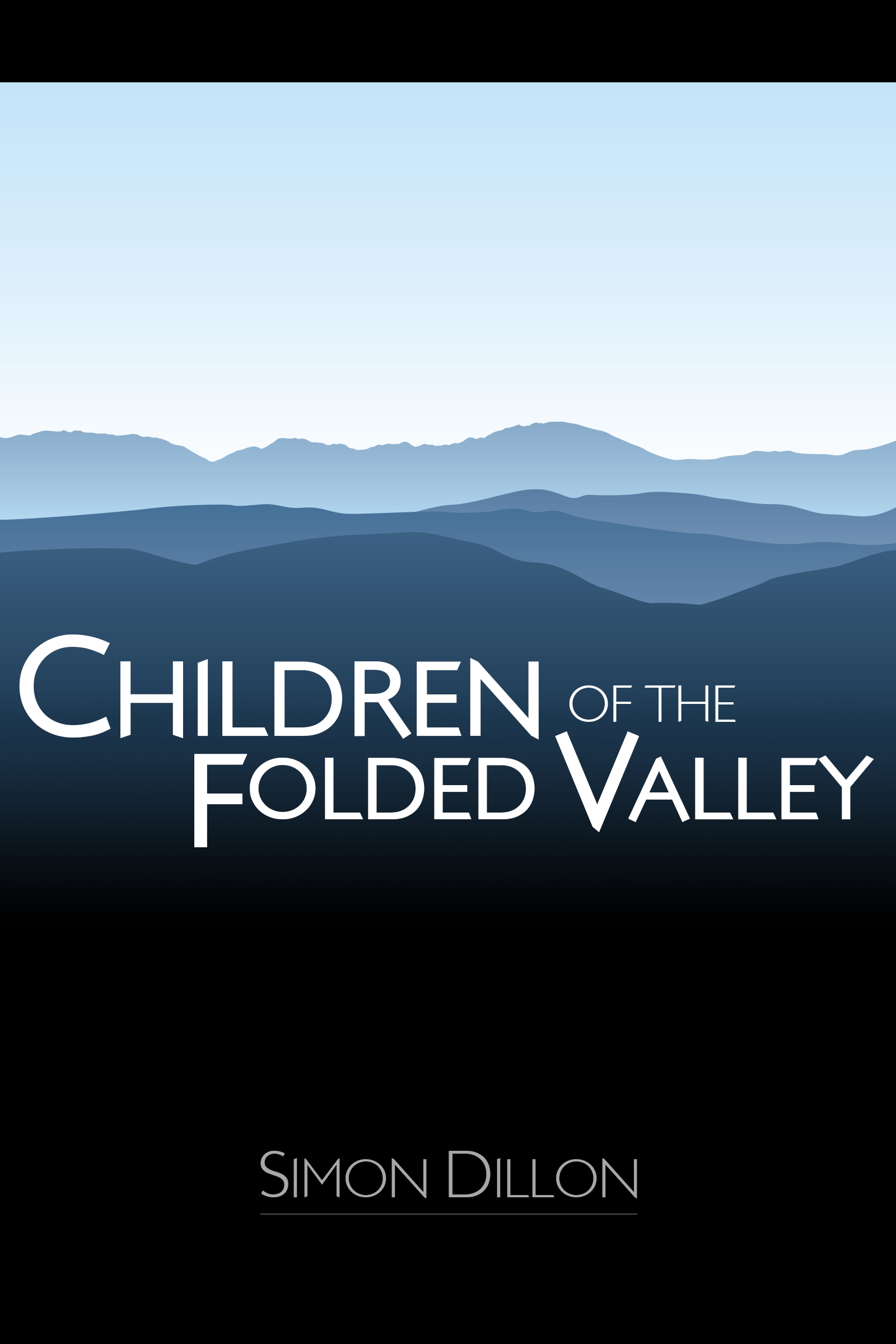
Folded Valley cover

Furthermore, it is important to emphasise that what I experienced does not necessarily appear in the novel at all. Indeed, it should be obvious that most of what the novel contains is nothing more than science fiction. But writing a novel based on experience isn’t always about conveying the factual veracity of true events – at least, not for me. Writing Children of the Folded Valley was about conveying how religious oppression feels, but within a science fiction backdrop containing all manner of exaggerations and outrageous situations necessary for the needed dramatic impact.

In a similar way, the battle scenes in The Lord of the Rings ring are informed by Tolkien’s experiences fighting in World War I. Obviously The Lord of the Rings is not a factual story, but the experience Tolkien brings to the writing makes an already masterful piece of work even more resonant.

Wars and religious cults may be negative things to have experience of, but plenty of authors write of good experiences they have had, and their work is enjoyed by millions. Sticking with Tolkien for a moment, the Aragorn/Arwen romance in The Lord of the Rings very much mirrors how he met his own wife Edith. Again it appears experience rather than suffering is the key thing here.

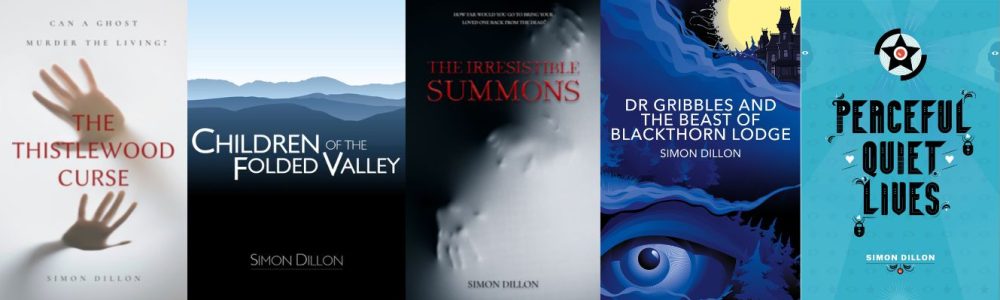
Having two children eventually led me to write Dr Gribbles and the Beast of Blackthorn Lodge and Uncle Flynn. The latter was inspired in part by a news report I saw about mollycoddled children, but mostly by the endless walks I have taken on Dartmoor with my eldest son. That can hardly be described as suffering.

Then again, Harry Lime, as brilliantly depicted by Orson Welles in The Third Man, obviously disagrees with me.

“In Italy for 30 years under the Borgias they had warfare, terror, murder and bloodshed, but they produced Michelangelo, Leonardo da Vinci and the Renaissance. In Switzerland they had brotherly love. They had 500 years of democracy and peace, and what did that produce? The Cuckoo Clock.”

  • Harry Lime, The Third Man.

Children of the Folded Valley – Print copies now available

Print copies of my latest novel Children of the Folded Valley can now be ordered from Lulu.com:

http://www.lulu.com/shop/simon-dillon/children-of-the-folded-valley/paperback/product-21732639.html

Kindle download is also available from Amazon:

Finally, a variety of e-book formats are available FREE from Smashwords:

https://www.smashwords.com/books/view/459663

As mentioned elsewhere on this blog, Children of the Folded Valley – my first novel for grown-ups – is something of a departure for me. I shall elaborate a little more on the inspiration and other matters at a later date. In the meantime, I hope you enjoy the book. Here is the blurb from the back once more:

During a journey to visit his estranged sister, James Harper recalls his childhood in a mysterious valley cut off from the outside world, where he grew up as part of a cult called the Folded Valley Fellowship.

In this seemingly idyllic world, the charismatic Benjamin Smiley claimed to be protecting his followers from an impending nuclear apocalypse.

But the valley concealed a terrifying secret.

A secret that would change Smiley’s followers forever.

Children of the Folded Valley OUT NOW

My new book, Children of the Folded Valley, is now available from Amazon. Check out the link below:

It is also available FREE – for a limited time – from Smashwords in various digital formats:

https://www.smashwords.com/books/view/459663

Print copies will be available from Lulu.com from the 27th of July.

Children of the Folded Valley is the first book I have released that is aimed at a more adult readership. It’s a drama with a few background science fiction elements, told in flashbacks like a memoir.

Here again is the blurb from the back, to whet your appetite:

From the author of Uncle Flynn and George goes to Mars

During a journey to visit his estranged sister, James Harper recalls his childhood in a mysterious valley cut off from the outside world, where he grew up as part of a cult called the Folded Valley Fellowship.

In this seemingly idyllic world, the charismatic Benjamin Smiley claimed to be protecting his followers from an impending nuclear apocalypse.

But the valley concealed a terrifying secret.

A secret that would change Smiley’s followers forever.