An excerpt from The Thistlewood Curse

Here’s an excerpt from my new supernatural thriller The Thistlewood Curse.

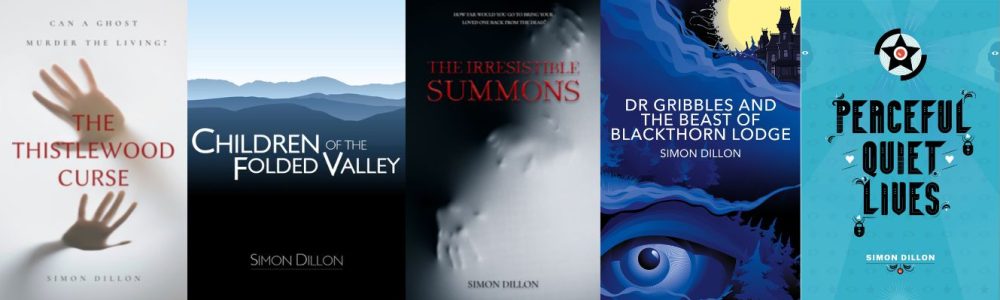
THE THISTLEWOOD CURSE Cover (JPG Print version)

Following a particularly difficult and traumatic case, Detective Sergeant Laura Buchan goes on leave, only to hear via email about the sudden death of her friend’s husband on Lundy Island. This is the event that sets the main plot in motion.

“Laura immediately grabbed her phone to give Sally a call. She hadn’t known Charles very well, but obviously she wanted to be there for her old friend. However, she then noticed the email was very long, and that there was a great deal more she ought to be aware of first before making any calls. As she read it she felt increasingly disturbed. Sally wasn’t merely bereaved, but she seemed quite beside herself with what appeared to be the most extraordinary paranoia.

Dear Laura,

I’m very sorry to have to tell you Charles has died. He was visiting his parents on Lundy Island and literally just dropped dead. According to the doctor it was a sudden heart attack. Very unusual for someone his age, and very unlucky. The funeral is next week. He’s going to be buried on the island.

  As you can probably imagine I’m going through a lot right now, but there is something else I have to tell you. I know you’re going to think I’m mad, but I think Charles was murdered. In fact, I’m sure of it. The worst thing is I can’t prove anything. I haven’t got a shred of evidence. I’ve got nothing more than a really, really horrible feeling. I’ve not said anything to anyone else, but I need you now, more than I’ve ever needed you before. I need you to help me prove Charles was deliberately killed. Please help me Laura. I’m really, really scared.

You can download or order print copies of The Thistlewood Curse from Amazon Kindle here.

The Thistlewood Curse – now available in print!

My latest novel The Thistlewood Curse is now available in print, as well as an Amazon Kindle download.

A gripping supernatural thriller, The Thistlewood Curse already has it’s first, five-star review from this Amazon reader, who claims it will “leave you with ‘novel hangover’, still reeling from the emotional storm that just picked you up and spit you out… Engaging, captivating, and immersive from the very beginning, and the plot twists were a pleasant surprise”.

Here is the blurb from the back of the book:

From the author of Children of the Folded Valley and The Birds Began to Sing

Can a ghost murder the living?

Lawrence Crane’s powers of astral projection are put to the ultimate test when he and his lifelong friend Detective Laura Buchan investigate a mysterious death on Lundy Island.

Sensing a dark power at work, they attempt to identify a human assassin under the control of supernatural evil.

But can they escape a terrifying, centuries-old curse?

Check out The Thistlewood Curse, and let me know what you think on Amazon.

The Thistlewood Curse – out now!

My long-awaited new novel The Thistlewood Curse is now available to download from Amazon Kindle.


A gripping supernatural thriller, The Thistlewood Curse is an unashamed, page-turning mystery. It is akin to my earlier novel, The Birds Began to Sing, although darker and more frightening, particularly towards the finale.

Over the next few weeks, I will be posting articles giving background on the novel, my inspiration, details on the writing process, the cover image, extracts, my thoughts on genre blending, and more.

Here is the blurb from the back of the book:

Can a ghost murder the living?

Lawrence Crane’s powers of astral projection are put to the ultimate test when he and his lifelong friend Detective Laura Buchan investigate a mysterious death on Lundy Island.

Sensing a dark power at work, they attempt to identify a human assassin under the control of supernatural evil.

But can they escape a terrifying, centuries-old curse?

Download your copy of The Thistlewood Curse here. An announcement will be made regarding print copies soon.

The Thistlewood Curse – out tomorrow!

My new novel The Thistlewood Curse is released tomorrow on Amazon Kindle.

Set almost entirely on Lundy Island, The Thistlewood Curse is a nail-chewing, page-turning supernatural thriller with a gripping central mystery that will keep you guessing to the very end.

Here is the blurb from the back of the book:

Can a ghost murder the living?

Lawrence Crane’s powers of astral projection are put to the ultimate test when he and his lifelong friend Detective Laura Buchan investigate a mysterious death on Lundy Island.

Sensing a dark power at work, they attempt to identify a human assassin under the control of supernatural evil.

But can they escape a terrifying, centuries-old curse?

You can pre-order The Thistlewood Curse from Amazon Kindle here. An announcement will be made regarding print copies soon.

The Thistlewood Curse out on the 1st of May!

After a few delays, I am pleased to finally announce that my new novel The Thistlewood Curse is available for pre-order on Amazon Kindle!

Set almost entirely on Lundy Island, The Thistlewood Curse begins as a detective story but evolves into a suspenseful supernatural thriller.

Here is the blurb from the back of the book:

From the author of Children of the Folded Valley and The Birds Began to Sing

Can a ghost murder the living?

Lawrence Crane’s powers of astral projection are put to the ultimate test when he and his lifelong friend Detective Laura Buchan investigate a mysterious death on Lundy Island.

Sensing a dark power at work, they attempt to identify a human assassin under the control of supernatural evil.

But can they escape a terrifying, centuries-old curse?

You can pre-order The Thistlewood Curse from Amazon Kindle here. An announcement will be made regarding print copies this week. Watch this space.

Inspiration: Love vs Honour

Continuing my series on inspiration and influences for my novels, in this post I am taking a look at the ideas behind my romantic drama Love vs Honour.

LvsHonour 1600 x 2400

This book stands apart from the rest of my novels, as teenage romantic fiction is not a genre I generally dabble in. However, themes of religious oppression, deception and revenge are definitely mainstays in a lot of my other writing, and they are very much to the fore here. I have always been drawn to unusual love stories, and I wanted Love vs Honour to succeed on that level, as well as, given the potentially contentious subject matter, on the level of a thought provoking drama that would attract readers outside the teenage romance crowd.

Here are two key influences on Love vs Honour:

Romeo and Juliet (William Shakespeare) – The most obvious influence on the novel, purely because disapproving families have always been a staple as a blocking force in romantic fiction. Also, I think as protagonists Johnny and Sabina share some of Romeo and Juliet’s characteristics, although certainly they evolve in very different directions.

House of Sand and Fog (Andre Dubus III) – Pre-revolutionary Iran under the Shah hangs like a shadow over the character of Massoud in this novel, as it does over Sabina’s father Ahmed in Love vs Honour. I have always been fascinated by the appalling damage caused by the Iranian revolution to those whose beliefs were insufficiently radical for the new regime, and their subsequent exile in western nations.

I have to confess, I struggled to think of other writing or stories that were an influence on the novel, although I am hardly the first to try and tackle interfaith romance. Tonally, some of Peter Weir’s films (particularly Picnic at Hanging Rock, Dead Poets Society and Witness) were touchstones in their explorations of emergent teenage sexuality, loneliness, overbearing parents and clashing cultures.

The truth is the main inspiration came as the result of a long train of thought whilst stuck in traffic on a long and boring bus journey. The setting came to me later, once I moved to Devon and I was inspired by locations in that part of the world.

You can download or buy print copies of Love vs Honour from Amazon here.

Update on Present Projects

So far, 2017 has been a very productive year for me. I have finished the first draft of The Spectre of Springwell Forest, and am awaiting feedback from a couple of willing guinea pigs, whose critical eyes are passing over said prose. In the meantime, I am working on my second novel of the year, tentatively titled A Statement of Disbelief. That project remains top secret for now, but here are a few more details regarding The Spectre of Springwell Forest.

abandoned-nottingham-mapperley-tunnel-2

  1. It’s a ghost story for grown-ups.
  1. Although it is bookended by sequences in the present, most of the story takes place in 1979. Many of my favourite horror films are from the 1970s, so this seems oddly appropriate.
  1. Once again, my home turf is the setting, ie the South-West of England.
  1. The plot involves a sinister painting, a disused railway tunnel, a potentially haunted forest, children who might be possessed, secret government research and suspiciously tight-lipped villagers who are obviously hiding a major secret.
  1. Susan Hill’s The Woman in Black is a key inspiration.
  1. I hope readers find the ending as bone-chilling as I did when I thought of it.
  1. The Spectre of Springwell Forest is my fourth full-on horror story currently awaiting publication, along with The Wormcutter, The Irresistible Summons and The Thistlewood Curse. Or fifth, if you count The Faerie Gate, which is aimed at children.

Speaking of The Thistlewood Curse, I really am hoping to have news on that front soon. Sorry about the delays. With any luck, it will be downloadable sometime in April once I have finalised one or two final details.

Telling myself the story

rewrite

I once read that “the first draft is you telling yourself the story”.

I’m not sure where to attribute that quote, but this is certainly true for me. Whilst I have a good outline of the story whenever I write a novel (including the ending, which is crucial), the precise details of that story are rendered fairly anxiously in a first draft. By anxiously I mean the story is over-explained, repetitious, states the obvious and character dialogue is merely functional at that stage, making sure I know what emotions need to be conveyed. I have to make sure the whole thing makes sense to me, before it can make sense to anyone else.

Should I expose readers to such a draft, they would no doubt feel horribly patronised. However, subsequent drafts eliminate over-explanation and repetition. In fact, the withholding of information, the adding of ambiguity to events, dialogue and so on is a hugely enjoyable process, once you as an author have made sense of the story for yourself. It is almost as though I say to myself “I know what I mean by this. Now I want the reader to add their own interpretation”.

Of course, some writers autocratically want to tell their readers what to think, but the older I get, the more I think this approach is a mistake. What is important to an author will be inherent in the text, but it is better for a reader to bring their own baggage and have wriggle room on interpretation, taking what is applicable to them.

In essence, telling the story to myself also encompasses telling myself how I respond to that story. The rewriting process removes the latter stage, stripping it down to the story only and leaving the interpretation to the reader. The final act in my novel Children of the Folded Valley is a prime example of this. I know what I meant to convey, but I removed the explicit stating of what that is. It is up to the reader to decide.

Coincidence: A mortal sin for writers?

I have heard some storytelling gurus state that the use of coincidence in a story is a heinous crime and should be avoided at all costs. Obviously Charles Dickens didn’t get that particular memo, as many of his greatest novels, including Oliver Twist and Great Expectations, contain all manner of fortuitous coincidences, many of which are integral to their plots.

My personal opinion is that if coincidence is used in a story, it must be done deliberately with a well-thought through reason. In the case of the Dickens novels mentioned above, the moments of coincidence have fabulist feel, ie the reader feels that they are reading a fable. As such using chance meetings or the like to turn the plot doesn’t seem out of place but rather an organic part of the storytelling process. For example in Great Expectations, when Pip discovers the truth about the relationship between Abel Magwich and Estella, it underscores the entire point of the fable regarding Victorian hypocrisy, the folly of class prejudice and our common humanity.

Outside of such stories, coincidence can be used, but is best kept to the openings – a chance meeting between two characters who then become lovers, for example. However stories that use coincidence later, especially if used to turn the final act, can feel forced, phoney and unsatisfying. This is particularly true if said coincidence comes in the form of deus ex machina, a poncey term for coincidence-zilla whereby a seemingly unconnected act of God gets the protagonists out of their trouble. Pixar’s legendary storytelling rules include “Coincidences to get characters into trouble is great; coincidences to get them out of it are cheating”.

One of my favourite Agatha Christie novels, Sleeping Murder, has a terrifically spooky opening that is entirely the result of coincidence. A young recently married couple on holiday in Devon just so happen to drive past a house for sale they rather like the look of. They decide to buy it, but as they go about various decorative renovations, a series of eerie discoveries sets the entire plot in motion, all as a result of the opening coincidence. But because it is the first major part of the story, the inciting incident if you will, what follows feels plausible rather than contrived, even though the odds of the couple coming across this particular house, which has ties to the woman’s past, must have been astronomical.

In conclusion, I think it is foolish to say coincidences (along with adverbs and – whisper it – passages that tell rather than show) are the work of the devil for writers. Instead, I see them as simply tools and techniques that should be used strategically and sparingly.

Inspiration: George Hughes trilogy

Continuing my series on inspiration and influences for my novels, in this post I am taking a look at the ideas behind my George Hughes science fiction adventure trilogy, which comprises (in reading order) George goes to Mars, George goes to Titan and George goes to Neptune.

The original idea for this series came from an article I once read online, about how various celebrities had bought plots of land on the moon to build homes there in case it was ever colonised. The person they bought the land from had made a claim with the US Land and Registry office on the entire surface of the moon, which apparently is legally binding (not sure how exactly, as I don’t see how this takes into account the laws of other nations).

The George Hughes series are mysterious, action-packed space stories aimed at the young and young at heart. Each story is a stand-alone adventure, but they do follow on from one another as well. They are not just for children either. Amid the excitement, humour and thrills, I touch on everything from murderous religious fundamentalism to sexual equality, civil rights, slavery as well as more metaphysical elements.

Here are five key influences on the stories:

The Alex Rider series (Anthony Horowitz) – Because so much science fiction literature is more grown-up and serious in nature, I wanted to write something that wasn’t Asimov or Herbert, but more of an unashamed thrill ride that could be enjoyed by all the family. The action packed tone in the George Hughes trilogy very much takes its cue from Horowitz’s brilliant teen spy series. The Alex Rider books particularly impress me because they are well researched and detailed, whilst also being completely non-patronising with adversaries as dangerous as anything in James Bond. In the George Hughes books, I have included a lot of accurate detail on the planets George visits, as well as some properly ruthless villains.

Flash Gordon (Alex Raymond) – The thrills of the original Alex Raymond Flash Gordon comics were another key influence. I wanted each novel to have perilous narrow escapes of the kind that occur so brilliantly in the panels of that seminal publication that later went on to become the Buster Crabbe Saturday matinee serials of the 1940s, the TV animated feature and series, and of course the glorious (if overly spoofy) 1980 film.

Charlie and the Chocolate Factory (Roald Dahl) – The extreme poverty George and his adoptive parents find themselves in at the start of George goes to Mars is akin to the extreme poverty endured by Charlie Bucket and his multiple relatives at the start of Charlie and the Chocolate Factory. Despite the science fiction setting, I wanted to create a similar, rags-to-riches sense of fairy tale in the way George suddenly comes into his inheritance.

Artemis Fowl (Eoin Colfer) – The mysterious character of Giles, who acts as a protector of sorts for George, draws a certain inspiration from the character of Butler in the Artemis Fowl series. The relationship between Artemis and Butler is also not unlike the relationship between Giles and George, at least to begin with. But of course, over the course of the George Hughes novels, that relationship evolves in rather different ways.

Explorers on the Moon (Herge) – There is a sequence in this comic where Tintin, Captain Haddock and Snowy explore a cave on the moon, which directly inspired the cave exploration sequence in George goes to Mars. Obviously the situation and the outcome are very different, but on a purely visual level this inspired my imagination. The idea of exploring caves on another world is oddly thrilling, and I always wanted it to lead onto a more profound discovery. Of course, in George goes to Mars that is exactly what does happen, though I wouldn’t dream of spoiling that here…

You can download the George Hughes novels from Amazon Kindle here, or else buy printed copies of the first two novels from Lulu here and here, and the third one from Amazon Create here.