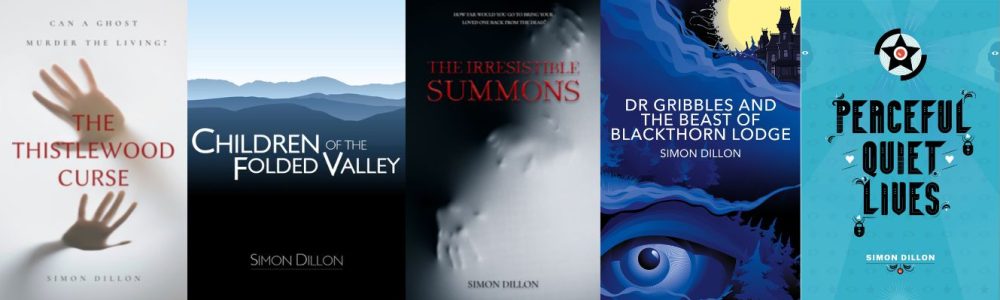
Inspiration: The Birds Began to Sing

Whether writers care to admit it or not, much of what they pen is influenced – consciously or unconsciously – by other works. In my case, I am happy to acknowledge influences, but like any other writer hope my own work stands out in its own right.

With that in mind, I have decided to write a series of articles detailing influences and inspirations for my own books, starting with six key texts that influenced my mystery thriller The Birds Began to Sing.
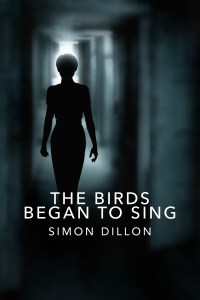
The Birds Began to Sing_1600x2400_Front Cover

Rebecca (Daphne Du Maurier) – An obvious gothic touchstone, given that my story contains a Danvers character of sorts. The central mystery is also very Du Maurier-esque. Indeed, one person who read my novel at one point forgot I had written it and thought she was reading Du Maurier. I take that as a very high compliment given that Du Maurier is certainly the strongest influence on The Birds Began to Sing.

Jane Eyre (Charlotte Bronte) – Another obvious gothic influence, chiefly because of the mad wife in the attic angle, which my own novel pays homage to. Like Du Maurier’s Rebecca, Jane Eyre contains a climactic fire that also acts as a symbolic purging metaphor, as all good gothic mysteries should. The Birds Began to Sing continues this tradition.

The Hound of the Baskervilles (Arthur Conan Doyle) – Another obvious influence, and not just because of the Dartmoor setting. The structure of the novel – with the first act in London and the rest of the story in a remote and sinister setting – was a formula I definitely followed. Also the atmosphere of subtle, uncanny menace, particularly during Watson’s first night in Baskerville Hall, proved a huge influence.

Sleeping Murder (Agatha Christie) – The splendidly eerie opening of this story, with its hints of repressed memories, hauntings and insanity, was a definite tonal inspiration. A recently married young woman buys a house and decides she wants to make various decorative changes. As the renovations get underway, the very changes she requested to doors, steps, types of wallpaper and so on are discovered mysteriously hidden beneath the current décor.

The Woman in Black (Susan Hill) – The deeply unsettling spectral appearances throughout Susan Hill’s horror masterpiece proved a big influence on my story, though obviously in my case the ghostly apparitions have a rather different explanation.

Coma (Robin Cook) – Here I must confess the film as much as the novel was an influence. This absolutely nail-biting medical conspiracy thriller contains many elements that are found in my own story, chiefly the tropes of the imperilled heroine who may or may not be paranoid, and her is-he-or-isn’t-he-in-on-it love interest.

You can download The Birds Began to Sing from Amazon Kindle here, or else buy a print copy here.

Religion, Agony and Secrets… The novels of DM Miller

On Valentine’s Day I normally favour a bit of counter-programming on this blog, rather than slavishly adhere to calendar observance. However, this year I think it is worth promoting fellow author DM Miller, who has written an unusual romantic trilogy. The Religion of the Heart, The Agony of the Heart and Secrets of the Heart are not the kinds of novels I would normally choose to read. However, because the novels centre around interfaith romance, I was interested purely because I have explored this territory a little myself (in my novel Love vs Honour).

DM Miller’s novels are radically different to Love vs Honour, but nonetheless raise many fascinating religious and political questions, in their fearless examination of the challenges faced by those in interfaith marriage.

The main plot appears simple enough, with Catherine and Abdul, Jewish and Arab respectively, meeting and falling desperately in love. In any love story there must be a blocking force, and here the blocking force is less religion but more culture, tradition and in some cases entrenched prejudice, most of which stems from relatives on both sides of their families. The third monotheistic religion, Christianity, is also cleverly woven into the mix, due to Catherine having been partly raised by her strict Christian adoptive father Dan. Incidentally Dan himself, for reasons too complicated to detail here, enters into an interfaith marriage of sorts in the course of the story.

Obviously the primary purpose of this kind of romantic novel is to provide an exhilarating emotional rollercoaster with dizzying highs and crushing lows, with a certain degree of escapism, and the trilogy contain these in spades. For example, Abdul’s rich family background is definitely a romantic escapist element popular in this kind of fiction. However, despite this escapism, intriguing religion based dilemmas are delved into throughout, and it is these that ground the novels, making them provoke thought as well as tug at heartstrings.

Whilst the first novel explores the considerable obstacles that stand in the way of Catherine and Abdul getting married, as well as some surprising family revelations, the second novel concerns complications that ensue post marriage once children enter the mix.  Catherine and Abdul are complex, fully rounded protagonists who elicit sympathy and occasionally irritation, thus making them more believable. The supporting characters are interesting too, particularly Dan.

Some might criticise the novels for being melodramatic, but since melodrama is a genre staple here to say that is to miss the point. Besides, melodrama is not necessarily a dirty word, as I have pointed out elsewhere on this blog. Again, I emphasise that whilst this kind of romantic fiction is not a genre I generally indulge in, DM Miller’s trilogy certainly goes to some interesting places. So far I have read the first two novels in the trilogy, and I look forward to reading the third.

His Dark Materials – A Reassessment

SPOILERS AHEAD for His Dark Materials.his-dark-materials

In the past I have written extensively of Phillip Pullman’s His Dark Materials trilogy. I have spoken of how it is a spectacular feat of imagination that almost equals The Lord of the Rings. I have also spoken at length regarding its anti-Christian themes, and it is regarding this that I wish to offer something of a reappraisal.

For those who have not read the novels, or may only have seen the damp squib film version of the first novel Northern Lights (aka The Golden Compass, the US title, which was used for the film), the His Dark Materials trilogy is set in an elaborate parallel universe, which subsequently expands to other universes, including our own. In the universe where the story begins, each human has a “daemon” that takes the form of an animal, from which they are inseparable. Essentially they are like spirit animals. The heroine, Lyra, along with Will, a boy from our universe, have a series of extraordinary adventures that include witches, armoured polar bears, mysterious spectres that kill only adults, as well as the even more mysterious “Dust”. Along the way, traditional notions of good and evil are challenged, as the Church from Lyra’s universe seeks to control and dominate, initially represented by the villainous Mrs Coulter. At the same time, the enigmatic Lord Asriel seeks to fight the Church, though his methods prove equally diabolical in many respects. This all comes to a head in an extraordinary confrontation between beings from multiple universes – including the angelic realm – as a war takes place against God himself.

Or does it?

The sticking point for certain Christian readers has always been the apparently anti-Christian, anti-God stance of the novels. Indeed, this article is not a complete recanting of what I have stated previously, as to be fair the novel does go to great lengths to dismiss the Christian notion of heaven, hell and the afterlife in general. Moreover, Pullman’s “God” character (referred to as “the Authority”) turns out to be the first angel created by Dust. This angel then lied to the other angels and told them he was God, leading to centuries of deception and oppression. However, whilst Pullman undoubtedly has an atheist viewpoint, it is worth considering the following.

Firstly, has not Pullman inadvertently reinvented God in the form of Dust? He seems to have hit the classic atheist dilemma, in that God cannot be disproved in much the same way as he cannot be proved. The brilliance of the Dust concept is that it can be read as “The Big Bang” or even “God” if you wish. Pullman is wise enough to know he has to leave wriggle room.

Secondly, Pullman’s own experience of organised religion is clearly a deeply negative one, and frankly mine has been too, on the whole. I cannot blame him for using his writing as a means of expressing this. I have also written of oppressive religious systems, both real and imagined, on multiple occasions (most notably in my novels Love vs Honour and Children of the Folded Valley). To complain that Pullman has it in for Christianity (and monotheism in general) is foolish, as his exploration of religious corruption is valid, and even though I do not subscribe to a simplistic view that all religion is bad, historically Christianity does have a lot to answer for, bad as well as good.

Finally, my past objections to Pullman centred around his responsibility as an author, specifically my concerns that he would put children off the idea of God entirely. Whilst it is true that books can contain powerful, worldview shaping ideas, and that authors do have a responsibility for what they write, I am increasingly convinced, even as a Christian believer, that “protecting” children against novels like His Dark Materials is misguided. I believe in engagement and discussion, not blanket prohibitions that lead to “forbidden fruit” curiosity.

My own faith has led me to conclude that God has a way of turning up in people’s lives and confounding their expectations of him. Phillip Pullman himself may even discover this himself one day, but in the meantime I would argue his extraordinarily imaginative tales should not be feared by Christians. Despite his views, Pullman is asking honest, difficult, painful questions and this is not a bad thing.

Of course, some Christians will still insist the novels are dangerous, and I agree. All good writing is potentially dangerous. That includes the Bible. Over the centuries those texts have been twisted and perverted to all manner of insidious ends, justifying everything from the Crusades to the Spanish Inquisition and the Ku Klux Klan. At this point in history, I don’t think His Dark Materials can lay quite the same claim, but yes, it is good to bear in mind that like all good writing, it is potentially dangerous. Does that mean we should get hot under our dog-collars and engage in book burning lunacy (as some have done this week to JK Rowling in protest of her views on Donald Trump)? Absolutely not.

Depicting something versus endorsing something

to_kill_a_mockingbird

A recent article in the Guardian reported how a library in Virginia had banned To Kill a Mockingbird and The Adventures of Huckleberry Finn because they contained racist language. News of such idiotic censorship always depresses me, and the problem is hardly a new one. Anyone with half a brain who has read those books would understand that the message of both is anything but racist. However, for some it seems the mere depiction of racism means the book must be, in itself, racist.

Schindler’s Ark chronicles unspeakable atrocities against the Jews. Does that make it anti-Semitic? Is the oppression of women promoted by the events of The Handmaid’s Tale? Does 1984 endorse totalitarian police state brutality? Is Trainspotting pro-drugs? Is The Kite Runner pro-child rape? Is The Godfather pro-organised crime? I could go on and on.

Such preposterous views have always blighted art throughout the ages. I have, over the years, vehemently disagreed with some of my fellow Christian believers, who condemn depictions of sex, violence or bad language regardless of context. For such zealots, watching or reading such things is “sinful”. I could not disagree more. The Bible itself is packed with sex and violence, not just mentioned in passing either. Several sections contain what one might say “too much information” with regards to sexual matters, and there is enough gruesome imagery to last a lifetime (who, for instance, would dare to make a film based on the final chapters of Judges – a story that begins with gang rape and dismemberment and builds to a full blown massacre). Oh, but the context is different, such zealots claim. My point entirely. Context is everything.

A book, play or film may be fiercely violent, full of profane language and ill-advised sexual activity, yet still be a moral tale. In fact, not including such material in certain contexts would make the story immoral. For example, I would argue a war film that doesn’t depict armed conflict with graphic violence is inherently dishonest and potentially dangerous. In a similar way, would that scene near the end of Babel with the completely naked Japanese girl be a tenth as dramatic if she were fully clothed? I would argue not. I watched the intensely gruesome murder near the beginning prison drama A Prophet through my fingers, but by the end of the film had to admit that had they toned the scene down it would have made the overall piece considerably less powerful.

Again, context is everything. I will concede that some people do not have the temperament for stronger material in stories, and that is perfectly fine. No one is forcing them to watch or read such material. However, what I find particularly irksome are people of a sensitive disposition who feel the need to presumptuously, patronisingly and censoriously inflict their preferences on the rest of us, for our own good.

The worst variant of such people are the religious kind, as they arrogantly profess to speak on behalf of the Almighty. For example, some of my fellow believers support their ideas about depicting sex and violence by quoting the verse from Philippians 4 verse 8 where Christians are encouraged to dwell on what is noble, lovely and true. What is “noble, lovely and true” is open to very wide debate. For example, I would argue that The Babadook is noble, lovely and true, with its cathartic and powerful themes of coming to terms with guilt and grief, but typically Christians would never endorse something as disreputable as a horror film, regardless of its message.

Conversely I would argue a film like the PG-rated Mamma Mia! is the complete opposite of noble, lovely and true. Its message is essentially it doesn’t matter who your father was, as long as your mother had loads of fun promiscuous sex. However, you don’t see me wagging my finger at my fellow believers when they choose to watch Mamma Mia! but condemn the likes of The Babadook.

But I’m getting off the point. All views are subjective (including mine). Besides, plenty of books, plays and films contain grey areas; where it is debatable whether the objectionable content depicted therein is endorsed by the context, or not. Furthermore, there are also works where appalling actions are openly and unrepentantly endorsed. Should we censor such works? Absolutely not. I say we appraise, criticise and speak out against them if we feel the need to, but should we censor them? No way.

In conclusion, I can only reiterate that whoever took that decision to remove To Kill a Mockingbird and The Adventures of Huckleberry Finn from those library shelves in Virginia should be thoroughly ashamed of themselves.

Banned Books

I have recently been researching the most banned books in American libraries. In many cases the reasons for said bans have been absurd and farcical. Nevertheless, despite laughing at such idiocy, I always choke on my laughter, as the only sensible way to feel about such censorship is to find it bone-chilling in the extreme.

In these days where the professionally offended proclaim their gospel of boycotting, censorial folly all over social media, it is more vitally important than ever to stand against the banning of books. Yes, some of these people are well-intended; thinking to protect sensitive souls from racism, sexism or the like, but the road to hell is paved with good intentions. The chilling effect on free speech at present is horrifying enough, without turning to George Orwell’s 1984 for apparent inspiration as to how to treat controversial texts. That novel is a cautionary tale, not a handbook for how to run the world. These days, the thought police are all too real.

Here then are some of the most banned titles in America, most of which I like a great deal: The Handmaid’s Tale (Margaret Atwood), Fahrenheit 451 (Ray Bradbury), The Kite Runner (Khaled Hosseini), Catcher in the Rye (JD Salinger), the Goosebumps series (RL Stine), To Kill a Mockingbird (Harper Lee), The Adventures of Huckleberry Finn (Mark Twain), Tintin in the Congo (Herge) the His Dark Materials trilogy (Phillip Pullman), Of Mice and Men (John Steinbeck), and the Harry Potter series (JK Rowling).

To look at a few examples, The Adventures of Huckleberry Finn and To Kill a Mockingbird were recently banned in a Virginia library for “racist language”. You’d have thought anyone would understand the anti-racist message of both novels, but sadly it seems some people can’t understand the difference between depicting something and endorsing something.

Tintin in the Congo is an interesting one, as there can be no doubt the book contains many racist stereotypes and outdated colonial attitudes. Herge himself referred to this volume as “the sins of youth” and his later work acted very much as a corrective. I can’t speak for American editions, but my copy of this Tintin adventure contains a preface from the publisher explaining the historic context and that some sequences may be offensive to readers. Such an introduction is right and proper to the complete and uncensored version of the book, and allows the readers to judge accordingly, rather than have the volume patronisingly withheld from them in case it turns them into raving racists.

The reason for the Goosebumps ban is that they are apparently too frightening for the children they are aimed at. Absolute rubbish. Children love being scared. The Goosebumps novels have been a regular fixture in my eight-year-olds reading life for well over a year now. There is nothing he enjoys more than a good macabre thrill, and why shouldn’t he? Restricting such material for children is, I believe, deeply unhealthy. They should be allowed the catharsis of a good scare.

On another note, I still find it transparently absurd that Christians object to the Harry Potter books. Any intelligent reading of them can only lead to a conclusion that they are the product of a Judeo-Christian culture, with the final novel in particular full of Biblical parallels. Yet I often come across believers who are convinced that JK Rowling is a witch (she isn’t), that the spells in the novel are real (they aren’t, as is obvious to anyone who understands cod-Latin jokes), and that the novels are somehow causing children to turn to the Church of Satan in droves (again, unsubstantiated nonsense).

Then again, the power of the written word can be dangerous, and I’d be a fool to state otherwise. Perhaps some deluded individuals really have joined Satanism after reading Harry Potter as a child. Hitler swayed many with Mein Kampf during the rise of Nazi Germany. Most damningly of all, the Bible has been twisted and perverted for hundreds of years to justify everything from the Crusades to the Spanish Inquisition and the Ku Klux Klan. Should we ban the Bible?

The pen may well be mightier than the sword, but banning books is not the answer. Instead these texts should be discussed, appraised, criticised, if necessary given curated introductions to explain historic context, and above all made available for readers to make up their own minds.

Doomed Romance

Here’s a peculiar observation I have made about my tastes: Generally speaking, in fiction I like my romance doomed.

200_s

Obviously there are exceptions (especially if one is reading/watching a romantic comedy), but on the whole big epic love stories seem more effective when they end in tragedy, for me at any rate.

Obvious examples (from books, films and plays) include Romeo and Juliet, The English Patient, Doctor Zhivago, The Remains of the Day, Casablanca, Brief Encounter, Gone with the Wind, Moulin Rouge and Wuthering Heights. In addition, doomed romances in novels that are not primarily romantic can be hugely effective in the right context (Winston and Julia in 1984 for instance).

Far From the Madding Crowd and Crouching Tiger Hidden Dragon (the latter essentially The Remains of the Day with action scenes) have a mixture of happy and sad endings, and very occasionally there are exceptions to my tragedy rule, Jane Eyre being a good example. However, even then the happy ending comes at quite a price.

I gave this matter some thought and concluded that the reason I prefer tragic romance in fiction is because it provides an escapist fantasy that allows the feeling of highs and lows of romance and heartbreak in a safe setting, in a way that provides considerable emotional catharsis. My unashamed love of a good tragic weepie stems from the same part of me that loves a good horror story. To me, tragic romance is the flip side of the same coin. Again, catharsis through fiction is what attracts me to these genres and I am not ashamed of it in the slightest.

Some people can’t abide tragedy (or horror) and quite honestly I feel sorry for them. For me to experience such things in fiction is to feel human, and to feel alive.

Getting under the skin of the reader

Every writer desires that their work will somehow affect the reader, getting under their skin as it were. In fact, sometimes bad reviews are preferable to good ones if the writing has made the reader frightened, sad, angry, offended, or otherwise provoked them.

Occasionally I read reviews of my work that clearly demonstrate I have achieved this. For example, here is an Amazon reader, David MacGuire, reviewing my novel Children of the Folded Valley:

Folded Valley cover

“I generally review only the books that I really love or hate passionately. I neither hate nor love the book, it has its flaws, but the story has stuck with me. This is a good, original story. The concept and characters are engaging and appealing. There are places where the writing gets a little thin, but I hope to see many more books by this author. It has a happy ending, of sorts, and yet left me profoundly depressed. I think it was that the author hit it right on the head; even in a perfect paradise, people are going to be perfect s***s to each other, given half a chance. Even so I recommend it.”

Here’s another negative review of Children of the Folded Valley on Amazon (by “value for money”) that strikes a similar tone:

“Saying I enjoyed this book would be wrong. I found it disturbing, distasteful and fascinating all at the same time. This is the first book I have read about cults such as this and although it is a work of fiction the content is all too real. Read it if you will but to me there is enough sickness in the world without reading fictional tales of it.”

Mr MacGuire’s review sounds as though he is still struggling to figure out what he really felt about the novel, which I am pleased about because it demonstrates the story got to him. As for “value for money”, to be told one’s novel is “disturbing, distasteful and fascinating all at the same time” in a two-star review is actually a great encouragement.

So thank you both, David MacGuire and “value for money”.

My writing plans for 2017

2017In 2016 I planned to write two novels and release two novels. I did the former but not the latter for a variety of unfortunate reasons. However, I hope to rectify that in the early months of 2017, by releasing one of the novels I intended to release last year, The Thistlewood Curse.

A detective story that evolves into a supernatural horror thriller, The Thistlewood Curse is a gripping, page-turning tale set almost entirely on Lundy Island. Part of the reason I failed to release it last year was a self-inflicted delay to improve the first act. With that element duly tweaked, I am confident this tale of revenge, murder and astral projection is one of the best things I have written. I can’t wait to unleash it upon an unsuspecting readership.

In 2017 I plan to go full steam ahead on another horror novel, this time a ghostly tale very much in the vein of Susan Hill. I shall say very little at this point except that it involves an abandoned railway tunnel and a sinister painting.

My next novel in 2017 is even more shrouded in secrecy at this point. It has been gestating in my consciousness for about twenty years, but I finally feel the urge to actually push ahead and write the thing. Although a radical departure from anything I have written, being more of a satirical, darkly comic piece, it is very much based on personal experience. I suspect the finished product will be guaranteed to ruffle feathers in certain quarters.

Assuming I manage to write both of the above in 2017, I will move on to a long planned science fiction anthology of four (or possibly five) novellas, each of which are too short for a novel but too long for a short story. One (or possibly two) involves time travel, one virtual reality, another suspended animation and another, spiders. Yes, you read that correctly. Spiders.

On that infuriatingly enigmatic note, I wish you all a Happy New Year.

2016 in review

Life didn’t really go to plan in 2016. Perhaps that is a phrase many will use when reviewing the year, and my writing year was no exception.

Firstly, I must apologise for the lack of any new book releases this year. I had originally planned two, but for various reasons I will not bore you with, both were delayed. The only thing I can say as a means of reassurance is that both novels in question – The Thistlewood Curse and The Faerie Gate – are still planned as my next releases. The former I hope to release early next year and the latter late next year. I appreciate that “watch this space” is hardly an encouraging phrase given my setbacks on these novels, but I honestly and sincerely do hope to have a proper, concrete announcement, at least on The Thistlewood Curse, very early in the New Year.

To be fair, 2016 wasn’t all bad news, at least from my perspective. I completed two new novels, The Deviant Prophet and The Balliol Conspiracy. The former is a dark, grown-up fairy tale (think Pan’s Labyrinth meets Alice in Wonderland via Coraline and Spirited Away). Thematically, it is something of a companion piece to my most successful novel to date, Children of the Folded Valley.

By contrast, The Balliol Conspiracy is a thriller that draws tonal inspiration from The 39 Steps and North by Northwest.  Due to being a good deal lighter than some of my more recent writing, it represents something of a departure for me. In fact, keeping it light proved a struggle, as my natural tendency is to introduce darker elements which were not appropriate here. Time will tell whether or not I succeeded.

I already have my next three books lined up and will announce those writing plans soon. In the meantime, I wish 2016 good riddance and look forward next year.

Download Children of the Folded Valley FREE – for five days only!

Get my most successful novel Children of the Folded Valley absolutely FREE on Amazon Kindle – for five days only!

Folded Valley cover

Here is the blurb from the back of the book:

During a journey to visit his estranged sister, James Harper recalls his childhood growing up in a mysterious valley cut off from the outside world, as part of a cult called the Folded Valley Fellowship.

In this seemingly idyllic world, the charismatic Benjamin Smiley claimed to be protecting his followers from an impending nuclear apocalypse.

But the valley concealed a terrifying secret.

A secret that would change Smiley’s followers forever.

Here is a sample of the many raves reviews (mainly from the Amazon page):

“I don’t usually leave reviews but I felt so strongly about encouraging people to read this fantastic book. It had me captured from start to finish. At one stage in the book I actually thought it was a true story.” – Paul, Amazon.

“The use of re-written religious doctrine to control, govern and frighten is particularly chilling… Full marks to Simon Dillon for this creative and highly readable novel.” – Around Robin, Amazon.

“Creepy and unnerving. Kept me gripped the whole way through.” – Lucyboo, Amazon.

“I couldn’t put it down.” – Bukky, Amazon.

“Really well written, well thought through, compassionate… Full of empathy.” – Over, Amazon.

“So well written, you could believe it was a memoir.” – Shelley, Amazon.

“A perturbing and very original story… The ending is magnificent.” – Joan, Goodreads.

Children of the Folded Valley can be downloaded FREE from Amazon Kindle here. Of course, if digital books aren’t your thing, print copies (not free) can be ordered here.