Good vs Evil in my novels

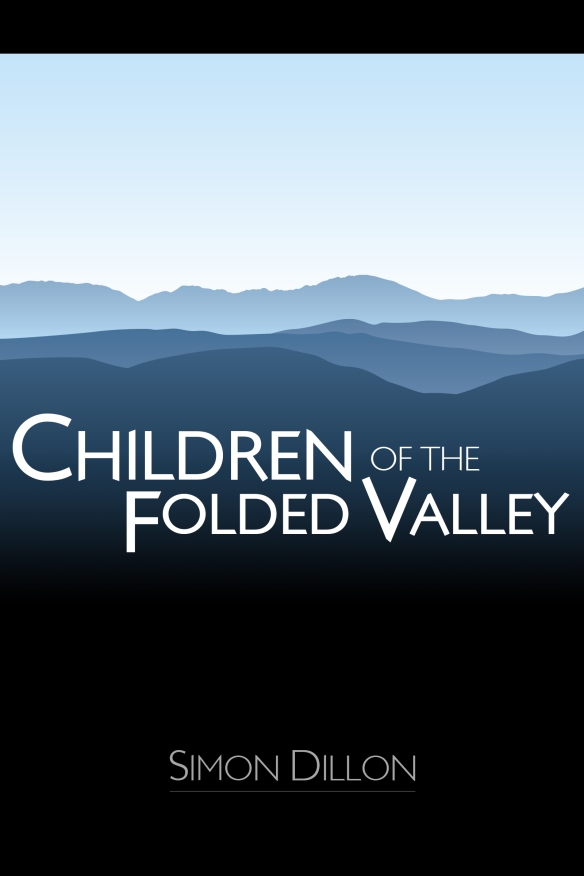
I have sometimes discussed the recurring themes in my novels on this blog. For example religious oppression and abuse of power are mainstays in all my work. Children of the Folded Valley is perhaps the most obvious example.
Folded Valley cover

Another key factor in my books is good versus evil. Inevitably this is born out of my Christian worldview, and since it is Easter perhaps now is a good time to reflect on this a little. For example, if I ever decide to explore the idea of good and evil being two sides of a coin, then I would prefer to think of Michael and Lucifer rather than God and Lucifer, as the afore-mentioned beings are of the same equivalent power. God by contrast is (in my worldview) far more powerful than either.

Themes of good versus evil are found in many of my favourite films and novels. Watership Down is about the price of fighting evil. The Untouchables is about refusing to compromise in the face of evil. With one key character (Snape), the Harry Potter series explores the motivations of why people stand on the side of good or evil. Then of course Star Wars and The Lord of the Rings are not only about overcoming external evil, but about overcoming the evil in oneself – or not, as the case may be.

In my own work, this latter point is something I have examined certainly in certain novels. The arc from bully to hero by one key character in the second and third novels of the George Hughes trilogy is an example. The descent into religious fundamentalism by certain characters in Love vs Honour, and the Faustian descent into murder depicted in my upcoming novel The Thistlewood Curse stand in stark contrast to this.

GGTT  GGTN 1600 x 2400  LvsHonour 1600 x 2400

Although I write antagonists with shades of grey, and include motivations, ultimately I do write from a worldview of good standing against evil, whatever the context. As I explained earlier this worldview is essentially a Judeo-Christian one, which I know stands at odds with writers who take a more anti-theist or moral relativist position. I must confess that whilst I admire many works written by such writers, I could never write like that myself, simply because it would not sound convincing. I can only write what I believe.

In short, in virtually all my stories, there is a clash of sorts between good and evil. I can’t see that changing any time soon.

The George Hughes trilogy: Hidden meanings?

Sometimes I don’t fully understand what my novels are about, deep down, whilst writing them.

Obviously I know about the story and characters, but because I don’t want to come off as preachy, I do not consciously include any “message” in my stories whilst they are being written. I often don’t understand what kind of point I am making, deep down, until after the fact.

Some might claim this makes me a bad writer, but if so I am clearly in good company. JRR Tolkien had this to say about why he wrote The Lord of the Rings: “As for any inner meaning or ‘message’, it has in the intention of the author none. It is neither allegorical nor topical. The prime motive was the desire of a tale-teller to try his hand at a really long story that would hold he attention of readers, amuse them, delight them, and at times maybe excite them or deeply move them. As a guide I had only my own feelings for what is appealing or moving.”

Later, Tolkien acknowledged that the novel did in fact have a number of things to say, regarding friendship, growing up, the treatment of the environment, the nature of war, and his own Christian faith, amongst others. Indeed, there are a great deal of “messages” and “ideas” in The Lord of the Rings. However, these were messages and ideas that were not consciously intended.

That summarises how I approach my own writing.

For example, in the case of the George Hughes trilogy, I wrote those purely because I wanted to write an exciting science fiction adventure story that children (and intelligent adults) would enjoy. The first in the series, George goes to Mars, simply launched the whole “boy inherits Mars” premise, and at the time was intended as a one-off novel.

GGTM_600px

However, subsequently readers expressed interesting ideas about what George goes to Mars was actually about, under the surface. Apparently the novel can be read as an allegory about the dangers of religious fundamentalism, and also contains strong feminist undertones. It is also, some have claimed, a parable about the need for responsible leadership. Here I must confess I did intend for George to have a character arc whereby leadership is thrust upon him, but merely as a character arc to provide a satisfying plot, not to make any great statement about the evils of corrupt leadership.

The immediate sequel, George goes to Titan, I have been told is about everything from bullying to civil rights and slavery, as well as metaphysical stuff like faith.

GGTT cover GGTN 1600 x 2400

The final novel, George goes to Neptune, I have been told is about heavy stuff like post-traumatic stress, overcoming fear, coming to terms with grief and growing up.

Again, I didn’t deliberately intend any particular message in these books, but in retrospect I have to concede that all of these readings are valid, and that in some cases, given what I was going through in my personal life when I wrote them, these interpretations make sense.

Taglines

In the past taglines were generally used for movies. Science fiction films in particular often feature very memorable taglines. Off the top of my head I think of Close Encounters of the Third Kind (“We are not alone”), Dune (“A world beyond your experience, beyond your imagination”), Total Recall (“They stole his mind, now he wants it back”), Jurassic Park (“An adventure 65 million years in the making”), and Alien (“In space, no-one can hear you scream”).

In recent years novels seem to be increasingly released with taglines. For example, Anthony Horowitz employed them with his Alex Rider and The Power of Five series. “Adrenaline, action, adventure” is a tagline used for the entire Alex Rider series, whilst “Darkness waits on the other side” is the tagline for Raven’s Gate, the first instalment of The Power of Five.

Some articles I’ve read claim taglines are a must for authors, as they are “like a publicist that never sleeps”. However, I’ve only released one book so far with a tagline, Love vs Honour, last year. Perhaps because that novel was so far removed from the genre fiction I normally write, it hasn’t been very successful so far, although those who have taken the time to read it have enjoyed it.

LvsHonour 1600 x 2400

The tagline for Love vs Honour is “Two Religions. Two Deceptions. One Love”. This essentially summarises the premise, with a boy and a girl from Christian and Islamic backgrounds respectively falling in love, and undertaking an elaborate deception designed to placate both sets of disapproving parents, whereby one pretends to convert to Islam and the other to Christianity.

I quite like this tagline. However, in my case it has hardly been a “publicist that never sleeps”. Indeed, my most successful novel to date by far, Children of the Folded Valley, had no tagline. Will I use taglines in the future? If I can think of a good one, yes. But I certainly don’t expect them to act as a magic spell for success.

Flashbacks

studies

Novelists are often advised not to write flashbacks. Or at least, if we do, we are told we’d better be a seasoned genius, not a wet-behind-the-ears first time novelist.

Like all other advice of this kind, I take it with a pinch (and occasionally a sack) of salt. Flashbacks are like any other narrative device. They can be done well or badly. I have not used them before unless you count a framing device in Children of the Folded Valley, in which case, the bulk of the novel is a flashback, technically speaking.

However, in a novel I wrote last year entitled The Irresistible Summons, I finally took the plunge and included flashbacks when I could think of no better alternative. The three chapters in question are staggered throughout the first half of the novel, and gradually reveal vital backstory that could only otherwise be told by one character to another in a lengthy explanation of something that took place in her childhood. This would have been less dramatic, and it would also have robbed the story of the emotional power I wanted it to contain.

There then comes the thorny question of where to place the flashbacks amid the main narrative so it feels seamless and not an intrusion. This proved fiendishly tricky, but with a bit of rewriting and other jiggery-pokery, I think I got away with it. The three individuals who have read early drafts all agreed that the flashbacks were both integral and well-placed. Cue huge sigh of relief from yours truly.

So yes, whilst flashbacks are a difficult trick to pull off, they are sometimes worth including in my view.

Get Children of the Folded Valley FREE – for five days only!

Get my most successful novel Children of the Folded Valley absolutely FREE on Kindle from Amazon – for five days only!

Folded Valley cover

Here is the blurb from the back of the book:

During a journey to visit his estranged sister, James Harper recalls his childhood growing up in a mysterious valley cut off from the outside world, as part of a cult called the Folded Valley Fellowship.

In this seemingly idyllic world, the charismatic Benjamin Smiley claimed to be protecting his followers from an impending nuclear apocalypse.

But the valley concealed a terrifying secret.

A secret that would change Smiley’s followers forever.

Here is a sample of the many raves reviews (mainly from the Amazon page):

“I don’t usually leave reviews but I felt so strongly about encouraging people to read this fantastic book. It had me captured from start to finish. At one stage in the book I actually thought it was a true story.” – Paul, Amazon.

“The use of re-written religious doctrine to control, govern and frighten is particularly chilling… Full marks to Simon Dillon for this creative and highly readable novel.” – Around Robin, Amazon.

“Creepy and unnerving. Kept me gripped the whole way through.” – Lucyboo, Amazon.

“I couldn’t put it down.” – Bukky, Amazon.

“Really well written, well thought through, compassionate… Full of empathy.” – Over, Amazon.

“So well written, you could believe it was a memoir.” – Shelley, Amazon.

“A perturbing and very original story… The ending is magnificent.” – Joan, Goodreads.

Of course, if digital books aren’t your thing, print copies can be ordered here (alas, not free).

Adverbs: The Work of the Devil?

adverbsOne frequently reads writing advice to the effect that adverbs are the source of all evil. Some of these articles are so vehement I actually checked the Bible to see if adverbs were a result of Adam and Eve eating from the Tree of the Knowledge of Good and Evil in the book of Genesis.

My own, rather more liberal view on adverbs is simple: if you use them to clarify, no problem.

For example, in “Simon smiled happily” the “happily” is superfluous. On the other hand “Simon smiled cruelly” could work well, depending on the context of course. If Simon is busy sadistically torturing a victim, then “cruelly” would also be superfluous as his sadistic acts speak for themselves. On the other hand such a sentence could work if the expression turns a scene. Perhaps you think Simon is a good guy then all of a sudden he smiles cruelly, indicating bad things to come.

Another example: people can sigh for different reasons. “Simon sighed…” Contentedly? Wearily? Reluctantly? Again it depends on the individual scene in which Simon sighs, but sometimes adding the adverb helps.

In short, for me, good use of adverbs is no bad thing. As usual it is all about context.


Prologues and Epilogues – passe and boring?

studies

Increasingly amongst literary types (well, amongst agents and publishers at least) there seems to be a vogue for disliking prologues and epilogues in novels, purely on principle. Apparently they are passe and boring.

I cannot understand why, beyond an essentially lazy argument that they want to ditch prologues in order to get on with the story. Sometimes prologues can be boring, self-indulgent and/or irrelevant, but at other times they can prove intriguing, insightful and essential. The same can be true of epilogues. The question as a writer is, how can you tell the difference?

Of course, if one wants to slavishly adhere to all directives from mainstream publishing types, prologues and epilogues are to be conscientiously avoided, especially for the first time novelist. However, I disregard such blanket prohibitions, as on a few occasions the presence of a prologue or epilogue has, in my view, greatly enhanced my novels – either in anticipation of events to follow, or in providing emotional closure at the aftermath.

My own rule of thumb is if the novel genuinely loses something from the excision of the prologue and/or epilogue, include them. Obviously deciding this can be done by taking into consideration advice from others. Last year for example, I wrote a novel that featured a prologue. It wasn’t strictly necessary for the plot, but it eerily foreshadowed subsequent events, and provided an emotional hook that otherwise would not have been present had the novel begun with chapter 1. Of course, some novelists would simply say to make the prologue chapter 1, but somehow that didn’t feel right to me in this case.

Folded Valley cover

Another example from my own work is the epilogue at the conclusion of my most successful novel Children of the Folded Valley. I defy you to find anyone who thinks the novel would be improved by excluding those last couple of pages. The epilogue is emotionally essential, providing what I hoped to be (and what reviewers tell me is) a powerfully cathartic close. Check out the novel for yourself, if you haven’t already.

One thing you should never do when writing a first draft

rewrite

During the first draft of a novel, one thing I never do, no matter how strong the temptation, is go back and start rewriting earlier chapters. For anyone writing a novel for the first time, I cannot advise you strongly enough to avoid this snare. Do not rewrite anything until you have finished your first draft.

Once, years ago, I made this rookie error. Consequently I found act two all but insurmountable, and it took every ounce of willpower to overcome the fierce George McFly syndrome that ensued (regular readers will understand what I mean by “George McFly syndrome”). The more you polish earlier sections of an unfinished novel, the more impossible finishing it will seem. The better the prose reads at the start of an unfinished novel, the worse any new writing will feel as you push on ahead.

That is why, with every novel I write, even if get brainwaves mid- draft that massively improve the book, I ensure any earlier sections affected are rewritten afterwards. The same is true if I want to include more scenes with a character earlier, more foreshadowing of character arcs, or even if I just want to make an earlier section more atmospheric, scary, funny or simply read better. No matter how good the ideas or inspiration, simply jot down the essence of them separately then return to implement your plans after you have finished the first draft.

Trust me. Heed this advice and you will save yourself a world of pain.

Feedback: When to listen and when to disregard

Manuscript-Editing4

Let’s be honest. No-one likes criticism, even when we know it is good for us. Even constructive criticism is like medicine that tastes disgusting but cures a horrible illness. The wisdom is to know when to take it.

However, stretching this metaphor a little further, medicine should not be taken when one is healthy. You cannot please everyone all the time, and on occasion it is important to stick to one’s guns when feedback is negative on one’s writing.

Self-diagnosing whether my books work is essentially impossible whilst writing them as I am too close to the material, which is why I rely on the feedback of trusted people. However, I do so with the following in mind:

  • The individual sensibilities and personality of the reader – This is critical. Some are more naturally disposed to like one kind of fiction over another. I actually think it sometimes helps to give your writing to someone who isn’t the intended readership, in order to gain a more objective view. However, I fully appreciate this can be a two-edged sword. The trick is to find someone who won’t say they hate it, say, simply because it is for children or science fiction.
  • The reader is just one person – Sometimes even our nearest and dearest will dislike something beloved by countless others. It is worth getting a few opinions, and you may find that more people agree with you than with the reader who thought you should change this or that. Again however, getting feedback from too many sources can be problematic, as you risk diluting your product by hearing a multitude of different opinions.
  • Sometimes you need to stick to your vision regardless – When I submitted my most successful novel Children of the Folded Valley to mainstream publishers, one showed considerable interest, but wanted me to rewrite the book as a third person narrative. This was, to me, an absolutely inexplicable request that fundamentally changed the nature of what I had written. I refused and self-published. Given the subsequent overwhelmingly positive feedback, I’d say my instinct was correct.

All that said, sometimes I have tested early novel drafts with multiple people and got the same feedback again and again on pieces that aren’t working. When that happens, when the readers I trust all agree, I tend to listen.

Feedback and criticism is a perilous balancing act, but writers desperately need it. It may sometimes be an unpleasant medicine to swallow, but in the end, I hope my novels are healthier for it.

The terror (or not?) of writing a new novel…

This week I started work on a new book. I have prepared plot outlines, chapter plans, character profiles and so forth, but there is nothing quite like the moment when the first word goes on the page. The beginning of a full-length novel is an incredibly intimidating time.

At least, it used to be.

Many authors speak of this moment squashing the ego and putting the fear of God into a writer, but quite honestly whilst that might have been true ten years ago, it is no longer true for me. I find the start of a well-planned novel an oddly exhilarating place. Yes, a ton of work lies ahead, but the process of writing a first draft is a wonderful experience.

For about six chapters.

Then, at some point normally mid-act two, George McFly syndrome threatens to engulf me (“What if they think I’m no good? I just can’t take that kind of rejection!”). Experience has taught me to ignore this and push on regardless, but that is the time I feel most intimidated, not on the opening page. Consequently, I try to write first drafts as quickly as possible to minimise George McFly syndrome, but it always lurks in the shadows, waiting to strike.

However, at present all is well. I am enjoying writing my new novel and my faith in it is sky high at present. Frankly, I think it helps to believe whatever you are writing is destined to be the greatest novel of all time, whilst you are writing it. And right now, this one feels like it might be.