George goes to Neptune out tomorrow

It’s almost here! Tomorrow George goes to Neptune, the third and final novel in the George Hughes trilogy, will be unleashed upon the world of digital downloads.

GGTN 1600 x 2400

You can still pre-order from Amazon by clicking here.

FREE copies of previous instalments George goes to Mars and George goes to Titan can be downloaded here and here (although hurry – only two days left on this offer).

Here is the blurb from the back of George goes to Neptune:

In this spectacular sequel to George goes to Mars and George goes to Titan, George Hughes faces his most dangerous adventure yet.

Following the Titanian invasion, a deadly and very personal threat forces George to undertake a voyage to a top secret Martian research base on Neptune.

On this remote outpost, he uncovers a diabolical plot. But George is too late to prevent the catastrophe.

A catastrophe that will change his life forever…

Print copies of George goes to Neptune will be available from the 31st October.

Download George goes to Mars and George goes to Titan FREE – for five days only!

To celebrate the release of the final novel in the George Hughes trilogy, George goes to Neptune, I am making the first two novels in the trilogy available free on Amazon Kindle for five days only!

Click here to download your free copy of George goes to Mars and here to download your free copy of George goes to Titan.

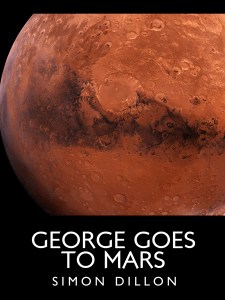
GGTM_600px GGTT

George goes to Mars and George goes to Titan are books 1 and 2 respectively in a thrilling, action-packed space tale set just over a hundred years in the future. Each story is a stand-alone adventure, but I recommend reading the novels in order nonetheless.

Here is the blurb from the back of George goes to Mars:

When George Hughes discovers he has inherited the planet Mars, he goes from poverty to becoming the richest boy on Earth overnight.

Accompanied by his new guardian, a mysterious secret agent and a crew of astronauts, George voyages to Mars to sell land to celebrities wanting to build interplanetary holiday homes. But sabotage, assassination attempts and the possibility of an alien threat plunge him into a deadly adventure…

Here is the blurb from the back of George goes to Titan:

The thrilling sequel to George goes to Mars…

A year on from his adventures on Mars, George Hughes faces an even deadlier peril as he travels to Titan on an urgent rescue mission. The mysterious Giles returns to help him, but assassins are once again on his tail, and a new, far greater alien menace lurks in the shadows waiting to strike.

The George Hughes trilogy is not just for children. Here are a few of reviews from adults:

“This is the second Simon Dillon novel that I’ve read and have thoroughly enjoyed. A wonderfully engaging and enjoyable read. A fun and easy going escape from reality, as all good books should be!” – Delian Jones, Amazon.

“A thoroughly enjoyable read.” – Mark, Amazon.

“Reading like a cross between one of Edgar Rice Burroughs’ pulpy Mars adventures and a Robert Heinlein ‘juvenile’, this improbable yarn (just how many “saved in the nick of time” coincidences can one novel contain?) about a rags-to-riches-to-hero boy named George was nonetheless page-turningly entertaining. Perfect rainy day/sick day reading.” – Elizabeth Olson, Goodreads.

And here some thoughts from the target audience (at least I assume so, given the tone of their reviews):

“This was totally amazing! Involves space ships, aliens and more! A totally exciting adventure you’ll love!” – Anonymous, Barnes and Noble.

“Pure awesomeness! Packed with suspense and adventure, as well as LOTS of action!” – Anonymous, Barnes and Noble.

“Best book ever!” – Anonymous, Barnes and Noble.

For those who prefer print copies, they can be ordered here and here (sadly not for free).

GGTN 1600 x 2400

George goes to Neptune is released on the 25th October. You can pre-order the Kindle download from Amazon by clicking here. Print copies will be available from the 31st October.

George goes to Neptune Q&A

I’ve received a number of questions regarding my upcoming novel George goes to Neptune, and the George Hughes trilogy in general. Herewith a Q&A, ahead of the release on the 25th October.

GGTN 1600 x 2400

What was the inspiration for the George Hughes trilogy?

The initial novel, George goes to Mars, was inspired by an article I saw in 2004, regarding an individual who made a claim with the US land registry to the effect that if the moon was ever colonised, said individual would have the right to sell the land. To that end, this person subsequently received money from film stars, a few ex-Presidents and other eccentrics from amongst the rich and famous, buying plots of land to build lunar holiday homes. I subsequently came up with the basic story for George goes to Mars and designed it as a science fiction adventure for all ages, with an emphasis on fun and excitement rather than heavy sci-fi hand-wringing of the Asimov variety.

GGTM_600px

Was the George Hughes saga originally designed as a trilogy?

I’d like to claim it was all neatly planned, but no. George goes to Mars was originally conceived as a stand-alone novel. However, after writing it, the plot for the second novel immediately occurred to me, fully formed. It was such a good idea that I knew I would have to write it someday, but I actually dithered for several years, until 2012, when George goes to Titan was written.

GGTT cover

And by that point, you planned it to be a trilogy?

Er… no. After reading the initial draft of George goes to Titan, my wife said – and I have to be careful of spoilers here – “(name redacted) is going to return, right? You need another sequel.” I immediately realised she was correct, and again, almost overnight, the entire plot of George goes to Neptune was planned.

Is George goes to Neptune definitely the final instalment?

I am 99.9 per cent certain there will be no more George Hughes novels. If I ever write another, it will be set several years later with totally different characters. But even then my ideas for such a story are very, very sketchy and quite honestly I think I am done with the George Hughes universe.

Why?

Because I know, deep down, nothing will top George goes to Neptune. I am very pleased with it. I think it’s the best of the three and a fitting end to the adventures of George, Meredith, Giles and the others.

What can readers expect from the new novel?

It has as much mystery, action and humour as the previous books. The Martians will return, and George will also encounter an entirely new alien race. The plot obviously involves a trip to Neptune for reasons I cannot spoil, suffice to say that the reason is very personal for George.

There are also many returning characters, although in some cases they only turn up briefly. However, Giles and Meredith both continue to play crucial roles. In fact, I think Meredith has all the best lines this time. I have really enjoyed developing her as a character throughout this series.

The main difference between George goes to Neptune and previous instalments is that this time the tone is slightly darker, especially in the final act which I think may surprise a number of readers.

How is it darker?

Well, I can’t get into specifics for fear of spoilers. However, the plot is as much about overcoming the potential for evil within oneself as overcoming external evil. Amid this I touch on issues including grief and the consequences of violence. But this probably makes the book sound really heavy and tough. I promise it is just as much fun as the others!

The George Hughes series have thrown up a bunch of interesting, more grown-up themes, right?

Absolutely. They are for adults as much as children, and over the course of three novels I have touched on everything from murderous religious fundamentalism to sexual equality, civil rights, slavery as well as more metaphysical elements. If these stories provoke a modicum of thought amid the thrills, then I am very happy.

George goes to Neptune is released on the 25th October. You can pre-order the Kindle download from Amazon by clicking here. Print copies will be available from the 31st October.

Reading to Children

I recently read an article that chilled me to the bone, claiming parents are reading to their children less and less (only one family in three, apparently). Even worse, when people suggest utter nonsense like this (so ludicrous I had to check my watch and make sure it wasn’t the 1st of April), I decided I had to post a blog on this subject.

The very idea of not reading to my children is an anathema. Not only is it important bonding time, but it also leads to deep, often quite profound discussion.

InHome_K_dad_boy_funinsun

For example, I have almost finished reading The Hobbit to my six year old. Not only did he love the thrills and spills of that adventure, but the section we are currently in, just prior to the Battle of Five Armies, has led to in depth talks about idolising wealth and the nature of greed.

In my view, not reading to children is nigh-on call for intervention by the social services. It goes without saying that reading to children is vital if you want to stimulate their imaginations, whatever their age. Whether you are reading picture books like The Hungry Caterpillar, Dogger, The Grufallo and The Tiger who came to Tea or novels like Swallows and Amazons, The Wind in the Willows, Five go to Smuggler’s Top or The Lion the Witch and the Wardrobe, or non-fiction material (my youngest son is very partial to books about undersea life, especially sharks), reading to children is absolutely essential to raise well balanced human beings.

It is also a great way for parents to reconnect with their own childhoods. I really enjoy reading my children the tales I loved as a child, as well as more recent greats, such as the Harry Potter books – a series I would have loved to have grown up with. I am often surprised and delighted to discover jokes and themes that can only be appreciated as an adult in the likes of, say, Winnie the Pooh.

If it is true that more and more parents are not reading to their children, then I can only condemn such inaction as shameful and bitterly sad neglect.

It should come as no surprise that I also use my children as guinea pigs for my own novels. I have almost finished reading the final book in the George Hughes trilogy, George goes to Neptune, to my eldest child, which is going down very well (although I don’t think he was quite prepared for the dark turns of the final act).

GGTN 1600 x 2400

Incidentally, George goes to Neptune is released on the 25th October. You can pre-order the Kindle download from Amazon by clicking here. Print copies will be available from the 31st October.

George goes to Neptune excerpt

Here is a brief taster of my upcoming novel – the third and final segment in the George Hughes trilogy, George goes to Neptune.

GGTN 1600 x 2400

Selecting a snippet from this novel has been fiendishly difficult, since I did not want to spoil too much – partly for those who haven’t read the previous novels, but most especially because those that have deserve to discover the twists and turns without knowing anything in advance.

The opening chapter sees George behaving somewhat differently to the way we have known him previously. He appears to have become slightly more arrogant and paranoid, for reasons he cannot fully understand himself. Are these simply teenage hormones? Is he suffering post traumatic stress from the events in George goes to Titan? Or is there a more sinister reason for George’s subtle shift in behaviour?

“George’s adoptive parents Albert and Gertrude sat on a white leather sofa reading together in companionable silence. They looked older, greyer and more fragile than they had only a year ago, although that was hardly surprising considering how brutally they had been treated under the Titanian occupation. Yet rather than feeling sorry for them, as he had at first, lately George had found himself resenting them. As a result of highly unusual circumstances, Albert and Gertrude had become the heads of the Mars Trust, and they would continue in these roles until he came of age. Yet they were hardly qualified to run such a huge organisation. It irritated George that he couldn’t simply take the reins of his company right now. He already had many ideas about projects the Trust could develop – projects that could change the world, strengthening it against any future alien threats. After two invasions it was time to make the planet secure. George was determined that what happened first with the Martians and secondly with the Titanians must never happen again.

Albert glanced up from his book as George opened the fridge. ‘Need some brain food for homework?

‘Hardly,’ said George. ‘Actually there was something I wanted to ask you.’

‘What is it love?’ asked Gertrude, putting down her magazine.

‘Miniaturisation. We need to invest in research in that field.’

‘Why?’

‘If we learn how to miniaturise living matter, think of the possibilities!’

Gertrude frowned. ‘You mean people? Shrinking people? Whadya wanna do that for?’

George restrained himself from moaning about his adoptive parent’s lack of vision. This was a frequent problem he had encountered, but overcoming it meant explaining matters in very simple terms.

‘We’ve just suffered two alien invasions in as many years. With miniaturisation we could hide planetary defences and weapons that would ensure any sneak attack could be dealt with immediately. Entire battalions could be stationed around the planet and live in a miniaturised world, invisible to the naked eye, ready to be called to action and fight off any invader.’

‘Sounds a bit…paranoid to me,’ said Albert. ‘Isn’t it enough that we have all these new fancy weapons from them spaceships that came last year? No-one’s gonna come invading Earth in a hurry, not with all that firepower at our fingertips.’

‘If we don’t invest in miniaturisation now, someone else will get there first.’

‘Is that a good enough reason to spend money that could be used helping and housing all them people that lost everything in the invasion?’

‘The Mars Trust was never meant to be a humanitarian organisation,’ said George. ‘It was set up to make money, and to guide mankind for the greater good.’

Gertrude frowned at George as though he might be ill. ‘What’s the matter sweetheart? Girlfriend trouble?’

George rolled his eyes. He couldn’t bear the patronising manner in which Albert and Gertrude seemed to speak to him lately.

‘I am proposing a sound investment, nothing more.’

‘I don’t know love,’ said Gertrude. ‘It sounds risky. We’d have to use animals to test it. Then we’d have to use humans eventually.’

‘All great scientific breakthroughs involve risk at the research stage,’ said George.

‘I dunno,’ said Albert. ‘I don’t think the Mars Trust should be all about military research.’

‘It wouldn’t be all about that,’ said George. ‘Just partly.’

‘I’m surprised to hear this from you, after all you saw in that other world,’ said Albert. ‘You told me how the other you used the Mars Trust to become a tyrant.’

‘Tyrants are what I’m trying to protect this world from.’

‘Saving the world isn’t just down to you, or me, or any one person,’ said Albert. ‘I have a bad feeling about this miniaturisation business. I’m worried where it could take us.’

‘I have a bad feeling too,’ said George. ‘I have a feeling someone will develop the technology and use it to invade the Earth, right under our noses.’

‘So you’re afraid of what you might call a miniaturisation gap, is that correct?’

‘That’s a good way of putting it.’

‘Have you read any 20th Century history?’

‘Bits of it. Why?’

‘What you’re saying reminds me of the reasons Russia and America gave for making nuclear weapons.’

‘This isn’t the same thing,’ George said, aware he was getting angry. ‘This is about protecting our planet. You of all people ought to understand that after everything you went through.’

Albert’s face darkened. ‘Alright George. We’ll think about it. Why don’t you go and finish your homework?’

George returned to his room, fuming inwardly. Why were Albert and Gertrude raising such foolish objections? The Cold War of the 20th Century was hardly a valid comparison, and even though he hadn’t studied that particularly historical period, he knew enough to know their present situation was entirely different.”

George goes to Neptune is released on the 25th of October on Kindle. It is currently available to pre-order at Amazon here.

Print copies will be available from the 31st of October.

Children’s stories and CS Lewis

CS Lewis once said that a children’s story that can only be enjoyed by children isn’t a good children’s story.

silver-chair

I don’t think he meant that children were undiscerning and couldn’t tell a good story from a bad one. I think what he meant was that the best, and indeed the most popular children’s stories, appeal to an inner child in adults as well as to children themselves.

The enduring popularity of the very greatest children’s stories stands testament to this truth. Everything from Swallows and Amazons to Winnie the Pooh, Harry Potter and indeed Lewis’s own Narnia books reach out to the adult reader, inviting them to experience again the magic of childhood with all its wonder, fear and heroic dreams, as well as its inevitable, bittersweet transition into adolescence – often fearlessly touching on all manner of difficult themes along the way.

Adults often enjoy children’s stories on a completely different level to children. Mary Poppins is a case in point, both book and film. In fact, speaking of film, the Toy Story movies – particularly Toy Story 3 – provide yet another example of this principle.

When I have written children’s stories I have always tried to bear CS Lewis’s comment in mind. So far I have yet to encounter a single adult reader who has dismissed my novels as “kid’s books”. Quite the opposite in fact, with many reviewers insisting Uncle Flynn, Dr Gribbles and the Beast of Blackthorn Lodge, George goes to Mars and George goes to Titan contain many adult themes (no, not that kind).

These reviewers are quite right. My novels mentioned above touch on overcoming fear, the dangers of mollycoddling, playing God, the insanity of the Cold War, greed, religious fundamentalism, sexual equality, bullying, post-traumatic stress, grief, death and the responsibilities of leadership, amongst other things.

In other words, they are what I hope CS Lewis would call good children’s stories.

My upcoming novel George goes to Neptune – the third and final instalment in the George Hughes series – is no exception. The story, particularly in the final chapters, goes to some quite dark places.

GGTN 1600 x 2400

George goes to Neptune is released on the 25th of October. You can pre-order the Kindle download from Amazon by clicking here. Print copies will be available from the 31st of October.

George goes to Neptune – the cover

Here is the cover for my upcoming novel – the third and final instalment in the George Hughes trilogy, George goes to Neptune.

GGTN 1600 x 2400

My incredible designer Charles Bown presented a number of options, but in the end we settled on something in keeping with the previous cover designs, emphasising a colour scheme that complemented them but also could be distinguished in its own right. Ultimately the covers for the George Hughes series are what might be termed “adult covers” for children’s books (akin to the Harry Potter adult covers). One day, I would love to give these books “children’s” covers, perhaps akin to the original Harry Potter artwork. But for now adults are my primary readers, and obviously the George Hughes series can be enjoyed by all ages.

For a fuller interview with Charles Bown from last year, click here.

You can follow Charles on Twitter here.

In addition to the cover, here is the blurb from the back:

In this spectacular sequel to George goes to Mars and George goes to Titan, George Hughes faces his most dangerous adventure yet.

Following the Titanian invasion, a deadly and very personal threat forces George to undertake a voyage to a top secret Martian research base on Neptune.

On this remote outpost, he uncovers a diabolical plot. But George is too late to prevent the catastrophe.

A catastrophe that will change his life forever…

George goes to Neptune is released on the 25th of October on Kindle. It is currently available to pre-order at Amazon here.

Print copies will be available from the 31st of October.
Action scenes

Action scenes in novels or films are a notoriously tricky thing to pull off. In fact, I find they are actually the hardest thing to write in either a screenplay or prose.

There are several pitfalls to avoid. Too little action in a story that demands it will feel flabby, often with a second act that seems to drag. Too much and it feels overblown, and character empathy is lost. Writing prose compounds this issue, as simply reading description – of a battle for instance – doesn’t work the way it might in a screenplay which will ultimately be filmed.

How then to approach action scenes in prose? I try to always emphasise the senses – smell, taste, touch, the noise, etc. Also describing the emotions experienced by the character helps a great deal, as do various other methods. Take the afore-mentioned battle scene problem. In The Lord of the Rings Tolkien dealt with this by building suspense. For example, the Minis Tirith siege is experienced by characters within the walls, slowing observing the advancing menace from Mordor. It is handled very differently in the film version, but the novel mostly stays with Pippin and his point of view.

lotr

It can also be a good idea to keep battle scenes in books brief. The Battle of Five Armies in The Hobbit is essentially dealt with in a few lines, whereas the film version went on for the best part of an hour. This isn’t necessarily a bad thing. It’s simply about making the right choice for the right medium.

There are various ways I approach action in stories that demand it. Sometimes it can be fun to bookend a story with large action sequences, providing a sense of full circle. Other times it is good to gradually build action scenes (what I call the Die Hard approach) with each outdoing the last. This is generally my method with the George Hughes series. There is normally an action scene fairly early on – in chapter 2 – before the main plot kicks in properly, and the scale of the action becomes bigger and increasingly outrageous.

GGTN 1600 x 2400

George goes to Neptune, the final novel in the George Hughes series, obviously features plenty of action. It is released on the 25th of October for download on Kindle, and can be pre-ordered here. Print copies will be available from the 31st of October.

How to make a segment in an ongoing story individually satisfying

One distinct advantage to writing a series of books with the assumption that the latest will be the last is that it provides a safeguard to ensure that each is individually satisfying. This was the case with all three of my George Hughes adventures, and the third instalment, George goes to Neptune, provides a definitive ending to the series.

GGTN 1600 x 2400

Conversely, the recent trend in film of either dividing the source text for the sake of greed rather than for any good artistic reason; or being too lazy to come up with a proper ending and instead assuming the audience will attend the next film in the series, drives me mad. Breaking Dawn, Mockingjay and Harry Potter and the Deathly Hallows are examples of the former trend. Prometheus is another example of the latter. Mind you, the entire screenplay for Prometheus made no sense, so the lack of a proper ending was merely the icing – or lack of it – on a very poorly baked cake.

That isn’t to say the to-be-continued thing can’t work. For example, The Empire Strikes Back features an absolutely first-rate climax and feels wholly satisfying even though it leaves plot threads dangling. In a similar way, dividing The Lord of the Rings into one film per volume made perfect sense.

Ultimately, my approach with the George Hughes series has been akin to the current Marvel movies, with each one being essentially a standalone tale, despite references to earlier subject matter and a post credits sequence to set up the next movie. In the George Hughes series, my short epilogues perform the same function as those post credits sequences.

That said, sequels are notoriously tricky things, especially if they aren’t planned. The idea for George goes to Titan occurred to me after I had written George goes to Mars, but because George goes to Mars felt so complete in its own right, I was reluctant to write it. In fact, it took me six years to finally give in to the nagging voices in my head, urging me to write the sequel.

I was even more surprised to find, at the end of the second book, that the idea for a third cropped up. Again, I wrote an epilogue for the second, this time knowing I wouldn’t wait so long to write the third.

The result is George goes to Neptune – the final book in this series – which will be out on the 25th of October. It can be pre-ordered to download on Kindle from Amazon here. Print copies will be out from the 31st of October.

George goes to Neptune out this October

This October, I am releasing the third and final novel in the George Hughes series, George goes to Neptune. It is available to pre-order from Amazon here.

GGTN 1600 x 2400

For me, this is the best George Hughes novel yet. I hope you enjoy it.

Here is the blurb from the back of the book:

In this spectacular sequel to George goes to Mars and George goes to Titan, George Hughes faces his most dangerous adventure yet.

Following the Titanian invasion, a deadly and very personal threat forces George to undertake a voyage to a top secret Martian research base on Neptune.

On this remote outpost, he uncovers a diabolical plot. But George is too late to prevent the catastrophe.

A catastrophe that will change his life forever…

George goes to Neptune is released on the 25th of October on Kindle. Pre-order your copy now!

Print copies will be available from the 31st of October. Details to follow soon.