For five days only – Dr Gribbles and the Beast of Blackthorn Lodge FREE download!

For five days only, you can download my novel Dr Gribbles and the Beast of Blackthorn Lodge absolutely FREE from Amazon.

Dr Gribbles and the Beast of Blackthorn Lodge is a gripping and scary tale involving spies, monsters, haunted houses, mad scientists and lots more besides, with action and thrills to spare. It was actually inspired by the nightmares of my youngest son, and the book is duly dedicated to him.

Here is the blurb from the back of Dr Gribbles and the Beast of Blackthorn Lodge:

September 1987.

Curiosity lands Tim Rawling in a world of secrets, spies and a desperate race against time.

The haunted house, the monster and the mad scientist are only the beginning of a terrifying adventure.

If you prefer to actually spend money and order print copies, they can be ordered here:

http://www.lulu.com/shop/simon-dillon/dr-gribbles-and-the-beast-of-blackthorn-lodge/paperback/product-21564790.html

What genres are most difficult to write?

Someone recently asked me, of the various genres I write, which are the most difficult? I had a think about this, and decided to answer in a blog post. So herewith a top 5 of genres I have written, in descending order of difficulty.

  1. Thrillers – In relative terms, I find thrillers easiest out of the genres I write. Obviously they are still difficult, especially as they divide into so many sub genres – ie murder mystery, supernatural thriller, political thriller, conspiracy thriller, historical thriller and so on. But as long as the setting is contemporary and they are aimed at adults, these stories are frequently a joy to write. The Birds Began to Sing is a good example.

The Birds Began to Sing_1600x2400_Front Cover

  1. Adventure – Most of my adventure stories are primarily aimed at children (though grown-ups do enjoy them). These can be slightly trickier than straightforward thrillers as writing for children is always harder due to the discipline of experiencing events through the eyes of a child. Other factors can complicate these novels too. For instance, Dr Gribbles and the Beast of Blackthorn Lodge is set in the latter years of the Cold War, so historical accuracy comes into play.

DrGibbles_1600x2400_front cover

  1. Horror – Whether for children or adults (yes I have written horror for children – check out previous blog posts), horror can be very difficult to get right. Again, the genre overlaps with many others, so for example I have written two detective thrillers that rapidly evolve into full-blown horror (as yet, both unreleased), along with a very dark fairy tale that some will call horror (the afore-mentioned children’s story). How well I succeeded in both endeavours remains to be seen, but the next novel I am writing will also be a supernatural thriller/horror story.
  1. Science Fiction – I don’t have experience of writing what I would call “hard” sci-fi, but so far my attempts in this genre include escapist adventure (the George Hughes series) and “light” sci-fi (Children of the Folded Valley). In both cases, the novels were extremely difficult to write. The George Hughes books require a huge amount of invention which has to sound pseudo-scientific for suspension of disbelief. The sci-fi elements in Children of the Folded Valley are very much in the background, but during chapters where they are expounded on, again the pseudo-science, even though it is utter nonsense, has to sound convincing enough for suspension of disbelief.

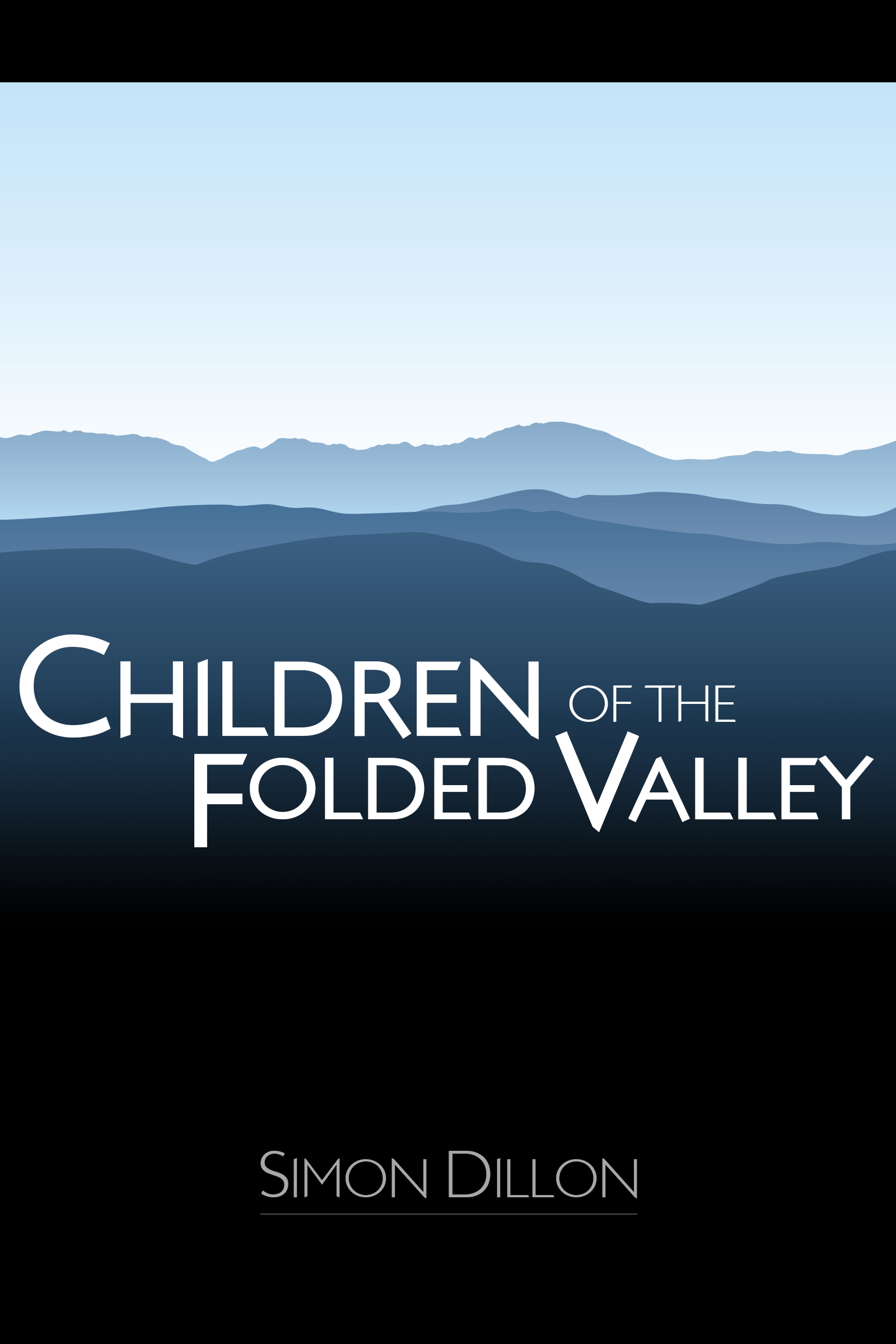
Folded Valley cover

  1. Fantasy – Without a doubt, I find fantasy the most fiendishly difficult of genres for several reasons. Again, there are multiple subgenres, but even without getting into that, the process of creating an entire and original world from scratch – including its politics, history, geography, culture, art, religion, languages and so on, depending on how detailed it is necessary to get – is a hideously troublesome undertaking. I have written a number of fantasy epics for both adults and children, but so far have released none, simply because they are not yet good enough, in spite of the fact that they contain good ideas. Being truly original in this genre is also very, very tricky indeed. I have half a dozen fantasy novels that I have been working on for years, and in some cases decades. One day I might actually consider one of them good enough to release, but I make no promises on that score.

Given that the above genres are what I generally write in, I was very surprised back in 2006 when I felt inspired to write a young adult romantic drama. I am finally releasing this novel, entitled Love vs Honour, this May. It is available to pre-order from Amazon (see link below).

Love vs Honour is only time I have branched out in this particular genre, and I suspect I might never do so again (though never say never). How successful I was remains to be seen, but here is the blurb from the back of the book to whet your appetite:

Two Religions. Two Deceptions. One Love.

When Johnny meets and falls in love with Sabina, their bond proves stronger than a teenage holiday fling.

Fearing the disapproval of their strict Christian and Islamic families, they undertake an elaborate deception to continue seeing one another. Johnny pretends to convert to Islam whilst Sabina pretends to covert to Christianity to appease their parents. 

But how long can this deception last before it unravels?

Love vs Honour is released on the 31st May on Amazon Kindle.

Print copies will be available from the 7th of June.

NEW RELEASE: Love vs Honour out on the 31st of May

This May I am releasing a new novel entitled Love vs Honour.

It is available to pre-order from Amazon (see link below).

Love vs Honour is a novel I wrote almost ten years ago and have sat on for some time, for reasons I will explain in subsequent posts.

It exists entirely outside of my usual genres; being neither a thriller, nor science fiction, horror, or a children’s adventure, but a young adult romantic drama aimed primarily at the Fault in our Stars demographic (although it isn’t about life-threatening illness). It will, I suspect, also be appreciated by grown-up readers, or anyone who enjoys a gripping, provocative drama.

Here is the blurb from the back of the book:

Two Religions. Two Deceptions. One Love.

From the author of Children of the Folded Valley

When Johnny meets and falls in love with Sabina, their bond proves stronger than a teenage holiday fling.

Fearing the disapproval of their strict Christian and Islamic families, they undertake an elaborate deception to continue seeing one another. Johnny pretends to convert to Islam whilst Sabina pretends to covert to Christianity to appease their parents.

But how long can this deception last before it unravels?

Love vs Honour is released on the 31st May on Kindle. Pre-order your copy now!

Print copies will be available from the 7th of June.

Download Uncle Flynn FREE for five days only!

For five days only, you can download my debut novel, Uncle Flynn, absolutely free from Amazon.

Uncle Flynn was received very positively. On the surface it is a properly old-fashioned treasure hunt adventure, but it contains underlying themes about overcoming fear and the dangers of mollycoddling. The book is dedicated to my eldest son, and was largely inspired by our many excursions over Dartmoor, as well as a bit of local history.

Here is the blurb from the back of Uncle Flynn:

When timid eleven year old Max Bradley embarks on a hunt for buried treasure on Dartmoor with his mysterious Uncle Flynn, he discovers he is braver than he thought.

Together they decipher clues, find a hidden map and explore secret tunnels in their search. But with both police and rival treasure hunters on their tail, Max begins to wonder if his uncle is all he seems…

Here are some reviews:

“Harking back to the wonderful adventure stories of Arthur Ransome, Uncle Flynn is a welcome return to the excitement of outdoor exploits in wild surroundings. Excitement, tension and peril combine in a well-written tale where The Goonies meets Swallows and Amazons. The evocative descriptions of treasure seeking on Dartmoor will have you longing to visit and explore for yourselves. Action-packed puzzle-solving pleasure for children and adults alike, with a neat twist in the tale to keep you guessing.”

Mrs Alice R Brewer.

“A treasure for all ages. Kids and teenagers would love this fast-paced adventure story. Most adults would also find it a light and enjoyable read.”

B Fraley, Amazon.

“Really enjoyed this book. Had read Folded Valley and thought I would try this by the same author. Kept me reading well past my bedtime.”

Simon Smith, Amazon.

“Don’t pass this one by. I have been burning through the free NOOKbooks and this is the absolute BEST. Doesn’t matter what type of fiction you like to read, I can imagine this would capture just about anyone’s attention – and heart.”

willreadanything, Barnes and Noble.

“Could not put the book down, so enjoyed the journey. Recommended it to my 12 year old grandson who now wants me to be his book reading adviser. Loved by three generations.”

Brinney, Barnes and Noble.

“What a wonderful book for young readers and anyone else who loves a book with a great twist on an amazing story of courage over fear.”

Beansie47, Barnes and Noble.

“I’m an 83 year old woman. Your book was a joy to me. I felt I was having all the adventures myself at this ripe old age. Your book was like a cold drink of water on a hot day. Thank you.”

Joan McLaughlin, commenting on the Uncle Flynn blog.

“I downloaded the book for my boys to read, and thought I’d just read the first few lines… Needless to say I read to the end! Well written and most enjoyable – great adventure with life lessons woven into the story.”

Cecile Weyers, commenting on the Uncle Flynn blog.

If you prefer print copies, they can be ordered here (but are not free, sadly): http://www.lulu.com/shop/simon-dillon/uncle-flynn/paperback/product-21165126.html

How do I handle bad reviews?

One simple fact any writer has to face is that you cannot please all people all the time. Often the very reasons one person loves your work is the reason another hates it. The important thing is to provoke reactions.

That said, no matter how thick skinned writers claim to be, or how much bravado they put across, bad reviews can be seriously discouraging. How then do I deal with this?

Fortunately, I have not yet been in a position where any of my novels are universally or near universally reviled. I can imagine such an occurrence would be deeply disheartening. For the most part, reaction to my work has been overwhelmingly positive. Such a good/bad ratio means it is very easy to dismiss bad reviews with a “can’t please everyone” shrug.

Yet some bad reviews have actually proved instructive, either to confirm that I succeeded in my goals (eg, when reviewing a horror story if someone says “I hated this book because it was too scary”), or to legitimately highlight areas I can improve.

Ultimately a review is simply an opinion, but it is very gratifying when a large amount of opinion is positive. My novel Children of the Folded Valley has almost entirely five and four star reviews on Amazon, and clearly the majority of readers have really embraced the novel.

But if you click on the link below, you will note that despite such apparent success, there are still a couple of bad reviews.

So how do I handle bad reviews? Depending on what they are saying and why, I either am discouraged or encouraged. I either disregard them, or see (sometimes through gritted teeth) where valid points have been made. They can hurt, but they can also be vitally important.

In short, they should not automatically be dismissed.

Getting under the skin of the reader

Every writer desires that their work will somehow affect the reader, getting under their skin as it were. In fact, sometimes bad reviews are preferable to good ones if the writing has made the reader frightened, sad, angry, offended, or otherwise provoked them in some way.

Occasionally I read reviews of my work that clearly demonstrate I have achieved this with a particular reader. For example, here is a review from an Amazon reader, David MacGuire, reviewing my novel Children of the Folded Valley.

“I generally review only the books that I really love or hate passionately. I neither hate nor love the book, it has its flaws, but the story has stuck with me. This is a good, original story. The concept and characters are engaging and appealing. There are places where the writing gets a little thin, but I hope to see many more books by this author. It has a happy ending, of sorts, and yet left me profoundly depressed. I think it was that the author hit it right on the head; even in a perfect paradise, people are going to be perfect s***s to each other, given half a chance. Even so I recommend it.”

Mr MacGuire’s review sounds as though he is still struggling to figure out what he really felt about the novel, which I am pleased about because it demonstrates the story got to him. I am not ashamed to admit that reviews like this provide great encouragement, so thank you David MacGuire.

Children of the Folded Valley is available to download for Kindle (see below link):

Print copies are available from Lulu.com: http://www.lulu.com/shop/simon-dillon/children-of-the-folded-valley/paperback/product-21836029.html

How long should a chapter be?

 studies

How long should a chapter be?

Like so many writing related questions, my answer is: it depends.

Many contemporary thrillers seem to consist of literally hundreds of chapters, with each lasting no more than two pages. I am Pilgrim is a good recent example, and anyone familiar with the works of Michael Crichton will also know what I am talking about.

Other texts, surprisingly often stories aimed at children, contain chapters that at times seem very long. Harry Potter and the Order of the Phoenix contains many lengthy chapters, for example.

Both approaches work well for their respective formats – fast contemporary thriller, versus more traditional fairy tale. The short chapter approach doesn’t necessarily mean the writer considers the reader to have the attention span of goldfish. Other novels have a mixture of short and long chapters for artistic reasons – Life of Pi, for instance.

In my own writing, I generally stick to average length chapters in both my novels for children and for grown-ups, regardless of genre or subject matter. My stories seem to naturally gravitate to a relatively straightforward format. However, the stories themselves are often anything but.

On a related note, I generally do not title chapters in a novel aimed at grown-ups (with rare exceptions), but I always do in a novel aimed at children. Why? I have no idea. Perhaps chapter titles in books aimed at children just sound cool.

Writing horror for children

The term “horror for children” might appear to be an oxymoron. However, I am personally of the opinion that no subject matter or level of scariness should be off limits to children, provided the treatment is appropriate.

I am currently writing a very dark fairy tale aimed at “the Harry Potter demographic”, although I suspect many will categorise it as horror. Think Neil Gaiman’s Coraline and you’ll get an idea of the tone.

Coraline

My novel is, without question, the scariest book I have written that is primarily aimed at children. I think open-minded adults will enjoy it too, even if some are uneasy or disapproving – hopefully for all the right reasons.

Frankly, all good fairy tales should make parents uneasy – or else I question their parental veracity. Wherever we find abused, traumatised or terrorised children in literature, in everything from Oliver Twist to Hansel and Gretel, children often identify with the journeys taken by these characters, whereas parents are rightly predisposed to be appalled by their treatment.

However, just because something is dark, scary and difficult does not necessarily mean it should be out of bounds to children. I accept that parents are always the final arbitrator in these matters, as they know best the temperaments of their offspring, but children know when they are being patronised, and talking down to children is a terrible mistake.

The thing to bear in mind when writing horror for children is to keep the treatment appropriate. No subject matter should be off limits, but how this subject is approached is what makes the difference. Here is one simple principle: depict all horrifying events through the eyes of your child characters. That way, you can place them in the most terrifying situation imaginable, and it will still read in an honest and innocent way. Example: the Holocaust. How do you tackle that darkest of subjects in a way appropriate to children? The Boy in the Striped Pyjamas manages, by depicting events through the eyes of a child protagonist. By contrast, horror for adults that features children is generally seen through the eyes of adult protagonists, with all their terrible knowledge of what the world is really like.

By the way, viewing events through the eyes of a child doesn’t necessarily mean keeping blood and gore out of it – quite the contrary in fact, since children often have a lurid fascination with such things (witness the enduring popularity of the Horrible Histories series if you don’t believe me).

Finally, and most importantly, horror stories for children are about confronting difficult truths in a way that is ultimately empowering. The afore-mentioned Coraline – both the book and Henry Selick’s film adaptation – provide excellent examples of this principle. Amid all the scariness, that story is about encouraging children not to take their parents for granted, whatever their shortcomings.

By contrast, horror stories for adults do not necessarily offer such empowerment. One could hardly accuse Stephen King’s The Mist of being particularly empowering. Adult horror can also contain political allegory or satire often lost on children, or else it is designed to shake the reader/viewer out of their apathy with dire warnings of one kind or another. For example Threads – a 1984 BBC television production about nuclear war – is quite possibly the most frightening and horrific warning of any kind I have ever witnessed.

Ultimately horror, like romance, weepies and even comedy, is about catharsis. These genres all offer a way for the reader to identify with something they would never want to go through in real life and leave them either laughing, crying or shaking with terror. Or, because the reader has unfortunately been through a similar situation in real life, they identify with events all the more – even if they are metaphorical (such as last year’s horror film The Babadook, which is essentially about coming to terms with grief).

As a consequence, the reader (or viewer) feels alive. Children are no different, and can experience a similar catharsis, often a very empowering one, in spite of their innocence. That is the power of storytelling and that is why – for me at least – a horror story for children is not an oxymoron.
Slow isn’t necessarily boring

A slow pace doesn’t necessarily mean a story is boring.

For some, this is an anathema. But should all stories zip by at a relentless pace; twisting, turning and generally behaving as if the audience or reader has the attention span of a goldfish?

To which I reply, it all depends.

Obviously in a certain kind of thriller, a fast pace is an important aspect of the genre. Also adventure stories and often children’s stories require a fast, attention grabbing pace that carries the reader or viewer along for a thrilling ride.

Yet frenetically paced stories – in film, onstage or in print – can sometimes come off as rushed, inconsequential and above all boring. This is what I like to call the Michael Bay effect. One hundred miles per hour is not necessarily the kind of pace required for a story like, say, The Remains of the Day, which is an utterly fascinating and gripping tale in both film and print. However the gentle, gradually getting under the skin approach is vital to the success of the story.

200px-KazuoIshiguro_TheRemainsOfTheDay

Sticking with film for a moment, many great movies – including Lawrence of Arabia, 2001: A Space Odyssey and The Assassination of Jesse James by the Coward Robert Ford – have a very slow, deliberate pace. Yet every frame of those movies, especially if seen in the cinema, arrests the attention of the viewer. Well, they certainly arrested my attention, at any rate. Obviously tastes differ, but the point remains: slow does not necessarily mean boring.

Even if you are dealing with an adventure story, sometimes a slow build and a decent set-up of the characters will make the dangerous predicament of the protagonist all the more palpable. Life of Pi is a good example. Or Batman Begins, wherein the first appearance of Batman comes over an hour into the film.

Even a fast slapstick comedy needs to be properly paced. There’s a climactic point about halfway through What’s up Doc? so funny that director Peter Bogdanovich was probably in danger of actually injuring his hysterical, laughter-gripped audience. So he allows them a brief romantic interlude before throwing them back into the relentlessly funny fray.

In my own work, I try to maintain an appropriate balance, depending on the subject matter and genre. Even in a fast paced adventure like Dr Gribbles and the Beast of Blackthorn Lodge (which features a monster, a mad scientist and a haunted house in the opening chapter alone) I try to make sure the reader doesn’t become too exhausted by the frantic plot developments, allowing breathing spaces and time for the characters to develop.

DrGibbles_1600x2400_front cover

Other books I have written – such as Love vs Honour, which I plan on releasing later this year – have a much more slow-burn approach, gradually building to what I hope is a climax that will satisfy and reward the patience of the reader.

In any event, I reiterate that slow and boring are not necessarily words that belong together.

Choosing an ending

I always know how a story ends before I write it. Only when I have that ending do I then work backwards, trying to find the best and most dramatic way to arrive there.

When endings are very clear cut – for example, the answer to whodunit – writing becomes all about how you make the big reveal; what details should emerge first, how the mystery should build to this crescendo that will hopefully wrong-foot and delight the reader.

However, when the ending is more esoteric – for instance, when it is about a character’s emotional and spiritual journey – choosing the specifics of a satisfying emotional and spiritual resolution can be much trickier.

As a case in point, my novel Children of the Folded Valley presented me with a serious dilemma in early outlines. I always knew what would happen to the protagonist James Harper inwardly, but I was stuck between three different act three scenarios that would demonstrate how it happened.

(SPOILERS FROM THIS POINT FOR Children of the Folded Valley)

My earliest idea involved having James buy his model train from an older man who turned out to be Paul Crow’s long lost father. They would share a mutual catharsis in that James would explain what happened to Paul, whilst the old man presented James with the long lost train set of his childhood he had sought for so long. In this version, Paul had a much more active role in the uprising prior to the destruction of the Folded Valley, and died heroically in the fiery horror of that sequence.

I rejected this version of the ending because it placed too much emphasis on Paul Crow, who is a secondary character. Thus, he had a reprieve and survived the Folded Valley apocalypse.

I then prepared a version of the ending more or less as it is now, but shorn of the supernatural elements. Arthur Lord was not an ambiguous figure, but definitely human. However, whilst this ending worked, it still didn’t feel quite right to me. I realised that however far-fetched it might seem, my own belief in the supernatural meant the ending required something a little more mysterious.

Subsequently I arrived at the ending as it is now, which can be read a number of ways. I do not presume to offer any correct interpretation, as I designed it so the reader can make up their own minds. This element of the plot was a big worry to me initially, but given how much readers have embraced the novel it seems I was correct in devising an ambiguous ending with an air of the mysterious and supernatural.

Children of the Folded Valley is available from Amazon for Kindle.


Print copies can be ordered from Lulu.com: http://www.lulu.com/shop/simon-dillon/children-of-the-folded-valley/paperback/product-21812308.html