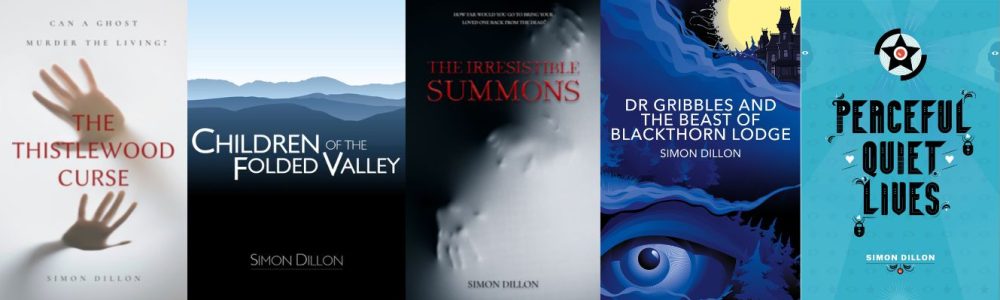
Uncle Flynn 10th Anniversary

Cover design: Charles Bown

This year marks the 10th anniversary of my debut novel Uncle Flynn. Well, sort of. Technically the first version appeared on 30th December 2010, but paperbacks followed in 2011, so it’s sort-of the 10th anniversary. Either way, this treasure hunt adventure for the young and young at heart still holds an important place in my heart.

Uncle Flynn was in fact the eighth novel I wrote, but the first I decided to self-publish. Having been turned down by agents and publishers, my brother-in-law suggested this thing called Kindle on Amazon, and I decided to give it a go. The book was a modest success, and received some very good reviews – although I’m sure the fact that it was free at that time helped.

Plot

The story concerns eleven-year-old Max, a boy who suffers from crippling phobias and anxiety. Estranged from his workaholic father, Max’s life gets interesting one day when his mysterious uncle Flynn – an archaeologist normally working in South America – comes to visit.

During his stay, Max and Flynn discover clues pertaining to a local legend – a treasure buried on Dartmoor by monks, during the sacking of Buckfast Abbey at the time of Henry VIII. Following these clues lead to the discovery of a map. Max begins to put aside his many fears and hang-ups due to his obsession with finding the treasure. Flynn is equally obsessed, despite the dangerous presence of rival treasure hunters.

Complicating matters even further, once they set off across Dartmoor, Max discovers the police are on their trail. What has his uncle done to put himself at odds with the law? Flynn urges Max to help him evade his pursuers. Because he is so desperate to beat their rivals to the treasure, Max agrees, despite his uncle’s refusal to tell him why he is on the run.

Photo by Elliot Martin on Unsplash

Background

As well as following in the tradition of well-known titles like Swallows and Amazons, Treasure Island, and adventure films like The Goonies, the novel was initially inspired by the many walks I had taken with my eldest son on Dartmoor (to whom the novel is dedicated). We had visited several memorable locations, including Cater’s Beam, Sherberton Stone Circle, the “Crock of Gold” Bronze Age tomb, and Wistman’s Wood. These all turn up in the novel, even if I am somewhat liberal with the geography.

Some of the dangers faced on Dartmoor by the characters are not entirely fictional. There are deadly mires, especially the notorious Fox Tor mire and Raybarrow Pool. In addition, there are wild boar in the west (now documented fact). There have also been several panther sightings, though most of these were on Exmoor rather than Dartmoor. The sheer number of these (and a few dubious photographs) raise eyebrows on a regular basis, although how they got there is a mystery. Some suggest that the UK Dangerous Pets Act in the 1970s caused eccentrics who owned big cats to turn them loose, and that they somehow bred in the wild. And yes – you can see adders on the moors at warmer times of year, though they typically slither away if you get anywhere near them.

Buckfast Abbey was another key location used in the book. Much of the history of the abbey works its way into the novel, especially regarding how Henry VIII burned priceless Catholic books, closed the abbey, and had its gold and other treasures transferred to London. William Petre, who is mentioned in the novel, oversaw this process. He later retired in the south-west, purchasing a couple of manors. Uncle Flynn moves beyond these facts to suggest William Petre had other motives for returning, namely that he had become obsessed with tracking down the treasure hidden by a few clever monks that had slipped through his fingers.

Photo by Louis Tripp on Unsplash

Themes

I suppose the novel is mainly about overcoming fear and the dangers of mollycoddling. My protagonist Max suffers severe anxiety and panic attacks. He has many phobias, and there are satirical suggestions that an increasingly risk-averse society is at least partly to blame. For instance, one sequence early in the novel has Max being initiated into a secret club in school – a club that dares to play conkers without “protective head gear”. Max and the other children are caught and punished for their dangerous behaviour. This may sound absurd, but my late father (who was a teacher) informed me this kind of nonsense has been introduced in some UK schools.

Such satire is largely peripheral, and the novel implies throughout that Max’s difficult, estranged relationship with his father is what really lies at the heart of his problems. In attempting to impress his father, Max – along with his mysterious, genuinely dangerous uncle – takes increasingly reckless action in his quest to find the treasure. The irony is mollycoddling actually leads Max to take greater and greater risks.

Of course, this makes the novel sound terribly heavy and worthy, and I can assure you it isn’t. It is, first and foremost, a children’s adventure story. I didn’t write it to deliver any kind of “message”. However, I noticed these themes and ironies after the fact. What is important to any author will always be inherent in the text of their work, and in this case, I can see these themes in retrospect.

Uncle Flynn is available on Kindle and in paperback here (in the UK) and here (in the US).

Borrowing History in My Novels

Many of my novels draw on history for their narratives, particularly the local history of where I live, in southwest England. Here are three examples of more fascinating historic footnotes that I appropriated, and massaged a little, for inclusion in my stories. The first two are from novels presently available, and the last one is from a manuscript I am holding on to for the time being.

The Dissolving of Buckfast Abbey (referenced in Uncle Flynn)

The facts: Henry VIII went about dissolving many Catholic monasteries during his reign. One of these was Buckfast Abbey, in the village of Buckfastleigh, on the southern borders of Dartmoor, which is a short distance east of where I live. The Abbey was dissolved by Sir William Petre, who in 1539, under instructions from the King, seized considerable amounts of gold which were subsequently taken to the Tower of London. William Petre later retired to the south-west. The Abbey was restored in the 1800s.

My fiction: In Uncle Flynn, the protagonist, eleven-year-old Max, and his mysterious adventurer uncle (who apparently has the police on his tail), uncover clues to hidden treasure written by a monk at the time of the dissolution. He supposedly took a vast amount of the Abbey’s gold, along with priceless Catholic library manuscripts, and buried them in a secret location on Dartmoor. This local legend is supported by William Petre’s supposed obsession with trying to locate this treasure that slipped through his fingers during the dissolution. It also explains why he chose to retire in the southwest.

Slaves of Lundy Island (referenced in The Thistlewood Curse)

The facts: Lundy Island is a tiny island on the Bristol coast, about three miles long and half a mile wide. It is sparsely populated, with limited local amenities, including a church, the Marisco Tavern, and a small airstrip where helicopters can land. Lundy Castle has since been divided into holiday homes. Electricity is only available at certain times of day, and there is no mobile phone signal (though there is a radio in the tavern).

Lundy has a rich and fascinating history, but one episode informed The Thistlewood Curse more than any other. Thomas Benson was an MP for Barnstaple when he owned Lundy in the 18th century. He also traded from the North Devon port of Bideford after inheriting a family fortune. His vessels transported tobacco, but he also kept a slave workforce on Lundy procured from convicts he was supposed to transport to America. After getting involved in smuggling, Benson’s misdeeds were discovered but managed to escape justice by fleeing abroad.

My fiction: Thomas Benson becomes Henry Thistlewood in my novel. As per real life, he secretly holds convicts intended for transportation to Virginia and uses them as slaves on the island. However, I devised the background for a ghost story: One slave, Jeremiah Adams, is executed with medieval barbarity after allegedly raping Thistlewood’s wife Cora. Whilst enduring death agonies, Adams curses the Thistlewood family line, swearing he will return to wipe them out.

In the present day, Henry Thistlewood’s descendant, Charles Thistlewood, son of Lord Alfred Thistlewood, mysteriously drops dead, having suffered an inexplicable heart attack. His wife Sally is an old friend of protagonist Detective Laura Buchan. Despite the doctor claiming Charles’s death is an open and shut case of tragic heart attack, Sally suspects foul play and asks Laura to come and secretly investigate, during Charles’s funeral. Laura brings along another childhood friend of theirs, paranormal investigator Lawrence Crane, who uses astral projection to try and discover the truth.

I won’t say anything more about the plot as I wouldn’t want to spoil it, but I will add that in my novel Lundy Castle is still occupied by the Thistlewoods, not divided into holiday homes.

Oliver Cromwell’s Head (referenced in The Balliol Conspiracy)

The facts: During the English Civil War, Balliol College in Oxford had its silver taken by the Roundheads and melted down for Oliver Cromwell’s New Model Army. After Cromwell’s death, when the monarchy returned, Charles II had Cromwell’s body dug up, put on trial, hanged, drawn, and quartered. His head was placed on a spike in London as a warning against anyone who’d seek to overthrow the monarchy again. Here’s where the facts get bizarre: Oliver Cromwell’s head was stolen, preserved, and changed hands multiple times (at one point it was hidden stuffed up a chimney), before supposedly being buried in Sidney Sussex College, Cambridge. Exactly where is unknown.

My fiction: My as-yet-unpublished novel The Balliol Conspiracy involves the above facts, though I tweak them by pretending Cromwell’s head was buried in Oxford. I won’t say any more about the plot, as the novel is strictly under wraps, suffice to say it’s a treasure hunt adventure for grown-ups, with a spy thriller element and a romantic element. I’ve not penned anything else quite like this, and it took quite some effort to rein in my gothic horror sensibilities whilst writing, to keep the narrative to PG levels. But I was determined that, for once, I’d write a novel that my mother could enjoy.

Uncle Flynn is available from Amazon here (in the UK) and here (in the US).

The Thistlewood Curse is available from Amazon here (in the UK), here (in the US), and here (from Smashwords).

The Balliol Conspiracy will be released at some point in the future. Watch this space.

Dr Gribbles and the Beast of Blackthorn Lodge Revisited

Last month, I revisited my debut novel Uncle Flynn with a number of articles. This month, I’m putting the spotlight on Dr Gribbles and the Beast of Blackthorn Lodge, but with just one article this time.

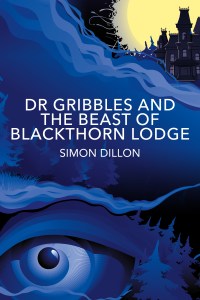
Dr Gribbles and the Beast of Blackthorn Lodge is a page-turning adventure story aimed at all ages, although primarily of appeal to those who enjoy novels such as Anthony Horowitz’s Alex Rider series. Check out this rather cool cover (courtesy of the excellent Charles Bown).

DrGibbles_1600x2400_front cover

A thrilling, fun, and sometimes scary ride (particularly in the first act), the opening chapter alone features a haunted house, a monster, and a mad scientist.

Set in 1987 towards the end of the Cold War, we’re introduced to our hero, eleven year old Tim; an intelligent, witty, but bullied child who gets trapped in the afore-mentioned haunted house. After a frightening encounter and narrow escape, he and his older brother Rob are drawn into a gripping adventure involving their neighbour; the mysterious, seemingly insane Dr Gribbles, a former government scientist.

Dr Gribbles was involved in a number of top secret experiments, one of which draws the attention of spies from Britain, America, and Russia – as well as Dr Gribbles’s estranged daughter Emily. Mayhem ensues amid a game of cat and mouse on the bleak wilderness of Dartmoor, hushed-up military research bases, mysterious archaeological digs, hidden tunnels, vehicular chases, twists, turns, betrayals, and much more. At one point, there are also wasps. Lots of horrible, angry wasps…

I should add that the wasp incident is actually based on a rather nasty real-life incident that my children and I had the misfortune to suffer (though we look back on it now with some amusement). The book is dedicated to my youngest son Thomas, on whose elaborate and imaginative nightmares the story is also partly based.

To get your copy of this madcap but marvellous adventure, simply click here.

Uncle Flynn Revisited – Themes

Uncle Flynn_Cover_600pxOver the next few months, I’m highlighting some of my earlier novels. This month, I’ve been delving into treasure hunt adventure Uncle Flynn.

So what is Uncle Flynn about? If you want a proper introduction to the story, click here. However, the themes of the novel can be summed up thus: overcoming fear and the dangers of mollycoddling.

My protagonist Max suffers severe anxiety and panic attacks. He has many phobias, and there are satirical suggestions in the story that the UK’s risk-adverse society is at least partly to blame for this. For instance, one sequence early in the novel has Max being initiated into a secret club in school – a club that dares to play conkers without “protective head gear”. Max and the other children are caught and punished for their dangerous behaviour. This may sound absurd, but my late father (who was a teacher) told me that this kind of nonsense was being introduced into UK schools, in the name of health and safety.

However, such satire is largely peripheral, and the novel implies throughout that Max’s difficult, estranged relationship with his father is what really lies at the heart of his problems. In attempting to impress his father, Max – along with his mysterious, genuinely dangerous uncle – takes increasingly reckless action in his quest to find the treasure. The irony of the story is that mollycoddling actually leads Max to take greater and greater risks.

Of course, this makes the novel sound terribly heavy and worthy, and I can assure you it isn’t. It is, first and foremost, a children’s adventure story. I didn’t deliberately write it to contain any kind of conscious “message”. Rather, I have noticed these themes and ironies after the fact. What is important to any author will always be inherent in the text of their work, and in this case, I can see these themes in retrospect.

Here are a few reader review snippets, again mainly to reassure that then novel isn’t a pretentious, preachy slog, but a fun, gripping adventure for all ages:

“Harking back to the wonderful adventure stories of Arthur Ransome, Uncle Flynn is a welcome return to the excitement of outdoor exploits in wild surroundings. Excitement, tension and peril combine in a well-written tale where The Goonies meets Swallows and Amazons. The evocative descriptions of treasure seeking on Dartmoor will have you longing to visit and explore for yourselves. Action-packed puzzle-solving pleasure for children and adults alike, with a neat twist in the tale to keep you guessing.”

Mrs Alice R Brewer, Amazon.co.uk

“A treasure for all ages. Kids and teenagers would love this fast-paced adventure story. Most adults would also find it a light and enjoyable read.”

B Fraley, Amazon.com

“Don’t pass this one by… Doesn’t matter what type of fiction you like to read, I can imagine this would capture just about anyone’s attention – and heart.”

willreadanything, Barnes and Noble.

“Could not put the book down, so enjoyed the journey. Recommended it to my 12 year old grandson who now wants me to be his book reading adviser. Loved by three generations.”

Brinney, Barnes and Noble.

“What a wonderful book for young readers and anyone else who loves a book with a great twist on an amazing story of courage over fear.”

Beansie47, Barnes and Noble.

“I’m an 83 year old woman. Your book was a joy to me. I felt I was having all the adventures myself at this ripe old age. Your book was like a cold drink of water on a hot day. Thank you.”

Joan McLaughlin, commenting on the Uncle Flynn blog.

“I downloaded the book for my boys to read, and thought I’d just read the first few lines… Needless to say I read to the end! Well written and most enjoyable – great adventure with life lessons woven into the story.”

Cecile Weyers, commenting on the Uncle Flynn blog.

Uncle Flynn is available on Kindle and in paperback. Click here to pick up a copy.

Uncle Flynn Revisited – An Introduction

Uncle Flynn_CoverI’ve decided to revisit some of my earlier novels in a series of articles this year, with a monthly spotlight on some of these works. To begin with, for the month of February, I’m putting the spotlight on Uncle Flynn.
Uncle Flynn was in fact the eighth novel I wrote, but was the first I decided to self-publish. Having been turned down by agents and publishers, my brother-in-law suggested this thing called Kindle on Amazon, and I decided to give it a go. The book was a modest success, and received some very good reviews – although I’m sure the fact that it was free at that time helped.

A treasure hunt adventure story for children, the novel is, like all my children’s books, also aimed at adult readers. The story concerns eleven-year old Max, a boy who suffers from crippling phobias and anxiety. Estranged from his workaholic father, Max’s life gets interesting one day when his mysterious uncle Flynn – an archaeologist normally working in South America – comes to visit.

During his stay, Max and Flynn discover clues pertaining to a local legend – a treasure buried on Dartmoor by monks, during the sacking of Buckfast Abbey at the time of Henry VIII. Following these clues lead to the discovery of a map. Max begins to put aside his many fears and hang-ups due to his obsession with finding the treasure. Flynn is equally obsessed, despite the dangerous presence of rival treasure hunters.

Complicating matters even further, once they set off across Dartmoor, Max discovers the police are on their trail. What has his uncle done to put himself at odds with the law? Flynn urges Max to help him evade his pursuers. Because he is so desperate to beat their rivals to the treasure, Max agrees, despite his uncle’s refusal to tell him why he is on the run.

I hope that has whetted your appetite.

Uncle Flynn is available on Kindle and in paperback here. There will be more articles about this novel throughout the month.

FREE Children’s Books Month: Dr Gribbles and the Beast of Blackthorn Lodge

This month is Free Children’s Books Month at Simon Dillon Books. Check back every Thursday for a new free novel. Each book will be available free between Thursday and Monday.

DrGibbles_1600x2400_front cover

This week, Dr Gribbles and the Beast of Blackthorn Lodge is available to download FREE from Amazon Kindle, between the 8th and 12th of March.

A gripping and scary tale involving spies, monsters, haunted houses, mad scientists and lots more besides, with action and thrills to spare, this is fast-paced romp will delight young and old alike.

It was inspired by the nightmares of my youngest son (when he was about three), and the book is duly dedicated to him.

Here is the blurb from the back of Dr Gribbles and the Beast of Blackthorn Lodge:

September 1987.

Curiosity lands Tim Rawling in a world of secrets, spies and a desperate race against time.

The haunted house, the monster and the mad scientist are only the beginning of a terrifying adventure.

Dr Gribbles and the Beast of Blackthorn Lodge can be downloaded FREE here.

Echo and the White Howl – Brexit allegory?

I have been asked on a number of occasions how my latest novel Echo and the White Howl should be interpreted. Is it an historic allegory? A contemporary political allegory? A spiritual allegory? Someone suggested the story alluded to Stalin’s Russia and the way he created famines. Someone else even suggested the story might be about the European Union and Brexit.

Quite honestly, the primary motivation for writing the novel was simply to create a gift for my youngest son, who asked for an adventure story about wolves. If readers want to interpret the book in any other way, they are most welcome to, but certainly there is no intentional message of any kind in the story. Indeed, I take that approach with all my books. I believe that the more one tries to put a message in one’s writing, the more preachy it will sound.

What I do believe, as I have often stated on this blog, is that when one writes purely to tell a story and not deliver a message, what is important to the author will be inherent in the text, and thus be far more palatable and persuasive. So yes, it is possible, perhaps even inevitable, that some of my political and spiritual views are lurking beneath the surface of Echo and the White Howl. I shan’t get into what they might be, as I prefer to leave that to readers to interpret (inaccurately or otherwise). However, some of the themes present in my other works – abuse of power and corruption for example, not to mention the metaphysical elements – appear again here.

Echo and the White Howl is out now. Click here for your Kindle download or paperback copy.

Christmas Present Ideas Part One – Books for Children

Christmas is rapidly approaching, but if you are scratching your head over potential presents, why not try one of my novels?

Here, in the first of a two-part series, is a quick look at what I have written primarily for children, though I must emphasise these stories are not just for children. Amid the humour, thrills and scares are themes many adults will appreciate too – from the dangers of mollycoddling to overcoming fear, difficult parent/child relationships, murderous religious fundamentalism, sexual equality, civil rights, slavery, political corruption, the metaphysical and more…

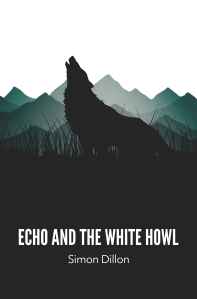
My most recent novel, Echo and the White Howl, is a thrilling animal fiction adventure about a pack of wolves set in the wilds of Alaska.

Echo and the White Howl Cover 10 (FINAL)

Here is the blurb from the back of Echo and the White Howl:

When a wolf pack discovers humans lurking near their territory, Echo senses dark times ahead.

Despite the warnings and omens, Aatag, the pack Alpha, refuses to flee… leading to a cruel turn of events that forces Echo into exile, and a quest for revenge that will change the pack forever.

Dr Gribbles and the Beast of Blackthorn Lodge is a gripping and scary tale involving spies, monsters, haunted houses, mad scientists and lots more besides, with action and thrills to spare. It was inspired by the nightmares of my youngest son, and the book is duly dedicated to him.

DrGibbles_1600x2400_front cover

Here is the blurb from the back of Dr Gribbles and the Beast of Blackthorn Lodge:

September 1987.

Curiosity lands Tim Rawling in a world of secrets, spies and a desperate race against time.

The haunted house, the monster and the mad scientist are only the beginning of a terrifying adventure.

Uncle Flynn, my debut novel, was received very positively. A properly old-fashioned treasure hunt adventure with a big twist, this book is dedicated to my eldest son. and was largely inspired by our many excursions over Dartmoor, as well as a bit of local history.

Uncle Flynn_Cover_600px

Here is the blurb from the back of Uncle Flynn:

When timid eleven year old Max Bradley embarks on a hunt for buried treasure on Dartmoor with his mysterious Uncle Flynn, he discovers he is braver than he thought.

Together they decipher clues, find a hidden map and explore secret tunnels in their search. But with both police and rival treasure hunters on their tail, Max begins to wonder if his uncle is all he seems…

The George Hughes trilogy (comprising, in reading order, George goes to Mars, George goes to Titan and George goes to Neptune) is a thrilling, action-packed space tale set just over a hundred years in the future. Each story is a stand-alone adventure, but I recommend reading the novels in order nonetheless.

Here is the blurb from the back of George goes to Mars:

When George Hughes discovers he has inherited the planet Mars, he goes from poverty to becoming the richest boy on Earth overnight.

Accompanied by his new guardian, a mysterious secret agent and a crew of astronauts, George voyages to Mars to sell land to celebrities wanting to build interplanetary holiday homes. But sabotage, assassination attempts and the possibility of an alien threat plunge him into a deadly adventure…

Here is the blurb from the back of George goes to Titan:

The thrilling sequel to George goes to Mars…

A year on from his adventures on Mars, George Hughes faces an even deadlier peril as he travels to Titan on an urgent rescue mission. The mysterious Giles returns to help him, but assassins are once again on his tail, and a new, far greater alien menace lurks in the shadows waiting to strike.

Here is the blurb from the back of George goes to Neptune (my personal favourite of the three):

In this spectacular sequel to George goes to Mars and George goes to Titan, George Hughes faces his most dangerous adventure yet.

Following the Titanian invasion, a deadly and very personal threat forces George to undertake a voyage to a top secret Martian research base on Neptune.

On this remote outpost, he uncovers a diabolical plot. But George is too late to prevent the catastrophe.

A catastrophe that will change his life forever…

All the above books can be ordered on Kindle or as paperbacks from Amazon here.