Looking for the perfect Christmas present for that difficult relative? Why not give them a book this year? To be more specific, why not give them one of my books?
In the first of three articles, this post explores the gothic mystery horror/thriller offerings from yours truly. Incredibly, none of these five novels – which I refer to as my “Spooky Quintet” – have had a single bad review. Check out Amazon or Goodreads, and you will see they are all raves. Also, if you’re worried about how scary these might be, some are more at the thriller end of the gothic mystery spectrum, and some more at the horror end. However, they are all page-turningly gripping, and full of suspense. For more information about the scariness factor in each, click here.
Here’s is the blurb from the back of each novel:
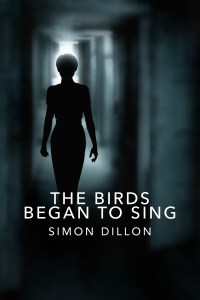 The Birds Began to Sing
When aspiring novelist Alice Darnell enters a competition to write the ending for an unfinished manuscript by late, world famous author Sasha Hawkins, it appears she might have her big break at last.
However, upon arrival at Sasha’s former home – the sinister Blackwood House – Alice is unsettled by peculiar competition rules, mysterious dreams and inexplicable ghostly visions. She begins to question her sanity as she is drawn into a terrifying web of deceit, revenge and murder.
Click here to order The Birds Began to Sing.
 The Thistlewood Curse
Can a ghost murder the living?
Lawrence Crane’s powers of astral projection are put to the ultimate test when he and his lifelong friend Detective Laura Buchan investigate a mysterious death on Lundy Island.
Sensing a dark power at work, they attempt to identify a human assassin under the control of supernatural evil.
But can they escape a terrifying, centuries-old curse?
Click here to order The Thistlewood Curse.
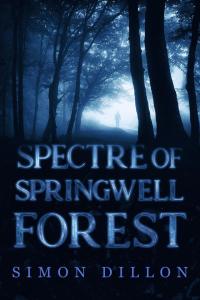 Spectre of Springwell Forest
Lily Henderson has a horrifying secret buried far in her past. She hoped it would never be revealed. Now she has no choice.
To save her family, Lily must keep them from returning to the village of Springwell, where she lived with her first husband and young daughter decades previously.
In the past, after moving to Springwell, Lily encounters secretive locals, government scientists, and rumours of a ghost haunting the forest.
Are they linked to the mysterious deaths of local children? Do paintings by a local artist predict when tragic events are getting closer? Will Lily’s daughter be next?
“Two were taken. More will follow.”
Click here to order Spectre of Springwell Forest.
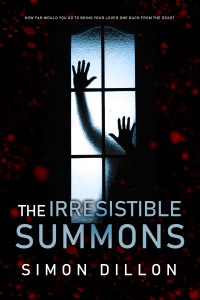 The Irresistible Summons
How far would you go to bring your loved one back from the dead?
Television producer Naomi Levinson makes documentaries debunking the supernatural.
When asked to film a promotional video for computer game company Persephone, she considers the task beneath her talents. But as production gets underway at the Persephone office block on London’s Canary Wharf, a mysterious disappearance, ghostly sightings, and lingering tragedy from Naomi’s past lead her to believe she might have stumbled into a genuine haunting.
As Naomi continues to investigate, past and present collide in a horrifying conspiracy. Cutting edge technology and ancient evil meet, leading to the discovery of a shocking and terrifying secret that could change the nature of life and death as we know it.
Click here to order The Irresistible Summons.
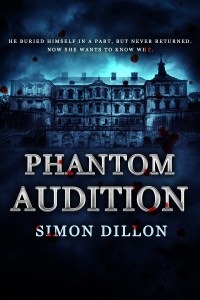 Phantom Audition
He buried himself in a part, but never returned. Now she wants to know why.
Small-time actress Mia Yardley, recently widowed wife of renowned actor Steven Yardley, discovers her late husband’s secret acting diary.
The diary details appointments made with a psychic medium, who advised Steven on which roles to take. It also raises questions about his mysterious and inexplicable suicide.
Seeking answers, Mia speaks to the medium, but in doing so is drawn into an ever- deepening mystery about what happened to her husband during the final days of his life. Eventually, she is forced to ask the terrible question: was Steven Yardley murdered by a vengeful evil from beyond the grave?
Click here to order Phantom Audition
 Love vs Honour
 Children of the Folded Valley


You must be logged in to post a comment.