What have I been up to lately? Well, I’ve been enjoying my holidays, taking a bit of time off having done a lot of promotion for my recent fantasy novel Ravenseed. But what have I done when I’ve not been taking time off? Mostly writing short stories. I’ve written two of these, plus a novella. Here’s a little bit about each.
35 Chestnut Terrace
This is a mystery thriller directly inspired by a Sherlock Holmes short story. I shan’t say which, as I wouldn’t want to spoil your enjoyment either of my story, or of Sir Arthur Conan Doyle’s (in case for some absurd reason you’ve not read every Sherlock Holmes story already). The title pertains to the scene of a dreadful crime. The plot? A young woman tries to exonerate her fiancé of a horrific murder, but is he innocent?
35 Chestnut Terrace will be serialised in four parts on Medium and Substack this September.
Rachael
A spooky, supernatural tale, about which I remain fairly tight-lipped for now. It’s set in a private girl’s school, and the protagonist is a teacher. The plot involves a play, an ancient curse, and a ghost. I had a lot of fun writing the main character for this one, as she’s not the most well-behaved of my protagonists.
Rachael will be serialised in five parts on Medium and Substack this October.
Wulfric’s Quest
The title may change, but this novella is a second companion piece to Ravenseed, set in a kind of parallel universe Dark Ages Britain. I’m not giving any plot details at this point, but thematically, this is very much cut from the same cloth as both Ravenseed and the other companion piece novella I wrote, Bloodmire. Between the novel and its two supporting tales, I’ve probably written quite enough material set in the Dark Ages, for the time being at least. When will this one be published? I’m not sure. I might hang on to it as an exclusive for an upcoming fantasy anthology.
Ravenseed is available from Amazon on Kindle or paperback here (in the UK) and here (in the US). It is also available from Draft2Digital and their associated outlets here.
Over the past couple of months, I’ve been busily promoting my latest novel Ravenseed. Here’s a handy list of links to the various facets of the novel explored on this site, for those still considering whether to take the plunge and give this novel a go.
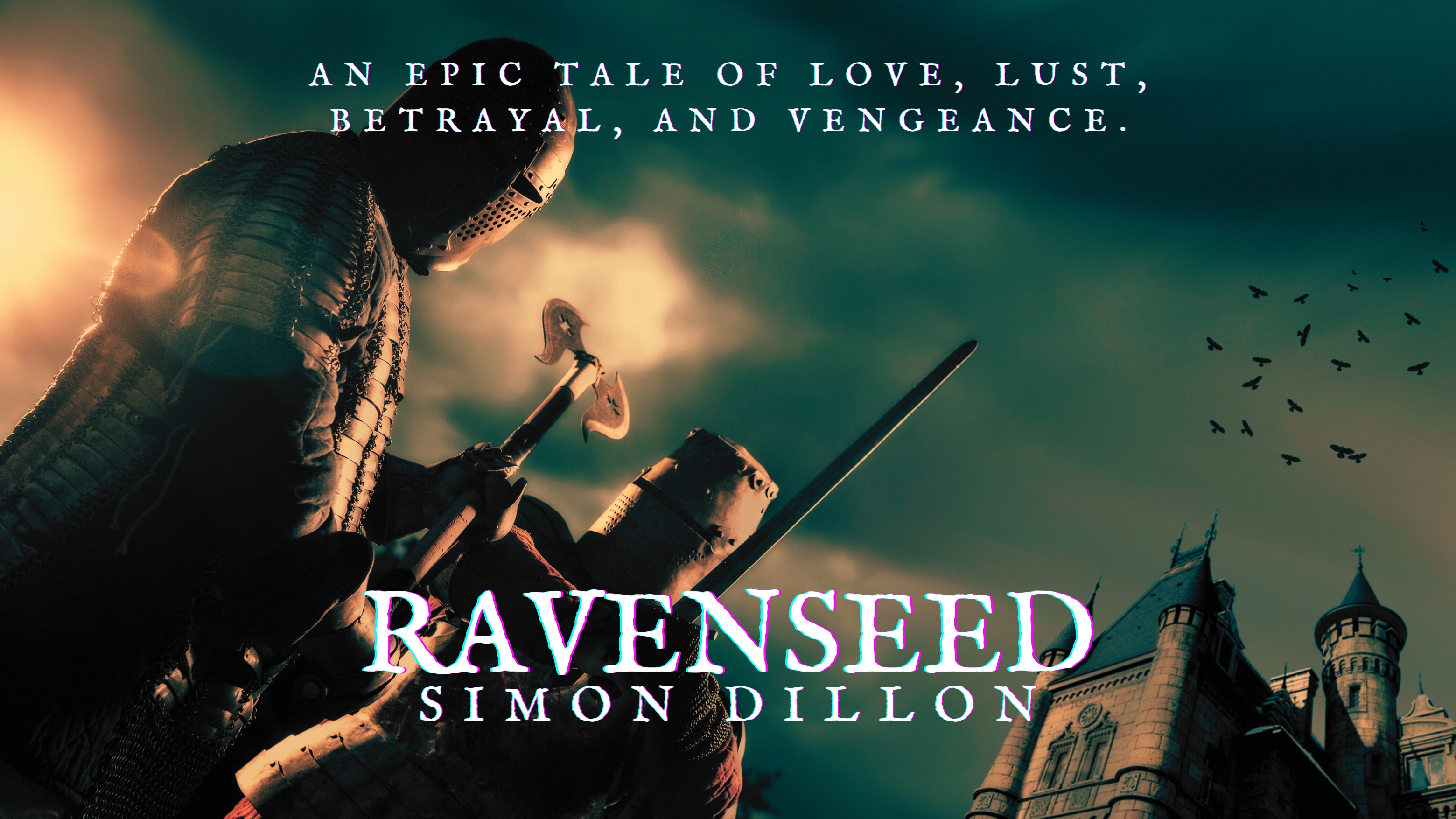
I can only again urge you to do so, as Ravenseed – an epic tale of love, lust, betrayal, and vengeance – is a story I’m particularly proud of. Blending Arthurian mysticism with adventure and romance, it’s the first fantasy novel I’ve ever released, but it isn’t aimed purely at the fantasy crowd. Ravenseed isn’t bogged down in world-building minutiae, but it deals with relatable themes via engaging characters, primarily in a Dark Ages setting, and in a present-day parallel plot that mirrors events in the past. Why not give it a go?
Here’s the blurb from the back of the book:
532 AD. Knights Sir Peter and Sir Matthew ride to battle, but when they take an ill-advised detour, the two friends find themselves involved in a quest to break a curse on Sir Matthew’s love, Elizabeth.
The quest sends them on a journey through Anglia, where they encounter magicians, spirits, gods, and dangers beyond their wildest dreams – from without and within.
In the present day, as teenager Fay Pendleton reads an ancient account of the two knights, scars start appearing on her face. Despite her ongoing disfigurement, she becomes obsessed with discovering the outcome of the quest, and her link to this mysterious story.
If that doesn’t whet your appetite, here are the aforementioned links to articles, exploring certain aspects of the novel in more detail.
Teaser Images
For a series of teaser images, hinting at some of the locations in the novel, click here, here, here, and here.
An Introduction
A lengthier introduction to the narrative and themes of Ravenseed can be found here. I also expound on why this isn’t just a novel for fantasy fans, but for all readers.
Excerpt 1
A brief taste of the novel, from chapter 3, introducing Sir Peter, Sir Matthew, and their squires. Click here to read it.
Excerpt 2
A second short excerpt, introducing the beautiful and beguiling Elizabeth. Click here to read it.
Settings, Research, Revisions
This article explores some of the research that went into the novel. This includes earlier iterations of themes and plot ideas from the original outline, as well as the physical locations, geography, histories, and folklore surrounding the story. Click here for more.
Influences and Inspiration
What novels or texts informed Ravenseed? I discuss the tonal inspirations in this piece.
Deleted Scenes
In an article about the editorial process, I reveal details of two major sequences (each about a chapter long) I decided to cut from the final draft. One involves a dragon, the other, a second battle sequence. Click here for more.
Bloodmire Revisited
A companion piece novella for Ravenseed entitled Bloodmire was published a couple of years ago on Medium. I’ve since decided to revise the ending, for Substack subscribers (exclusively, for the time being). More details can be read here.
The First Review
Fellow fantasy author Claus Holm offered this five-star endorsement of Ravenseed. To read it, click here.
Ravenseed is available from Amazon on Kindle or paperback here (in the UK) and here (in the US). It is also available from Draft2Digital and their associated outlets (such as Smashwords).
Reviews are hugely important to independent authors like yours truly, as they encourage algorithms to show my novels to more people. Obviously, it’s also great when they are positive, and in the case of Ravenseed‘s first review, it’s a five star all-out rave. Author Claus Holm had this to say about my novel:
“Dillon reveals a new side of himself in this novel. Mostly known for gothic thrillers, this time he turns to a fantasy stories with knights, curses and dark wizards wielding evil magic. He knocks it out of the park!
In modern day, a teenage girl named Fay finds an old book, describing the adventures of two knights of the realm, Sir Peter and Sir Matthew, during the reign of King Arthur. The book tells of how they embark on a quest to absolve Matthew’s great love, Elisabeth, from a curse. As she reads the book, the events in the book being affecting Fay’s life, and she is soon stalked by an unknown enemy that has ties to the very story she reads. She must go on her own quest to find out what is happening.
The story is dark, full of rich flavor and told very well. Both Peter (the writer of the old book) and Fay are compelling protagonists, that you very quickly get to care about, and the descriptions of old Anglia that was are full of very lovely descriptions of a world long gone.
The book also frames the conflict between the old religions and Christianity in an interesting way, where they both have power in different ways.
The book is a rare gem, for well-written Arthurian fiction is hard to come by, and the modern twist only improves the story. Highly recommended for a darker fantasy reading.”
All very encouraging, and great to have the endorsement of a fellow fantasy writer. If you have read and enjoyed Ravenseed, please consider leaving a review on Amazon or Goodreads, or ideally both. It doesn’t have to be long or eloquent. “I enjoyed it” is fine, and all reviews are appreciated. They are the lifeblood of independent authors, and literally put food on the table, due to the aforementioned algorithmic stimulation. Thank you to all of you who do review my work. You are hugely appreciated.
Ravenseed is available from Amazon on Kindle or paperback here (in the UK) and here (in the US). Downloads or paperbacks are also available from Draft2Digital, Smashwords, and associated outlets here.
Over the next seven weeks, I’m serialising my fantasy novella Bloodmire on Substack. It had previously been serialised on Medium, but this version has a revised ending exclusive to Substack. This is also the ending I prefer, on balance. I don’t generally revise the finales of my stories, but in this specific case, felt I had missed a trick concerning the fate of a particular supporting character. This has now been tweaked.
Bloodmire concerns a Dark Ages knight undertaking a quest to rescue the young woman to whom he is betrothed. She has been captured by a mysterious Beast and taken into a dangerous uncharted forest. On his quest, the knight encounters bandits, witches, and strange supernatural beings, journeying ever deeper into the forest, and ever deeper into himself. But this is no straightforward tale of a damsel in distress. Nor is the knight perhaps as noble as you might initially believe.
Curious? Why not check it out on Substack, over the next seven weeks (click here for part one). You’ll need to subscribe to me there, but for a mere $5 per month, you get access to multiple short stories and novellas, plus almost every article I publish on Medium is republished there too. On top of that, you get full access to my film review archive. In short, it is great value for money!
Bloodmire is also intended as a companion piece to my recently released novel Ravenseed and features one of the supporting characters. However, I stress Bloodmire requires no prior knowledge of Ravenseed. It stands entirely alone.
Incidentally, you can pick up Ravenseed from Amazon on Kindle or paperback here (in the UK) and here (in the US). Downloads or paperbacks are also available from Draft2Digital, Smashwords, and associated outlets here.
My recently released fantasy novelRavenseedunderwent substantial revisions from early drafts to the finished version. Various sequences were removed based on feedback from beta readers (who saw different iterations as the novel took shape). My first draft – written from an outline I’d already drastically altered many times – came in at over 122,000 words, with the released version cut down to about 113,000 words. As an insight into my writing process, here’s a look at two major sequences that were removed, and why.
During the outlining stage, I became anxious that the novel needed more action in the second half. Both the sequences in question were born out of this concern, but it rapidly became apparent after penning the first draft that both were unnecessary. Instead, I needed to trust the story and the character arcs rather than artificially insert extra perils. As a result, two massive sequences got the axe.
The Dragon Attack
Following the chapters where the knights take some rest in Kirkstall Abbey, a dragon attacks them at night. Carefully treading around spoilers, by this point in the story, schisms already exist between certain characters. The original idea was for them to be forced to work together to fight this monstrous threat, allowing for a brief flash of their former camaraderie. The dragon was also intended as a metaphor for the lusts and ambitions of one particular supporting character, who (it is later revealed) consorted with the main antagonist to bring about the attack in the first place, for their own ends.
After I’d left some time to distance myself from the manuscript and read it with fresh eyes, this sequence stood out like a sore thumb. The dragon lust metaphor was clumsy, and the Machiavellian machinations of the supporting character seemed absurdly convoluted. I eventually cut almost all that subplot, including the entire dragon sequence. Although Ravenseed features supernatural entities, this isn’t a novel that needed big monster scenes, so it was a good cut to make, and the story reads far better as a result.
The Second Battle
Another major chapter removed from the final version is a battle sequence told in flashback that details how Sir Matthew saved Sir Peter’s life, some years previously. I shan’t say exactly where this flashback would have appeared, again, for fear of spoilers, except to say it was intended to add contrast and irony with events later in the book, whilst beefing up the action.
The battle is fought in flat eastern lands, perhaps in Norfolk or East Anglia, amid freezing conditions. I rather liked some of the details – for instance, Sir Matthew’s distress at the suffering of their steeds during the attack, further exploring the animal-loving side of his persona, and a near-drowning moment. The terrain is also very different to the earlier battle (a castle siege), with ambushes in long grass and reeds. In addition, this was meant to expound on a key moment of character development for Sir Peter, who finds new reason for optimism and hope, after becoming disillusioned about notions of glory and honour in the face of warfare’s brutal realities.
However, whilst this sequence worked well in and of itself, it felt like seriously over-egging the pudding in the context of the novel. There’s already a major battle sequence earlier in the book, so adding another big-scale conflict at a time when the story has become more low-key, and dramatically focused on a smaller group of characters, didn’t work. In addition, the hoped-for irony and contrast didn’t come off as well as I’d hoped. It felt as though I was trying to be too clever for my own good by demanding additional calls on reader sympathy when I’ve already put them through the emotional wringer in other respects.
In short, this story didn’t need an extra battle or a dragon, and I am convinced no one will come away from it feeling short-changed. Ravenseed has plenty going on without additional razzle-dazzle. You get knights, sorcerers, sieges, spirits, gods, sword fights, supernatural duels, two love stories, epic journeys in past and present, plus a magical finale with more than enough climactic conflict and irony to be going on with.
Ravenseed is out now. Here’s the blurb from the back of the book:
532 AD. Knights Sir Peter and Sir Matthew ride to battle, but when they take an ill-advised detour, the two friends find themselves involved in a quest to break a curse on Sir Matthew’s love, Elizabeth.
The quest sends them on a journey through Anglia, where they encounter magicians, spirits, gods, and dangers beyond their wildest dreams – from without and within.
In the present day, as teenager Fay Pendleton reads an ancient account of the two knights, scars start appearing on her face. Despite her ongoing disfigurement, she becomes obsessed with discovering the outcome of the quest, and her link to this mysterious story.
Ravenseed is available from Amazon on Kindle or paperback here (in the UK) and here (in the US). Downloads or paperbacks are also available from Draft2Digital, Smashwords, and associated outlets here.
The most obvious point of inspiration for my new fantasy novel Ravenseed is the Arthur Legends. Whether you’re reading Sir Thomas Mallory’s La Morte d’Arthur, TH White’s The Once and Future King, or any of the many other versions of Arthurian mythology, this is the most direct and conscious influence. Though Ravenseed is an entirely original work and makes no direct reference to Merlin, Guinevere, Arthur, or any of his various knights, the Dark Ages setting, and a couple of references to the unnamed King, make clear this tale belongs somewhere in the Arthurian timeline.
What other texts most influenced my work? Here are three books that lingered in my subconscious whilst writing, mostly as a tonal inspiration.
The Bible: 1 and 2 Samuel
I’ve written before about my theory that the Arthur legends were directly inspired by the story of King David. Just replace Samuel with Merlin, Saul with Uther Pendragon, David with Arthur, David’s Mighty Men of Valour with the Knights of the Round Table, Jerusalem with Camelot, and add supernatural artefacts (the Ark of the Covenant, Excalibur, and the Holy Grail). You get the idea.
My primary source of inspiration for this tale is the forbidden romance aspect: Lancelot and Guinevere in the Arthur legends, and David and Bathsheba in the Bible. Their affairs lead to disaster in both cases (as well as causing war and division in the process – Absalom, Mordred, etc). In Ravenseed, there are two romantic stories, each a parallel of the other, one in the Dark Ages and one in the present. One is forbidden, the other isn’t, but both relationships face potential catastrophe.
The Buried Giant by Kazuo Ishiguro
This melancholy, elegiac tale of an elderly couple journeying in an attempt to find their son shortly after the reign of King Arthur is an unusual, vivid novel. A mysterious loss of memory seems to have gripped many in the land, though as they travel, the couple in question slowly recall their past. Along the way, they encounter knights, monks, ogres, dragons, and a number of travelling companions, some of whom are not what they seem. Much iconoclastic debunking of the supposed honour and justice of Arthurian rule ensues.
In this novel, Arthur is not the all-benevolent King generally spoken about in the legends, as the major revelations of the story reveal. In Ravenseed, the two knights, Sir Peter and Sir Matthew, are not as affluent or famous as many of their more celebrated kin, and whilst my book doesn’t reveal dark deeds performed by their King the way this one does, it does note that the King and his wizard (neither of whom are named) are often too wrapped up in loftier matters to care about important details like showing up for battles. In addition, Sir Peter and Sir Matthew are not treated well by the knights closest to the King, and understandably bear a certain amount of ill will as a result.
Stardust by Neil Gaiman
This hugely enjoyable romantic fairytale features star-crossed lovers, quite literally, given that one of the central couple, Yvaine, is a fallen star. Tristan has vowed to bring this star to the object of his affection, Victoria, but finds himself drawn to Yvaine amid a supernatural comedy of errors that also features an evil witch, enchantments, and certain other fantastical complications, some of which were an influence on Ravenseed.
Chief among these is the main enchantment that afflicts Elizabeth in my story (the details of which I will not spoil). She has just got married to Sir Matthew, at a detour to the Raven Inn on their march to war, though they do not consummate the marriage. However, Sir Peter is also drawn to her, and gradually, she begins to reciprocate. Obviously, love triangles are nothing new, but the supernatural nature of those in Stardust informed both of the romantic narratives in my novel. I’d also add the comedy in Stardust also informed some of the lighter moments in Ravenseed.
Again, to be clear, Ravenseed is its own beast and stands out from all the above. But it would be disingenuous not to mention the inspirations and influences that informed the novel. Besides, if any of the above are your cup of tea, I reckon you’d definitely enjoy my book.
Ravenseed is out now. Here’s the blurb from the back of the book to whet your appetite, if you’ve yet to pick up a copy:
532 AD. Knights Sir Peter and Sir Matthew ride to battle, but when they take an ill-advised detour, the two friends find themselves involved in a quest to break a curse on Sir Matthew’s love, Elizabeth.
The quest sends them on a journey through Anglia, where they encounter magicians, spirits, gods, and dangers beyond their wildest dreams – from without and within.
In the present day, as teenager Fay Pendleton reads an ancient account of the two knights, scars start appearing on her face. Despite her ongoing disfigurement, she becomes obsessed with discovering the outcome of the quest, and her link to this mysterious story.
Ravenseed is available from Amazon on Kindle or paperback here (in the UK) and here (in the US). Downloads or paperbacks are also available from Draft2Digital, Smashwords, and associated outlets here.
A fair amount of research was required for my new fantasy novel Ravenseed. Here’s a bit of an insight into that process, as well as a few ramblings about the locations and revisions to the story made ahead of writing the first draft of the manuscript.
Whilst the Dark Ages setting for the bulk of the narrative didn’t necessarily require strict factual veracity given the parameters of the fantasy genre, I wanted to ensure the correct names were used for regions, towns, and so forth, assuming they existed at that point. I discovered Plymouth, Exeter, and Camelford were already established, but Bristol wasn’t. However, the region was called Abona, so I used that name. I also opted to use Anglia rather than Albion as the latter generally refers to Great Britain rather than just England. My novel is set entirely in the latter.
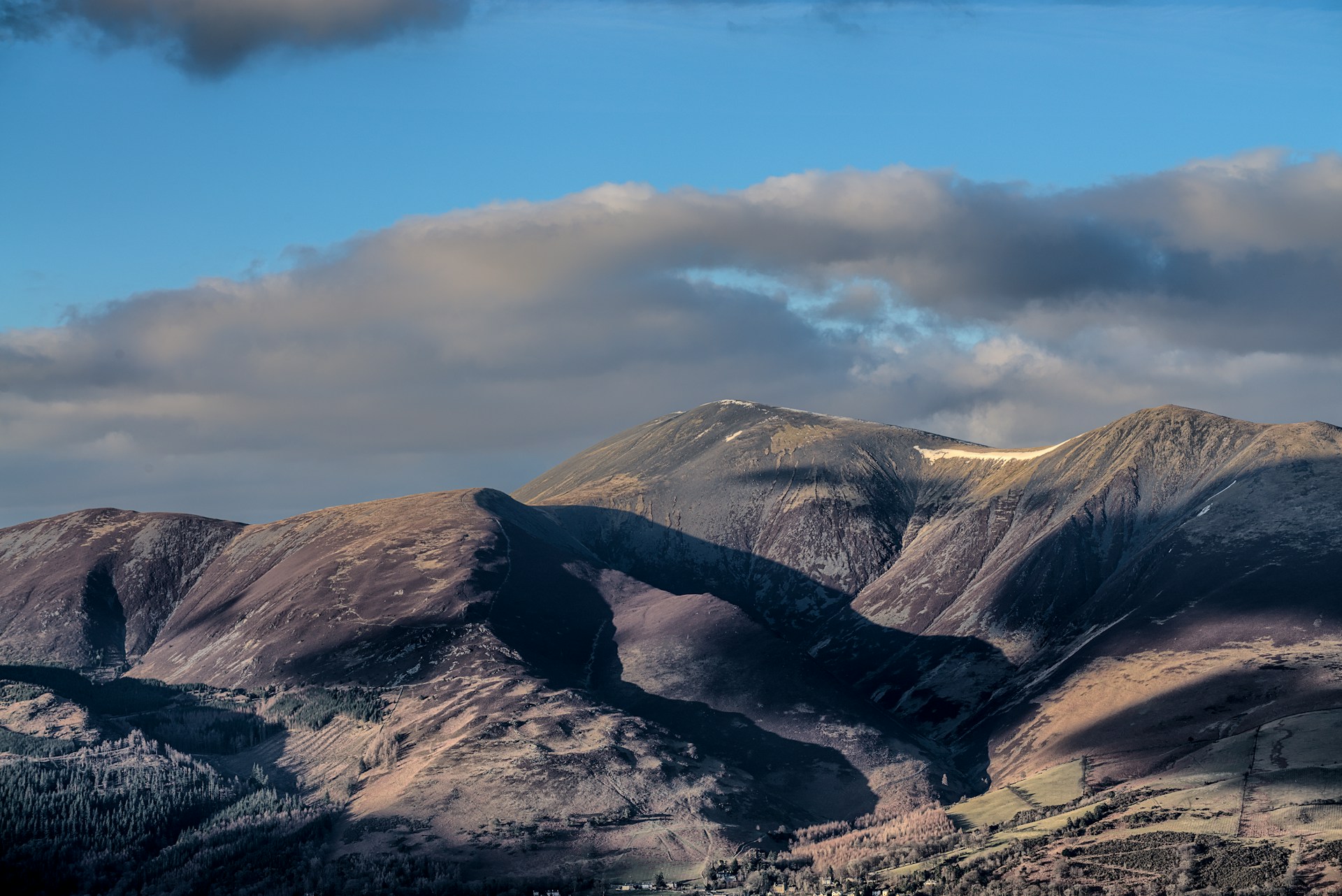
Beyond that, as I’ve already mentioned, I didn’t necessarily cling to strict historical fact. For example, plate armour wasn’t around in those days, but it is used in my novel, as it is part of Arthurian fantasy iconography. On the other hand, I did try to stick to geographic fact as much as possible, making sure the journey taken by the characters reached caves in the Mendips before going far further north to Sca Fell Pike in the Lake District (the highest mountain in England), for example. The clash of Christianity with the old religion is a key theme of the Arthur legends, and likewise informs my novel.
Before I wrote the first draft of the Ravenseed manuscript, my plot outline changed many times. For example, the original parallel story wasn’t set in the present, but only a generation or two after the main story. Instead of Fay, Abel, and Anne, and their modern-day journey, I had a story about a blacksmith’s apprentice who happens upon Sir Peter’s account. At the same time, I had the mysterious masked traveller rampaging from village to village, searching for “the last of the Ravenseed”, killing without mercy, and leaving terror in his wake. I worked on this version of the story in some detail, before deciding the parallel tale lacked contrast, so opting for a contemporary version instead.
Another glance through my original notes informs me I’d originally considered reincarnation themes, as well as a lot of ponderous piffle about the idea of the written word as contagion (in relation to the disfigurement subplot in the modern-day storyline). The straightforward, less pretentious curse I ditched all that for is far more appropriate to the fantasy genre. I honestly don’t know why I was so foolishly abstract in my narrative approach, but then again, my outlining process is mostly about getting rid of the bad ideas.
A second outline featured the journey culminating in the Malvern springs in Worcestershire. This idea came from ancient legends about Malvern water supposedly containing restorative or healing properties (it was once considered sacred). These stories were later put down to the water’s purity when samples were scientifically tested. Anyway, I eventually ditched using this location in favour of what takes place in the novel, but reading around this subject anew was immensely interesting.
At one point, I considered setting part of the novel in France, with an invading French force repelled by the King and his knights (which included Sir Peter and Sir Matthew). This ultimately changed to the Cornish rebellion and subsequent battle that features early in the final novel. Some of the fantastical elements were a bit more out there in the original drafts too. I even considered an appearance from Lucifer, along with a dragon that acted as a clumsy sexual jealousy metaphor. The dragon sequence survived to the point that it was written into the first draft before it got excised. But more on the deleted scenes in a future article, as I’ve rambled on enough.
Ravenseed is out now. Here’s the blurb from the back of the book to whet your appetite, if you’re yet to pick up a copy:
532 AD. Knights Sir Peter and Sir Matthew ride to battle, but when they take an ill-advised detour, the two friends find themselves involved in a quest to break a curse on Sir Matthew’s love, Elizabeth.
The quest sends them on a journey through Anglia, where they encounter magicians, spirits, gods, and dangers beyond their wildest dreams – from without and within.
In the present day, as teenager Fay Pendleton reads an ancient account of the two knights, scars start appearing on her face. Despite her ongoing disfigurement, she becomes obsessed with discovering the outcome of the quest, and her link to this mysterious story.
Ravenseed is available from Amazon on Kindle or paperback here(in the UK) and here (in the US). Downloads or paperbacks are also available from Draft2Digital, Smashwords, and associated outlets here.
Here’s another excerpt from my newly released fantasy novel Ravenseed, an epic tale of love, lust, betrayal, and vengeance. In this scene, Sir Peter meets Sir Matthew’s betrothed Elizabeth for the first time, and is captivated by her beauty.
I noticed a young barmaid crossing the room to where we stood. Her gaze was fixed on Matthew, but because I stood quite close to him, she could almost have been staring at me. Indeed, at one point her eyes flickered in my direction and gave a brief appraisal, before returning to their intended focus.
The barmaid let out an exclamation of delight and embraced Matthew. She kissed his lips then drew back, regarding him with an expression of unadulterated joy.
‘Matthew! I didn’t expect you! After I heard about the King fighting in Cornwall, I thought I might never see you again.’
Matthew appeared pleased with his welcome, but stiffened somewhat, perhaps due to my presence.
‘Elizabeth, this is Sir Peter and his squire Robin.’
‘A pleasure,’ said Robin, bowing slightly.
Elizabeth ran a hand through her long auburn hair. ‘I’ve heard a great deal about you, Sir Peter.’
To say that I understood in an instant why Elizabeth had so captivated Matthew would be an understatement. She was beautiful, yes, but hers wasn’t the mere beauty of a country girl. Something about her deep green eyes drew me into her face and held me transfixed. They were warm, kind, almost magical, as though they could perceive my very soul, locate my greatest desire, and grant it.
‘I’ve heard a great deal about you too, Elizabeth,’ I said eventually. ‘Sir Matthew is very fortunate.’
Elizabeth laughed and gave Matthew a playful cuddle. ‘Fortunate? How can you be sure of that? How do you know I will not bring disaster upon him?’
‘No one seeing you could entertain such an absurd notion,’ I replied.
Elizabeth stared at me, suppressing a grin. An expression of mild irritation crossed Matthew’s features.
‘I’m delighted to hear Elizbeth meets with your approval, Sir Peter.’
He spoke as though jesting, yet I sensed a flicker of unease beneath Matthew’s remark. Had my reaction to Elizabeth’s immense beauty unsettled him? He had no reason to be concerned, though I could entirely understand his obsession with her.
‘I am likewise glad to meet with your approval, brave sir knight,’ said Elizabeth, with a hint of harmless mischief in her eyes.
You can pick up Ravenseed from Amazon on Kindle or paperback here (in the UK) and here (in the US). Downloads or paperbacks are also available from Draft2Digital, Smashwords, and associated outlets here.
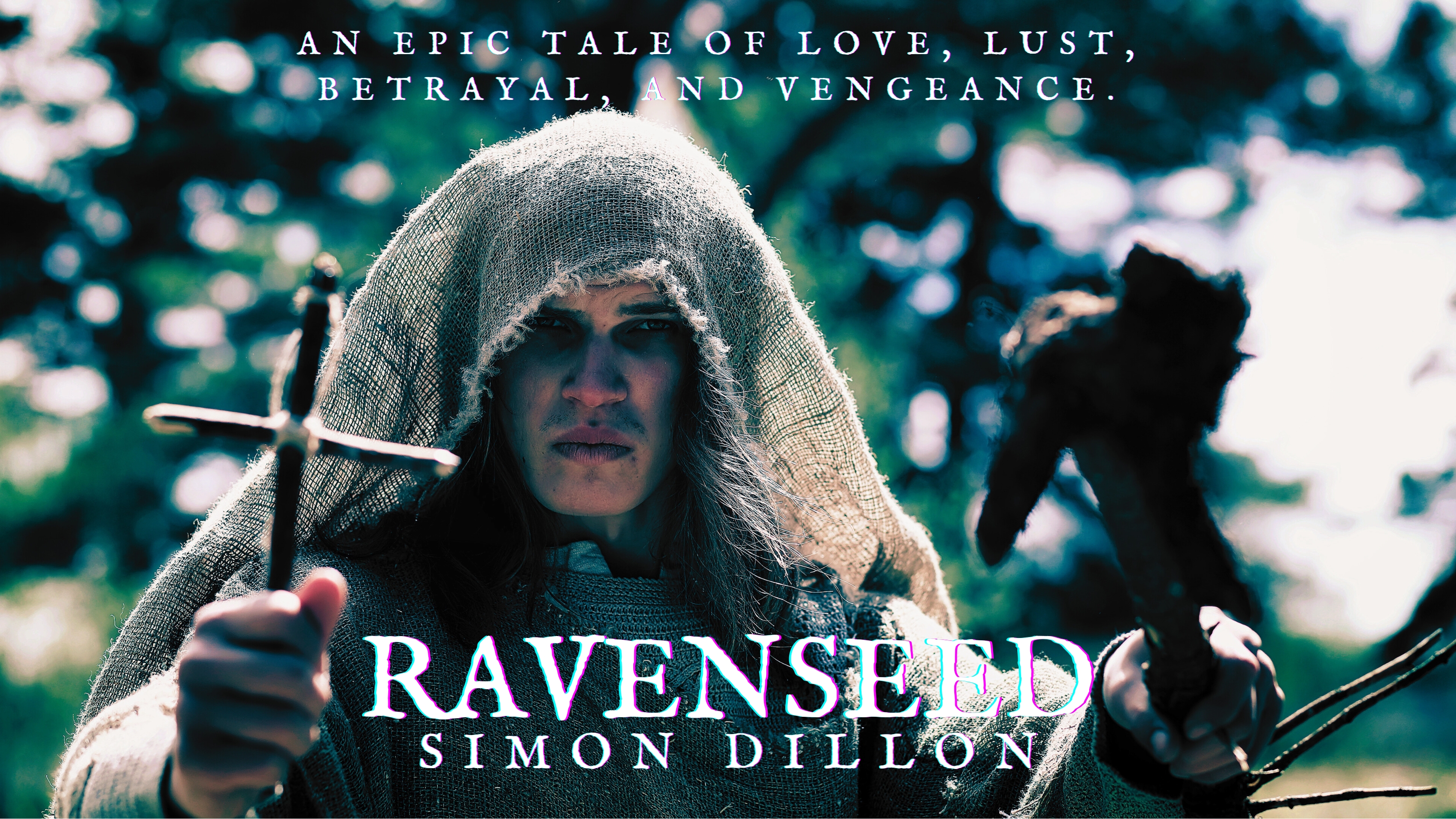
Here’s an excerpt from my recently released fantasy novel Ravenseed, an epic tale of love, lust, betrayal, and vengeance. It is mostly set in the Dark Ages, with a parallel plot in the present. This scene is from Chapter 3, in which Sir Peter, Sir Matthew, and their squires Hugh and Robin encounter a mysterious monk as they ride to war. The monk warns against the detour they are about to take to the Raven Inn.
The path through the woods grew broader as we approached the fork in the road. To the left, the path went down into a valley, into thicker forest that I knew would eventually bring us to our destination, just outside Plymouth. To the right, the path climbed further, leading west towards the great river and the bridge that separated Cornwall from the rest of the land.
As we approached, I noticed a man in a brown robe standing facing us at the fork in the road. His face was hidden by a hood, but he appeared to be a monk. In his hand, he held a staff. Something about his manner bothered me, and it seemed clear that he wished to speak with us. Everyone else sensed the same, as we came to a joint decision to halt our horses.
‘Greetings friend,’ I said. ‘Can we help you?’
The Monk drew back his hood, revealing a youthful face with pale skin. His dark eyes were wide and intense. He looked us over, as though evaluating or assessing us. I didn’t care for his gaze, which felt uncomfortably shrewd and penetrating. It made me want to hide, though from what I did not know.
‘Are you lost?’ said Matthew.
‘I see my path better than you,’ said the Monk.
His voice had a curious, deep tone that echoed more than I expected amid the dense woodland. Was this really a monk from a local monastery? I shivered. Everything about this young man unsettled me. He didn’t belong in this landscape.
‘You speak in riddles,’ I said. ‘Yet we cannot break our journey to indulge in such discourse, as we wish to reach the Raven Inn by nightfall.’
‘So, you will turn left,’ said the Monk.
In his voice I sensed disappointment. I could not understand why our journey should be of interest to him, a complete stranger. What could he possibly know of our decision to take a detour to the inn, rather than continue west to Cornwall?
‘Who are you?’ I asked.
The Monk shook his head. ‘Who I am is unimportant, but you may call me Brother Mordecai.’
‘Well, Brother Mordecai,’ said Matthew. ‘If you do not require our assistance, we will wish you well and continue our journey.’
Mordecai addressed Matthew. ‘There is death ahead for you if you take the right path.’
Matthew and I exchanged bemused glances. This young monk was eccentric, possibly even mad, but he didn’t seem dangerous. Why then did he fill me with such unease?
‘Why are you saying that?’ asked Matthew.
‘Because something worse than death lies in wait if you take the left path.’
‘What if we turn around and go back the way we came?’ Matthew asked, not caring to hide the mockery in his voice.
The Monk did not answer. Matthew addressed him in exasperated tones. ‘Well, Brother Mordecai, we wish to avoid death, and I fail to see what could be worse than that, so if it’s all the same to you, I think we’ll continue on our journey to the Raven Inn.’
‘It is not all the same to me,’ said the Monk. ‘If you take the path to the Raven Inn, I will regret it. I am sent to deliver warnings, and when they are not heeded, I am grieved.’
‘Sent by whom?’ I asked.
The Monk did not answer. Robin and Hugh began to chuckle amongst themselves at this somewhat absurd figure. But there was a nervousness to their laughter, and however much we might have desired to ridicule Brother Mordecai, with hindsight I must admit that moment unsettled us all.
‘Brother Mordecai, you are not speaking reason,’ said Matthew. ‘You stand yonder, and make nebulous, mystical pronouncements, claiming we have a choice between death or something worse. That is no choice at all!’
‘If you do not understand that there are worse things than death, you have my pity.’ The Monk shook his head. ‘Perhaps I am destined to deliver warnings that are unheeded, so I better understand the perspective of God. But that is my burden to bear, not yours.’
The Monk sat down at the fork in the path and cast his eyes to the ground. Matthew and I stared at one another in bewilderment. What could this man know of our journey? How could he possibly think appearing here before us with no explanation, urging us to ride to certain death would possibly result in us heeding his advice? It was preposterous. Brother Mordecai had to be mad.
‘You’re insane,’ said Matthew, voicing my thoughts. He indicated to Hugh. ‘Come!’
We continued to ride, taking the left fork, onto the path that led down into the denser woodland. As we passed the Monk, he remained seated, staring down at the ground. Only as I turned my head from him did I catch, out of the corner of my eye, one final glance up at me. I couldn’t swear to it, but I sensed dismay, as though he had singled me out for special pity.
You can pick up Ravenseed from Amazon on Kindle or paperback here (in the UK) and here (in the US). Downloads or paperbacks are also available from Draft2Digital, Smashwords, and associated outlets here.
My new novel Ravenseed is out now. A page-turning epic of love, lust, betrayal, and vengeance, this (mostly) Dark Ages-set tale marks my first foray into the fantasy genre. Ravenseed has been a long time in gestation, with many rewrites, tweaks, and polishes. I am extremely pleased with it, and I do hope you’ll read and enjoy it.
What’s it about? Here’s the blurb from the back of the book:
532 AD. Knights Sir Peter and Sir Matthew ride to battle, but when they take an ill-advised detour, the two friends find themselves involved in a quest to break a curse on Sir Matthew’s love, Elizabeth.
The quest sends them on a journey through Anglia, where they encounter magicians, spirits, gods, and dangers beyond their wildest dreams – from without and within.
In the present day, as teenager Fay Pendleton reads an ancient account of the two knights, scars start appearing on her face. Despite her ongoing disfigurement, she becomes obsessed with discovering the outcome of the quest, and her link to this mysterious story.
Hopefully, that will spark your interest. As I mentioned in my previous announcement, I don’t intend for Ravenseed to be purely for genre fans. This novel is written to have broad appeal for all (adult) readers. In my not particularly humble opinion, all the best fantasy novels have that same broad appeal – The Lord of the Rings, the Harry Potter series, and His Dark Materials, for instance.
One thing I’ve learned about writing fantasy is not to make worldbuilding the main thing. Yes, worldbuilding provides background, but it should not become foreground. People generally don’t read The Lord of the Rings because they’re fascinated by arcane details of Elven magic, Dwarf metallurgy, or how many mana points Gandalf needs to defeat a Balrog. They read it because of universally resonant, relatable themes – courage, loyalty, friendship, temptation, betrayal, sacrifice, the love of home, the horrors of war, the devastation of the industrial machine at the expense of the environment, good versus evil (not just external evil, but the evil in oneself), growing up, the melancholy at the end of an era, and so forth.
In the case of Ravenseed, the tightrope of drip-feeding worldbuilding into the narrative whilst avoiding the fall into the dreaded info dump was not an issue, because it is mostly set in the Dark Ages. Everyone is aware of that era by cultural osmosis due to the Arthur legends. Creating a dirt-under-the-fingernails landscape of bleak moors, mountains, rivers, and mystical forests, or dwellings such as taverns, monasteries, besieged castles, and so forth, gave the novel a feeling of the familiar. Setting the novel in and around areas I know in southwest England (and further north) also proved immensely liberating.
My tagline sums up the plot thus: “An epic tale of love, lust, betrayal, and vengeance.” All four of those themes are universally relatable, and in addition, the book is about friendship, loyalty, honour, and a lot more I wouldn’t dream of spoiling. Although most of the novel is set in the Dark Ages, there’s also a parallel plot in the present day that provides a contemporary reference point, again reinforcing the idea that this is a grounded fantasy. As such, this is a story with relatable characters that can be enjoyed by all, regardless of the genre.
You can pick up Ravenseed from Amazon on Kindle or paperback here (in the UK) and here (in the US). Downloads or paperbacks are also available from Draft2Digital, Smashwords, and associated outlets here.





 Simon Dillon Books
You must be logged in to post a comment.