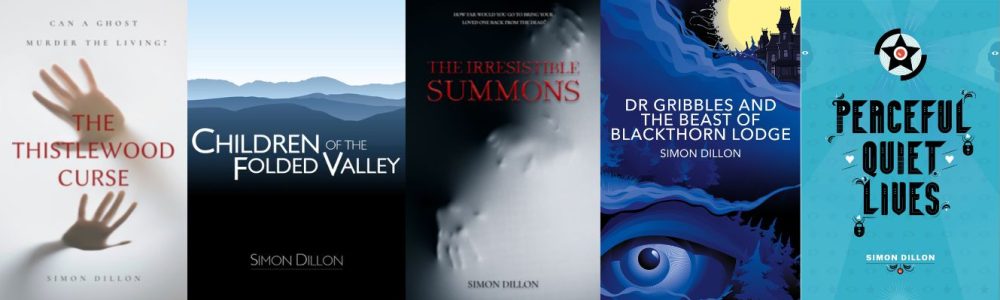
What writers inspired my latest novel Spectre of Springwell Forest?
 Two undoubted influences on the story are Susan Hill’s seminal The Woman in Black, and the shorts of ghost story par excellence author MR James (such as The Ash Tree and Oh Whistle And I’ll Come To You My Lad). There’s also a smidgeon of Don’t Look Now by Daphne Du Maurier present, along with a dash of The Turn of the Screw by Henry James. In fact, pretty much all my favourite ghost stories have informed this novel in some way, shape or form.
In the case of The Woman in Black, one of the major inspirations was the structure of the novel, including the framing device, and the famously upsetting, terse finale. I’ve always loved the way that book begins in a more settled present; at Christmas (like my story) but with a sense that the apparent serenity of the present masks long buried pain. Certainly as Arthur Kipps recounts his bone-chilling visit to Eel Marsh House, it becomes apparent that he is opening wounds that have never really healed.
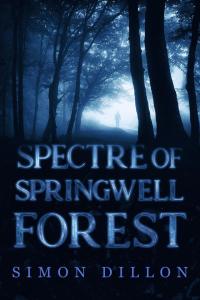 With Spectre of Springwell Forest, I wanted to capture something of this tone in the framing device structure, and with the nasty sting in the tail right at the end. Thematically my novel shares other DNA with The Woman in Black – the apparent threat to children, for instance. Don’t Look Now also deals with the death of children and the supernatural.
On the other hand, I didn’t want Spectre of Springwell Forest to be one hundred percent clear cut in its explanations. The Turn of the Screw has an ambiguity that has always appealed to me, and in my novel, amid the spooky shenanigans I wanted to hint that there might – just might – be a natural explanation.
In the case of MR James’s stories, it was more the terrifying tone of those tales that proved an influence, rather than plot specifics. His superbly suspenseful prose remains unsurpassed. If my book contains a tenth of the churning dread conjured by his writing, I will have done very well. Of course, my novel doesn’t set out to copy his work or the other afore-mentioned classics, but seeks to be its own beast.
Spectre of Springwell Forest is out now. Pick up your copy here (in the UK) or here (in the US).


 Simon Dillon Books
You must be logged in to post a comment.