The Dillon Empire hereby wishes you a very Happy New Year, and hopes you have a splendid 2025. Tradition dictates that l set out my main writing plans for the year ahead, so here’s what I hope to achieve.
Since August, I’ve been researching, outlining, and creating character profiles for my next novel. It’s the first in a series of dark mystery thrillers with a supernatural edge featuring a private detective and her assistant investigating a particularly baffling murder. Each of these novels will be a standalone mystery, but a bigger mystery will start to reveal itself in the background as the novels progress. As you can see, this is a hugely ambitious project as I’ve not consciously undertaken the writing of a series before (The George Hughes Trilogy was an accident in that respect, so doesn’t really count). At any rate, I am about to start writing the first draft of the first novel, so I’ll keep you updated on progress.
Also, this year, I might release another of my novels: horror-thriller mystery The Hobbford Giant. I’m still shipping that one around agents and publishers, but if I draw a blank, I may self-publish it. Alternatively, I might self-publish another volume of short stories (probably some of my fantasy tales, a few of which have previously appeared on Medium and Substack, and some of which have never been published before). I can’t say for sure which way I’ll leap, but one or the other of those will hopefully be available by the end of the year.
On top of this, I aim to write a clutch of new short stories, as well as pen another significant segment of my epic sequel to an as-yet unpublished children’s fantasy novel I wrote ten years ago, tentatively entitled The Faerie Gate (though that title will change). I had hoped to make progress on that novel last year, but that didn’t happen for various reasons; mainly, I’d bitten off more than I could chew, and something had to give. However, this year, I hope I’ll have the window to get another chunk finished. The novel is about half finished at present, and if I can get to two-thirds finished by the end of the year, that would be splendid. It’s turned into a bit of a monster in terms of length, so this novel could wind up being divided into separate volumes akin to The Lord of the Rings. But we’ll see. At present, I still think of it as one novel.
Beyond all that, I plan to revise and polish the mystery novel I wrote last year. I call it False Witness at present, even though that isn’t the real title (I’m keeping it a secret, for now). In addition, if The Hobbford Giant fails to get snapped up by agents and publishers, I’m going to send out A Thorn in Winter; another mystery novel which I originally wrote in 2022. As you can see, I’m not giving up on that front. Who knows? Perhaps this will be the year I find a mainstream publisher (I’ve had novels traditionally published in small indie presses before, but not by any of the big guns).
It will be interesting to see where I get to with all the above by the end of the year. I’m sure I’ll be immensely busy. In the meantime, thank you for supporting my writing. Again, I wish you all a very Happy New Year.
NOTE: The following is a revised version of an article originally published on Medium, where I’ve published a number of writing advice pieces.
Plotting versus “pantsing” (as in writing by the seat of your pants) is a familiar debate among fiction writers. I’m not here to proclaim the virtues of one method over another, as whatever works for any given writer is evidently best for them. According to Goodreads, successful novels have been written pantsing (Stephen King’s work, for instance), as well as plotting (John Grisham is a good example). JK Rowling is another famous plotter, who works from detailed hand-scribbled charts.
As an unashamed full-blown plotter, my methodology is simple: I don’t start a novel or short story without an ending that blows me away, as I know without that, I won’t have the enthusiasm to finish. Once I have that ending, I work backwards from that point, planning character profiles and arcs, researching, preparing chapter outlines, and so forth. Yet despite this, people often assume I have no flexibility in my writing process.
The idea that plotters are creatively compromised control freaks is a myth I wish to debunk. Yes, it’s true that going straight to manuscript stage by inventing a character and seeing where they take you isn’t a style that works for us, but that doesn’t mean we aren’t open to new ideas and directions outside of our detailed outlines. It has often been suggested to me that my approach stifles spontaneity. Nothing could be further from the truth.
Spontaneity whilst outlining: Destroying my work
For a plotter, spontaneity occurs mostly in the planning stage. I create multiple outlines of a particular scene, trying to decide which variation works best for the story. For example, where should lovers meet? On public transport? At work? In a bar? Online? Or who should turn out to be the killer in a whodunnit, and why? What characteristics should the protagonist take on? Are they cheerful? Optimistic? World-weary? Sarcastic? Outgoing? Private? Repressed? What is their fatal flaw? Greed? Pride? Anger? Lust? Too trusting? Overly ambitious? Delusional?
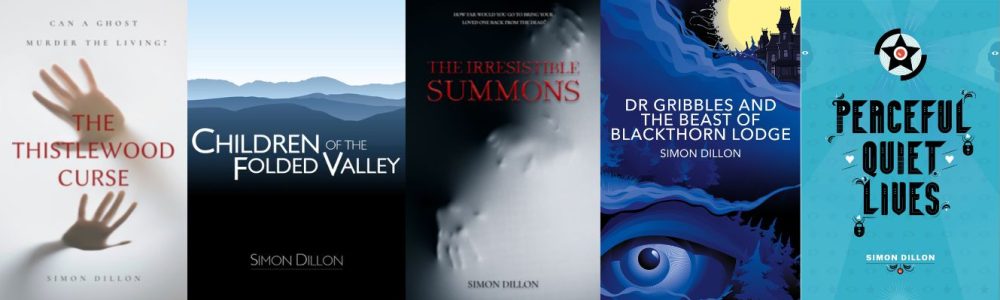
As an example, for my most successful novel to date, Children of the Folded Valley, I considered many different potential protagonists and points of view. The story is narrated by a protagonist recalling his life growing up within a mysterious cult cut off from the outside world. However, at one point, the protagonist was going to be a female journalist who investigates and ends up trapped within said cult. I wrote a detailed outline based on this protagonist, still culminating with the same big reveals and uprising featured in the final version, but with a significantly different character arc. I ultimately jettisoned this protagonist, opting for a much more personal approach, drawing from my real-life experience growing up in a cult.
These kinds of possibilities are all delved into at the planning stage, in order to destroy the plan. I eliminate characters, characteristics, scenes, sequences, entire chapters, entire acts, but within my ever-evolving outline. Rather than write myself into a corner halfway through a 90,000-word manuscript, I write myself into corners in a one-page outline. What’s more, I do it on purpose. I want to exhaust every possible variation before I choose which to run with. I don’t like settling for good ideas if there is a great one waiting to be discovered through outline experimentation with different protagonists and scenarios.
I fully accept that this process is arduous, lengthy, and requires discipline. But writing a novel from a thorough outline is a joy, and often proceeds at a lightning pace.
Spontaneity whilst writing the manuscript: Unexpected branches
Pantsers might say this is all very well, but what if better ideas occur to you whilst working from a detailed outline? In my case, the answer is simple: I make the change. However, by this point, because I’ve worked through umpteen scenarios and possibilities, changes at this stage tend to be easily incorporated. They aren’t dead ends hit 50,000 words in, requiring a page one rewrite. They tend to be, as Tolkien once put it in his foreword to The Lord of the Rings, unexpected branches thrown out along the way.
I’ve certainly had a few unexpected branches whilst writing my novels, as well as some unexpected pruning. Regarding the latter, one supporting character in Children of the Folded Valley was originally going to die, leading to a subplot that provided contrast and counterpoint with the protagonist in the finale. However, whilst it looked splendid in the outline, when I came to write it, I realised the subplot detracted from the emotional arc of the main protagonist. As a result, the supporting character got a reprieve, and the subplot was abandoned.
At the same time, an entirely new, unexpected branch emerged in the finale. I shan’t get into spoilers, but this sequence — involving the protagonist experiencing a profound, possibly supernatural catharsis whilst purchasing a rare model railway set from a seller in the west country — was not a part of my original outline. I’d planned something much more straightforward for the seller in question, but he would up being far more enigmatic, and the story is all the stronger for it.
Conversely, whilst writing psychological gothic mystery Phantom Audition, although working from a meticulous outline, I had a creative safety net in place. My earlier gothic novels had clear-cut finales. However, this story I designed to be more ambiguous. It concerns a grieving widow who comes to believe her famous actor husband may have been murdered, possibly by a supernatural agent that took possession of him in a method acting experiment that went pear-shaped. My intention was for the identity of the killer (if indeed there is a killer) to become increasingly irrelevant as the protagonist’s grief, guilt, denial, possible delusion, and eventual cathartic empowerment comes to the fore.
Ambiguous finales are risky, so for this reason, when outlining Phantom Audition, I prepared six alternative versions of the ending, each with more concrete, clear-cut resolutions. That said, the seventh more open-ended finale — the original inspiration that blew me away and propelled me to write the novel — was the ending I ultimately settled for. I use this example to contrast my experience with the finale of Children of the Folded Valley, to illustrate that despite ultimately sticking with my outline, I remained open to other possibilities throughout the writing process.
Spontaneity whilst editing: A case study
After the first draft is finished, whilst editing and penning subsequent drafts, I remain open to spontaneous inspiration that can sometimes reshape the narrative for the better. Here’s are three examples, from another of my gothic mystery horror novels: The Irresistible Summons. Whilst the mechanics of the main plot didn’t change, certain scenes, subplots, and sometimes entire characters were removed to bring clarity and focus. New scenes and even an entirely new epilogue emerged in the edit stage.
The Irresistible Summons concerns a television producer, Naomi, who makes documentaries debunking the supernatural. A personal tragedy from her teenage years returns to haunt her, as she uncovers a spooky conspiracy in the office building of Persephone, a London-based computer game company. My original outline featured many additional elements ultimately discarded, resulting in an initial draft of 109,000 words ultimately weighing in at around 93,000 words.
Murders in Persephone — I have to skirt around spoilers a bit here, but there are certain characters whose demises originally occurred much earlier in the story, precipitating murder investigations that complicated the main plot. In the end, I felt the police aspect of the story cluttered the narrative, so I removed these murders, and instead restricted police involvement to the first mysterious disappearance.
Romantic subplot — The chemistry between Naomi and game designer Eric was much more fully explored in the original draft, with several more conventionally romantic scenes. However, this all felt out of place, especially given Naomi’s ongoing obsession with her dead teenage lover Toby. I ended up cutting these scenes, and instead having more of an undertone that Eric might be someone with whom Naomi could ultimately strike up a romantic relationship — if she ever gets past what happened with Toby.
The Epilogue — On reflection, the epilogue in my outline and earlier drafts was absurdly optimistic, and tonally felt like it belonged more in a romantic novel. For the final version, this was replaced and rewritten entirely, closing on an appropriately melancholy note that brought the novel full circle.
Conclusion: Plotters are spontaneous and also unpredictable
I’ve gone into considerable detail, but hopefully, this article is a strong rebuttal to the idea that plotters are inflexible or bound up in creative straitjackets. Personality, temperament, and many other factors come into play in the determination of whether one is a plotter or pantser, and I certainly do not claim my method is superior to anyone else’s. However, I do take exception to the idea that plotters aren’t spontaneous. In my experience, it’s a myth.
In closing, I also wish to challenge the notion that plotters write predictable stories. Many reviews of my novels praise their unpredictability and how the readers didn’t see the big twists coming (here, for example). I know that sounds arrogant — and it is, considering I’m hardly a famous author — but if that doesn’t convince you, consider the unpredictability in the novels of JK Rowling; not just the Harry Potter novels, but the Strikeseries too (which she pens under the pseudonym Robert Galbraith). In short, plotters can be just as spontaneous and unpredictable as pantsers.
NOTE: The following is a revised version of an article originally published on Medium, where I’ve published a number of writing advice pieces.
Warning: Contains spoilers for Born on the Fourth of July, Rain Man, Schindler’s List, Indiana Jones and the Last Crusade, Treasure Island, Five on a Treasure Island, Moonfleet, The Treasure of the Sierra Madre, Breaking Bad, The Witch, The Wizard of Oz, Romeo and Juliet, The Catcher in the Rye, Macbeth, and The Hitch Hiker’s Guide to the Galaxy.
Alanis Morissette famously complained that rain on a wedding day was ironic, when in fact that was just bad luck. However, she isn’t alone in her confusion regarding the nature of irony. Despite the standard definitions of verbal, situational, and dramatic irony, it’s a tricky concept to explain, and even trickier to consciously nail in fiction (some of the ironies in my own novels have been happy accidents). However, ironic stories are extremely satisfying to read or watch when the concept is properly understood.
One method of crafting an ironic story is to create a central protagonist with a convincingly ironic character arc. For the best results, I recommend first figuring out where you want your character to end up, and working backward from that point, weaving irony into the narrative. For example, a rich man systematically bankrupts himself to save lives. What ironic events would bring him to that point? I’ll come back to this question in a moment.
Ironic character arcs are best defined in two ways: Firstly, by what they aren’t, and secondly, because irony is by nature slippery and difficult to define, with examples. Irony isn’t sarcasm, bad luck, coincidence, or ambiguity, as some have claimed. A sarcastic character isn’t ironic for that reason. Simple bad luck or coincidence does not provide the deep rush of profound insight inherent in an ironic story. There is nothing ambiguous about irony either. Ironic character arcs communicate a crystal-clear truth to the reader or viewer, leaving them in no doubt. Furthermore, they typically come in two forms: redemptive and punitive.
Redemptive ironic character arcs
Redemptive ironic character arcs can be roughly defined this way: The protagonist pursues goals initially esteemed and greatly valued, perhaps obsessively. These goals can be financial, career, or love life-related. They can be politically, socially, or spiritually motivated. However, the compulsion to realise these goals drives the protagonist to the verge of despair and self-destruction.
Any intelligent audience is aware of the character flaws that drive the protagonist on their obsessive quest because they have the self-awareness and objectivity the protagonist lacks. However, in the redemptive ironic character arc, the protagonist eventually experiences an epiphany that brings about profound change, wherein they have a moment of clarity, look at themselves in the mirror, disregard their original goals, and achieve something far greater.
Films like Born on the Fourth of July, Rain Man, and Schindler’s List are good examples of this storytelling principle. Ron Kovic begins Born on the Fourth of July as a gung-ho Vietnam War recruit but is wounded in combat and paralysed from the mid-chest down. He returns home, still driven by patriotic fervour, but gradually changes his views as he degenerates into political disillusionment, self-pity, and rage. Eventually, after PTSD moves him to confess to a friendly fire incident, Kovic emerges as an anti-war activist; a role ironically requiring the same courage he displayed on the battlefield, as protestors clash with riot police.
Tom Cruise is excellent as Kovic and equally excellent as Charlie Babbit in Rain Man, where he plays a ruthless, selfish car dealer. Following the death of his estranged father, Charlie is furious to discover his inheritance goes to his autistic brother Raymond; a brother he never knew he had. Charlie in effect kidnaps Raymond and takes him on a road trip, hoping to leverage a deal with the lawyers so he’ll get a chunk of the inheritance. But as time passes, Charlie bonds with his long-lost brother, and by the time the lawyers are ready to make a deal, he no longer wants to be parted from him. The money ceases to matter to him. He wants the relationship with his brother instead.
Schindler’s List features another redemptive ironic character arc, one alluded to in my introduction: A rich man systematically bankrupts himself to save lives. What ironic events would bring him to that point? Oscar Schindler was a member of the Nazi party and a profiteer of slave labor, yet a crisis of conscience at the treatment of the Jews in wartime Poland caused him to systematically bankrupt himself to save as many lives as he could. His original goals are sacrificed in favor of a greater moral imperative, giving him a redemptive ironic character arc.
Treasure hunt narratives
Another good example of the redemptive ironic character arc is often found in treasure hunt stories. The protagonist obsessively searches for treasure, yet ultimately the greatest treasure is not the object of the quest, but something else more important gained along the way. The treasure turns out to be a side benefit to a greater reward ultimately received by the protagonist, or in some cases, the protagonist does not retain the treasure at all.
In Indiana Jones and the Last Crusade, Henry Jones Sr spends his life in an obsessive pursuit of the Holy Grail. For forty years he meticulously chronicles endless clues, to the exclusion of all else, including his son. As a result, Indy is estranged from his father for years. But when the Nazis attempt to uncover the Grail and Henry is kidnapped, Indy rescues him. They try to find the Grail before the Nazis, and in the process, both gain something far greater: The restoration of their relationship.
Other famous treasure hunt stories follow this pattern, including Robert Louis Stevenson’s Treasure Island, probably the most famous treasure hunt story of all time. Jim is excited by his quest, but his relationships with the other colourful characters, especially Long John Silver, are what drives his character arc. Yes, the heroes ultimately keep the pirate treasure, but Jim’s rite of passage to manhood is the more interesting aspect of the tale, and his experiences are his greatest gain.
Another example is Enid Blyton’s Five on a Treasure Island. It features a treasure discovering narrative that rescues George’s parents from pseudo-middle-class poverty, so they can send George to a posh private school. This rather laughable call on reader sympathy and its subsequent resolution is not the most satisfying upshot for George and the other children. Instead, George’s character arc from an angry, distrustful loner to someone with close friends is the ultimate reward for her endeavours.
Punitive ironic character arcs
By contrast, punitive ironic character arcs often involve falls from grace. For example, sticking with treasure hunt narratives, an inverted principle comes into play when such tales have a darker, more tragic side, especially when characters become unduly obsessed with the treasure they seek. Fred Dobbs in The Treasure of the Sierra Madre or Elzevir in Moonfleet are good examples. It can be equally satisfying to see these characters obtain the treasure (often temporarily) whilst losing everything that actually matters.
The punitive ironic character arc can be roughly defined this way: The protagonist pursues what they believe is a noble goal through dubious means, unaware of their own flaws and hypocrisy. They increasingly believe their self-justification and lies, and this lack of self-awareness makes them vulnerable to the very kinds of behaviour and action they condemn.
Again, these stories can centre around financial gain, career, love life, politics, criminality, religion, and so forth. At a critical point, the protagonist reaches a similar crisis that mirrors that in the redemptive ironic arc, only this time rather than pull back from the abyss, they tip over the edge, committing acts that directly contradict the very values they profess.
Shakespeare’s Macbeth is an obvious example. Macbeth’s actions are set in motion as a result of his consultation with the witches. Had he disregarded their prophecies, his ambitions and desires would have been fulfilled in any case, since King Duncan already favoured him, naming him Thane of Cawdor and heir to the throne. Instead, the famous bloody tragedy ensues.
Television series Breaking Bad is another excellent case in point. Walter White’s descent into evil is bone-chilling and darkly funny. A law-abiding citizen fatally flawed by pride, Walter starts secretly manufacturing crystal meth to pay medical bills and provide for his family after a cancer diagnosis. However, the audience recognizes something Walter takes five series to admit: he’s doing this for his own gratification. Walter gradually deteriorates into full-blown megalomania, allowing for a rich vein of irony in his character arc as hospital bills become irrelevant, and he loses the family he originally wanted to support.
Horror film The Witch provides another fascinating example of punitive irony. A family of Puritan settlers too uptight for regular Puritans believes they are being targeted by a witch in the forest. The father is completely obsessed with the idea of sin, and forces strict religious ideology on his charges, especially his teenage daughter, who he comes to believe is a witch. As the hysteria escalates, the daughter, who had no intention of becoming a witch, ends up becoming a witch, demonstrating the ironic truth that the more religious people are obsessed with their ideas of sinfulness, the more likely they are to manifest it. One only has to look at the various scandals in the church for evidence.
Conclusion: Irony adds value
In conclusion, embracing irony in fiction is difficult but worthwhile, especially when writing a protagonist with an ironic character arc. You will probably find multiple methods to organically evolve ironic themes as you plan the narrative, and even more, in the writing process itself. For example irony in the plotting, will make any story sparkle. The fearsome wizard in The Wizard of Oz turning out to be a fraud is a superb ironic plot turn. The tragic irony at the end of Romeo and Juliet, where Romeo commits suicide thinking Juliet is already dead, is another powerful example.
At the very least, irony can add humour. Just look at Holden Caufield’s flippant attitude to the tumour in his brain in The Catcher in the Rye. Or the ridiculous intergalactic bureaucracy in The Hitch Hiker’s Guide to the Galaxy, wherein Arthur Dent protests that his house is due to be destroyed to make way for a bypass. He is greeted with bureaucratic indifference by the construction foreman: “The plans have been on display in the council for over a year. It’s not my fault you don’t take an interest in civic affairs.” Shortly afterward, Earth discovers it is to be destroyed by the Vogons to make way from an intergalactic bypass. The Vogon Commander states the plans have been on display at Alpha Centauri for over a year, and it isn’t his fault if humans don’t take an interest in civic affairs.
On that amusing note, as you write, may the irony be ever in your favour.
NOTE: The following is a revised version of an article originally published on Medium, where I’ve published a number of writing advice pieces.
Warning: Contains spoilers for The Witches.
One of my as-yet-unpublished children’s novels is a very dark fairy tale. A horror story for children. The scariness envelope is deliberately pushed to the absolute limit.
I was intrigued to note the reaction from adult beta readers versus child beta readers. The adult readers were horrified, greatly disturbed by some of the imagery and events in my story, and insisted it was far too scary. By contrast, the child readers loved it, but also made some merciless criticisms, including that it wasn’t scary enough!
Writing children’s fiction is exceptionally tricky. My children’s novels are pitched at the Harry Potter/Alex Rider demographic, so they aren’t aimed at the very young. However, it becomes even trickier when generating a gripping, satisfying narrative around darker subject matter. When done well, it will engage child readers, and hopefully grown-up readers too — even if they find it more alarming.
Here are four important principles I follow in crafting dark children’s tales.
Don’t condescend
The worst thing to do to children is to talk down to them. Don’t be afraid of strategically including more advanced vocabulary. To quote JRR Tolkien:
“A good vocabulary is not acquired by readingbooks written according to some notion of the vocabularyof one’s age group. It comes from reading books above one.” — JRR Tolkien, The Letters of JRR Tolkien.
This is a principle that many modern schoolteachers seem unable to grasp, to my immense frustration. They have often refused permission for my children to read certain books considered above their reading level. When my children returned home and informed me of this, I would present them with my own copies. If they find words they don’t understand, they ask or look them up. Children should never be discouraged from reading above their ability level.
No subject matter off-limits
On a related note, I don’t believe any subject matter is inappropriate for children. It is the treatment of the subject, not the subject itself, that is important. Children’s fiction can be every bit as incisive, incendiary, challenging, and thought-provoking as grown-up fiction. Often more so.
Difficult subjects covered in children’s fiction include terminal illness and repressed guilt (A Monster Calls), racism and prejudice (Ghost Boys, To Kill a Mockingbird), the Holocaust (The Boy in the Striped Pajamas, Maus), autism (The Curious Incident of the Dog in the Night-Time), wrongful imprisonment (Holes), corrupt religious authority, abuse of power, and sexual awakening (His Dark Materials). Countless great children’s novels deal with death (Charlotte’s Web, Watership Down, the Harry Potter novels). The novels of Jacqueline Wilson cover everything from mental illness to adoption and divorce.
In the case of my own aforementioned novel, the plot concerns a thirteen-year-old girl in denial over her parent’s marital crisis, after she overhears a phone call between her father and what could be his mistress. Within the framework of the horror/dark fairy tale genre, the scary, supernatural events that ensue provide the protagonist a cathartic character arc that (I hope) resonates with any child of divorced parents, helping them come to terms with their situation.
Include material that isn’t necessarily PG-rated
When the subject matter calls for it, don’t be afraid to step outside the “PG-rated” envelope. Edgier content can be fully justified depending on the genre and context. For example, you might think the f-word has no place in a children’s story, but The Curious Incident of the Dog in the Night-Time proves otherwise. The placement of those words is hugely important regarding the consistent voice and character of Mark Haddon’s protagonist, Christopher Boone (and also the adults in that story who try not to swear, but are driven to out of frustration due to Christopher’s actions).
Some of the greatest children’s stories, from the Grimm fairy tales to the Goosebumps series, are scary and gruesome. In my experience, children are morbidly curious about gore, love to be scared, and should be allowed to explore frightening stories, rather than have their curiosity squashed. Yes, temperament, personality, and upbringing are complicating factors, but on the whole, I believe scary stories are good for children’s mental health. They are important childhood rites of passage.
Sometimes endings that are dark and cruel to adults make complete sense to children. As a child, I remember thinking the ending of Roald Dahl’s The Witches was perfect. After being turned into a mouse, the unnamed boy protagonist wonders how long mice live. After discovering it’s about as long as his beloved grandmother will live, he is quite content, as she is his only surviving family member after his parents died in a car crash, and he doesn’t want to outlive her in any case. This downbeat, melancholy conclusion only became more upsetting to me with age.
Sometimes a children’s story needs to be not merely scary but flat-out terrifying. Neil Gaiman’s Coraline is a case in point. The nightmarish buttons-for-eyes parallel universe is a vital crucible through which Coraline must journey, as she gradually learns to appreciate her own dull but decent parents. This is a moral lesson implied, rather than stated outright, which brings me to my final point.
Don’t preach
Editorialising, preaching, or consciously grinding the message axe is to be avoided in any work of fiction. In a children’s novel, multiply that factor by ten. The moment children detect a sanctimonious, finger-wagging authority figure telling them what they must do or think, for their own good, they switch off.
That isn’t to say moral messages can’t be included in children’s fiction. Indeed, certain children’s stories are practically hellfire sermons (Pinocchio for instance). But these messages must be inherent in the story, as in the example of Coraline.
There are rare exceptions. Roald Dahl’s Charlie and the Chocolate Factory is a good example, as it features spoiled children getting their just desserts, accompanied by amusing Oompa Loompa rhymes. But unless you have Dahl’s outrageous wit, inserting a po-faced moral message into a children’s novel is a guaranteed way to kill a potentially good story.
Conclusion: Remember the delirious thrill of being scared as a child
As a child, after reading The BFG, I had nightmares about giants snatching me from my bed and eating me alive. Yet I read it again and again and absolutely loved it. I was also thrilled by many other scary novels and movies (PG-rated films in those days could be a far more frightening experience, as anyone who saw Indiana Jones and the Temple of Doom at the cinema as a child will tell you).
Whilst writing scary stories for children, it is important to return to that mindset, when being scared was so much fun, even if it meant nightmares. It is also important to approach such writing with a smidgen of subversive glee, knowing you may incur the wrath of disapproving parents. But write them anyway. To quote Marty McFly in Back to the Future: “Your kids are gonna love it.”
NOTE: The following is a revised version of an article originally published on Medium, where I’ve published a number of writing advice pieces.
Warning: Contains spoilers for Legends of the Fall, The Godfather Part II, Oedipus Rex, The Remains of the Day, The Illusionist, The Empire Strikes Back, and Blackadder Goes Forth.
Several years ago, I went to see Legends of the Fall. The film featured fine direction from Edward Zwick, an A-list cast that included Anthony Hopkins, Brad Pitt, Julia Ormond, and Henry Thomas, and gorgeous, Oscar-winning cinematography courtesy of John Toll. I hoped for a sweeping, epic tear-jerker, but it turned out to be one of the most unsuccessful attempts at tragedy I have ever seen on film. The screenplay features poorly motivated, unconvincing characters, who then have tragedy upon tragedy piled upon them. The ludicrous escalation of misfortune becomes numbing, and eventually even funny.
Throughout the film, I was acutely aware of the audience’s emotional response. The first great tragedy occurs with the death of Henry Thomas’s character in World War I. Audience reaction: Sombre silence, but no-one was particularly upset, as we didn’t have a handle on who he was enough to miss him.
This was merely the first act. Another tragedy occurred shortly afterward. Then another, and another, until I heard disgruntled snorts from fellow patrons. Towards the end, when the character played by Anthony Hopkins has a debilitating stroke, the audience finally erupted with derisive laughter. Why? Because we’d been bludgeoned over the head with an unrelenting stream of big tragic events, to the point where it was absurd to expect us to be upset any longer.
Legends of the Fall contained none of the counterpoint vital to generating a satisfying tragic tale, comedic or otherwise. Before explaining how and why such counterpoint works, I am going to explore two different tragedies, and why counterpoint is essential to the success of all tragic writing. This applies whether they are based on irony, fatal character flaws, circumstantial disaster, or other traditional English literature definitions.
The Tragedy Spectrum
“I used to be partial to tragedy in my youth, until experience taught me life was tragic enough without my having to write about it.” — Amon, Clash of the Titans.
I cite the above quotation not because I agree with it (although I share the sentiment to a degree), but because it hints at the two kinds of tragedy, we invariably encounter in stories. If it is your ambition to write impactful, meaningful, convincing tragic drama, whether for stage, television, film or in prose, you must first decide what kind of tragedy you wish to write. I have devised what I term the Tragedy Spectrum.
Melodramatic Tragedy
At one end of the spectrum, we have what I loosely term “melodramatic tragedy”. This deals with the accidentally killing-one’s-father, marrying-one’s-mother, and gouging-one’s-eyes-out kind of tragedy. It is big, melodramatic, and often overheated. Not that it can’t be interesting, convincing, and moving. Sometimes a blunt instrument is the most effective tool, but it has to be well deployed. With Legends of the Fall, it was not.
However, with Sophocles’s Oedipus Rex (flippantly alluded to above), it works. It also works in everything from Shakespeare’s Hamlet and Romeo and Juliet, to great novels including Emily Bronte’s Wuthering Heights, Thomas Hardy’s Far from the Madding Crowd, and Thomas Malory’s Le Morte d’Arthur. Many films also feature successful uses of melodramatic tragedy, including Francis Ford Coppola’s The Godfather Part II and Baz Luhrmann’s Moulin Rouge.
These narratives feature large-scale tragedies that wear their hearts on their sleeves, attempting to make the biggest potential impact on the audience. Whether Hamlet’s bloody vengeance, resulting in the deaths of most of the key characters, or King Arthur’s tragic fall at the hands of his bastard son Mordred, or Michael Corleone deciding to murder his own brother, these stories exist squarely at the melodramatic end of the scale.
This kind of tragedy we are mercifully unlikely to experience. Most of us aren’t destined to unknowingly murder our fathers, sleep with our mothers, and gouge our eyes out. Nor are we likely to discover our uncle has murdered our father, undertaking procrastinating vengeance that winds up with the deaths of our entire family, whilst others around us go insane and commit suicide for good measure. Nor are we likely to become the head of a mafia organisation and commit fratricide to consolidate our power. These kinds of tragedies, when well-written, make for a gripping, dramatic story we can enjoy from a safe distance, knowing it is exceptionally unlikely we will one day find ourselves in the protagonist’s shoes.
Private Tragedy
At the other end of the spectrum, we have what I call “private tragedy”. This deals with more intimate, everyday, small-scale heartbreak and loss. As Henry David Thoreau famously put it: “Most men lead lives of quiet desperation”. These tragedies rarely involve lurid sexual sins, gruesome revenge, and Grand Guignol body counts. But they are quietly devastating to those concerned. This kind of tragedy we are likelier to or inevitably will experience; the tragedy of small, mundane, seemingly insignificant events that only spell despair for the person or people directly involved.
Quiet desperation narratives include Susan Hill’s sublime collection of short stories A Bit of Singing and Dancing. Or novels such as Kazuo Ishiguro’s The Remains of the Day, David Nicholl’s One Day, and films including Sylvain Chomet’s The Illusionist, Yojiro Takita’s Departures, Luca Guadagnino’s Call Me By Your Name, and Marc Foster’s Finding Neverland.
The Remains of the Day is about the tragedy of wasted lives. Butler Stevens misses his opportunity for happiness with housekeeper Miss Kenton, out of misguided loyalty to an equally misguided Nazi appeasing master. The gradual realisation of the appalling personal cost to himself unfolds throughout the narrative, which is told in flashback.
The Illusionist is interesting because it taps into tragedy all inevitably experience: Wistful nostalgia at the passing of an era. The music hall magician in that film finds himself increasingly upstaged by the rise of rock bands in the late 1950s. Along with other music hall acts, he gradually becomes obsolete. An achingly sad tale.
Counterpoint and Humour
One of the most important narrative techniques when writing any fiction is to use counterpoint. The best writing emphasises conflict, contrast, differing views, and opposing ideas. To write tragedy convincingly, there must be something tugging against it. Some optimism. A note of hope. Regardless of how relentless and miserable real life may be, it often contains moments of absurd humour. To deny humour a place in a tragedy is to deny reality, which is why a story like Legends of the Fall rings hollow.
The Illusionist works because the magician is accompanied by a naïve assistant girl who believes his magic is real. Her innocent beliefs are destined to be shattered, but her own coming-of-age, culminating in her attracting the attention of a young man, shows a happy future. This subplot provides an undercurrent of optimism amid the melancholia of the main plot.
The devastating heartbreak at the core of The Remains of the Day would be too much to bear if it weren’t for the gentle humour in the story, regarding Stevens’s hilarious fastidious, uptight character. One moment where he is instructed to convey the facts of life to his master’s godson is hilarious. Yet throughout the narrative, audience response to the absurd repression of Stevens’s character gradually moves from laughter to tears.
Hamlet has several amusing and witty subplots; for instance, the bumbling pompousness of Polonius, who seems unable to take his own advice (“Give every man thine ear, but few thy voice”). Wuthering Heights gains much tragic power because it is told through the eyes of the unreliable narrator Mr. Lockwood, whose slightly comical emotional timidity stands in stark contrast to the raging passions of the main protagonists. F Scott Fitzgerald’s The Great Gatsby pulls off a similar trick.
Baz Luhrmann drenches Moulin Rouge in surreal, outrageous humour, making the final tragic loss even more potent. The Godfather Part II is a sombre, brooding film, but it finds time for upbeat and comedic moments, particularly in the flashback sections to the young Vito Corleone in early 20th Century New York (the carpet theft, for instance).
The Empire Strikes Back is generally regarded as the finest Star Wars film, yet it is also one of the darkest and most downbeat. Luke Skywalker struggles not just against external evil, but the evil in himself, as revealed in the terrible secret of the Skywalker family line. Han Solo ends up frozen in carbonite, with possibilities of unfreezing parole looking increasingly unlikely as he’s spirited off to Jabba the Hutt. Our heroes don’t win. They merely survive, by the skin of their teeth, to fight another day. All of which is leavened by the hilarious, screwball comedy of the Han/Leia romance (“Would it help if I got out and pushed?”).
Even something as serious as Schindler’s List has funny moments peppered amid the horrific events. Scenes such as Schindler’s secretary montage, to his darkly comic asides with Nazi bureaucrats (“I think I can guarantee you’ll both be in Southern Russia before the end of the week”), makes the appalling tragedy even more believable and powerful. No one would be foolish enough to describe Schindler’s List as funny, but these tiny moments provide important glimmers of humanity amid one of the darkest chapters in humanity’s history.
A superb example of comedy as a counterpoint to tragedy occurs in the TV series Blackadder Goes Forth. After six hilarious episodes satirising the absurdity of the trenches of World War I, the principal characters meet their deaths in a hail of machine-gun bullets after they are ordered to advance. Their slow-motion, doomed attempt to cross no-man’s-land dissolves into a quiet field of poppies; one of the most shattering television finales I have ever seen. As a testament to the horrifying tragedy of the First World War, it leaves Legends of the Fall in the dust.
Conclusion
I expect some of you are thinking tragedy in life isn’t funny. I don’t wish to argue with anyone’s personal experience, but rendering tragedy in a satisfying narrative is a different matter. Besides, my experience is that even the most tragic real-life situations can contain moments of dark comedy. For example, at my father’s funeral, I experienced a farcical “shoe malfunction” that would have had my father in stitches. Such real-life experiences have only underlined my belief in the storytelling counterpoint principle.
Deliberately omitting humour from tragedy makes for a one-note tale that is depressing for all the wrong reasons, especially if said tale comprises little more than the repetition of endless tragedy. Such stories actually end up becoming unintentionally comic because they are so absurd, as the audience reaction I witnessed to Legends of the Fall shows. A tragic story that uses counterpoint judiciously and wisely, especially comedic counterpoint, will win over even the most tragedy-averse viewer or reader. My point boils down to this simple takeaway: If you make an audience laugh at your character, they will like them. Therefore, they will feel for them when you place them in tragic situations.
NOTE: The following is a revised version of an article originally published on Medium, where I’ve published a number of writing advice pieces.
Warning: Contains spoilers for Planet of the Apes, One Day, Dead Poets Society, Rebecca, The Hound of the Baskervilles, Harry Potter and the Chamber of Secrets, 24 series 2, Death on the Nile, and The Sixth Sense.
Big story twists can be brilliant or dreadful, depending on the skill of the writer. Many a budding screenwriter or novelist would love to pull off a gasp-inducing twist of The Sixth Sense proportions, but doing so in a manner that feels organic, plausible, and above all inevitable is extremely difficult. However, it is not impossible.
Successful big twists can be intellectually thrilling and emotionally exhilarating; The Murder of Roger Ackroyd, The Usual Suspects, and Memento are examples of the former, Rebecca, Jane Eyre, and The Empire Strikes Back the latter. Some are a combination: Snape’s true allegiance in Harry Potter and the Deathly Hallows for instance. The big reveals at the end of Les Diaboliques, Planet of the Apes, and The Sixth Sense generate tremendous cerebral and emotional pleasure, whilst the latter even operates on a spiritual level.
Conversely, a bad plot twist feels bolted on, gratuitous, and irritating. How many times have you encountered a film or novel with a promising plot, only to be sideswiped by a random, contrived plot twist that seems to have gate-crashed from another story? Ambushing an audience with ill-conceived, implausible, shock tactic twists only serve to undermine intellectual or emotional engagement. The big twist ending cannot seem tacked-on as an afterthought. It must be an essential final component.
Twist versus Unexpected Plot Turn
To avoid confusion, it is important to define a plot twist. I do not mean an unexpected plot turn, which is slightly different. In an unexpected plot turn, the story may veer off in a new and unforeseen direction, but it does not mean earlier events are viewed in a different light. A plot twist is a reversal; a revelation that turns the entire story on its head, provoking a rush of insight and causing the audience to see the entire narrative from a completely new angle. The tragic death near the end of One Day, the suicide at the climax of act two in Dead Poets Society, or the aftermath of the sucker-punch received by Hilary Swank’s character in Million Dollar Baby are examples of unexpected plot turns rather than twists.
Most great, narrative-defining twists occur towards or at the end because that’s the natural place for them. Withholding the most essential facts from the audience for as long as possible creates the immensely satisfying thrill of delayed gratification. However, there are rare occasions when revealing the major twist earlier adds depth to the work. The Crying Game and Reservoir Dogs are both good examples.
The major bombshell central to the mystery in Hitchcock’s Vertigo occurs at one hour and fifteen minutes in. This surprised me the first time I saw it, but every subsequent viewing has underlined why screenwriters Alec Coppel and Samuel A. Taylor made this unconventional choice. Audience knowledge regarding Kim Novak’s character creates a sense of impending dread and despair, as we watch James Stewart’s character spiral into ever increasing obsession over the remaining forty-five minutes. How will he react when he finds out the truth?
Know your ending
I know this won’t appeal to “pantser” writers, but if your ambition is to craft a story with a major twist ending, simply seeing where a character takes you will almost certainly lead to far more agonised rewriting than if you work from a well-planned outline. I always prefer to start with an ending that completely blows me away, then work backwards, discovering how the characters ended up at that point. As I’ve already noted, twists of plot-defining magnitude typically occur in the latter stages, so with this kind of story, it really pays to plan.
It is also worth asking, does my story need a big twist ending? It might not. However, as an aside, every story should at least feature crisis in the climax. If the final act of a heist thriller features everything going precisely to plan during the heist, how boring would that be?
The most obvious skill in writing a major plot twist is the ability to conceal it from the audience. In some genres, such as the murder mystery, the author must summon an arsenal of misdirection weaponry, because the reader is already on the alert to expect the unexpected. Here are some examples of tactics that can be deployed in whodunit type narratives.
Red Herrings
The use of red herrings — seemingly important plot points that prove irrelevant — is an obvious genre trope, but they should be deployed sparingly. Too many will lead to frustration and confusion in the reader. However, slipping one in now and again can work wonders for plot misdirection.
Conan Doyle’s Sherlock Holmes stories provide a masterclass in red herrings. In The Hound of the Baskervilles, Holmes himself turns out to be one, as he is latterly identified as the mysterious figure Watson observed on the moors. That same novel includes many other false trails, including a subplot involving an escaped convict.
In Harry Potter and the Chamber of Secrets, JK Rowling deploys multiple red herrings concerning the identity of the heir of Slytherin. Everyone from Hagrid to Draco Malfoy is suspected. At one point, Rowling even cast a suspicious eye at Percy Weasley (when he is seen reading about “Prefects that gained power”). There is also a monstrous red herring in the form of giant spider Aragog.
Incidentally, red herrings aren’t necessarily confined to detective fiction. Romantic stories can contain emotional red herrings. These take the form of misunderstandings, or secondary characters attempting to win the affections of our protagonist in their quest for true love. There are often plenty of red herring dalliances before the reveal of who the protagonist ends up with. Jane Austen’s novels, such as Pride & Prejudice and Sense and Sensibility, indulge in such romantic red herrings, as do latter romantic comedies following the Austen template, like Bridget Jones’s Diary.
Multiple Suspects
When writing any story featuring a mysterious, perhaps murderous unidentified figure manipulating events behind the scenes, I incorporate at least three suspect characters into the narrative. The first is the individual to whom all evidence points, and they are suspected by characters or investigators in the story. Since the audience invariably considers themselves smarter than the protagonist, it is vital to feed them a second character, not suspected by anyone in the plot, over whom clouds of suspicions can gradually form. There can be more than one of these second suspects, as required. The final suspect is the genuine culprit or manipulator, who is considered by both reader and protagonist to be above suspicion. Yet when unmasked, the solution must appear obvious and make complete narrative sense.
Agatha Christie’s Death on the Nile features a particularly clever example of this technique, with multiple suspects, all of whom have means, motive, and opportunity for the murder. Yet the two characters with cast-iron alibies, who are emphatically above suspicion, prove to be the killers. What’s more, their scheme is convincing, plausible, and fiendishly clever.
In TV series 24, agent Jack Bauer suspects young Muslim Reza of being involved in a terrorist plot. Reza protests, and we believe him. But we’re not so sure about his shifty father-in-law to be, who has secretly worked for the CIA and clearly has some dark secrets. Yet the real snake in the grass turns out to be Reza’s seemingly sweet and innocent wife-to-be, Marie. She was completely above suspicion, yet she has been brainwashed into murderous fundamentalism.
Hiding in plain sight
The final misdirection device, and one of the most effective, is the hiding-in-plain-sight technique. The Sixth Sense is a case in point. Everything you need to figure out the big twist is contained within the opening scene, which in retrospect ought to be obvious. Yet the audience doesn’t see it coming. Why? Clever screenwriting sleight of hand, from M Night Shyamalan. The subsequent scenes with Bruce Willis’s character Malcolm interacting with his estranged wife Anna, and with his young patient Cole, appear to be straightforward. Yet the final reveal points to the elephant in the room, so to speak, in every one of those sequences. It was there, the entire time, yet we failed to spot it.
The Murder of Roger Ackroyd is another example of hiding in plain sight. It features a phenomenally cunning twist that works best on the page rather than in onscreen adaptations, for reasons that will be clear to anyone that has read it. Whenever I encounter snobby dismissals of Agatha Christie, I point to that novel as one of the finest examples of hiding in plain sight misdirection ever written.
Daphne Du Maurier’s gothic mystery Rebecca features my all-time favorite hiding in plain sight twist. The young, nameless protagonist marries widower Maxim de Winter in a whirlwind romance, but once back at ancestral family home Manderley, finds herself endlessly and unfavorably compared to Maxim’s first wife Rebecca. She is torn apart over the belief that Maxim adored Rebecca, whose wit, intelligence, sophistication, and beauty is remarked upon by all around her. Sinister housekeeper Danvers seems particularly determined to torment the new Mrs de Winter, and she does so with devilish cruelty.
Yet eventually, a dramatic turn of events forces Maxim to confess his true feelings regarding Rebecca to his new bride: “I hated her.” Those three words reverberate in the reader’s mind, as a shocking rush of insight. Maxim’s subsequent explanation, concerning how their marriage had been a sham, forces the reader to re-evaluate everything they thought they knew about Maxim up to that point. Every time a memory of Rebecca was triggered, he wasn’t upset because he had loved her. He was upset because he had hated her. More importantly, he had been indirectly responsible for her death, and had made it look like an accident.
Inevitability
There is one other major factor in creating a twist ending that genuinely wrong-foots the audience: It must seem inevitable. If the audience instantly imagines an alternative scenario, or a better plot twist, the writer has failed. The reader or viewer needs to experience the big twist in such a way that it not only makes complete sense, but that the plot could not have unfolded any other way.
In the original 1968 Planet of the Apes film, Charlton Heston’s character Taylor is an astronaut on a mission to explore the far reaches of the universe. After years in suspended animation, his spaceship crashes on a strange world where apes seemingly evolved from men. With ape the master and mankind their mute slaves, Taylor spends the entire film trying to validate his existence as intelligent being rather than savage. In the process he upsets the religious, theocratic apes, who don’t believe in evolution, but stubbornly cling to their religious texts which warn man is dangerous and must be suppressed. They also want to suppress recent archaeological evidence of a society of intelligent men predating apes.
Taylor exposes this conspiracy, and leaves the apes feeling rather pleased with himself. But then he has to confront the appalling truth when he discovers the ruins of the Statue of Liberty, revealing the planet to have been Earth all along. Taylor pounds the sand in despair, cursing the men who pushed the button of (presumably) nuclear annihilation that turned evolution upside down. It’s an astonishingly dramatic, powerful reveal, which answers all the questions of the film in a rush of insight, through a single devastating image. Impossible to see coming, but also, in retrospect, inevitable.
Conclusion
With good planning, and by factoring in some or all of the above disciplines, in my experience it is possible to write a convincing, thrilling, unexpected twist ending. I have crafted a few in some of my own novels, which I believe fulfill the criteria of being organic, plausible, and inevitable. I hope the above advice is useful to anyone with similar ambition.
The gothic mystery is a much-underrated genre. At their best, they are riveting tales of nail-biting suspense, heart-rending romance, and spine-tingling terror. They are stories that deal in the deepest, darkest areas of human consciousness, presenting complex protagonists with conflicting conscious and subconscious desires. They delve into the uncanny, the psychological, metaphysical, and spiritual, exploring at a primal level what most haunts us, and how love and horror can be two sides of the same coin.
I’m a big fan of gothic mystery novels, both reading and writing them. I’ve had three traditionally published by a small indie publisher, and I’ve self-published a few others. This article is primarily for those who aspire to write in this genre, but I hope it will be inspirational and interesting for everyone. Here then are some of my insights into what makes a great gothic mystery.
Traumatised protagonists
Gothic mysteries almost always feature protagonists with significant past trauma or dark secrets. This baggage has a direct bearing on the narrative, dealing with everything from repressed sexual passions to physical or mental abuse, religious delusions, madness, and supernatural curses (which may or may not be all in the mind). Consider the traumatised Arthur Kipps in Susan Hill’s The Woman in Black, the famously nameless heroine of Daphne Du Maurier’s Rebecca, the similarly nameless governess in Henry James’s The Turn of the Screw, the passionate Cathy in Emily Bronte’s Wuthering Heights, or the eponymous Jane Eyre in Charlotte Bronte’s classic.
Most of my gothic mystery novels feature imperilled heroines. They are brave and tenacious, but often flawed by an insatiable curiosity. All have trauma and dark secrets in their pasts, that have a direct bearing on the main plot. Their character arcs are often a metaphorical descent into the underworld, entering a labyrinthine mystery culminating in cathartic confrontation of their darkest fears. Depending on the nature and choices of the protagonist, this can lead to triumphant rebirth, or an irreversible spiral into madness and worse.
The outer labyrinth
The protagonist explores the mystery, which invariably involves sinister settings. These can often be gothic locations that hide dark secrets — the mansions in Sarah Waters’s The Little Stranger and Laura Purcell’s The Silent Companions, Thornfield in Jane Eyre, Eel Marsh House in The Woman in Black — but can just as easily be modern. For instance, think of the brutalist architecture used for the Jefferson Institute in Michael Crichton’s superb 1978 film version of Robin Cook’s Coma. In one of my novels, the haunting takes place not in a spooky old house, but a modern office block in central London.
Here it is important to embrace the iconography and formula of the genre. I’ve written elsewhere about being formulaic versus being unpredictable, and with gothic mysteries, it is possible to remix ideas and still keep readers hooked and surprised. My own frequently used tropes include dark broody skies, remote haunted locations, hidden rooms, secret passages, cults or secret societies, witchcraft, ghosts, demons, and a lot of scenes involving my protagonist creeping through dark, maze-like corridors. In gothic mysteries, such imagery is as vital to the genre as hats, horses, and frontier towns in the western.
It is worth adding that when it comes to settings for gothic mysteries, a thorough, dirt-under-the-fingernails knowledge of real locations is often invaluable. I live in southwest England and have been hugely inspired by everything from rugged coastlines to sinister mansions. Having the bleak but beautiful Dartmoor on my doorstep has ensured it turns up in many of my stories, as have local histories I’ve discovered or researched in south and north Devon. One of my novels (The Thistlewood Curse) was even set on Lundy Island, in the Bristol Channel; an island with a fascinating history that informed the narrative.
The inner labyrinth
The inward labyrinth is what makes the gothic mystery even more compelling. As we journey deeper into the darkness of the central mystery, we also journey deeper inside the protagonist. In The Little Stranger, when Dr Faraday looks into the haunted house with which he is obsessed, we are also looking into him. The governess in The Turn of the Screw is another excellent example. Is she really seeing ghosts, or are the apparitions all in her head? Are they the result of religious mania and sexual repression?
The outcome of this inner journey depends on the choices made by the protagonist. Sometimes a protagonist is simply too traumatised by their experience to emerge with anything that can be termed a happy ending. The finale of The Woman in Black is a case in point. In the beginning, Kipps writes as though he has come to terms with what happened to him, but as he recounts his chilling tale, it becomes increasingly apparent that the act of doing so has simply brought all the horror back to the surface, hence this superbly terse prose at the very end:
“They asked for my story. I have told it. Enough.” — Susan Hill,The Woman in Black.
Similarly, my protagonists never emerge from their journeys unscathed, nor do they necessarily live happily ever after. Sometimes they deliberately choose evil. Such endings I refer to as DEA (Doomed Ever After), in flippant allusion to the publishing industry HEA (Happily Ever After) or HFN (Happy For Now) acronyms, frequently used in the romance genre.
Gothic horror versus gothic thriller
The descent into the inner labyrinth is a vital component of the gothic mystery and one that separates it from other kinds of thriller or horror stories. However, sometimes it is difficult to say whether a gothic mystery belongs in the horror or thriller genre. The lines can be blurred.
In the gothic genre, horror and thriller are a sliding scale, and romance can be present in both. For instance, Rebecca is a romantic gothic thriller, whereas Bram Stoker’s Dracula is a romantic gothic horror (or at least, it certainly is in Francis Ford Coppola’s film version). My novels feature examples at both extremes of the scale, with some my notoriously scare-averse mother has been happy to read, and others she wouldn’t touch with a bargepole.
The supernatural spectrum
Similarly, the presence of the supernatural in the gothic can be merely hinted at or accepted outright. The superb ghost stories of MR James deliver malevolent spectral entities at face value, though the great strength of those tales is they are never properly explained, thus leaving the reader to do the spiritual heavy lifting. The Woman in Black is another example where the reader is left in no doubt that a ghost is responsible for the torment and misery in the narrative.
At the other end of the scale, Rebecca isn’t really about a ghost at all in the metaphysical sense, though the influence of the dead character is felt on every page. In that respect, Rebecca is one of the greatest ghost stories ever written, even though it doesn’t actually feature a ghost, per se. Something like The Turn of the Screw falls in the middle of the spectrum, andagain, my novels feature stories at both ends.
The terrible secret
Gothic mysteries often conceal a terrible secret. What lies hidden in the attic of Thornfield in Jane Eyre. The tragic truth behind the haunting of Eel Marsh house in The Woman in Black. The real reason Maxim De Winter is so haunted by his first wife in Rebecca. All these big mysteries involve dramatic reveals in their respective narratives.
Rug-pulling twists are a key part of the genre, and they are also present in my novels. Here I want to stress something that goes against advice often given to novelists. Don’t necessarily dial down melodrama in the big reveals. It is all about context, and sometimes the blunt instrument of melodrama is extremely effective when properly earned. Ask yourself honestly: Would Wuthering Heights or Jane Eyre benefit from being less melodramatic?
Conclusion: How to make it personal
Often dismissed as overblown, the gothic mystery is in fact a tremendous canvas for exploring personal stories through metaphor and allegory. The best gothic fiction uses supernatural elements such as curses, ghosts, and demons to cathartically explore genuine psychological trauma. Regardless of how ambiguous or otherwise these elements might be in any given narrative, they are important symbols.
Recurrent themes of my fiction — particularly oppressive religious trauma and abuse of power — finds a natural home in the gothic mystery genre. However, I would advise against consciously inserting these with any kind of preachy agenda. It is better to simply tell a good story with these themes, rather than use your protagonist as a social or political mouthpiece. Your views will be inherent in the material in any case.
(NOTE: This article is a revised version of a piece that originally appeared on Medium.)
Whilst I carry on writing the first draft of the new novel in earnest (currently about 75,000 words in, closing in on the end of chapter 18), I’ve continued to be as prolific as ever on Medium and Patreon. Here are a few highlights.
On Patreon, I’m serialising the current unpolished draft of my psychological mystery thriller The Balliol Conspiracy. I’ve also kept up with my awkward video updates, and one or two other bits and pieces. Here’s a sample of what’s available to supporters.
Watch me awkwardly bumble my way through a writing update in a woodland, decidedly in need of a haircut, and sounding out of breath. Plus added snark from subtitles added by my eldest son.
I thought it might be fun to run a series of short interviews conducted with characters from my novels. First up, the protagonist of my most successful novel to date, Children of the Folded Valley. Here, I imagine him being harassed by a curious journalist in-between the events of acts two and three (which are alluded to in mysterious, hopefully intriguing terms, but not spoiled for those who haven’t read the novel).
This is a snippet of a satirical sci-fi comedy project I started fifteen years ago, abandoned, and am considering picking up again. It might wind up as a short story or novella, but this is a sample what I’ve written so far. It concerns an extremely reluctant alien invader, mired in middle management apathy.
The Dillon Empire lists the great director’s films in order of personal preference. (NOTE: There’s a link to the second part at the end, which in turn has a link to the third part at the end.)
You too can breed smug specimens of cinematic literacy. (NOTE: This is the final part in this series. There are links to all five previous parts at the beginning).
That’s a wrap for this month. Thank you again for all your support, and as always, a massive extra huge thank you to all my supporters on Patreon – Claus, Robin, Eric, David P, Steve, Emma, Sterling, Galina, Ian, Gillian, Yasmine and Ville, plus those who have contributed one-off donations on Ko-fi. Also, thank you to Ruth and Iain, and David S, and to everyone who has bought books, reviewed books, and promoted or supported me in other ways. You are hugely, hugely appreciated, and I couldn’t do this without you.
If you aren’t already a supporter on Patreon, please take a look at this link, which outlines my writing goals for the next year, clearly stating how much I wish to raise and why, and offering support levels of £2, £4, £8, and £25 per month, with different benefits at each level. Please consider supporting me, even if only at the lower level, as every contribution helps.
Those of you who aren’t Medium subscribers get three free reads per month. However, if you decide to subscribe to Medium to read all my work (and the work of many others), please do so via this link, as it means I financially benefit from your subscription.
I’ve had a busy start to 2023. Whilst writing the first draft of my latest novel, I’ve also been posting on Patreon and Medium, as usual.
On Patreon, I’ve added a number of new insights into my writing, updates, and other exclusive bits and pieces for my supporters. For instance, they now have chapters three and four of my novel The Balliol Conspiracy, which I’m serialising the draft, pre-edited version of, as a special bonus for those supporting at “Knight of the Dillon Empire” level (£8 per month), or higher. The Balliol Conspiracy, which will almost certainly be retitled when I eventually decide what to do with it, is a romantic psychological mystery-cum spy thriller a genre apart from my usual gothic oeuvre.
For Knights of the Dillon Empire, here are the two latest instalments.
Bridge engineer Stanley Orchard goes to Heathrow airport to collect the mysterious left luggage suitcase he bid for in an online auction, only to become suspicious he is being watched.
Stanley Orchard goes to visit his mother, having picked up the mysterious left luggage suitcase he’d bid for in an online auction. His mother has some surprising personal news, and an intriguing visitor.
My awkward video update shenanigans continue, and once again, as per my December update, my eldest son tries to muscle in on the act, leaving various sarcastic captions as I spout about what I’ve been up to. I’ve had some supporters tell me they are patrons for these video updates alone, as they enjoy watching me squirm on camera. I shall continue to indulge their sadistic whims. These updates are available from the lowest support tier and up, so if you wish to become an “Ally of the Dillon” Empire, it’s a mere £2 per month.
Supporters on Patreon at “Free Citizen of the Dillon Empire” level or higher (£4 per month) get these exclusive updates and insights into progress on my latest novel, and my writing process in general. If you want news about what I’m up to, you’ll hear it here first.
Elsewhere, I’ve been busy on Medium. Herewith some highlights, beginning with the first part of this series I’ve just started.
That’s a wrap for this month. Thank you again for all your support, and as always, an extra huge thank you to all my supporters on Patreon – Claus, Robin, Eric, David P, Steve, Emma, Sterling, Galina, Ian, Gillian, Yasmine and Ville, plus those who have contributed one-off donations on Ko-fi. Also, thank you to Ruth and Iain, and David S, and to every one of you who has bought books, reviewed books, and promoted or supported me in other ways. You know who you are, and I wouldn’t be here without you.
If you aren’t already a supporter on Patreon, please take a look at this link, which outlines my writing goals for the next year, clearly stating how much I wish to raise and why, and offering support levels of £2, £4, £8, and £25 per month, with different benefits at each level. Please consider supporting me, even if only at the lower level, as every pound makes a huge difference.
Those of you who aren’t Medium subscribers get three free reads per month. However, if you decide to subscribe to Medium to read all my work (and the work of many others), please do so via this link, as it means I financially benefit from your subscription.
This month on Patreon, I’ve added several new articles, updates, and other snippets for supporters, including chapter two of my draft novel The Balliol Conspiracy. This romantic psychological mystery-cum spy thriller isn’t a part of my usual gothic oeuvre, but I am serialising the draft manuscript as an exclusive for those who support me at Knight of the Dillon Empire level or higher. For those of you who are supporters, in case you’ve missed these, here are a few highlights.
Bridge engineer Stanley Orchard is drawn into a web of intrigue after bidding an outrageous price for a mysterious suitcase in left luggage at Heathrow airport. However, this chapter is primarily a flashback, detailing his relationship with his now-dead wife.
Patrons often get exclusive insights or advance notice of announcements. Here I talk about a particularly irksome aspect of submitting to agents, and also include the pitch for my current submission, gothic mystery novel The White Nest. However, that isn’t the real title. It’s a placeholder temporary title. I will announce the real title here eventually, but if you’re a supporter on Patreon, you already know it, and have been sworn to secrecy (it’s included in this article).
Outside Patreon, I’ve also had the usual busy month on Medium. Here are a few highlights, beginning with a rather silly piece that I hope you find gigglesome.
The legendary maestro gave these disappointing films a set of scores to die for.
That’s it from me this month. Thank you again for all your support, and a special big thank you to all my supporters on Patreon – Claus, Robin, David S, David P, Steve, Emma, Sterling, Galina, Ian, Gillian, Yasmine and Ville, plus those who have contributed one-off donations on Ko-fi. Also, thank you to Ruth and Iain, and thank you to every one of you who has bought books, reviewed books, and promoted or supported me in other ways. You know who you are, and I wouldn’t be here without you.
If you aren’t already a supporter on Patreon, please take a look at this link, which outlines my writing goals for the next year, clearly stating how much I wish to raise and why, and offering support levels of £2, £4, £8, and £25 per month, with different benefits at each level. Please consider supporting me, even if only at the lower level, as every pound makes a huge difference.
Those of you who aren’t Medium subscribers get three free reads per month. However, if you decide to subscribe to Medium to read all my work (and the work of many others), please do so via this link, as it means I financially benefit from your subscription.




 Simon Dillon Books
You must be logged in to post a comment.