How Long Between First Draft and Publication?

Someone recently asked how long it takes between first draft and publication of my novels. The short, boring answer is “it depends”. However, I try to ensure a decent amount of time for reflection between drafts, especially between first and second drafts. I find that an interval of a year, or at least six months, gives the necessary distance for some degree of objectivity.

Trying to rewrite a first draft immediately is fraught with problems. Having just been through the intense rollercoaster of writing novel-length fiction, at that stage, I’m simply not able to discern what should stay, go, be tweaked, or rewritten, with any degree of critical judgement. By that point, I’m often sick of the whole endeavour, convinced it’s rubbish (normally having started thinking it’s a masterpiece).

By now, I’m familiar enough with my own authorial ups and downs to ignore both feelings – the idea that I’m creating a masterpiece, or the idea that it’s rubbish. I know that time and distance will provide the truth. For this reason, some of my early novels will (rightly) never see the light of day. Others I initially deemed rubbish have turned out rather well, when viewed with the distance of time.

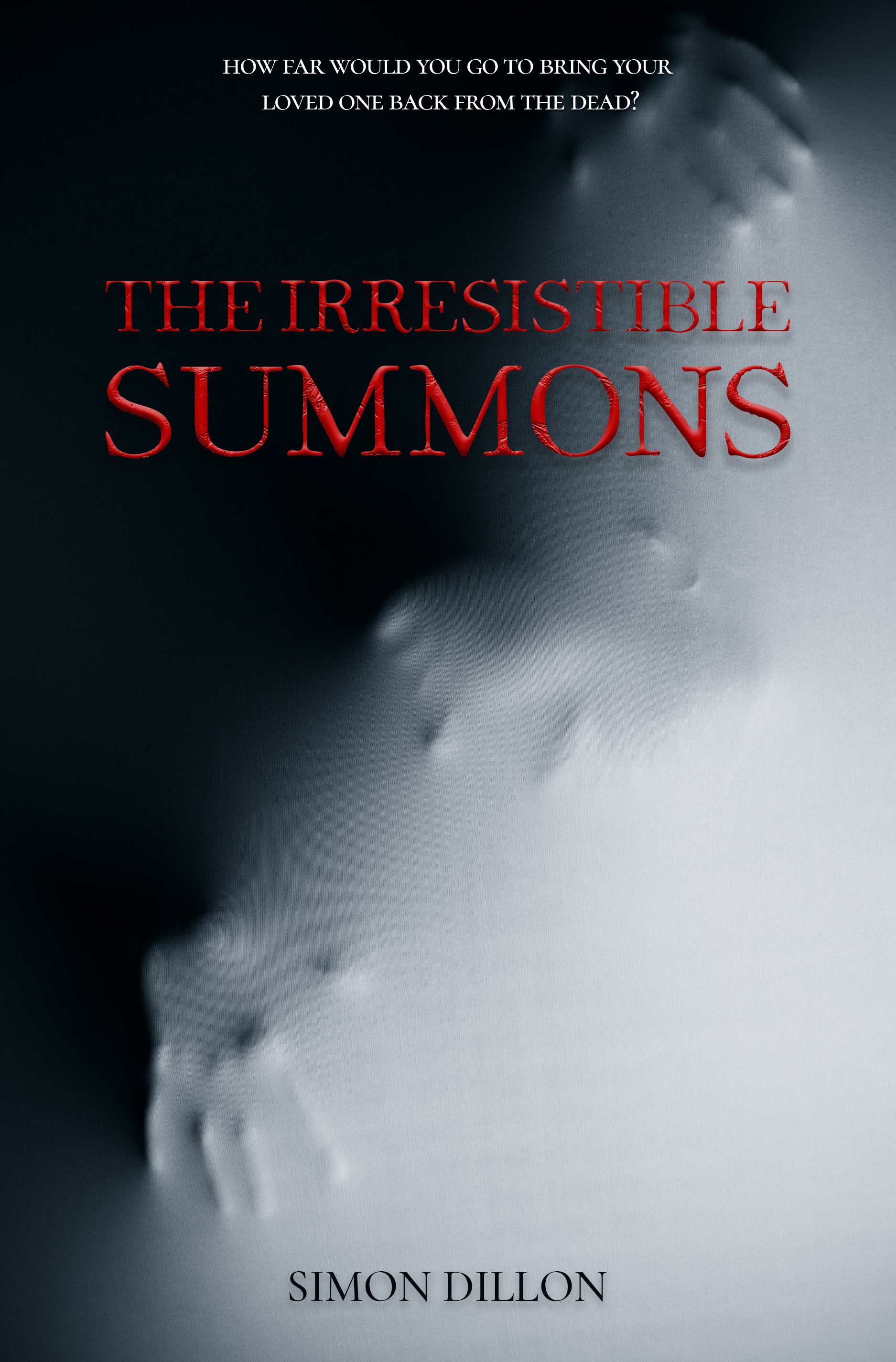
In truth, the distance between first draft and publication has greatly varied. For instance, I wrote the first draft of my most popular novel, Children of the Folded Valley, in 2011. I sat on it for six months, then made a few tweaks, before then showing it to my father, who had a superb suggestion to improve it. That precipitated a rewrite, though sadly my father never got to see the finished novel, as he died shortly afterwards. Children of the Folded Valley was ultimately released in 2014, three years after I finished the first draft.

In stark contrast, Echo and the White Howl was written during the summer of 2017, after my youngest son (then eight years old) requested a story about wolves. I don’t write animal fiction, but made the attempt on this occasion, rushing from first draft to self-publication in December of that year, so he’d have the novel in time for Christmas. Hardly anyone has read this novel, but I’m very proud of it. Most importantly, my son loved it.

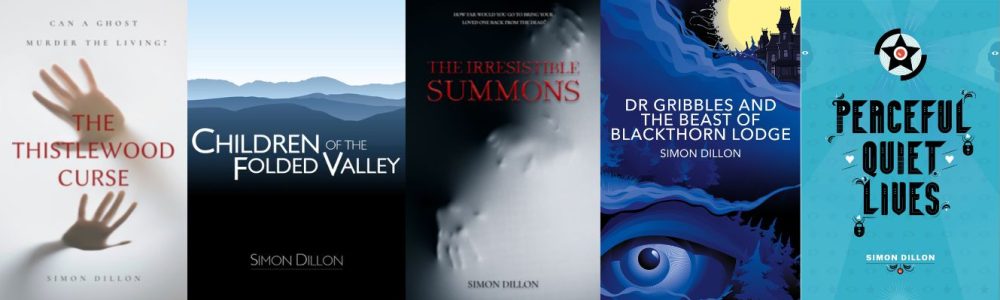
Most of my published work is in the gothic mystery horror/thriller genre, but normally there are a few years between first draft and publication. For example, my first draft of The Irresistible Summons was written in 2015, but it wasn’t published until 2019. In the interim, there were several revisions and deletions (which I detail here). Again, I’m very pleased with the finished novel.

On top of this, some of my novels have sat on the shelf for years in various states of disrepair – from first draft to nearly ready for publication. The oldest of these is another horror novel, entitled Wormcutter, which I wrote in 2007. Due to some of the subject matter, I’m a bit nervous about ever releasing this one, so it may stay there indefinitely. I’ve also a number of fantasy novels waiting in the wings, the oldest of which dates back to 2008. I hope those see the light of day at some point.

Writing Update

With 2021 well underway, here’s an update on my various writing endeavours.

Photo by Anne Nygård on Unsplash

Firstly, and most importantly, I’m now ten chapters (about 40,000 words) into writing my latest novel; a sequel to a still unreleased contemporary children’s horror/dark fairy tale I wrote in 2014, entitled The Faerie Gate. The new novel is yet to be titled, but it wasn’t originally conceived as a sequel. During the planning stages, I realised the narrative dovetailed perfectly in the universe of The Faerie Gate. It is set several decades later (in our future), and is a much bigger, more epic story. In fact, it could even end up being two or even three volumes, which means The Faerie Gate will be to the new story to what The Hobbit is to The Lord of the Rings. It’s a hugely ambitious undertaking, which I’ll keep chipping away at throughout this year, and probably beyond.

My most recent novel Peaceful Quiet Lives continues to bring in good reviews, and this post contains links to various articles exploring the novel from lots of perspectives.

This April, my currently unavailable gothic mystery horror/thrillers Spectre of Springwell Forest, The Irresistible Summons, and Phantom Audition are due for re-release with all new covers. More information on that next week.

I’ve also written a new short story, entitled Trial Period. It’s an unusual piece that takes a satirical look at being made redundant, and the peculiarities of the modern job market. It evolves into a tale of odd-couple mentorship and friendship between the protagonist – a white, middle-aged former publishing professional – and his co-worker, a young black woman with untapped literary talent. Whilst working for the marketing department of a herbal remedy company, they eventually discover a sinister conspiracy.

Trial Period might be published on Medium at some point in the future. Speaking of which, I’m now very active on that platform, contributing to publications including Frame Rated, Cinemania, The Writing Cooperative, Writer’s Blokke, and Illumination. I’ve also had an article published in the Guardian earlier this year, so all things considered, not a bad start to 2021.

What My Villains Reveal About Me

In storytelling, a great antagonist is as important as a great protagonist. The most satisfying narratives feature determined, active characters facing off against equally determined opposing forces.

A recent article on this blog listed ten of my favourite literary villains. Here are three antagonists from my own novels that I suspect, in retrospect, personify what I take a dim view of, drawn from personal experience, as well as political and spiritual outlook. Whilst some villains in my stories must remain anonymous, for fear of spoilers (particularly those in my gothic mystery horror/thriller novels), these three I can talk about upfront, without ruining the plot.

Graham Brooks (The Birds Began to Sing) – Although he isn’t the main villain, and only appears in one chapter during the first act, Graham Brooks is small-minded, petty, power-crazed, two-faced, and vindictive. He represents everything I despise about modern business management, with his meaningless targets, character assassination performance reviews, ghastly corporate lingo, and utterly phoney belief in so-called “teamwork”. I also took the opportunity to depict how much I loathe people who insist “problems” are “opportunities” (see what I did there?). As my protagonist Alice observes, alcoholics don’t have drinking opportunities.

Imalik (Echo and the White Howl) – Imalik is an ambitious and extremely dangerous wolf, who enters into a Faustian deal with a mysterious and malevolent supernatural force. He murders the pack Alpha, and forces other packs in the surrounding land into a union by systematically slaughtering the elk, moose, and other prey in their terrain, thus making them dependant on him for food. Imalik’s totalitarian dictatorship can be read as an allegory of any fascist state you care to name, especially those that have deliberately created food scarcity as a means of control. I didn’t intend Echo and the White Howl as anything more than an adventure story about wolves in Alaska, but in retrospect, some of my despair at short sighted political stupidity and greed over issues like overfishing may have crept in.

Benjamin Smiley (Children of the Folded Valley) – Of the many villainous faces of religious oppression in my stories, none are more diabolical than Benjamin Smiley. Exactly how he came to lead the mysterious Folded Valley Fellowship can’t be revealed here, suffice to say he is a master manipulator who preys on the weak and emotionally vulnerable, as per all cult leaders. His apparently miraculous powers of healing hold his congregation rapt, ensuring his more dubious activities (including assertion of sexual rights over whomever he chooses) go unquestioned. Benjamin Smiley is based on a number of real people I encountered during childhood, adolescence, teenage years, and even adulthood. Abuse of religious power remains the number one theme I return to in my novels, time and time again.