One thing you should never do when writing a first draft

rewrite

During the first draft of a novel, one thing I never do, no matter how strong the temptation, is go back and start rewriting earlier chapters. For anyone writing a novel for the first time, I cannot advise you strongly enough to avoid this snare. Do not rewrite anything until you have finished your first draft.

Once, years ago, I made this rookie error. Consequently I found act two all but insurmountable, and it took every ounce of willpower to overcome the fierce George McFly syndrome that ensued (regular readers will understand what I mean by “George McFly syndrome”). The more you polish earlier sections of an unfinished novel, the more impossible finishing it will seem. The better the prose reads at the start of an unfinished novel, the worse any new writing will feel as you push on ahead.

That is why, with every novel I write, even if get brainwaves mid- draft that massively improve the book, I ensure any earlier sections affected are rewritten afterwards. The same is true if I want to include more scenes with a character earlier, more foreshadowing of character arcs, or even if I just want to make an earlier section more atmospheric, scary, funny or simply read better. No matter how good the ideas or inspiration, simply jot down the essence of them separately then return to implement your plans after you have finished the first draft.

Trust me. Heed this advice and you will save yourself a world of pain.

Feedback: When to listen and when to disregard

Manuscript-Editing4

Let’s be honest. No-one likes criticism, even when we know it is good for us. Even constructive criticism is like medicine that tastes disgusting but cures a horrible illness. The wisdom is to know when to take it.

However, stretching this metaphor a little further, medicine should not be taken when one is healthy. You cannot please everyone all the time, and on occasion it is important to stick to one’s guns when feedback is negative on one’s writing.

Self-diagnosing whether my books work is essentially impossible whilst writing them as I am too close to the material, which is why I rely on the feedback of trusted people. However, I do so with the following in mind:

  • The individual sensibilities and personality of the reader – This is critical. Some are more naturally disposed to like one kind of fiction over another. I actually think it sometimes helps to give your writing to someone who isn’t the intended readership, in order to gain a more objective view. However, I fully appreciate this can be a two-edged sword. The trick is to find someone who won’t say they hate it, say, simply because it is for children or science fiction.
  • The reader is just one person – Sometimes even our nearest and dearest will dislike something beloved by countless others. It is worth getting a few opinions, and you may find that more people agree with you than with the reader who thought you should change this or that. Again however, getting feedback from too many sources can be problematic, as you risk diluting your product by hearing a multitude of different opinions.
  • Sometimes you need to stick to your vision regardless – When I submitted my most successful novel Children of the Folded Valley to mainstream publishers, one showed considerable interest, but wanted me to rewrite the book as a third person narrative. This was, to me, an absolutely inexplicable request that fundamentally changed the nature of what I had written. I refused and self-published. Given the subsequent overwhelmingly positive feedback, I’d say my instinct was correct.

All that said, sometimes I have tested early novel drafts with multiple people and got the same feedback again and again on pieces that aren’t working. When that happens, when the readers I trust all agree, I tend to listen.

Feedback and criticism is a perilous balancing act, but writers desperately need it. It may sometimes be an unpleasant medicine to swallow, but in the end, I hope my novels are healthier for it.

The terror (or not?) of writing a new novel…

This week I started work on a new book. I have prepared plot outlines, chapter plans, character profiles and so forth, but there is nothing quite like the moment when the first word goes on the page. The beginning of a full-length novel is an incredibly intimidating time.

At least, it used to be.

Many authors speak of this moment squashing the ego and putting the fear of God into a writer, but quite honestly whilst that might have been true ten years ago, it is no longer true for me. I find the start of a well-planned novel an oddly exhilarating place. Yes, a ton of work lies ahead, but the process of writing a first draft is a wonderful experience.

For about six chapters.

Then, at some point normally mid-act two, George McFly syndrome threatens to engulf me (“What if they think I’m no good? I just can’t take that kind of rejection!”). Experience has taught me to ignore this and push on regardless, but that is the time I feel most intimidated, not on the opening page. Consequently, I try to write first drafts as quickly as possible to minimise George McFly syndrome, but it always lurks in the shadows, waiting to strike.

However, at present all is well. I am enjoying writing my new novel and my faith in it is sky high at present. Frankly, I think it helps to believe whatever you are writing is destined to be the greatest novel of all time, whilst you are writing it. And right now, this one feels like it might be.

FREE books – for five days only!

To round off the Christmas and New Year celebrations, I am making my novels Uncle Flynn and Dr Gribbles and the Beast of Blackthorn Lodge available to download FREE from Amazon Kindle for five days only. Simply click on the covers below.

uncle-flynn_cover

Uncle Flynn, my debut novel, was received very positively. On the surface it is a properly old-fashioned treasure hunt adventure, but it contains underlying themes about overcoming fear and the dangers of mollycoddling. The book is dedicated to my eldest son, and was largely inspired by our many excursions over Dartmoor, as well as a bit of local history.

Here is the blurb from the back of Uncle Flynn:

When timid eleven year old Max Bradley embarks on a hunt for buried treasure on Dartmoor with his mysterious Uncle Flynn, he discovers he is braver than he thought.

Together they decipher clues, find a hidden map and explore secret tunnels in their search. But with both police and rival treasure hunters on their tail, Max begins to wonder if his uncle is all he seems…

DrGibbles_1600x2400_front cover

Dr Gribbles and the Beast of Blackthorn Lodge is a gripping and scary tale involving spies, monsters, haunted houses, mad scientists and lots more besides, with action and thrills to spare. It was actually inspired by the nightmares of my youngest son, and the book is duly dedicated to him.

Here is the blurb from the back of Dr Gribbles and the Beast of Blackthorn Lodge:

September 1987.

Curiosity lands Tim Rawling in a world of secrets, spies and a desperate race against time.

The haunted house, the monster and the mad scientist are only the beginning of a terrifying adventure.

Happy New Year!

2015 was quite a year.

I released two novels: the final instalment in the George Hughes trilogy, George goes to Neptune, and Love vs Honour.

The latter in particular represented something of a watershed for me, in that I stepped well outside my usual genres. It begins as a boy meets girl story, with a potentially controversial religious spin. It then evolves into a drama of deception, with many twists, turns and ironies before a much darker finale. Although ostensibly a novel for teenagers, it has as much appeal for grown-ups, especially as the subject matter is not exclusively romantic but embracing of complex, thought-provoking themes and ideas. At least, that is what those who have read the novel claim in their reviews. Why not give it a go yourself and see what you think?

LvsHonour 1600 x 2400

So, what does 2016 have in store?

Unless it is snapped up by mainstream publishers, I plan to release The Thistlewood Curse – a detective thriller that evolves into a supernatural drama and finally a horror story. I will say very little at present, other than it involves astral projection and is set almost entirely on Lundy Island.

For younger readers, I plan on releasing something potentially even scarier – The Faerie Gate. Again, plans may change if mainstream publishers want to get their grubby little mits on it, but this is easily the darkest children’s book I have written; a proper horror story for younger readers, and adults with nerves of steel.

Also for younger readers, I hope to release a single volume version of the entire George Hughes trilogy at some stage, so George goes to Mars, George goes to Titan and George goes to Neptune will all be available in one place.

I am also writing another dark fairy tale in the early part of the year, which I would describe as drawing inspiration from Alice in Wonderland, Coraline, Pan’s Labyrinth, and Spirited Away yet also in many ways a companion piece to Children of the Folded Valley. That one is intended for adults.

The second book I intend to write in 2016 is also for adults, though the details remain top secret for now. I must confess to feeling oddly superstitious about writing this novel, and part of me doesn’t want to. But the story is so strong I feel I must at least get it on paper. I can always chicken out and not release it after all, if I get cold feet. But if it turns out as good as I think it could be that would perhaps be cowardly.

I realise all this sounds infuriatingly enigmatic, so I will instead wish you a Happy New Year from Simon Dillon Books, and judging by 2016’s planned output, it’s also going to be quite a scary one.

Christmas Present – FREE Kindle books!

Since its Christmas, I have made three of my novels FREE for download on Kindle at Amazon – for five days only!

The FREE novels are:

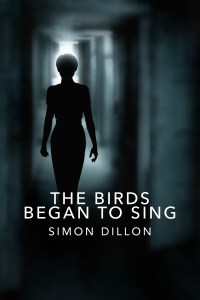
1) The Birds Began to Sing – a gripping thriller that draws inspiration from Agatha Christie, Daphne Du Maurier, Sir Arthur Conan Doyle, Susan Hill, the Bronte Sisters and Michael Crichton, but also unique in it’s own right – at least reviewers. One reader at Barnes and Noble praised it thus: “Mystery, drama, conspiracy theory, and some supernatural intrigue. A real page turner!”

The Birds Began to Sing_1600x2400_Front Cover

From the back of the book:

When aspiring novelist Alice Darnell enters a competition to write the ending for an unfinished manuscript by late, world famous author Sasha Hawkins, it appears she might have her big break at last.

However, upon arrival at Sasha’s former home – the sinister Blackwood House – Alice is unsettled by peculiar competition rules, mysterious dreams and inexplicable ghostly visions. She begins to question her sanity as she is drawn into a terrifying web of deceit, revenge and murder.

Download your FREE copy of The Birds Began to Sing here.

2) George goes to Mars – The first part in the thrilling Geoge Hughes trilogy, this science fiction adventure can stand-alone, or be read as part of the wider saga. It’s not just for children either. Throughout the trilogy, amid the excitement, humour and thrills I touch on everything from murderous religious fundamentalism to sexual equality, civil rights, slavery as well as more metaphysical elements.

GGTM_600px

From the back of the book:

When George Hughes discovers he has inherited the planet Mars, he goes from poverty to becoming the richest boy on Earth overnight.

Accompanied by his new guardian, a mysterious secret agent and a crew of astronauts, George voyages to Mars to sell land to celebrities wanting to build interplanetary holiday homes. But sabotage, assassination attempts and the possibility of an alien threat plunge him into a deadly adventure…

Download your FREE copy of George goes to Mars here.

3) George goes to Titan – The action-packed second part of the George Hughes trilogy, which again works as a stand-alone adventure, although I do recommend reading the first novel beforehand.

GGTT cover

From the back of the book:

The thrilling sequel to George goes to Mars…

A year on from his adventures on Mars, George Hughes faces an even deadlier peril as he travels to Titan on an urgent rescue mission. The mysterious Giles returns to help him, but assassins are once again on his tail, and a new, far greater alien menace lurks in the shadows waiting to strike.

Download your FREE copy of George goes to Titan here.

Make sure you download all these novels before the 30th December.

Happy Christmas from Simon Dillon Books!

Christmas Present ideas: Children of the Folded Valley

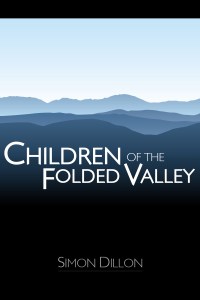
Continuing this series on suggested Christmas presents, today’s suggestion is Children of the Folded Valley – by far my most successful novel to date.

Intended Readership: Adults.

Folded Valley cover

Children of the Folded Valley was shortlisted by the SpaSpa Book Awards in 2014, coming third in the fantasy category, though I personally think of it more as a coming of age memoir set against a “light” science fiction backdrop.

Here is the blurb from the back of the book:

During a journey to visit his estranged sister, James Harper recalls his childhood growing up in a mysterious valley cut off from the outside world, as part of a cult called the Folded Valley Fellowship.

In this seemingly idyllic world, the charismatic Benjamin Smiley claimed to be protecting his followers from an impending nuclear apocalypse.

But the valley concealed a terrifying secret.

A secret that would change Smiley’s followers forever.

A sample of the many rave reviews:

“I don’t usually leave reviews but I felt so strongly about encouraging people to read this fantastic book. It had me captured from start to finish. At one stage in the book I actually thought it was a true story.” – Paul, Amazon.

“The use of re-written religious doctrine to control, govern and frighten is particularly chilling… Full marks to Simon Dillon for this creative and highly readable novel.” – Around Robin, Amazon.

“Creepy and unnerving. Kept me gripped the whole way through.” – Lucyboo, Amazon.

“I couldn’t put it down.” – Bukky, Amazon.

“I had so much adrenaline flowing by the end that I couldn’t get to sleep!” – Hells Thomas, Goodreads.

“Well thought through, compassionate… Full of empathy.” – Over, Amazon.

“So well written, you could believe it was a memoir.” – Shelley, Amazon.

“A perturbing and very original story… The ending is magnificent.” – Joan, Goodreads.

Children of the Folded Valley can be downloaded here, and print copies can be ordered here.

Christmas Present ideas: The Birds Began to Sing

Here’s another Christmas present suggestion from the Dillon back catalogue: The Birds Began to Sing.

Intended Readership: Adults.

The Birds Began to Sing_1600x2400_Front Cover

The Birds Began to Sing is a mystery novel inspired by the likes of Agatha Christie, Daphne Du Maurier and Sir Arthur Conan Doyle, with a dash of Susan Hill, the Bronte Sisters and Michael Crichton but hopefully also original in its own right (you decide). It is dedicated to my wife, who loves a gripping, page-turning thriller.

Here is the blurb from the back of the novel:

When aspiring novelist Alice Darnell enters a competition to write the ending for an unfinished manuscript by late, world famous author Sasha Hawkins, it appears she might have her big break at last.

However, upon arrival at Sasha’s former home – the sinister Blackwood House – Alice is unsettled by peculiar competition rules, mysterious dreams and inexplicable ghostly visions. She begins to question her sanity as she is drawn into a terrifying web of deceit, revenge and murder.

Some review snippets:

“Mystery, drama, conspiracy theory, and some supernatural intrigue. A real page turner!” – Anonymous, Barnes and Noble.

“Well written, poetic in places, funny at times and with a plot that will keep you turning the pages…” – Al Gibson, Amazon.

“This was really a great read and I loved the twist. Did not expect it at all.” – Jennifer, Amazon.

The Birds Began to Sing can be downloaded here, and print copies can be ordered here.

Sentimental Simon Part 2

In this second part of my Sentimental Simon blog post, I examine books I have cried at.

lotr

Perhaps it is less common to cry at books than films, but because I find a good novel so immersive, there have been a number of occasions when tears have been provoked. Here are five examples, in no particular order (warning – some spoilers):

Life of Pi – The ambiguous epilogue, where Pi converses with the Japanese insurance people who want to get to the bottom of what really took place at sea, brought a tear to my eye when I read it. The prose is subtle, but the trauma Pi feels, not to mention the grief at having lost his family, is quietly devastating.

One Day – Anyone who has suddenly lost a loved one out of the blue will relate to the aftermath of the shocking, out-of-left-field death in the final act of this romantic and often funny novel (avoid the anaemic film version, by the way). Tears were forthcoming.

The Kite Runner – Flippantly referred to as the Afghan Great Expectations, as with One Day, I recommend reading the book rather than seeing the film. One scene in a hospital late in the novel (a sequence inexplicably removed from the film), leads to the protagonist crying hysterically. And me, whilst I read it.

Watership Down – This story is a landmark trauma event for most people from my generation, largely because of the notorious animated film version (one commenter on Mark Kermode’s blog memorably described it as “a one-way ticket to post traumatic stress disorder”). But it was the novel that first made me weep, especially the epilogue, when Hazel essentially passes into the rabbit afterlife.

The Lord of the Rings – It is all but impossible to explain the profound impact this novel had on me the first time I borrowed it from the school library, not to mention every subsequent time I read it. Although I had read The Hobbit, nothing prepared me for the emotional impact of the final chapters of The Lord of the Rings. After everything our heroes go through, on their many adventures, their ultimate partings were almost too much to bear.

Here are three brief excerpts to give you an idea:

“Farewell, my hobbits! You should come safe to your own homes now, and I shall not be kept awake for fear of your peril. We will send word when we may, and some of us may yet meet again at times; but I fear that we shall not all be gathered together ever again.”

“With that they parted, and it was then the time of sunset; and when after a while they turned and looked back, they saw the King of the West sitting upon his horse with his knights about him; and the falling Sun shone upon them and made all their harness to gleam like red gold, and the white mantle of Aragorn was turned to a flame. Then Aragorn took the green stone and held it up, and there came a green fire from his hand.”

“Then Elrond and Galadriel rode on; for the Third Age was over, and the Days of the Rings were passed, and an end was come of the story and song of those times. With them went many Elves of the High Kindred who would no longer stay in Middle-earth; and among them, filled with a sadness that was yet blessed and without bitterness, rode Sam, and Frodo, and Bilbo, and the Elves delighted to honour them.”

Annual Brain Recharge

brainrecharge

Other writers no doubt have their own rest and recharge routines, but for me, every December I stop writing for the entire month. Why? Because I find that, for some reason, by the time I reach that point in any given year, my levels of inspiration are running dangerously low.

Given that I spend the other eleven months of the year writing one thing or another, this one month recharge period has become a vital part of my writing routine.

That said I do not stop entirely. I still write film reviews, and occasional blog posts, although I try to have written as much as possible in advance, for the month of December. Nor does it mean that ideas do not occur to me. Indeed, I already have a decent outline for a novel I am writing first thing next year, so no doubt the details will be ticking away in the back of my mind during the Christmas period.

However, the fact that I chose not to write means that when I do finally get down to writing the afore-mentioned novel, it will have been brewing nicely for some time. I will feel a lot more inspired to write it having given a months rest and recuperation to the Dillon brain.

So, in two days time, I’m hitting shutdown on all major writing projects and enjoying a much needed mental break. Generally I am pleased with how my writing year has gone, so I think I deserve it.