Christmas Present ideas: The Birds Began to Sing

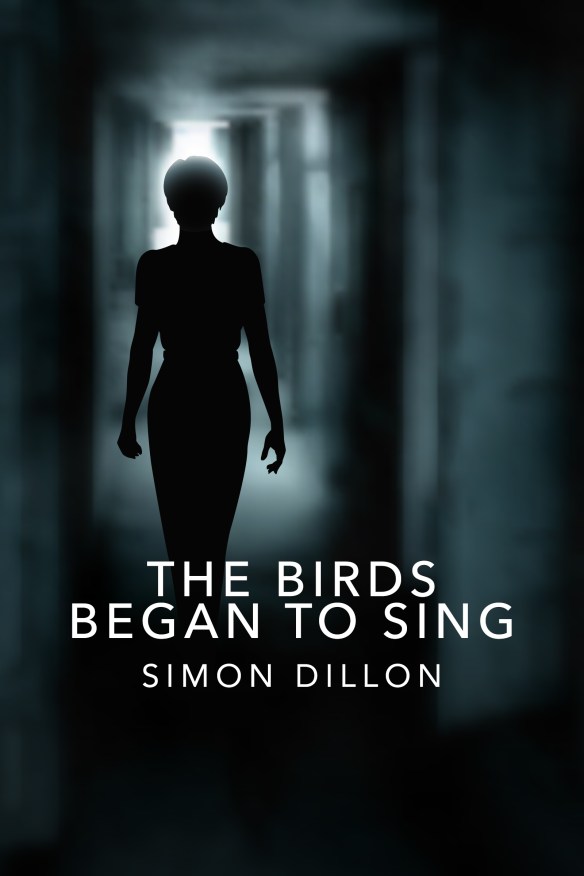
Here’s another Christmas present suggestion from the Dillon back catalogue: The Birds Began to Sing.

Intended Readership: Adults.

The Birds Began to Sing_1600x2400_Front Cover

The Birds Began to Sing is a mystery novel inspired by the likes of Agatha Christie, Daphne Du Maurier and Sir Arthur Conan Doyle, with a dash of Susan Hill, the Bronte Sisters and Michael Crichton but hopefully also original in its own right (you decide). It is dedicated to my wife, who loves a gripping, page-turning thriller.

Here is the blurb from the back of the novel:

When aspiring novelist Alice Darnell enters a competition to write the ending for an unfinished manuscript by late, world famous author Sasha Hawkins, it appears she might have her big break at last.

However, upon arrival at Sasha’s former home – the sinister Blackwood House – Alice is unsettled by peculiar competition rules, mysterious dreams and inexplicable ghostly visions. She begins to question her sanity as she is drawn into a terrifying web of deceit, revenge and murder.

Some review snippets:

“Mystery, drama, conspiracy theory, and some supernatural intrigue. A real page turner!” – Anonymous, Barnes and Noble.

“Well written, poetic in places, funny at times and with a plot that will keep you turning the pages…” – Al Gibson, Amazon.

“This was really a great read and I loved the twist. Did not expect it at all.” – Jennifer, Amazon.

The Birds Began to Sing can be downloaded here, and print copies can be ordered here.

Sentimental Simon Part 2

In this second part of my Sentimental Simon blog post, I examine books I have cried at.

lotr

Perhaps it is less common to cry at books than films, but because I find a good novel so immersive, there have been a number of occasions when tears have been provoked. Here are five examples, in no particular order (warning – some spoilers):

Life of Pi – The ambiguous epilogue, where Pi converses with the Japanese insurance people who want to get to the bottom of what really took place at sea, brought a tear to my eye when I read it. The prose is subtle, but the trauma Pi feels, not to mention the grief at having lost his family, is quietly devastating.

One Day – Anyone who has suddenly lost a loved one out of the blue will relate to the aftermath of the shocking, out-of-left-field death in the final act of this romantic and often funny novel (avoid the anaemic film version, by the way). Tears were forthcoming.

The Kite Runner – Flippantly referred to as the Afghan Great Expectations, as with One Day, I recommend reading the book rather than seeing the film. One scene in a hospital late in the novel (a sequence inexplicably removed from the film), leads to the protagonist crying hysterically. And me, whilst I read it.

Watership Down – This story is a landmark trauma event for most people from my generation, largely because of the notorious animated film version (one commenter on Mark Kermode’s blog memorably described it as “a one-way ticket to post traumatic stress disorder”). But it was the novel that first made me weep, especially the epilogue, when Hazel essentially passes into the rabbit afterlife.

The Lord of the Rings – It is all but impossible to explain the profound impact this novel had on me the first time I borrowed it from the school library, not to mention every subsequent time I read it. Although I had read The Hobbit, nothing prepared me for the emotional impact of the final chapters of The Lord of the Rings. After everything our heroes go through, on their many adventures, their ultimate partings were almost too much to bear.

Here are three brief excerpts to give you an idea:

“Farewell, my hobbits! You should come safe to your own homes now, and I shall not be kept awake for fear of your peril. We will send word when we may, and some of us may yet meet again at times; but I fear that we shall not all be gathered together ever again.”

“With that they parted, and it was then the time of sunset; and when after a while they turned and looked back, they saw the King of the West sitting upon his horse with his knights about him; and the falling Sun shone upon them and made all their harness to gleam like red gold, and the white mantle of Aragorn was turned to a flame. Then Aragorn took the green stone and held it up, and there came a green fire from his hand.”

“Then Elrond and Galadriel rode on; for the Third Age was over, and the Days of the Rings were passed, and an end was come of the story and song of those times. With them went many Elves of the High Kindred who would no longer stay in Middle-earth; and among them, filled with a sadness that was yet blessed and without bitterness, rode Sam, and Frodo, and Bilbo, and the Elves delighted to honour them.”

Annual Brain Recharge

brainrecharge

Other writers no doubt have their own rest and recharge routines, but for me, every December I stop writing for the entire month. Why? Because I find that, for some reason, by the time I reach that point in any given year, my levels of inspiration are running dangerously low.

Given that I spend the other eleven months of the year writing one thing or another, this one month recharge period has become a vital part of my writing routine.

That said I do not stop entirely. I still write film reviews, and occasional blog posts, although I try to have written as much as possible in advance, for the month of December. Nor does it mean that ideas do not occur to me. Indeed, I already have a decent outline for a novel I am writing first thing next year, so no doubt the details will be ticking away in the back of my mind during the Christmas period.

However, the fact that I chose not to write means that when I do finally get down to writing the afore-mentioned novel, it will have been brewing nicely for some time. I will feel a lot more inspired to write it having given a months rest and recuperation to the Dillon brain.

So, in two days time, I’m hitting shutdown on all major writing projects and enjoying a much needed mental break. Generally I am pleased with how my writing year has gone, so I think I deserve it.

Muse the force

“I must caution you that I am a writer. Anything you say or do could be used in my next novel.”

Muses are integral to any writing process, whether they inspire characters directly, indirectly, in part or in full. If a writer writes what they know, as conventional advice dictates, then their writing will be full of people who have inspired their work, consciously or unconsciously.

In my own writing, I have consciously written about people, and also unconsciously, realising that I had after the fact. For example, my wife – my greatest inspiration – consciously inspired elements of the three central female characters in my as yet unreleased fantasy magnum opus Goldeweed. However she also unconsciously inspired Meredith, or significant elements of her, in the George Hughes trilogy. Only after my mother pointed out the obvious connection between Meredith and my wife (after the first novel George goes to Mars) did I realise. Meredith’s defining characteristic is her fierce loyalty, and that comes directly from my wife. She also often comes up with the plan that saves the day, and generally has the best lines too, especially in the final novel George goes to Neptune. Again, this is very characteristic of my wife.

GGTM_600px

Love vs Honour is another example of a novel where the characters (and also situations) in some cases were inspired by people from my past.

LvsHonour 1600 x 2400

There are dangers, however, of crowbarring unworkable elements into fictional characters if one relies too much on direct inspiration from real individuals. There is a balance to be struck. For example, earlier this year, when writing a supernatural thriller entitled The Irresistible Summons, I based the central character, and two other supporting characters, on friends of mine (in one case, my closest friend). For the central character I’d say about 70 percent is based on the muse in question, and the other 30 percent made up. At times I was tempted to make this protagonist more like her real-life counterpart, but it would have weakened the overall novel. The same was true for the supporting characters.

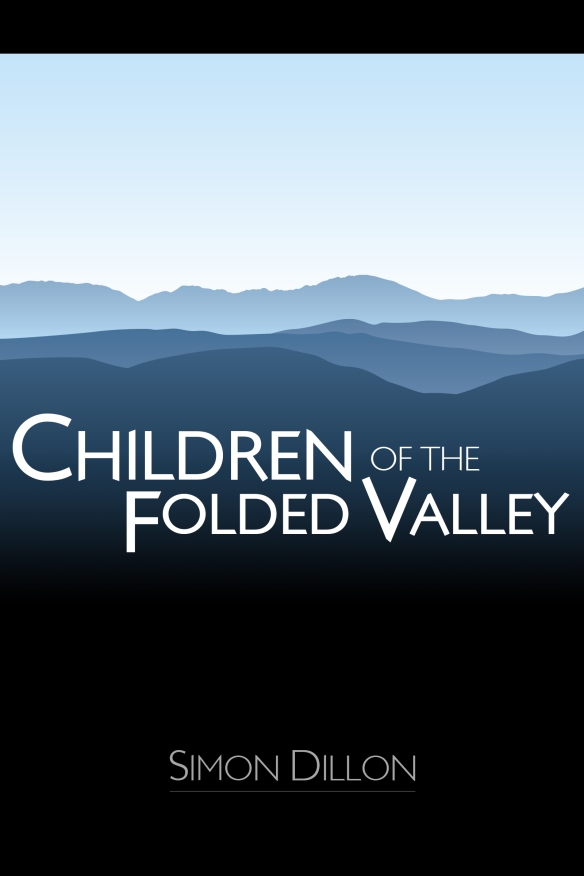
Elsewhere many of my novels (particularly Children of the Folded Valley) feature characters minor and major that are directly inspired from figures in my past or present. But they are always cloaked in fictionalised elements, mostly for the purposes of the novel but also very occasionally to differentiate sufficiently from real life incidents. This is to avoid potential offence being taken, should the real people ever realise they inspired the character in question. After all, I don’t always own up to people if they have ever ended up in a novel in some form, especially if their portrayal is less than flattering.

Folded Valley cover

And make no mistake – some of the people I write about are deeply unpleasant individuals. An odious left luggage attendant in The Irresistible Summons is based entirely on a truly obnoxious person I once had the misfortune to encounter in Paddington railway station. In The Birds Began to Sing, Alice’s boss is an officious, corporate non-entity based very much on a person I know, though I suspect he would not recognise himself in print. Much more seriously, cult leader Benjamin Smiley in Children of the Folded Valley is also based on someone (now deceased) that I knew as a child. Of all my novels, Children of the Folded Valley contains more characters that are either composites or else directly inspired from people I know or knew than any of my other works.

George goes to Neptune – now available in print

George goes to Neptune, the third and final novel in the George Hughes trilogy, can now be ordered in dead tree format, with pages that physically turn, from Amazon Create Space.

GGTN 1600 x 2400

Here is the blurb from the back of the book:

In this spectacular sequel to George goes to Mars and George goes to Titan, George Hughes faces his most dangerous adventure yet.

Following the Titanian invasion, a deadly and very personal threat forces George to undertake a voyage to a top secret Martian research base on Neptune.

On this remote outpost, he uncovers a diabolical plot. But George is too late to prevent the catastrophe.

A catastrophe that will change his life forever…

George goes to Neptune is also available from Amazon Kindle.

George goes to Neptune – out now!

The wait is over!

GGTN 1600 x 2400

George goes to Neptune, the third and final novel in the George Hughes trilogy, is now available for download on Amazon Kindle. Click here to get your copy!

Here is the blurb from the back of the book:

In this spectacular sequel to George goes to Mars and George goes to Titan, George Hughes faces his most dangerous adventure yet.

Following the Titanian invasion, a deadly and very personal threat forces George to undertake a voyage to a top secret Martian research base on Neptune.

On this remote outpost, he uncovers a diabolical plot. But George is too late to prevent the catastrophe.

A catastrophe that will change his life forever…

Print copies of George goes to Neptune will be available from the 31st October. You can pre-order copies here.

George goes to Neptune out tomorrow

It’s almost here! Tomorrow George goes to Neptune, the third and final novel in the George Hughes trilogy, will be unleashed upon the world of digital downloads.

GGTN 1600 x 2400

You can still pre-order from Amazon by clicking here.

FREE copies of previous instalments George goes to Mars and George goes to Titan can be downloaded here and here (although hurry – only two days left on this offer).

Here is the blurb from the back of George goes to Neptune:

In this spectacular sequel to George goes to Mars and George goes to Titan, George Hughes faces his most dangerous adventure yet.

Following the Titanian invasion, a deadly and very personal threat forces George to undertake a voyage to a top secret Martian research base on Neptune.

On this remote outpost, he uncovers a diabolical plot. But George is too late to prevent the catastrophe.

A catastrophe that will change his life forever…

Print copies of George goes to Neptune will be available from the 31st October.

Download George goes to Mars and George goes to Titan FREE – for five days only!

To celebrate the release of the final novel in the George Hughes trilogy, George goes to Neptune, I am making the first two novels in the trilogy available free on Amazon Kindle for five days only!

Click here to download your free copy of George goes to Mars and here to download your free copy of George goes to Titan.

GGTM_600px GGTT

George goes to Mars and George goes to Titan are books 1 and 2 respectively in a thrilling, action-packed space tale set just over a hundred years in the future. Each story is a stand-alone adventure, but I recommend reading the novels in order nonetheless.

Here is the blurb from the back of George goes to Mars:

When George Hughes discovers he has inherited the planet Mars, he goes from poverty to becoming the richest boy on Earth overnight.

Accompanied by his new guardian, a mysterious secret agent and a crew of astronauts, George voyages to Mars to sell land to celebrities wanting to build interplanetary holiday homes. But sabotage, assassination attempts and the possibility of an alien threat plunge him into a deadly adventure…

Here is the blurb from the back of George goes to Titan:

The thrilling sequel to George goes to Mars…

A year on from his adventures on Mars, George Hughes faces an even deadlier peril as he travels to Titan on an urgent rescue mission. The mysterious Giles returns to help him, but assassins are once again on his tail, and a new, far greater alien menace lurks in the shadows waiting to strike.

The George Hughes trilogy is not just for children. Here are a few of reviews from adults:

“This is the second Simon Dillon novel that I’ve read and have thoroughly enjoyed. A wonderfully engaging and enjoyable read. A fun and easy going escape from reality, as all good books should be!” – Delian Jones, Amazon.

“A thoroughly enjoyable read.” – Mark, Amazon.

“Reading like a cross between one of Edgar Rice Burroughs’ pulpy Mars adventures and a Robert Heinlein ‘juvenile’, this improbable yarn (just how many “saved in the nick of time” coincidences can one novel contain?) about a rags-to-riches-to-hero boy named George was nonetheless page-turningly entertaining. Perfect rainy day/sick day reading.” – Elizabeth Olson, Goodreads.

And here some thoughts from the target audience (at least I assume so, given the tone of their reviews):

“This was totally amazing! Involves space ships, aliens and more! A totally exciting adventure you’ll love!” – Anonymous, Barnes and Noble.

“Pure awesomeness! Packed with suspense and adventure, as well as LOTS of action!” – Anonymous, Barnes and Noble.

“Best book ever!” – Anonymous, Barnes and Noble.

For those who prefer print copies, they can be ordered here and here (sadly not for free).

GGTN 1600 x 2400

George goes to Neptune is released on the 25th October. You can pre-order the Kindle download from Amazon by clicking here. Print copies will be available from the 31st October.

George goes to Neptune Q&A

I’ve received a number of questions regarding my upcoming novel George goes to Neptune, and the George Hughes trilogy in general. Herewith a Q&A, ahead of the release on the 25th October.

GGTN 1600 x 2400

What was the inspiration for the George Hughes trilogy?

The initial novel, George goes to Mars, was inspired by an article I saw in 2004, regarding an individual who made a claim with the US land registry to the effect that if the moon was ever colonised, said individual would have the right to sell the land. To that end, this person subsequently received money from film stars, a few ex-Presidents and other eccentrics from amongst the rich and famous, buying plots of land to build lunar holiday homes. I subsequently came up with the basic story for George goes to Mars and designed it as a science fiction adventure for all ages, with an emphasis on fun and excitement rather than heavy sci-fi hand-wringing of the Asimov variety.

GGTM_600px

Was the George Hughes saga originally designed as a trilogy?

I’d like to claim it was all neatly planned, but no. George goes to Mars was originally conceived as a stand-alone novel. However, after writing it, the plot for the second novel immediately occurred to me, fully formed. It was such a good idea that I knew I would have to write it someday, but I actually dithered for several years, until 2012, when George goes to Titan was written.

GGTT cover

And by that point, you planned it to be a trilogy?

Er… no. After reading the initial draft of George goes to Titan, my wife said – and I have to be careful of spoilers here – “(name redacted) is going to return, right? You need another sequel.” I immediately realised she was correct, and again, almost overnight, the entire plot of George goes to Neptune was planned.

Is George goes to Neptune definitely the final instalment?

I am 99.9 per cent certain there will be no more George Hughes novels. If I ever write another, it will be set several years later with totally different characters. But even then my ideas for such a story are very, very sketchy and quite honestly I think I am done with the George Hughes universe.

Why?

Because I know, deep down, nothing will top George goes to Neptune. I am very pleased with it. I think it’s the best of the three and a fitting end to the adventures of George, Meredith, Giles and the others.

What can readers expect from the new novel?

It has as much mystery, action and humour as the previous books. The Martians will return, and George will also encounter an entirely new alien race. The plot obviously involves a trip to Neptune for reasons I cannot spoil, suffice to say that the reason is very personal for George.

There are also many returning characters, although in some cases they only turn up briefly. However, Giles and Meredith both continue to play crucial roles. In fact, I think Meredith has all the best lines this time. I have really enjoyed developing her as a character throughout this series.

The main difference between George goes to Neptune and previous instalments is that this time the tone is slightly darker, especially in the final act which I think may surprise a number of readers.

How is it darker?

Well, I can’t get into specifics for fear of spoilers. However, the plot is as much about overcoming the potential for evil within oneself as overcoming external evil. Amid this I touch on issues including grief and the consequences of violence. But this probably makes the book sound really heavy and tough. I promise it is just as much fun as the others!

The George Hughes series have thrown up a bunch of interesting, more grown-up themes, right?

Absolutely. They are for adults as much as children, and over the course of three novels I have touched on everything from murderous religious fundamentalism to sexual equality, civil rights, slavery as well as more metaphysical elements. If these stories provoke a modicum of thought amid the thrills, then I am very happy.

George goes to Neptune is released on the 25th October. You can pre-order the Kindle download from Amazon by clicking here. Print copies will be available from the 31st October.

Reading to Children

I recently read an article that chilled me to the bone, claiming parents are reading to their children less and less (only one family in three, apparently). Even worse, when people suggest utter nonsense like this (so ludicrous I had to check my watch and make sure it wasn’t the 1st of April), I decided I had to post a blog on this subject.

The very idea of not reading to my children is an anathema. Not only is it important bonding time, but it also leads to deep, often quite profound discussion.

InHome_K_dad_boy_funinsun

For example, I have almost finished reading The Hobbit to my six year old. Not only did he love the thrills and spills of that adventure, but the section we are currently in, just prior to the Battle of Five Armies, has led to in depth talks about idolising wealth and the nature of greed.

In my view, not reading to children is nigh-on call for intervention by the social services. It goes without saying that reading to children is vital if you want to stimulate their imaginations, whatever their age. Whether you are reading picture books like The Hungry Caterpillar, Dogger, The Grufallo and The Tiger who came to Tea or novels like Swallows and Amazons, The Wind in the Willows, Five go to Smuggler’s Top or The Lion the Witch and the Wardrobe, or non-fiction material (my youngest son is very partial to books about undersea life, especially sharks), reading to children is absolutely essential to raise well balanced human beings.

It is also a great way for parents to reconnect with their own childhoods. I really enjoy reading my children the tales I loved as a child, as well as more recent greats, such as the Harry Potter books – a series I would have loved to have grown up with. I am often surprised and delighted to discover jokes and themes that can only be appreciated as an adult in the likes of, say, Winnie the Pooh.

If it is true that more and more parents are not reading to their children, then I can only condemn such inaction as shameful and bitterly sad neglect.

It should come as no surprise that I also use my children as guinea pigs for my own novels. I have almost finished reading the final book in the George Hughes trilogy, George goes to Neptune, to my eldest child, which is going down very well (although I don’t think he was quite prepared for the dark turns of the final act).

GGTN 1600 x 2400

Incidentally, George goes to Neptune is released on the 25th October. You can pre-order the Kindle download from Amazon by clicking here. Print copies will be available from the 31st October.