Action scenes

Action scenes in novels or films are a notoriously tricky thing to pull off. In fact, I find they are actually the hardest thing to write in either a screenplay or prose.

There are several pitfalls to avoid. Too little action in a story that demands it will feel flabby, often with a second act that seems to drag. Too much and it feels overblown, and character empathy is lost. Writing prose compounds this issue, as simply reading description – of a battle for instance – doesn’t work the way it might in a screenplay which will ultimately be filmed.

How then to approach action scenes in prose? I try to always emphasise the senses – smell, taste, touch, the noise, etc. Also describing the emotions experienced by the character helps a great deal, as do various other methods. Take the afore-mentioned battle scene problem. In The Lord of the Rings Tolkien dealt with this by building suspense. For example, the Minis Tirith siege is experienced by characters within the walls, slowing observing the advancing menace from Mordor. It is handled very differently in the film version, but the novel mostly stays with Pippin and his point of view.

lotr

It can also be a good idea to keep battle scenes in books brief. The Battle of Five Armies in The Hobbit is essentially dealt with in a few lines, whereas the film version went on for the best part of an hour. This isn’t necessarily a bad thing. It’s simply about making the right choice for the right medium.

There are various ways I approach action in stories that demand it. Sometimes it can be fun to bookend a story with large action sequences, providing a sense of full circle. Other times it is good to gradually build action scenes (what I call the Die Hard approach) with each outdoing the last. This is generally my method with the George Hughes series. There is normally an action scene fairly early on – in chapter 2 – before the main plot kicks in properly, and the scale of the action becomes bigger and increasingly outrageous.

GGTN 1600 x 2400

George goes to Neptune, the final novel in the George Hughes series, obviously features plenty of action. It is released on the 25th of October for download on Kindle, and can be pre-ordered here. Print copies will be available from the 31st of October.

How to make a segment in an ongoing story individually satisfying

One distinct advantage to writing a series of books with the assumption that the latest will be the last is that it provides a safeguard to ensure that each is individually satisfying. This was the case with all three of my George Hughes adventures, and the third instalment, George goes to Neptune, provides a definitive ending to the series.

GGTN 1600 x 2400

Conversely, the recent trend in film of either dividing the source text for the sake of greed rather than for any good artistic reason; or being too lazy to come up with a proper ending and instead assuming the audience will attend the next film in the series, drives me mad. Breaking Dawn, Mockingjay and Harry Potter and the Deathly Hallows are examples of the former trend. Prometheus is another example of the latter. Mind you, the entire screenplay for Prometheus made no sense, so the lack of a proper ending was merely the icing – or lack of it – on a very poorly baked cake.

That isn’t to say the to-be-continued thing can’t work. For example, The Empire Strikes Back features an absolutely first-rate climax and feels wholly satisfying even though it leaves plot threads dangling. In a similar way, dividing The Lord of the Rings into one film per volume made perfect sense.

Ultimately, my approach with the George Hughes series has been akin to the current Marvel movies, with each one being essentially a standalone tale, despite references to earlier subject matter and a post credits sequence to set up the next movie. In the George Hughes series, my short epilogues perform the same function as those post credits sequences.

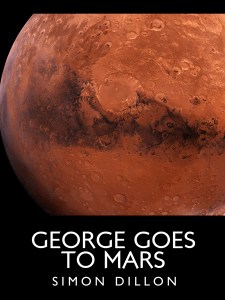
That said, sequels are notoriously tricky things, especially if they aren’t planned. The idea for George goes to Titan occurred to me after I had written George goes to Mars, but because George goes to Mars felt so complete in its own right, I was reluctant to write it. In fact, it took me six years to finally give in to the nagging voices in my head, urging me to write the sequel.

I was even more surprised to find, at the end of the second book, that the idea for a third cropped up. Again, I wrote an epilogue for the second, this time knowing I wouldn’t wait so long to write the third.

The result is George goes to Neptune – the final book in this series – which will be out on the 25th of October. It can be pre-ordered to download on Kindle from Amazon here. Print copies will be out from the 31st of October.

George goes to Neptune out this October

This October, I am releasing the third and final novel in the George Hughes series, George goes to Neptune. It is available to pre-order from Amazon here.

GGTN 1600 x 2400

For me, this is the best George Hughes novel yet. I hope you enjoy it.

Here is the blurb from the back of the book:

In this spectacular sequel to George goes to Mars and George goes to Titan, George Hughes faces his most dangerous adventure yet.

Following the Titanian invasion, a deadly and very personal threat forces George to undertake a voyage to a top secret Martian research base on Neptune.

On this remote outpost, he uncovers a diabolical plot. But George is too late to prevent the catastrophe.

A catastrophe that will change his life forever…

George goes to Neptune is released on the 25th of October on Kindle. Pre-order your copy now!

Print copies will be available from the 31st of October. Details to follow soon.

Love vs Honour Q & A

I’ve had a few questions and comments about my latest novel Love vs Honour that I thought it would be good to address on the blog.

LvsHonour 1600 x 2400

When and where did you get the idea for the novel?

Sometime in 2005, on a bus in a traffic jam. The start and end downloaded into my consciousness from the inexplicable ethereal void known as “sudden inspiration”. The mid-section, whereby Johnny and Sabina pretend to convert to different religions as an elaborate parental appeasing ruse, occurred to me a little later. It wasn’t until mid-2006, after I moved to Devon, that I decided to write it and set it amid my new surroundings.

Why write something so clearly outside your usual genres?

I can only plead the afore-mentioned “sudden inspiration”. Teen romantic drama is a long way outside my so-called “comfort zone”. Yet the novel deals with themes similar to those found in my other works – rebellion, religious oppression, abuse of power, and so on.

What is the target readership?

Teenagers. But grown-ups have also told me they found it thought-provoking, gripping and moving.

Is Johnny based on you?

No, but there are elements of me in him, as there are, inevitably, in many of my characters.

Is Sabina based on a real person?

Sort of.

Is Johnny’s family’s troubled religious background based on my own?

Yes, to a point. It is actually closer to my own experiences than the fictional cult activities in Children of the Folded Valley.

Did you base the story on a real life relationship deception?

No. But who knows? Perhaps it has happened before, somewhere.

Is Love vs Honour pro-Christianity or pro-Islam?

Neither. It simply depicts characters from both faiths, and their differing views and convictions.

But surely you must have your own beliefs?

Of course. But I have not consciously used Love vs Honour as a vehicle for them. It is intended as a gripping romantic drama first and foremost.

It gets quite dark towards the end, doesn’t it?

Yes. I make no apology for that. The subject matter is challenging, and I tried to explore some big ideas as fearlessly and honestly as possible.

I didn’t expect that ending.

Good. But I hope you’ll agree it was the right ending.

Love vs Honour can be downloaded here. Print copies are available here.

Here is the blurb from the back of the book:

Two Religions. Two Deceptions. One Love.

When Johnny meets and falls in love with Sabina, their bond proves stronger than a teenage holiday fling.

Fearing the disapproval of their strict Christian and Islamic families, they undertake an elaborate deception to continue seeing one another. Johnny pretends to convert to Islam whilst Sabina pretends to covert to Christianity to appease their parents. 

But how long can this deception last before it unravels?

Download Dr Gribbles and the Beast of Blackthorn Lodge FREE – for five days only!

For five days only, you can download my novel Dr Gribbles and the Beast of Blackthorn Lodge absolutely FREE from Amazon.

DrGibbles_1600x2400_front cover

Dr Gribbles and the Beast of Blackthorn Lodge is a gripping and scary tale involving spies, monsters, haunted houses, mad scientists and lots more besides, with action and thrills to spare. It was actually inspired by the nightmares of my youngest son, and the book is duly dedicated to him.

Here is the blurb from the back of Dr Gribbles and the Beast of Blackthorn Lodge:

September 1987.

Curiosity lands Tim Rawling in a world of secrets, spies and a desperate race against time.

The haunted house, the monster and the mad scientist are only the beginning of a terrifying adventure.

Dr Gribbles and the Beast of Blackthorn Lodge is not just for children. Grown-up readers have commented on political cynicism and distrust of government apparently lurking between the lines (which of course I could not possibly confirm or deny). The ending caught a number of readers by surprise too, but don’t take my word for it. Check it out for yourself.

Print copies (alas, not free) are available to order here.

Breaking away from writing in the middle of a…

studies

I am between novels at present, so having just been on holiday, I was be able to do so without the complications and character arcs of act two rumbling in the back of my mind.

Breaking away from in-depth writing is always difficult, and conventional wisdom dictates that a clean break is best, ie between novels, as outlined above. However, given that this isn’t always possible, how best to proceed? Finish the chapter or section one is writing?

Surprisingly, I would advise the exact opposite. I always leave each writing session in the middle of a section I am enjoying or finding easy to write – for example, in the middle of a conversation, or amid a crucial dramatic moment. It sounds like madness, but the truth is upon re-reading I find I immediately get excited about what I am writing, remember why I decided to write it, and throw myself into it afresh with renewed enthusiasm.

By contrast, I find finishing a chapter or key section of the drama makes it harder for me to get back into it next time I sit down to write. If I reach the end of a chapter, I always write a chunk of the next before stopping, just to break the ice, so to speak. Chapter beginnings are always psychologically difficult, and it helps to at least have those first few paragraphs.

The psychological challenge of actually beginning a novel is even more intense, but that’s a subject for another post.

Download The Birds Began to Sing FREE – for five days only

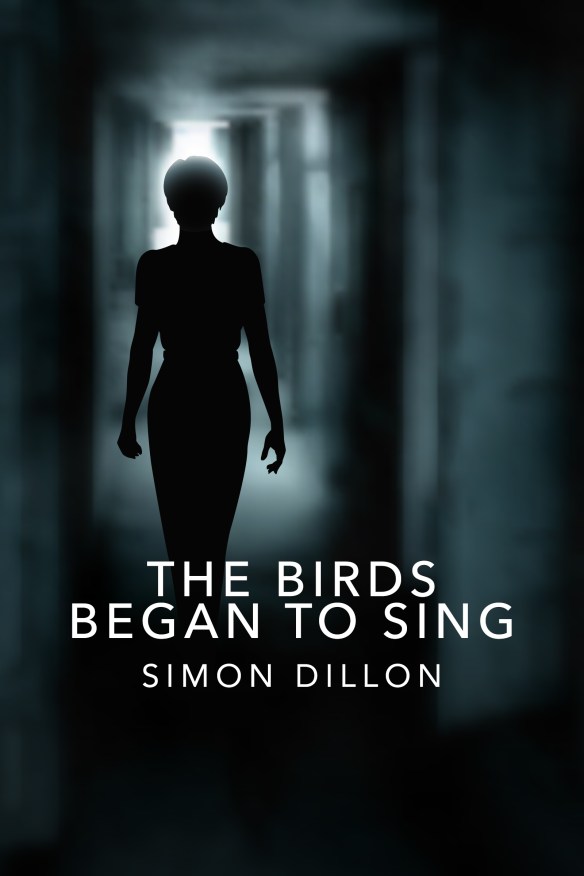
For five days only, you can download my novel The Birds Began to Sing absolutely FREE from Amazon.

The Birds Began to Sing_1600x2400_Front Cover

The Birds Began to Sing is a mystery novel inspired by the likes of Agatha Christie, Daphne Du Maurier and Sir Arthur Conan Doyle, with a dash of Susan Hill, the Bronte Sisters and Michael Crichton but hopefully also original in its own right (you decide). It is dedicated to my wife, who loves a gripping, page-turning thriller.

Here is the blurb from the back of The Birds Began to Sing:

When aspiring novelist Alice Darnell enters a competition to write the ending for an unfinished manuscript by late, world famous author Sasha Hawkins, it appears she might have her big break at last.

However, upon arrival at Sasha’s former home – the sinister Blackwood House – Alice is unsettled by peculiar competition rules, mysterious dreams and inexplicable ghostly visions. She begins to question her sanity as she is drawn into a terrifying web of deceit, revenge and murder.

Two reviewers at Barnes and Noble had this to say:

“Mystery, drama, conspiracy theory, and some supernatural intrigue. A real page turner!”

“I really enjoyed this. Really thought it was unique.”

And here are another two reviews from Amazon:

“This was really a great read and I loved the twist. Did not expect it at all.”

“An intriguing story, full of exciting twists and turns.”

Print copies are available to order here: http://www.lulu.com/shop/simon-dillon/the-birds-began-to-sing/paperback/product-21878694.html

Guest post on From Sand to Glass: Rebellion, Religious Oppression and Abuse of Power

This week, fellow author Martin Willoughby has very kindly allowed me to write a guest post promoting my work on his blog. You can check out the article here.

What follows is a shorter, modified version of the post on Martin Willoughby’s blog, giving an overview of recurrent themes in my writing:

Regular readers of this blog know I write for both grown-ups and children in a variety of genres, but what recurrent themes are present in my writing?

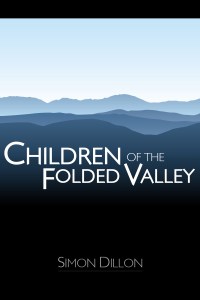
Abuse of power and religious oppression are certainly two mainstays. My most successful novel to date, Children of the Folded Valley, is about a man looking back on his childhood growing in a mysterious cult, seemingly in a parallel dimension bordering our own.

Folded Valley cover

These themes are echoed in my most recent novel, Love vs Honour, which on the surface may appear to be a teenage romance, but it takes a number of dark and unexpected turns that I think are just as likely to make the novel appeal to adults. It concerns relationship between teenagers of different fundamentalist faith backgrounds, and their parent appeasing subterfuge as each pretends to convert to the others religion.

LvsHonour 1600 x 2400

George goes to Mars (and its sequel George goes to Titan, along with the upcoming final part of the trilogy, George goes to Neptune) also to a lesser extent deals with oppressive religious systems, and those who set themselves up as gods. The simple premise of the first novel – poverty stricken boy inherits all rights to sell land on the planet Mars – is merely the start of several thrilling adventures that will appeal to all ages.

GGTM_600px GGTT cover

Abuse of power, and themes of distrust in political powers of all persuasions crop up in another adventure story I wrote entitled Dr Gribbles and the Beast of Blackthorn Lodge. The first chapter features a haunted house, monster and mad scientist, and then novel builds from there.

DrGibbles_1600x2400_front cover

In a different vein, Uncle Flynn, a treasure hunt adventure, features themes of overcoming fear and the dangers of mollycoddling.

uncle-flynn_cover

Returning to novels for adults, The Birds Began to Sing is a gripping thriller about a mysterious writing competition that takes many sinister, possibly supernatural turns. Yet again abuse of power is a background theme, although primarily it concerns the power of the written word.

The Birds Began to Sing_1600x2400_Front Cover

It is worth mentioning a theme that crops up in virtually all my books: rebellion/uprising against corrupt and/or oppressive systems and/or people; whether religious, political or even just school bullies. Sometimes these confrontations take place on a small, personal level (the afore-mentioned bullies in stories like Dr Gribbles and the Beast of Blackthorn Lodge, or perhaps the confrontations of Love vs Honour), or on a larger, more obvious scale (George goes to Mars, Children of the Folded Valley, etc).

Of course, this makes my novels sound terribly heavy and tough, but they aren’t. There is humour too, often quite dark humour, throughout all these stories.

Finally, I should add that many of my novels are set in and round where I live in the South West of England. Since moving here in 2006, I have derived a great deal of inspiration from my surroundings, and certain locations (particularly places on Dartmoor such as Wistman’s Wood) crop up again and again in my work.

All my novels are available on Amazon at a mere 99 pence per download. Print copies are also available from Lulu or, in the case of Love vs Honour, Amazon Create Space.

Download Children of the Folded Valley FREE – for five days only

To celebrate the first anniversary of the release of my most successful novel to date, for five days only, you can download Children of the Folded Valley absolutely FREE from Amazon (see link below):

AMAZON LINK

Folded Valley cover

Here is the blurb from the back of the book:

During a journey to visit his estranged sister, James Harper recalls his childhood growing up in a mysterious valley cut off from the outside world, as part of a cult called the Folded Valley Fellowship.

In this seemingly idyllic world, the charismatic Benjamin Smiley claimed to be protecting his followers from an impending nuclear apocalypse.

But the valley concealed a terrifying secret.

A secret that would change Smiley’s followers forever.

Children of the Folded Valley is a gripping and dramatic mystery with a “light” science fiction edge.

The novel has been very well reviewed. Here is a sample of the many raves:

“I don’t usually leave reviews but I felt so strongly about encouraging people to read this fantastic book. It had me captured from start to finish. At one stage in the book I actually thought it was a true story.” – Paul, Amazon.

“The use of re-written religious doctrine to control, govern and frighten is particularly chilling… Full marks to Simon Dillon for this creative and highly readable novel.” – Around Robin, Amazon.

“I was captivated… I didn’t want to put it down and just kept trying to find time to squeeze in a chapter… It just gets better and better as you read it and you find yourself needing to know what happened.” – Hannah, Goodreads.

“Creepy and unnerving. Kept me gripped the whole way through.” – Lucyboo, Amazon.

“I couldn’t put it down.” – Bukky, Amazon.

“Really well written, well thought through, compassionate… Full of empathy.” – Over, Amazon.

“So well written, you could believe it was a memoir.” – Shelley, Amazon.

“A perturbing and very original story… The ending is magnificent.” – Joan, Goodreads.

Print copies can be ordered here (but unlike the download are sadly not free): http://www.lulu.com/shop/simon-dillon/children-of-the-folded-valley/paperback/product-21812308.html

Typecasting writers

It is interesting how many famous authors that were largely known for one type of writing were upset about that fact, and wanted to be known for their other works too. For example, Sir Arthur Conan Doyle became infuriated with the success of Sherlock Holmes to the point that he killed him off, sending him plunging to his apparent doom alongside arch nemesis Moriarty at the Reichenbach Falls. Public outcry led to Holmes’ resurrection, but nevertheless Doyle often wanted his other works – including adventure stories such as The Lost World – to be better known.

conan_doyle

In a similar way, certain actors sometimes resent their most successful roles, thinking they overshadow their wider body of work. Alec Guinness ended up detesting the success of Star Wars, to the point that he once told a fan that he would only sign an autograph if he promised to never, ever watch Star Wars again.

I have some sympathy with such people, only because as an author I have written for both children and adults in a wide variety of genres. My most successful novel to date by far is Children of the Folded Valley, but I don’t just want to be known for that. I confess that I sometimes look at the huge amount of reviews for that book compared with the relatively small amount for my other novels and think: why don’t people give my other stories a try?

Folded Valley cover

Of course, such thoughts are nonsense. An author should be grateful for any success or novel they pen that strikes a chord with the reader. It is better to be a one-trick pony than a no-trick pony. Nevertheless, I am always hopeful that readers will upgrade me to multiple-trick pony.