My Principles for Writing Gothic Mysteries

Photo by Shakhawat Shaon from Pexels

The gothic mystery is a much-underrated genre. At their best, they are riveting tales of nail-biting suspense, heart-rending romance, and spine-tingling terror. They are stories that deal in the deepest, darkest areas of human consciousness, presenting complex protagonists with conflicting conscious and subconscious desires. They delve into the uncanny, the psychological, metaphysical, and spiritual, exploring at a primal level what most haunts us, and how love and horror can be two sides of the same coin.

I’m a big fan of gothic mystery novels, both reading and writing them. I’ve had three traditionally published by a small indie publisher, and I’ve self-published a few others. This article is primarily for those who aspire to write in this genre, but I hope it will be inspirational and interesting for everyone. Here then are some of my insights into what makes a great gothic mystery.

Traumatised protagonists

Gothic mysteries almost always feature protagonists with significant past trauma or dark secrets. This baggage has a direct bearing on the narrative, dealing with everything from repressed sexual passions to physical or mental abuse, religious delusions, madness, and supernatural curses (which may or may not be all in the mind). Consider the traumatised Arthur Kipps in Susan Hill’s The Woman in Black, the famously nameless heroine of Daphne Du Maurier’s Rebecca, the similarly nameless governess in Henry James’s The Turn of the Screw, the passionate Cathy in Emily Bronte’s Wuthering Heights, or the eponymous Jane Eyre in Charlotte Bronte’s classic.

Most of my gothic mystery novels feature imperilled heroines. They are brave and tenacious, but often flawed by an insatiable curiosity. All have trauma and dark secrets in their pasts, that have a direct bearing on the main plot. Their character arcs are often a metaphorical descent into the underworld, entering a labyrinthine mystery culminating in cathartic confrontation of their darkest fears. Depending on the nature and choices of the protagonist, this can lead to triumphant rebirth, or an irreversible spiral into madness and worse.

The outer labyrinth

The protagonist explores the mystery, which invariably involves sinister settings. These can often be gothic locations that hide dark secrets — the mansions in Sarah Waters’s The Little Stranger and Laura Purcell’s The Silent Companions, Thornfield in Jane Eyre, Eel Marsh House in The Woman in Black — but can just as easily be modern. For instance, think of the brutalist architecture used for the Jefferson Institute in Michael Crichton’s superb 1978 film version of Robin Cook’s Coma. In one of my novels, the haunting takes place not in a spooky old house, but a modern office block in central London.

Here it is important to embrace the iconography and formula of the genre. I’ve written elsewhere about being formulaic versus being unpredictable, and with gothic mysteries, it is possible to remix ideas and still keep readers hooked and surprised. My own frequently used tropes include dark broody skies, remote haunted locations, hidden rooms, secret passages, cults or secret societies, witchcraft, ghosts, demons, and a lot of scenes involving my protagonist creeping through dark, maze-like corridors. In gothic mysteries, such imagery is as vital to the genre as hats, horses, and frontier towns in the western.

It is worth adding that when it comes to settings for gothic mysteries, a thorough, dirt-under-the-fingernails knowledge of real locations is often invaluable. I live in southwest England and have been hugely inspired by everything from rugged coastlines to sinister mansions. Having the bleak but beautiful Dartmoor on my doorstep has ensured it turns up in many of my stories, as have local histories I’ve discovered or researched in south and north Devon. One of my novels (The Thistlewood Curse) was even set on Lundy Island, in the Bristol Channel; an island with a fascinating history that informed the narrative.

The inner labyrinth

The inward labyrinth is what makes the gothic mystery even more compelling. As we journey deeper into the darkness of the central mystery, we also journey deeper inside the protagonist. In The Little Stranger, when Dr Faraday looks into the haunted house with which he is obsessed, we are also looking into him. The governess in The Turn of the Screw is another excellent example. Is she really seeing ghosts, or are the apparitions all in her head? Are they the result of religious mania and sexual repression?

The outcome of this inner journey depends on the choices made by the protagonist. Sometimes a protagonist is simply too traumatised by their experience to emerge with anything that can be termed a happy ending. The finale of The Woman in Black is a case in point. In the beginning, Kipps writes as though he has come to terms with what happened to him, but as he recounts his chilling tale, it becomes increasingly apparent that the act of doing so has simply brought all the horror back to the surface, hence this superbly terse prose at the very end:

“They asked for my story. I have told it. Enough.” — Susan Hill, The Woman in Black.

Similarly, my protagonists never emerge from their journeys unscathed, nor do they necessarily live happily ever after. Sometimes they deliberately choose evil. Such endings I refer to as DEA (Doomed Ever After), in flippant allusion to the publishing industry HEA (Happily Ever After) or HFN (Happy For Now) acronyms, frequently used in the romance genre.

Gothic horror versus gothic thriller

The descent into the inner labyrinth is a vital component of the gothic mystery and one that separates it from other kinds of thriller or horror stories. However, sometimes it is difficult to say whether a gothic mystery belongs in the horror or thriller genre. The lines can be blurred.

In the gothic genre, horror and thriller are a sliding scale, and romance can be present in both. For instance, Rebecca is a romantic gothic thriller, whereas Bram Stoker’s Dracula is a romantic gothic horror (or at least, it certainly is in Francis Ford Coppola’s film version). My novels feature examples at both extremes of the scale, with some my notoriously scare-averse mother has been happy to read, and others she wouldn’t touch with a bargepole.

The supernatural spectrum

Similarly, the presence of the supernatural in the gothic can be merely hinted at or accepted outright. The superb ghost stories of MR James deliver malevolent spectral entities at face value, though the great strength of those tales is they are never properly explained, thus leaving the reader to do the spiritual heavy lifting. The Woman in Black is another example where the reader is left in no doubt that a ghost is responsible for the torment and misery in the narrative.

At the other end of the scale, Rebecca isn’t really about a ghost at all in the metaphysical sense, though the influence of the dead character is felt on every page. In that respect, Rebecca is one of the greatest ghost stories ever written, even though it doesn’t actually feature a ghost, per se. Something like The Turn of the Screw falls in the middle of the spectrum, and again, my novels feature stories at both ends.

The terrible secret

Gothic mysteries often conceal a terrible secret. What lies hidden in the attic of Thornfield in Jane Eyre. The tragic truth behind the haunting of Eel Marsh house in The Woman in Black. The real reason Maxim De Winter is so haunted by his first wife in Rebecca. All these big mysteries involve dramatic reveals in their respective narratives.

Rug-pulling twists are a key part of the genre, and they are also present in my novels. Here I want to stress something that goes against advice often given to novelists. Don’t necessarily dial down melodrama in the big reveals. It is all about context, and sometimes the blunt instrument of melodrama is extremely effective when properly earned. Ask yourself honestly: Would Wuthering Heights or Jane Eyre benefit from being less melodramatic?

Conclusion: How to make it personal

Often dismissed as overblown, the gothic mystery is in fact a tremendous canvas for exploring personal stories through metaphor and allegory. The best gothic fiction uses supernatural elements such as curses, ghosts, and demons to cathartically explore genuine psychological trauma. Regardless of how ambiguous or otherwise these elements might be in any given narrative, they are important symbols.

Recurrent themes of my fiction — particularly oppressive religious trauma and abuse of power — finds a natural home in the gothic mystery genre. However, I would advise against consciously inserting these with any kind of preachy agenda. It is better to simply tell a good story with these themes, rather than use your protagonist as a social or political mouthpiece. Your views will be inherent in the material in any case.

(NOTE: This article is a revised version of a piece that originally appeared on Medium.)

New Short Story: Window of the Soul

Photo by Ion Fet on Unsplash

I’ve recently written a new short story; a dark fairy tale entitled Window of the Soul. Well, I say short story, it’s actually closer to novella length, hence why Fictions on Medium are running it in eight instalments over last month and this month. It is also available on Substack, for those of you who subscribe to the paid version of the Dillon Empire on that platform.

Window of the Soul is set in an unnamed land akin to a modern western nation, but with key differences. They exist in a state of civil war between east and west. Into this mix, an adolescent girl finds her very soul in jeopardy, when ocular double-glazing salesmen urge her authoritarian stepfather to replace her eyes with new ones that will protect her from supposedly untoward spiritual influences. I won’t say anything else about the plot but do check out part one here (on Medium) or here (on Substack).

Happy New Year!

Photo by BoliviaInteligente on Unsplash

A very Happy New Year from the Dillon Empire. I hope you are enjoying your holiday. As per New Year’s Day tradition, it’s time to reveal some of my writing plans for 2024.

My top priority is writing my next novel. I spent the second half of 2023 researching, creating character profiles, and outlining my next mystery thriller, tentatively titled False Witness, though I promise that title will change. The plot remains a closely guarded secret at present, but I will say it concerns a female protagonist with a terrible secret in her past. Yes, I know lots of my horror-thriller novels feature imperilled heroines with dark secrets, but this one is darker than I’ve gone before, and involves a particularly intriguing premise, though I say so myself. I’m very excited about writing it and will keep you updated on progress.

I may also release another anthology of short stories this year, though please don’t hold me to it. If I do, it is likely to be a collection of dark fairy tales and fantasy stories, some of which you may already have seen on Medium, Substack, or elsewhere, and some of which I have yet to write. I may include my short story Papercut, which you can download free here, if you’re interested in a sample. I intend to write more short stories this year too, not necessarily just those that will appear in a hypothetical anthology.

Beyond this, I hope to finish another significant chunk of my epic sequel to an as-yet unpublished children’s fantasy novel I wrote ten years ago, tentatively entitled The Faerie Gate (though that title will almost certainly change). This sequel has proved something of a monster to write, proving a hugely ambitious work that I’ve undertaken on and off over the past three years. I’m currently about halfway through, and my modest goal for this year is to get two-thirds of the way through. This story may wind up being split into three separate volumes akin to The Lord of the Rings, but I’m not certain yet. At any rate, given that the first book remains unreleased, this is likely to be a long-term project.

On top of this, I plan to revise and polish A Thorn in Winter, the mystery thriller novel I wrote last year. At the same time, I will keep showcasing The Hobbford Giant to agents and publishers, in the hope of finally cracking that mainstream publication deal. I am not giving up on that front and will keep you informed of all developments.

Perhaps, at the end of 2024, I’ll have achieved all the above. Perhaps not. Either way, as always, watch this space. Thank you so much for your ongoing support of my writing endeavours, and again, I wish you all a Happy New Year.

2023 In Review

I was going to pose with a death stare for Death Nest, but my wife ruined that by telling a joke.

Annual reviews can sound terribly self-serving, so the first thing I want to say in this one is thank you so much to all of you. Thank you for buying my books, reviewing my books, and most of all, I’m thrilled that you are enjoying them. Thank you for all your kindness and support all this year, and through many previous years. Things are developing slowly but surely, as I ease my way into this full-time writing business, and I have much to celebrate and be thankful for in 2023.

New Novel Release: Death Nest

The achievement I’m most proud of this year is the release of my supernaturally tinged mystery thriller Death Nest. It’s had some stunning reviews so far (as you can see here) and readers are finding it every bit as gripping as I’d hoped. It’s a huge encouragement to me and something of a relief, considering how personal this novel is to me (as you may have already read about here).

New Anthology Release: Love and Other Punishments

This year also saw the release of another short story anthology entitled Love and Other Punishments. This one had a dystopian science fiction theme, with seven stories, most of them exclusive to this collection. Driverless cars being hacked by terrorists, mind-reading software implanted in the brains of office workers, nightmare-suppressing nanotech for children, and much more are explored in a wide-ranging set of tales incorporating satire, thrillers, and even a touch of romantic comedy. For more information, click here.

New Novel First Draft Written: A Thorn in Winter

Another major achievement this year was penning the first draft of this new gothic mystery thriller. It involves a young woman initially caught in a web of blackmail, only to uncover something much more sinister when a tarot card reading links her situation to a decades-old unsolved murder case. I’m very proud of what I hope is a page-turning whodunit, and I can’t wait to share it with you all.

New Novel Rewritten: The Hobbford Giant

This horror-thriller I originally wrote in 2022. It was on my list to polish up this year, and this has been done. It is now being submitted to mainstream agents and publishers in the hope that someone finally says yes on that front (I came frustratingly close this year with Death Nest, eventually self-publishing it, and feeling thoroughly vindicated by the positive feedback).

Here’s a brief idea of what the novel is about, from my pitch letter to literary agents:

Is it sometimes better not to know the truth? This question lies at the heart of The Hobbford Giant, my 83,000-word horror-thriller mystery. Set in 1997, it concerns a young journalist investigating an unusual archaeological dig, an abuse scandal at a former children’s home, an ancient folklore legend, and a dark family secret that connects her to all three. The story also explores repressed memories, childhood trauma, and what happens when lies are covered by more lies. A tagline for the novel might be: “Some secrets can claim your soul.”

Against the wishes of her parents, Mira Webb moves in with her estranged uncle, after getting a job at the local paper in the southwest town of Hobbford. Her first assignment involves a piece on archaeologists digging in the grounds of a children’s home closed years previously in the aftermath of an abuse scandal. Their discoveries may shed light on the legend of a giant that once menaced the area, but after she experiences ghostly visitations, and the archaeologists start winding up in comas, Mira comes to believe an ancient curse may be at work; a curse to which she has a horrifying personal connection.

Sound gripping? I hope so. Hopefully, agents and publishers will think so too. I’ll keep you posted with updates on this next year.

Short Stories

Image by Rizal Deathrasher from Pixabay

I’ve written six short stories and novellas this year, some of which were exclusives for the aforementioned Love and Other Punishments anthology. Two others were released on Medium and Substack, the latter of which I branched out into recently. At this point, Substack is a mirror of my Medium output, with a free option for people who only want the new release film reviews (as you’ve probably noticed, I no longer host those here), and a paid option for those wanting everything. However, I may well start putting exclusives on Substack too. Here are the two short stories in question. Links to subsequent parts are included at the end of every instalment.

Aftermath

After leaving a cult, a young woman returns to her estranged mother. Read on Medium here, or on Substack here.

Crockern’s Curse

A young couple investigating a childhood mystery on Dartmoor are menaced by supernatural forces linked to local folklore. Read on Medium here, or on Substack here.

Other Achievements This Year

One of my long term projects is an epic sequel to an as-yet unpublished fantasy novel for children entitled The Faerie Gate (though that title will probably change). This huge undertaking is a novel I return to between other writing priorities, and this year I managed to write a hefty chunk, to the point that it is now about halfway finished. I hope to write more of this monster novel next year.

I’ve also continued to give exclusive early access to short stories, sneak previews of artwork, exclusive insights into my writing processes, video updates, novel draft previews (including serialised unpublished novels), and other material found nowhere else, on my Patreon page. I still offer four levels of pricing support: Ally of the Dillon Empire, Free Citizen of the Dillon Empire, Knight of the Dillon Empire, and General of the Dillon Empire. I’ve grown my support a little this year, so that’s encouraging. Take a look at my Patreon page here, for more information.

In short, 2023 has been a breakneck year, with lots achieved, and much still to achieve. I’m taking a break over Christmas, but as usual, I’ll unveil my goals for 2023 on New Year’s Day. Watch this space.

It only remains for me to wish you all a peaceful, restful Christmas.

(All images by author or created by author in Canva, unless otherwise stated.)

A Christmas Present Suggestion: Death Nest

Image created by author in Canva.

Seldom-seen relatives one only catches up with at Christmas can be difficult to buy presents for. However, most people love a nail-biting, page-turning mystery thriller. To that end, I humbly suggest my recently released novel Death Nest.

I’ve written about this novel a little on Medium, principally in this Orson Welles-ish faux-interview prank designed to intrigue readers (I interview one of the supporting characters). I’ve also written a lot about it here, for example in this piece, which is probably as close as I’m ever going to get to a baring-my-soul, personal essay-type article. In it, I discuss the real-life fears and traumas that metaphorically and emotionally informed the novel.

But if that makes it all sound heavy and depressing, don’t be put off! Death Nest is first and foremost a gripping thriller with a touch of romance, a smidgen of coming-of-age drama, and the odd moment of supernaturally tinged horror. There are also a few funny bits, and that’s important in any novel if you ask me, purely to provide contrast.

Here’s the blurb from the back of the book to give you an idea of the plot:

From the author of Spectre of Springwell Forest and The Irresistible Summons

A nail-biting new mystery.

After his young son Ben writes a disturbing story about murdering a boy in a forest, widower Nick Unwin is alarmed by eerie parallels between his son’s behaviour and that of his younger brother Jason, prior to his inexplicable disappearance twenty years previously. This tragic past returns to haunt Nick when he sees an image of his long-lost brother in a newly released film.

Fearing history will repeat itself, Nick decides to investigate, along with Tanith, an old flame from his early teenage years, with dark secrets of her own connected to Jason’s disappearance. But as they delve deeper into the labyrinthine mysteries of their past, long-buried memories resurface. Nick is forced to face the terrible fear that has plagued him for decades: Was he responsible for the death of his brother?

A riveting coming-of-age thriller exploring traumatic sibling relationships, parental fears, and the misleading nature of memory, Death Nest is Simon Dillon’s most gripping novel yet.

If you want to try before you buy, the first three chapters of Death Nest are available to read on Medium in Fictions. Here’s chapter one.

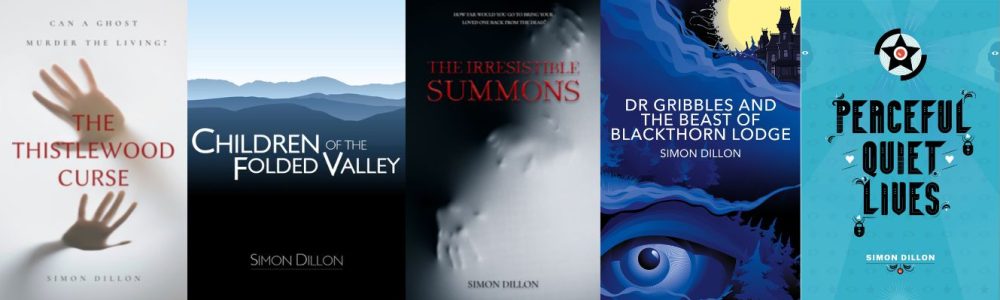
Of course, Death Nest isn’t the only novel I have available for potential Christmas presents. I’ve also written other mystery horror thrillers, children’s adventure stories, dystopian sci-fi tales, and one or two other things. For a full list of my published novels, click here.

Death Nest is available in paperback or on Kindle from Amazon here (in the US) and here (in the UK). It is also available via Smashwords and its various outlets (click here).

Read My Short Stories on Substack!

As you are no doubt aware, all my film reviews have now moved to Substack or Medium. I syndicate them to both sites, with Medium available only to those with a Medium account. However, those with a Substack account can access my film reviews for FREE – for four weeks, before they disappear behind a paywall.

This FREE option isn’t the only thing I’m up to on Substack. I’m also creating a mirror of my Medium account, which means for just $5 per month, you also have access to short stories, including horror stories like Crockern’s Curse or Once in a Lifetime, poignant dramas including Aftermath, satirical fantasy such as In-Between, satirical thrillers like Call the Number on Your Screen, and many others as I release them. For example, my dark fairy tale Window of the Soul will be serialised there over the next eight weeks, and new subscription-only material is added constantly (for one thing, I’m gradually transferring my entire Medium back catalogue, as well as releasing new stuff).

Your monthly subscription also gets you access to all the film essays, top tens, and other cinema analysis I write on Medium, along with access to the full film review archive, which doesn’t disappear after four weeks behind a paywall (unlike the FREE option). There’s also a try-before-you-buy option, so why not take a free trial of Dillon Empire on Substack? Click here and sign up today, as they say in commercial speak.

Thank you to everyone who has supported my writing by signing up so far.

(Dillon Empire image created by author in Canva.)

New Short Story: Crockern’s Curse

Image by Rizal Deathrasher from Pixabay

In October, I published a new short story. Crockern’s Curse concerns a young couple investigating a childhood mystery on Dartmoor are menaced by supernatural forces linked to local folklore. A spine-freezing tale of supernatural horror, this proved very popular with readers of the Fictions publication on Medium (where it was published). It’s in five parts, but there are links to every subsequent part at the end of each instalment.

Check out the first part on Medium here. Alternatively, if you are a subscriber to Dillon Empire on Substack, check out all five parts there, starting with part one here (again, there are links at the end of each segment to the next part). I’ll explain more about what I’m up to on Substack soon, but the short verison is you can get all my film reviews there for free (they disappear behind a paywall after four weeks), or else take up the paid option of $5 per month and in addition to unlimited access to the film review archive, enjoy all my other articles syndicated from Medium, including top tens, classic film analysis, and of course, short stories.

Enjoy!

Death Nest: Summary of Recent Articles

My new mystery thriller novel Death Nest is out now. I’ve been writing a lot about it recently, from many different angles. Here’s a summary of what I’ve been discussing, with links to the articles in question. First though, here’s a brief idea of what the novel is about.

A widower fears his young son is cursed when he shows disturbing behaviour akin to that of his younger brother, before he vanished without a trace twenty years previously. Gnawing dread that history will repeat itself is inherent throughout this modern gothic mystery novel. It’s also a coming-of-age romance with hints of the supernatural, exploring traumatic sibling relationships, parental worries, and the misleading nature of memory. 

After his young son Ben writes a disturbing story about murdering a boy in a forest, widower Nick Unwin is alarmed by eerie parallels between his son’s behaviour and that of Nick’s younger brother Jason, prior to his inexplicable disappearance twenty years previously. This tragic past returns to haunt Nick when he sees an image of his long-lost brother in a newly released film.

Fearing a repeat of history, Nick decides to investigate, along with Tanith, an old flame from his early teenage years, with dark secrets of her own connected to Jason’s disappearance. But as they delve deeper into the labyrinthine mysteries of their past, long-buried memories resurface. Nick is forced to face the terrible fear that has plagued him for decades: Was he responsible for the death of his brother?

The following articles explore different aspects of the novel and the making of it. I have worded them carefully to avoid plot spoilers.

Death Nest: Reflections on Writing My Most Personal Novel

This story is quite personal for me, as it has been informed (in broad metaphorical terms) by the sectioning of my youngest brother following drug abuse, as well as my own fears about the future of my autistic youngest son. The article above was slightly written through gritted teeth, as I’ve revealed a lot more of my personal life than I’m normally accustomed to, but I hope this provides some valuable insights.

Death Nest: Chapter 1 Excerpt

According to readers so far, this is an opening that immediately grips the reader. As an author that’s all very encouraging to hear.

Death Nest: Chapter 7 Excerpt

A second clip, this time from a flashback chapter, introducing a key supporting character.

Death Nest: Settings, Research, Revisions

Various locations in southwest England, as well as my home city of Oxford, were chosen as a setting. This article also touches on other research aspects, and some of the ways in which the novel was rewritten.

Death Nest: Inspiration and Influences

Here I discuss the initial idea for the novel, and how it evolved, including an abandoning of almost all the original premise, and the switching of the protagonist’s gender from female to male (my horror-thriller novel protagonists are usually female). I also mention other novels and a few films that informed the story.

Death Nest: Initial Reviews

The five-star raves are starting to trickle in! Check out some reader feedback here.

Death Nest is in paperback or on Kindle from Amazon (click here for the UK, and here for the US). It’s also available from Smashwords and its various outlets.

(All images designed by author in Canva.)

Death Nest: Initial Reviews

Image created by author in Canva.

The first reviews for my latest novel, mystery thriller Death Nest, are starting to trickle in. I’m thrilled to tell you they are five-star raves! I’m extremely pleased readers are finding this book as gripping and entertaining as I had hoped. My fears that the story would prove too painfully personal (for reasons discussed here) seem to have been unfounded. I’m glad.

Let’s take a look at what people are saying.

“Once I started reading this, I couldn’t put it down. The mystique of the storyline drew me in and held my attention until the very end.” – Joseph M Zobel, Amazon.

“I couldn’t put it down because the twists and turns kept me on my toes. Dillon’s deep dives into characters, narrative, mystery, and intrigue kept me totally engaged. There were no lulls… I was sorry when it ended.” – Annabelle Colbert, Amazon.

“The perfect pre-Halloween read. A wonderful combination of dark and supernatural forces with moral dilemmas in life that we can all relate to, and a thread of romance that runs right through the story… Thoroughly enjoyable (if deeply disturbing at times) and hard to put down from start to finish.” – Saltram, Amazon.

The above reviews can be read in full here.

If you’ve read and enjoyed Death Nest, please do add a review to Amazon or Goodreads (or ideally both). It doesn’t have to be long or eloquent. A one-liner saying you enjoyed it is fine. I seek reviews not to massage my ego (though obviously good reviews are encouraging) but because they are absolutely vital for independent writers like yours truly. Reviews mean the algorithms show my books to more people who potentially buy them. As such, reviews literally put food on my table, so a huge thank you to all of you who take the time to write them. It is so, so appreciated.

If you’ve not read Death Nest, here’s the blurb from the back of the book to whet your appetite.

From the author of Spectre of Springwell Forest and The Irresistible Summons

A nail-biting new mystery.

After his young son Ben writes a disturbing story about murdering a boy in a forest, widower Nick Unwin is alarmed by eerie parallels between his son’s behaviour and that of his younger brother Jason, prior to his inexplicable disappearance twenty years previously. This tragic past returns to haunt Nick when he sees an image of his long-lost brother in a newly released film.

Fearing history will repeat itself, Nick decides to investigate, along with Tanith, an old flame from his early teenage years, with dark secrets of her own connected to Jason’s disappearance. But as they delve deeper into the labyrinthine mysteries of their past, long buried memories resurface. Nick is forced to face the terrible fear that has plagued him for decades: Was he responsible for the death of his brother?

A riveting coming-of-age thriller exploring traumatic sibling relationships, parental fears, and the misleading nature of memory, Death Nest is Simon Dillon’s most gripping novel yet.

Death Nest is available in paperback or on Kindle from Amazon (click here for the UK, and here for the US). It’s also available from Smashwords and its various outlets.

Death Nest: Settings, Research, Revisions

Created by author in Canva.

My latest novel, the mystery thriller Death Nest, has recently been released. Lately, I’ve been exploring different aspects of this novel, which as well as dealing in page-turning suspense also features coming-of-age elements, a touch of romance, and the odd horror moment (especially in the latter stages). It’s also possibly my most “personal” novel to date (as I’ve discussed elsewhere), with a variety of influences and inspirations informing the book.

Here, I want to share a few insights into the settings, research, and revisions that went into the creation of the novel. Beginning with the settings, I should point out that the town of Corthpothan in the novel is fictional, but slightly based on the real Cornish village Porthcothan. I visited this lovely area on the north Cornwall coast a few years ago with the family, at the height of summer. 

Porthcothan beach. Photo by Zara Dillon.

If you drive past, it looks deceptively uninteresting, but if you walk the short distance along the sand of the small inlet next to the village, it widens out into a vast sandy beach. The sea has phenomenal waves, so it is great for surfers. The area is bordered by a spectacular rugged coastline that boasts caves and gorgeous rock pools. Some of the latter are great for children to swim in (if one is concerned about the ferociousness of the sea waves and strong currents).

We had a fantastic time here, but at the same time, the details of the area were carefully logged away in my mind, knowing they might one day make their way into a novel. As for other settings that wound up appearing in the novel, these include the lovely Bagley Woods on Boars Hill, Oxford. In fact, the opening movement of the novel features a variety of Oxford locations, including the King’s Arms pub; a real place, which used to be a regular watering hole of mine. The story also includes scenes in the Magdalen Street cinema (now sadly closed), and Port Meadow, which is another fabulous place to go for walks if you ever visit Oxford, especially if you’re a keen birdwatcher.

Beyond that, the sinister Darkfire Forest is inspired by a few different woodland areas in and around where I live in Devon. Of course, eerie, possibly haunted forests have cropped up before in my novels Spectre of Springwell Forest, but what takes place in Death Nest is a little different. Here’s a photograph I took a while ago that sets the tone for the Darkfire Forest.

Photo by author.

Much of my research for this novel came about from simply checking details about places I already knew, making sure I either rendered them accurately, or deliberately changed them (as was the case with the name Porthcothan). The novel also dealt with certain subjects with which I am already greatly familiar (film production, for instance). However, some more in-depth research took place into dark subjects like human trafficking and brainwashing. I also had to research pagan folklore quite a bit, which is where I discovered and adopted the name Damara for the ancient spirit that may (or may not) influence events in the story. But I also made up a great deal too.

The initial draft had a lot more overtly supernatural stuff included. I cut or greatly reduced much of this, deciding a greater ambiguity over such incidents was preferable. There are still plenty of spooky edges in the final text, and one can read the supernatural into the events. But at the same time, there are enough doubts and questions to leave such matters up to the reader, rather than forcing them into a particular perspective.

Death Nest is available in paperback or on Kindle from Amazon (click here for the UK, and here for the US). It’s also available from Smashwords and its various outlets.