White Rabbits and Snicker-Snack: Marcus Bines Interview

Marcus Bines is a fellow author who contributes to the Dragon Soul Press anthologies. His excellent short story Blessed be the Brine has been published as part of the Shadows of the Sea anthology. He has now contributed a second story, Snicker-Snack, to the Chasing White Rabbits anthology, based around characters from Lewis Carroll’s classic Alice in Wonderland. Let’s begin this interview by diving down the rabbit hole…

51yovvFWbQLWhat is the enduring appeal of the Alice in Wonderland characters?

I think it must be something to do with their unpredictability – and how similar that is to how many of us experience life. All we know as we read the books and travel through Wonderland is that Alice will be curious, and everything around her will be insane and nonsensical; she has to navigate the insanity, aiming for a point where things make sense – if they ever do. That desire to wrestle the chaotic world into one of order is a very strong one for many of us I think! Wow, that was a bit deep for question 1.

Tell us a little about your short story for Chasing White Rabbits.

In my story Snicker-Snack, Alyssia is a young Londoner with a dull call-centre job and irritating colleagues who is sent a mysterious and ultra-sharp knife in the post. She quickly discovers how handy it is for defending herself against the capital’s ne’er-do-wells, but also that using it comes with some unusual side effects. The inspiration for the story was the Jabberwocky, Lewis Carroll’s amazing nonsense poem (included in Through the Looking-Glass) that makes perfect sense once you ease yourself into the language.

Besides Alice in Wonderland, are there any other existing fictional worlds you would like to write a story about?

Well, as you can see from that synopsis, I haven’t exactly written about Wonderland itself, or even included any specific characters from Carroll’s novels – although if you look closely in Snicker-Snack you will find certain characters either hinted at or explicitly referenced. I’ve never really thought of writing in other fictional worlds, and if I did I think I’d like to do something fairly tangential, or inspired by another medium – like imagining the homeworld of Ziggy Stardust, David Bowie’s sci-fi alter ego from the 1970s.

To what extent are your characters based on you or people you know?

Not much – at least not deliberately! Having said that, my current WIP novel series and my first published short story, Blessed Be The Brine (to be found in this anthology) both contain teenage characters. As a secondary school teacher, I’m sure there are shades of pupils I’ve taught in those characters. In fact, when my 15-year-old son read my short story, he complimented me on getting the teenage kids just right in the way they speak and act. So that was a relief!

Do you know your ending when you write, or do you start and see where the story or characters take you?

I’m not ultra-rigid in my planning, but I do think it’s kind of foolish to start a story without knowing where it’s going. Some of the most satisfying stories have a circularity in the character arcs that make them very pleasurable, and knowing the ending means you can get the beginning right I think. But I love it when characters and events pop up on the way in the writing process, ones you didn’t plan and that either throw you for a loop or fire your creative juices. I often find it’s the latter, thankfully.

What is the best thing about being a writer?

For me, it’s tapping into the creativity that I see as a beautifully human and inherently spiritual element of life. I spent years thinking I wasn’t creative because I couldn’t do it the way others did (e.g. making music, painting, drawing), but the chance to create a whole world that exists in my mind and the mind of the reader is a joyful, inexplicable and mysterious thing. What’s really weird is that the worlds I create as a writer almost certainly look different in the imagination of the reader – I find it hard to even get my head around that!

What is the worst thing about being a writer?

The fact that I have to juggle writing with other responsibilities – you know, ones that actually earn me money and mean my family can live in a house and eat food. I’m blessed to be a teacher, as I get whole weeks off work at a time, but it means that when I’m teaching, my writing progress is painfully slow. As teachers we basically cram 12 months of work into 10 months, so everything else that is non-essential tends to get squeezed. That’s where my writing goes at the moment, unless I can find the energy to get up at 5am. It happens, but not enough!

To what extent (if at all) do you agree with the statement “write what you know”?

I don’t think I do really – unless it means “write what you know when you’ve researched some stuff”! I tend to prefer writing female characters to male, and have never been female. My preferred writing genre is fantasy at the moment, which automatically moves my writing away from what I know in terms of daily life. But do I know the mundanity of a tedious job, as Alyssia does in Snicker-Snack? Sure. Do I know what it feels like to have to lead other people without the first clue how to do it (a challenge my main character Autumn faces in my first novel, Gods Of Clay)? Absolutely. So I think I’d prefer “write what you want and include what you know.”

Are you promiscuous or monogamous with your genre of choice?

Well, I’m still new to this really, having been writing for about three years, so I’ve stuck with one genre for now – namely fantasy. I find I can let my imagination loose that way, and I really enjoy it. But my novel series is a mythic fantasy which is fairly epic, Blessed Be The Brine was definitely tinged with horror and Snicker-Snack is an urban fantasy.

Which writers inspire you?

Oh man, so many. I’m currently reading a Stephen King novel for the first time in a few years, and am so impressed by the detail in his research and world-building – but it never bogs the story down. I’d forgotten how enjoyable his books are. As a fantasy writer (and a linguist in my history), obviously there’s Tolkien, whose worlds are ridiculously detailed, to the point where some modern readers struggle to engage. Personally, I wish I could re-read The Lord of the Rings every year, but I’d never have time! The movies will have to suffice. Michael Grant’s Gone series is a great example of YA-fantasy-horror, and when a novel’s opening line involves a teacher disappearing into thin air in front of the class, that’s a great hook! I don’t tend to read EVERYTHING a writer has produced, but recently I’ve loved Room by Emma Donoghue (I know, not all that recent!), The Wake by Paul Kingsnorth (an amazing novel, written in a proto-Anglo-Saxon dialect, about the aftermath of 1066) and Children of Blood and Bone by Tomi Adeyemi.

In addition to the short stories, I understand you are presently writing a vast fantasy epic. Please tell us a little more about that project.

As already mentioned, Gods of Clay is the (current!) title of Book 1 of the series, which is going under the collective name Legends of Vanartha at the moment. The first book is mostly about Autumn, a 14-year-old peasant girl who suddenly receives a supernatural power – seeing visions of the future – and has to find out why by leaving home and family to go on a dangerous journey across her world. Simultaneously, several other characters from different walks of life (a princess, a fisherman, a diplomat and two ageing lovers) find they also have unusual powers at their disposal and have to choose what they will do about them. I’m currently about halfway through book 2 and exploring a range of avenues in terms of publication for book 1.

What advice would you give someone who tells you they want to be a writer?

Go for it – and have realistic expectations! If you have access to a pen and paper, or a keyboard and electricity, there’s nothing stopping you putting words on paper and creating something amazing – a world, an emotion, a reaction, a character – out of literally a blank space. And that, as far as I’m concerned, is always worth doing. Accessing that creative spark that makes us who we are is, I believe, a privilege of being human. But that’s no guarantee anyone else will love or even like what you create – and if getting other people to read it is your goal, there’s hard work involved, and learning the craft of writing (both on the technical spelling-punctuation-grammar-sentence level and how to make a story work), and persistence, and resilience, and a willingness to listen to and act on criticism. Among many other great qualities!

Check out Marcus Bines on Facebook here, on Twitter here, and on his blog here.

Chasing White Rabbits is out now and can be purchased here.
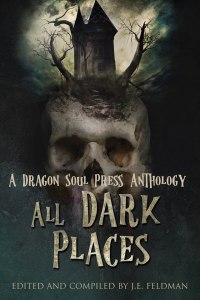
All Dark Places – Now available for pre-order

All Dark Places, the horror anthology containing my short story Once in a Lifetime, is now available for pre-order from Amazon Kindle. Just click the link below.

NOTE: Dead tree (ie print copies) will be available for pre-order soon.

All Dark Places is published by Dragon Soul Press and released on the 30th of October.

BIG NEWS: The Spectre of Springwell Forest to be published by Dragon Soul Press

I am very pleased to announce my next novel, The Spectre of Springwell Forest, is to be published by Dragon Soul Press this December.

Spectre of Springwell Forest sinister wood - for blog headerNeedless to say, I am utterly thrilled at this news. Having a traditional publisher has been a wonderful, eye-opening experience, and I am very excited to see where things go from here. My previous novels have all been self-published with varying degrees of success, but it is wonderful to now have talented publishing professionals working alongside me.

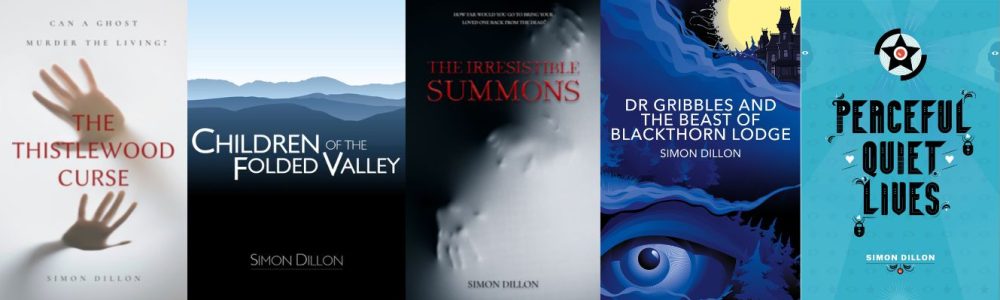
The Spectre of Springwell Forest is a mysterious, ghostly, gothic nail-biter. The story involves a young mother who is strangely drawn to a sinister painting of an abandoned railway tunnel. If you enjoyed my previous novels The Birds Began to Sing or The Thistlewood Curse, you’ll definitely enjoy this one too.

In the meantime, don’t forget I also have my short story Once in a Lifetime coming soon, as part of the All Dark Places horror anthology, also published by Dragon Soul Press.

All Dark Places is released on the 30th of October.

The Spectre of Springwell Forest is released on the 20th of December.

All Dark Places cover reveal

Here is the cover for All Dark Places – the upcoming horror anthology from Dragon Soul Press. It was designed by the fabulous Ruxandra Tudorica at Methyss Art.

42527225_2110568718954593_3375305340684861440_n

I have a short story entitled Once in a Lifetime in this collection. A psychological horror story dripping with existential dread, it is based on a particularly alarming (and surprisingly well-plotted) nightmare I had earlier this year. It is also partly inspired by some of the lyrics in Talking Heads classic 1981 single of the same name.

This is the first piece of writing I have not self-published, and it has been tremendous to see this whole project come together, under the brilliant editorial control of Jade Feldman.

I hope to interview the other hugely talented authors (A.M. Cummins, Anna Sinjin and Hui Lang) who contributed to this volume on this blog soon. Also there will be updates on launch events, in the run up to the official release.

All Dark Places is released on the 30th October.

42526129_2110568868954578_30994833355046912_n

Once in a Lifetime to be published by Dragon Soul Press

Here is a short post about a short story.

I am thrilled to announce that Once in a Lifetime has been accepted by Dragon Soul Press for inclusion in their upcoming horror anthology entitled All Dark Places, to be released this October.

Once in a Lifetime is an existential dread short, inspired by an existential dread nightmare. I’ve always been of the opinion that bad dreams are better than good dreams, because they provide great inspiration for writing. Besides, there’s always that disappointment when you wake up from a good dream and find out that it wasn’t real.

Needless to say, I am very pleased. I will announce further details on the blog soon, including precise release dates, the cover reveal, interviews with some of my fellow authors, details on release launch events and so forth.

My brain needs a break

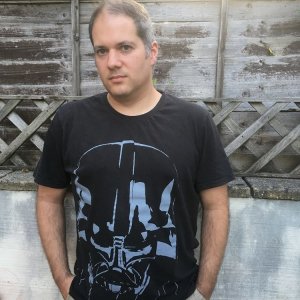
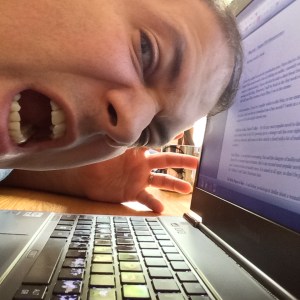
My brain needs a break. Here’s a scary picture of me in brain meltdown mode.

IMG_0660(1) Given the rather excessively productive year I have had so far (first drafts on two longer than usual novels, lots of editing on earlier, currently unreleased novels, and a couple of short stories), I have decided to take a short break from writing and from posting on this blog. However, I will be back in the first week of September, and I will still post film reviews of any films I see at the cinema.
In the meantime, if you’re a regular visitor to this blog, or are stumbling on it for the first time, why not buy or download one of my novels?

I write in a variety of genres, so here are five that might interest you:

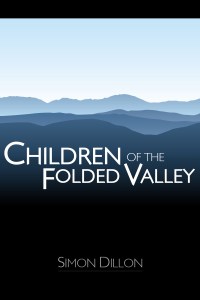
Folded Valley coverChildren of the Folded Valley – By far my most popular novel to date, this tale of a man looking back on his life growing up in a strange cult has over eighty mostly rave reviews on Amazon, and seems to have struck a chord with a lot of readers. It even seems to have got under the skin of people who didn’t like it (eg “Disturbing, distasteful and fascinating all at the same time” was one “negative” reader comment). I’ve also been told it’s my most “personal” novel to date, whatever the hell that means, although to be fair it is partly inspired by some of my own experiences in a cult during the early part of my life. Check it out here.


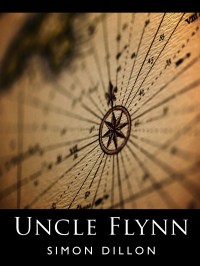
Uncle Flynn_CoverUncle Flynn – A story about overcoming fear and the dangers of mollycoddling disguised as a treasure hunt adventure, this is my second most popular novel, and again, Amazon reviews are mostly raves. It is aimed at all ages, so don’t be put off by the “children’s book” label. For example, one reader said “In this day and age I sometimes find myself reading books like this unaware. I loved it and I’m nearly 69 years old. Uncle Flynn is a real treat.”

Read more here.


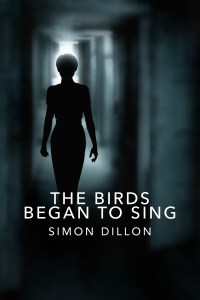
The Birds Began to Sing_1600x2400_Front CoverThe Birds Began to Sing – A nail-biting psychological thriller about a wannabe writer entering a mysterious writing competition in a remote country house, this will satisfy anyone who loves a gripping, sinister narrative with a big twist ending. The reviews on Amazon are unanimous raves, with one reader commenting: “I kept guessing, thinking up various theories but never really sure which one would solve the mystery. As it turned out, none of my ideas were right!”

Click here for more.


Echo and the White Howl Cover 10 (FINAL)Echo and the White Howl – An animal fiction adventure about wolves in Alaska, mixing dirt-under-the-paw revenge story realism with a dash of the metaphysical. Tonally it is akin to something like Watership Down, and just as much aimed at adults as children. Here’s what one reviewer had to say: “The wolves bring to mind Jack London as well as George Orwell’s Animal Farm, but Dillon does it his own way, as always, with the spiritual/religious features that are common in his work.”

Click here for more.


LvsHonour 1600 x 2400Love vs Honour – Teenage romantic drama isn’t a genre I typically I dabble in, but this novel is something of an outside curiosity compared with my usual work. It details a tale of star-crossed teenage lovers with a religious twist, as the protagonists try to appease their religious parents by pretending to convert to Islam and Christianity respectively. A tangled web of deception ensues, building to a much darker final act that some readers think is brilliant and some readers absolutely hate. Why not have a read here and decide for yourself?


Happy reading, and see you in September.

Update on current projects

2018 is more than half over, so here’s a sort-of mid-term report on how the year is shaping up for me so far.

askwallpapers.com-30018

Ravenseed – The first few months of the year were spent writing this Dark Ages set fantasy novel. Even though I have yet to test it on any Beta readers, I’m really very pleased with the results. A brooding, melancholy tale of knights, sorcerers and enchantment, Ravenseed simmers with love, lust, betrayal and revenge. However, alongside the Dark Ages narrative is a parallel framing story set in the present, featuring a journey that echoes the quest in the ancient past. It was a very tricky novel to write, but I honestly think my hard work paid off.

Peaceful Quiet Lives (title to be confirmed) – This week, I have just finished making a few final adjustments to the first draft of this dystopian novel set in a future America. I have set out to satirise both sides in the so-called culture wars, and at this point I honestly can’t tell if I succeeded brilliantly, or if the novel is a crash and burn failure. Perhaps looking at it in a few months with a fresh eye and the feedback of Beta Readers will shed a more accurate light on what I actually have here.

The Spectre of Springwell Forest – This ghostly, gothic nail-biter (which I wrote in the early part of last year) will be my next release. The story is set in the 1970s, and involves a sinister painting and an equally sinister abandoned railway tunnel. Full details to follow soon. Watch this space.

In addition, this year I have written a short story which I have just submitted to a publisher in the hopes that it will selected for a horror anthology entitled All Dark Places which his due for release this October. If my story is chosen, more details will follow.

Speaking of short stories, I’m currently writing another, a romantic fairy tale, to submit to a different anthology due for release in December. In fact, I’d better get back to it…

Why I am an egomaniac

I am a writer, which makes me a bit of an egomaniac.

054EAA47-B0FE-4528-B4F5-E62D4D06E6E3

I don’t think that is a bad thing, and here is why. To honestly, truthfully believe that someone would want to read whatever it is you have written, you need to be possessed of a certain egomania. You have to believe you are a great writer. In fact, I personally believe every novel I write is the most imaginative, exciting, gripping, funny, relevant, thought-provoking and moving novel ever written, whilst I am writing it.

Of course, amid these dizzying heights come the dizzying lows (in my case, George McFly Syndrome), and invariably it is unlikely at best that I have written the greatest novel of all time. But I still have to believe that someone, somewhere will want to read it. Otherwise, it becomes very, very hard to persevere.

So, accepting that writers are egomaniacs to a greater or lesser degree, how can that ego be managed so it doesn’t become insufferable? My personal recommendation is twofold.

Have a very, very thick skin – This is vital for when Beta readers come back with critiques of your work. If they are worth their salt, they will not sugar-coat things and they will be severe when they need to be. I once had a Beta writer tell me to put a particular novel through the shredder (I have since agreed that it should never see the light of day). If you fail to listen to Beta readers (they may be wrong, after all), be aware that if they are correct, you are adding vanity to folly by exhibiting your flawed or failed work. In that case, be fully prepared for scathing reviews. Incidentally, I try to wear bad reviews on my sleeve wherever possible. Not everything I have published has been a roaring success, and in some cases, I have ignored Beta readers when I really shouldn’t have done. However, it is a learning process, so I take all that on the chin.

Have a very dark, self-deprecating sense of humour – This is more for the benefit of those you live with – wives, husbands, children, families, flatmates and so on. The ability to laugh at yourself will be a saving grace and a fine counterbalance to the egomania necessary to actually finish a book in the first place. Great books have been written by people who didn’t possess the ability to laugh at themselves, but I bet they were really, really horrible people to live with. If you are going to be a melodramatic flounce, at least try and be self-aware enough to realise that even if you are the greatest writer of all time, a bit of humility goes a long way, and the ability to laugh at yourself goes even further.

Now go and read my books. They are all absolutely bloody brilliant.

In the shadow of Nineteen Eighty-Four: Writing my current novel

71Y5qibEolLI have recently re-read George Orwell’s dystopian milestone, Nineteen Eighty-Four. As ever, I came away from it stunned by the satirical and chilling narrative, and deeply alarmed at its prophetic insights. However, I also experienced something I hadn’t expected: Intimidation. This book has been called one of the greatest novels of the twentieth century, and sometimes the greatest. The bar for this kind of fiction has been set very highly indeed, not just with Nineteen Eighty-Four but also other classic dystopias like The Handmaid’s Tale, Brave New World, Fahrenheit 451, A Clockwork Orange and so on. Therefore, what business does an upstart like me have trying to write a dystopian future shock novel? Can I really add anything of value in this genre?

Whatever moments of George McFly Syndrome I may experience along the way, I honestly believe I can. I am about two-thirds of the way through what has become one of the most challenging and exciting novels I have ever undertaken. I have no idea if the finished product will be brilliant, terrible, or something in between, but nonetheless I am writing it with a passion unprecedented even by my standards.

The title remains a secret for now, but the story is set a little way into the future, in America. It is, broadly speaking, a dystopian drama about the so-called culture wars, satirising both sides and their various subcultures. The “religious right” and “liberal left” are equal targets of my ire, and common sense is utterly disregarded by both during the events of the story.

This makes it sound like I have an axe to grind, and perhaps, for once, I do. But I don’t intend to lash out at the reader in despair. Nor is this intended as a political statement of any kind (heaven forbid). What I hope for this book is that it will be gripping and dramatic; at times darkly comic, absurd, thoughtful, moving, tragic, and perhaps yes, a little bit angry. But I hope the overall feeling the reader is left with is sympathy for the plight of the protagonist, rather than a sense that they are being preached at. After all, in the past I have been very vocal about what can happen when writing a story with a conscious agenda. The last thing I ever want to sound like is condescending, finger-wagging or preachy.

More on this novel once it is finished, polished, and finally published. Watch this space.

Love vs Honour – Did I fail?

LvsHonour 1600 x 2400In 2006, I wrote Love vs Honour, which I then self-published nearly ten years later, in 2015. The novel is a sideways step outside of my usual world of thrillers, horror, science fiction, fantasy and children’s adventures. Teenage romance isn’t something I dabble in, but when the premise of Love vs Honour occurred to me whilst stuck in traffic during an interminable bus journey, I felt the story was too good to ignore.

A tale of star-crossed teenage lovers with a religious twist, Love vs Honour begins as a conventional romance, with a holiday attraction leading to something more serious. Then it takes an unusual turn, as protagonists Johnny and Sabina try to appease their religious parents by pretending to convert to Islam and Christianity respectively. A tangled web of deception ensues, building to a much darker final act.

Reviews have been mostly positive. However, at least a couple of people have told me there is a big, gaping flaw in the centre of the story: Johnny is not likeable enough.

Romantic fiction is not my area of expertise, and it seems this factor was a colossal oversight. The typical male lead in romantic fiction is handsome, dashing, charming, intelligent, perhaps roguish and flawed in some way, but above all he should be desirable. By contrast, I wrote Johnny as a realistically conflicted, angst-ridden teenager. He has a dark past that colours his view of the present, sometimes in negative ways. Like many teenagers he can be selfish, sulky and not entirely sympathetic. His statements are sometimes exaggerated, and are very much his side of the story (for example, he is quite scathing of his parents who, despite their more extreme religious viewpoints, are kind and generous people). Obviously he isn’t without redeeming features either, and as the novel gradually reveals dark elements from his past, he perhaps becomes a person with whom it is a bit easier to sympathise.

However, I think my critics might have a point. Even if Johnny is a realistic and believable character, he simply isn’t likeable enough as a conventional male romantic lead. By contrast, I think Sabina is far, far more appealing, and whilst it is plausible that intelligent girls like her would fall for someone like Johnny, in a romantic novel it can lead to a feeling of the story being unbalanced. I think in retrospect I was wrong to strive for realism, and should have erred more on the side of genre convention.

I’m still very proud of Love vs Honour as I think it does contain interesting characters and thought provoking scenarios. In that sense, it is best viewed as a drama rather than a romance. I also stand by my ending, which provoked a little controversy as well. However, if I were writing the book now, I would make Johnny a much more appealing character. Experience is a great teacher, and in the unlikely event I try my hand at teenage romance again, I will bear in mind what I have learned.

Check out Love vs Honour here, if you are curious.