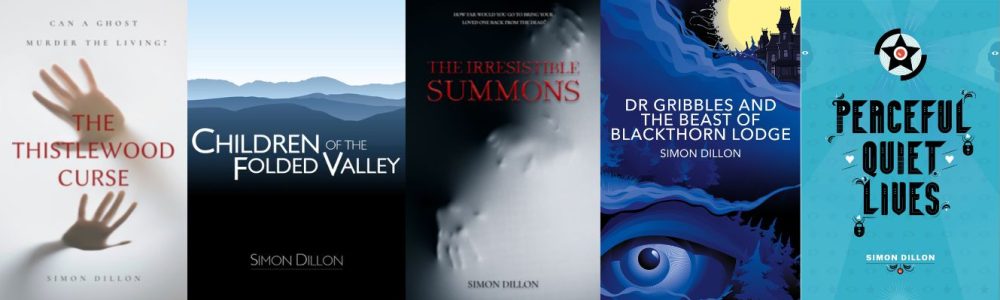
Opening Chapters: Children of the Folded Valley

Over the past few weeks on Medium, I’ve been showcasing some of the opening chapters from my novels. The series draws to a close with this initial segment of my dystopian sci-fi coming of age novel Children of the Folded Valley. Since it partly draws from my own experiences of growing up in a cult, it is perhaps the most “personal” of my novels currently in publication (though the term “personal” always strikes me as faintly absurd, as I consider all my stories personal in some way).

Here are the first few paragraphs:

We spend our adult lives trying to regain what we lost in childhood.

I do not claim to be unique in that respect. Whilst it might be argued that I lost more than some, we all, I think, chase after what we once had or never had. What we lost cannot be replaced, but we chase after it nonetheless.

Some think of what they lost with romantic rose-tinted spectacles, whilst others are more pragmatic. Some deny it, others get angry about it, others still accept it and seek help from friends, family, lovers, therapists, priests, gurus, or anyone else who will listen. But I cannot do that. I can never tell my friends, my colleagues, my wife, or my children what happened to me in the Folded Valley.

Since escaping all those years ago, I have been searching; but mine is not a sentimental journey. I do not long for the past, yet nor do I think of it as exclusively bad. I don’t ever want to go back, but I want things that are trapped there, lost forever.

What I lost, I lost on the railway line that runs along the southern edge of Dartmoor. I can still see the train disappearing; a silhouette against the bleak moors and darkening sunset skies. I can still smell the freshly cut grass, sense the cool breeze and feel the stinging tears. I remember the relief at escaping, the fear of what lay ahead, and the horrible churning sensation at the knowledge that everything I had ever known was gone.

That happened in August 1982.

From Children of the Folded Valley by Simon Dillon

You can read the whole of the chapter here, and read my companion piece article on this series here. Alternatively, to purchase a copy of Children of the Folded Valley (ebook or paperback) click here (for the UK), here (for the US), or here, if you wish to purchase via Smashwords.

Writing Update: The White Nest

With the exception of a couple of short stories, last year I took an extended break from fiction writing after finishing the first draft of a novel tentatively titled The White Nest. This story proved every bit as “personal” as Children of the Folded Valley. In fact, given the level of raw nerve jabbing involved, it’s safe to say I did something of a “Truman Capote”. What I mean by that is Capote was scarred to such a degree after writing his masterpiece In Cold Blood that he never finished another novel.

I am not comparing myself to such a literary giant, nor did I do anything as drastic as attend executions for my art, as he did, but the painful truth is that writing The White Nest affected me in ways I’m still coming to terms with. For some time, I wondered if my “voices” would ever return. I wrote a bit about that experience in this article on Medium. Thankfully I can report that the voices are back.

This year so far, I have written the first novel in a planned trilogy of fantasy stories that exist in the same Universe as my as-yet unpublished dark fairy tale novel The Faerie Gate. However, despite being pleased that I’ve managed to write another novel, I’m not yet convinced the quality is high enough to warrant being shared with the world. I feared the same for The White Nest, but having finally braved another look at the manuscript, I am pleased to report that is not the case.

The White Nest (I’m keeping the real title secret for now) is another gothic mystery, at least in part. It is also a coming-of-age story, a romance, a conspiracy thriller, and obviously it contains some strong horror elements. It deals in themes of complicated sibling relationships, parental fears, and false guilt. Reading it back, I can see why the process of writing it had such an effect on me, due to some of the painful personal experiences on which I am drawing. That said, I think readers will simply enjoy it as a vivid, gripping, page-turning mystery, which was always my primary intention. I think it might contain the best first act I’ve ever written. I can’t say if the ending is up to the same standard, as I’ve yet to reread it, but so far the signs are promising.

In terms of plot, The White Nest represents something of a departure from my previous gothic mysteries, in that the protagonist is male. I’m keeping the specifics under wraps for now, but I can tell you the story contains a full checklist of my favourite gothic tropes, including a sleepy south-west England village, haunted forest, eerie mansion, secret tunnels, dubious secret experimental facilities, occult secret societies, ghosts, demons, curses, mysterious disappearances, childhood memories buried by trauma, rug-pulling twist ending… you name it. You could even call this novel Now That’s What I Call A Simon Dillon Gothic Mystery if you really wanted to, as it is something of a compilation of my preoccupations, genre wise.

Here are some photographs of locations that inspired settings for certain sequences in The White Nest. The novel is predominantly set in Cornwall, but much of the landscape is based on the rugged North Devon coast. However, the first part of the novel is set in Oxford. One key scene takes place in Port Meadow.

Once I finish a second draft of The White Nest, I am moving on to a new gothic mystery, one that’s been gestating in my mind for some time. It is getting to the point where it is an itch I have to scratch, and I’m looking forward to developing it. In the meantime, I may well release a volume of short stories in the future, as I’ve now got quite a nice pile of these, and it would be nice to have them all together in one place. As ever, watch this space.

Christmas Presents: The One-Offs

Looking for the perfect Christmas present for that difficult relative? Why not give them a book this year? To be more specific, why not give them one of my books?

In this, the final of three articles, here’s a look at two of my novels that are one-offs. I don’t write teenage romantic drama, but I did write Love vs Honour as I couldn’t get the story out of my head. Although it begins as a romance, the story contains many of the themes present in my other novels – religious oppression, abuse of power and so on – and this is a much darker tale than it first appears.

In the case of Children of the Folded Valley, it’s a dystopian tale of about a man looking back on his life growing up in a cult, but with a sci-fi twist. It is also by far my most successful novel (to date).

Here’s is the blurb from the back of each novel:

LvsHonour 1600 x 2400Love vs Honour

Two Religions. Two Deceptions. One Love.

When Johnny meets and falls in love with Sabina, their bond proves stronger than a teenage holiday fling.

Fearing the disapproval of their strict Christian and Islamic families, they undertake an elaborate deception to continue seeing one another. Johnny pretends to convert to Islam whilst Sabina pretends to covert to Christianity to appease their parents.

But how long can this deception last before it unravels?

Click here to order Love vs Honour.

Folded Valley coverChildren of the Folded Valley

During a journey to visit his estranged sister, James Harper recalls his childhood in amysterious valley cut off from the outside world, where he grew up as part of a cult called the Folded Valley Fellowship.

In this seemingly idyllic world, the charismatic Benjamin Smiley claimed to be protecting his followers from an impending nuclear apocalypse.

But the valley concealed a terrifying secret.

A secret that would change Smiley’s followers forever.

Click here to order Children of the Folded Valley.

Inspiration: Children of the Folded Valley

Concluding my series on inspiration and influences for my novels, here’s a look at the stories that informed my most successful and “personal” book to date, Children of the Folded Valley.

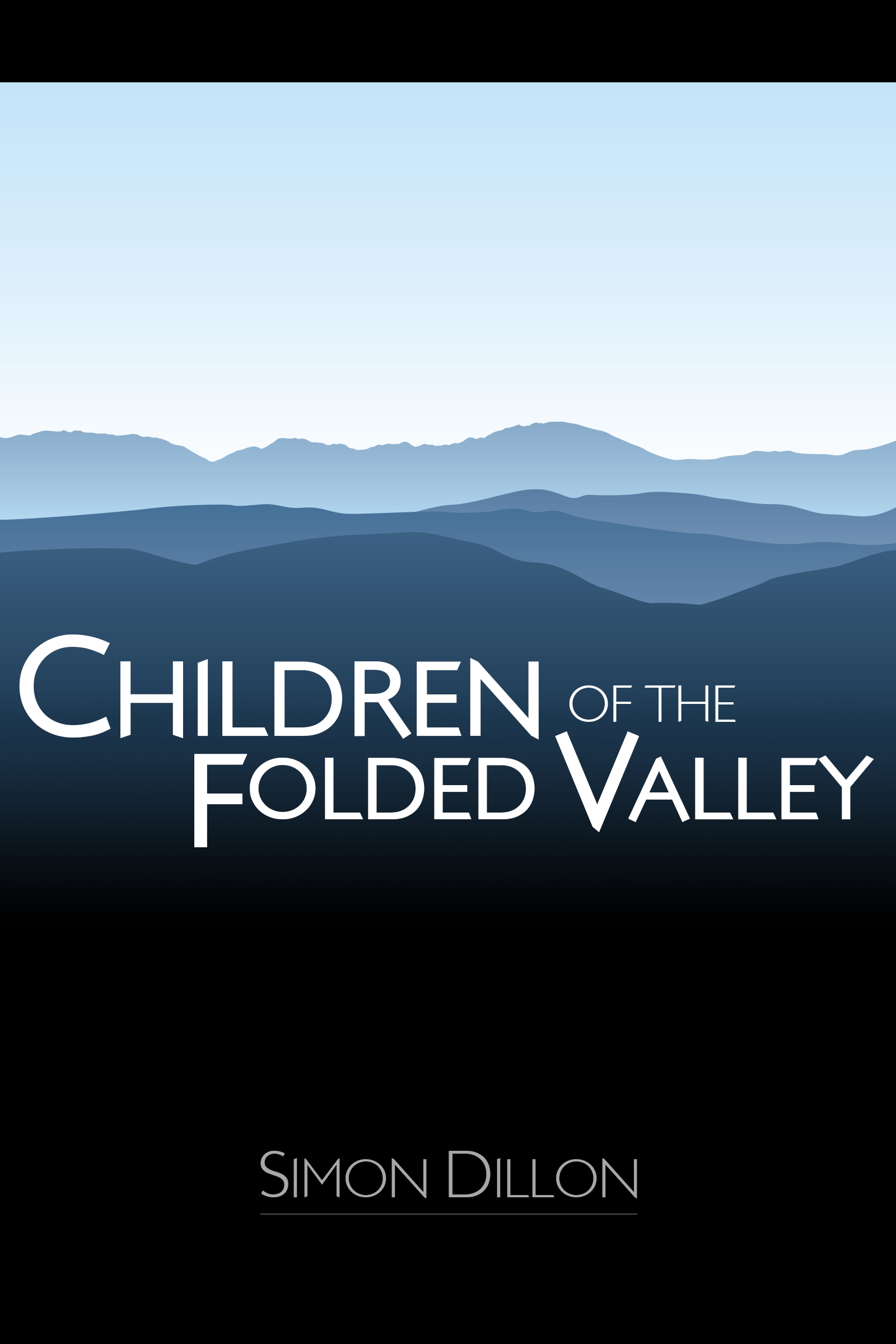
Folded Valley cover

A coming of age memoir set against a “light” science fiction backdrop, Children of the Folded Valley is about a man recalling his childhood and adolescence amid an unusual religious cult. The novel draws on some elements of personal experience, but here are seven key texts that were also influential.

The Remains of the Day (Kazou Ishiguro) – Children of the Folded Valley has a similar flashback structure to Ishiguro’s masterpiece, with the protagonist also taking a journey from Oxfordshire to the West Country during his reminiscences. Obviously The Remains of the Day has very different subject matter, but the melancholy theme of wasted lives is definitely an undercurrent in my own novel.

Never Let Me Go (Kazou Ishiguro) – Ishiguro again, and actually a novel I am less keen on because for me dystopian narratives really need to culminate in an act of rebellion (successfully or otherwise). Although brilliantly written, this one is determined to be “realistic”, with the characters resigned to their fate, at the expense of dramatic satisfaction. However, it remains a key influence for this reason: I love the way the science fiction element remains very much in the background, unrevealed until it absolutely has to be, and even then very obliquely.

The Handmaid’s Tale (Margaret Atwood) – As with Never Let Me Go, the science fiction elements are kept cleverly in the background (hence my term “light” science fiction), because they are less important than the bone-chilling themes of religious dystopia. The hideous treatment of women in this appalling future was also influential to a certain degree, though to be honest I must sadly admit I didn’t have to look too far into my own experience of real life religious organisations to find inspiration on that front.

1984 (George Orwell) – Well, obviously. I mean, anyone writing a dystopian novel has to acknowledge the granddaddy of them all. Orwell’s scathing, brilliant condemnation of totalitarianism is a clear influence, even though his novel focusses more on political dictatorship and mine on religious dictatorship. Like Shakespeare and Dickens, Orwell despised “the mob” (in this case, a political mob manipulated by the state). In my novel, the brainwashed “mob”, followers of cult leader Benjamin Smiley, are equally insidious at times, even though they too are victims. The “bleeding” scene in Children of the Folded Valley is also influenced a little by “Room 101”.

The Wizard of Oz (L Frank Baum) – The wizard being revealed as a fraud is an important moment in the novel (and in the film), although the effect is largely comical. In Children of the Folded Valley, when Smiley is revealed for what he is, the effect is devastating. However, there remains a touch of the Wizard of Oz in his character, despite Smiley’s malevolence.

Great Expectations (Charles Dickens) – Just as 1984 is the ultimate dystopian novel, Great Expectations is the ultimate coming of age story and I borrowed from it extensively. There are definitely elements of Estella and Pip in the relationship between James and Miranda, though again I know the backgrounds are very different. It’s also worth giving an honourable mention to The Kite Runner here, as there were tonal elements that were an inspiration, particularly in the novel’s latter stages.

Lost (TV series) – Yes, I know this ultimately led to an exasperating and disappointing finale, but along the way the story of “the Others” proved very influential, in the way they operated much like a cult. Benjamin Smiley is not deliberately named after Ben Linus, but it is an amusing coincidence.

You can download or buy print copies of Children of the Folded Valley from Amazon here.