Coming up with imaginative ways to publicise my novels can be a challenge. In the case of my supernaturally tinged mystery thriller Death Nest, I’ve run a gamut from the serious (how this is my most personal novel) to pranks (such as this fake interview that I’m pleased to say tricked a few readers, based on the comments). My latest attempt, a short film, is more in the latter category. Death Nest: The Disappearance of Simon Dillon is a meta-mockumentary that imagines the White Nest, a sinister and dangerous organisation within the novel, is real.
Also, this version of the film is slightly different to the version I previously uploaded on Patreon (if you saw it there already). I’ve made a couple of minor changes. Let’s call this version the “Director’s Cut”. We can even start a rumour that I didn’t get to finish it properly originally due to “studio interference”, if you like, instead of the more mundane truth that I wanted to add a couple of cutaways and a scary additional visual tweak at the end (that I won’t spoil).
The film pretends that because I recklessly detailed what they do in the book, the White Nest decided to silence me. Tommy Rogers, a private investigator looking into my disappearance, interviews former colleagues and friends. It degenerates into cheesy pseudo-Blair Witch style nonsense in the finale, but I thought, why not go the whole hog? With any luck, it will intrigue those of you who haven’t read the novel into picking up a copy. It will also make a great Christmas present for that difficult-to-buy-for relative. Here’s the film in full. I hope you find it entertaining.
Death Nest features a gripping central mystery, a romantic subplot, coming-of-age drama, and moments of horror and humour. To further whet your appetite, here’s the blurb from the back of the book.
From the author of Spectre of Springwell Forestand The Irresistible Summons… A nail-biting new mystery.
After his young son Ben writes a disturbing story about murdering a boy in a forest, widower Nick Unwin is alarmed by eerie parallels between his son’s behaviour and that of his younger brother Jason, prior to his inexplicable disappearance twenty years previously. This tragic past returns to haunt Nick when he sees an image of his long-lost brother in a newly released film.
Fearing history will repeat itself, Nick decides to investigate, along with Tanith, an old flame from his early teenage years, with dark secrets of her own connected to Jason’s disappearance. But as they delve deeper into the labyrinthine mysteries of their past, long-buried memories resurface. Nick is forced to face the terrible fear that has plagued him for decades: Was he responsible for the death of his brother?
A riveting coming-of-age thriller exploring traumatic sibling relationships, parental fears, and the misleading nature of memory, Death Nest is Simon Dillon’s most gripping novel yet.
Additional potential Christmas presents can be found in other published novels from my back catalogue. These include horror, thrillers, children’s adventure stories, dystopian sci-fi tales, and my recent forays into fantasy with my novel Ravenseed (about which I have written here) and a companion piece anthology, The Dark Forest Within (about which I have written here).
Death Nest is available in paperback or on Kindle from Amazon here (in the US) and here (in the UK). It is also available via Draft2Digital and its various outlets, including Barnes and Noble, Apple Books, and Smashwords (click here).
The Dillon Empire hereby wishes you a very Happy New Year, and hopes you have a splendid 2025. Tradition dictates that l set out my main writing plans for the year ahead, so here’s what I hope to achieve.
Since August, I’ve been researching, outlining, and creating character profiles for my next novel. It’s the first in a series of dark mystery thrillers with a supernatural edge featuring a private detective and her assistant investigating a particularly baffling murder. Each of these novels will be a standalone mystery, but a bigger mystery will start to reveal itself in the background as the novels progress. As you can see, this is a hugely ambitious project as I’ve not consciously undertaken the writing of a series before (The George Hughes Trilogy was an accident in that respect, so doesn’t really count). At any rate, I am about to start writing the first draft of the first novel, so I’ll keep you updated on progress.
Also, this year, I might release another of my novels: horror-thriller mystery The Hobbford Giant. I’m still shipping that one around agents and publishers, but if I draw a blank, I may self-publish it. Alternatively, I might self-publish another volume of short stories (probably some of my fantasy tales, a few of which have previously appeared on Medium and Substack, and some of which have never been published before). I can’t say for sure which way I’ll leap, but one or the other of those will hopefully be available by the end of the year.
On top of this, I aim to write a clutch of new short stories, as well as pen another significant segment of my epic sequel to an as-yet unpublished children’s fantasy novel I wrote ten years ago, tentatively entitled The Faerie Gate (though that title will change). I had hoped to make progress on that novel last year, but that didn’t happen for various reasons; mainly, I’d bitten off more than I could chew, and something had to give. However, this year, I hope I’ll have the window to get another chunk finished. The novel is about half finished at present, and if I can get to two-thirds finished by the end of the year, that would be splendid. It’s turned into a bit of a monster in terms of length, so this novel could wind up being divided into separate volumes akin to The Lord of the Rings. But we’ll see. At present, I still think of it as one novel.
Beyond all that, I plan to revise and polish the mystery novel I wrote last year. I call it False Witness at present, even though that isn’t the real title (I’m keeping it a secret, for now). In addition, if The Hobbford Giant fails to get snapped up by agents and publishers, I’m going to send out A Thorn in Winter; another mystery novel which I originally wrote in 2022. As you can see, I’m not giving up on that front. Who knows? Perhaps this will be the year I find a mainstream publisher (I’ve had novels traditionally published in small indie presses before, but not by any of the big guns).
It will be interesting to see where I get to with all the above by the end of the year. I’m sure I’ll be immensely busy. In the meantime, thank you for supporting my writing. Again, I wish you all a very Happy New Year.
NOTE: The following is a revised version of an article originally published on Medium, where I’ve published a number of writing advice pieces.
Plotting versus “pantsing” (as in writing by the seat of your pants) is a familiar debate among fiction writers. I’m not here to proclaim the virtues of one method over another, as whatever works for any given writer is evidently best for them. According to Goodreads, successful novels have been written pantsing (Stephen King’s work, for instance), as well as plotting (John Grisham is a good example). JK Rowling is another famous plotter, who works from detailed hand-scribbled charts.
As an unashamed full-blown plotter, my methodology is simple: I don’t start a novel or short story without an ending that blows me away, as I know without that, I won’t have the enthusiasm to finish. Once I have that ending, I work backwards from that point, planning character profiles and arcs, researching, preparing chapter outlines, and so forth. Yet despite this, people often assume I have no flexibility in my writing process.
The idea that plotters are creatively compromised control freaks is a myth I wish to debunk. Yes, it’s true that going straight to manuscript stage by inventing a character and seeing where they take you isn’t a style that works for us, but that doesn’t mean we aren’t open to new ideas and directions outside of our detailed outlines. It has often been suggested to me that my approach stifles spontaneity. Nothing could be further from the truth.
Spontaneity whilst outlining: Destroying my work
For a plotter, spontaneity occurs mostly in the planning stage. I create multiple outlines of a particular scene, trying to decide which variation works best for the story. For example, where should lovers meet? On public transport? At work? In a bar? Online? Or who should turn out to be the killer in a whodunnit, and why? What characteristics should the protagonist take on? Are they cheerful? Optimistic? World-weary? Sarcastic? Outgoing? Private? Repressed? What is their fatal flaw? Greed? Pride? Anger? Lust? Too trusting? Overly ambitious? Delusional?
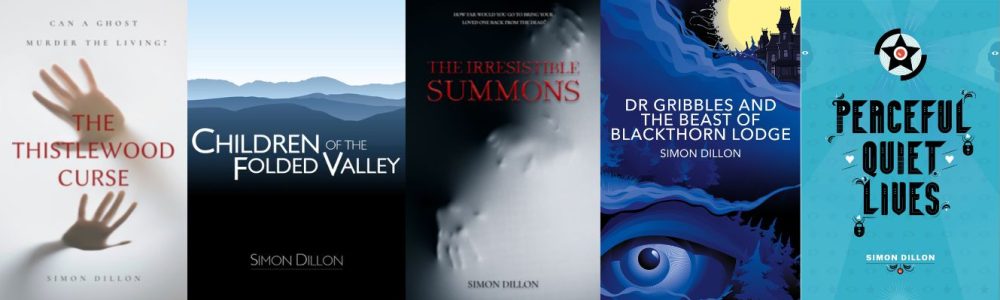
As an example, for my most successful novel to date, Children of the Folded Valley, I considered many different potential protagonists and points of view. The story is narrated by a protagonist recalling his life growing up within a mysterious cult cut off from the outside world. However, at one point, the protagonist was going to be a female journalist who investigates and ends up trapped within said cult. I wrote a detailed outline based on this protagonist, still culminating with the same big reveals and uprising featured in the final version, but with a significantly different character arc. I ultimately jettisoned this protagonist, opting for a much more personal approach, drawing from my real-life experience growing up in a cult.
These kinds of possibilities are all delved into at the planning stage, in order to destroy the plan. I eliminate characters, characteristics, scenes, sequences, entire chapters, entire acts, but within my ever-evolving outline. Rather than write myself into a corner halfway through a 90,000-word manuscript, I write myself into corners in a one-page outline. What’s more, I do it on purpose. I want to exhaust every possible variation before I choose which to run with. I don’t like settling for good ideas if there is a great one waiting to be discovered through outline experimentation with different protagonists and scenarios.
I fully accept that this process is arduous, lengthy, and requires discipline. But writing a novel from a thorough outline is a joy, and often proceeds at a lightning pace.
Spontaneity whilst writing the manuscript: Unexpected branches
Pantsers might say this is all very well, but what if better ideas occur to you whilst working from a detailed outline? In my case, the answer is simple: I make the change. However, by this point, because I’ve worked through umpteen scenarios and possibilities, changes at this stage tend to be easily incorporated. They aren’t dead ends hit 50,000 words in, requiring a page one rewrite. They tend to be, as Tolkien once put it in his foreword to The Lord of the Rings, unexpected branches thrown out along the way.
I’ve certainly had a few unexpected branches whilst writing my novels, as well as some unexpected pruning. Regarding the latter, one supporting character in Children of the Folded Valley was originally going to die, leading to a subplot that provided contrast and counterpoint with the protagonist in the finale. However, whilst it looked splendid in the outline, when I came to write it, I realised the subplot detracted from the emotional arc of the main protagonist. As a result, the supporting character got a reprieve, and the subplot was abandoned.
At the same time, an entirely new, unexpected branch emerged in the finale. I shan’t get into spoilers, but this sequence — involving the protagonist experiencing a profound, possibly supernatural catharsis whilst purchasing a rare model railway set from a seller in the west country — was not a part of my original outline. I’d planned something much more straightforward for the seller in question, but he would up being far more enigmatic, and the story is all the stronger for it.
Conversely, whilst writing psychological gothic mystery Phantom Audition, although working from a meticulous outline, I had a creative safety net in place. My earlier gothic novels had clear-cut finales. However, this story I designed to be more ambiguous. It concerns a grieving widow who comes to believe her famous actor husband may have been murdered, possibly by a supernatural agent that took possession of him in a method acting experiment that went pear-shaped. My intention was for the identity of the killer (if indeed there is a killer) to become increasingly irrelevant as the protagonist’s grief, guilt, denial, possible delusion, and eventual cathartic empowerment comes to the fore.
Ambiguous finales are risky, so for this reason, when outlining Phantom Audition, I prepared six alternative versions of the ending, each with more concrete, clear-cut resolutions. That said, the seventh more open-ended finale — the original inspiration that blew me away and propelled me to write the novel — was the ending I ultimately settled for. I use this example to contrast my experience with the finale of Children of the Folded Valley, to illustrate that despite ultimately sticking with my outline, I remained open to other possibilities throughout the writing process.
Spontaneity whilst editing: A case study
After the first draft is finished, whilst editing and penning subsequent drafts, I remain open to spontaneous inspiration that can sometimes reshape the narrative for the better. Here’s are three examples, from another of my gothic mystery horror novels: The Irresistible Summons. Whilst the mechanics of the main plot didn’t change, certain scenes, subplots, and sometimes entire characters were removed to bring clarity and focus. New scenes and even an entirely new epilogue emerged in the edit stage.
The Irresistible Summons concerns a television producer, Naomi, who makes documentaries debunking the supernatural. A personal tragedy from her teenage years returns to haunt her, as she uncovers a spooky conspiracy in the office building of Persephone, a London-based computer game company. My original outline featured many additional elements ultimately discarded, resulting in an initial draft of 109,000 words ultimately weighing in at around 93,000 words.
Murders in Persephone — I have to skirt around spoilers a bit here, but there are certain characters whose demises originally occurred much earlier in the story, precipitating murder investigations that complicated the main plot. In the end, I felt the police aspect of the story cluttered the narrative, so I removed these murders, and instead restricted police involvement to the first mysterious disappearance.
Romantic subplot — The chemistry between Naomi and game designer Eric was much more fully explored in the original draft, with several more conventionally romantic scenes. However, this all felt out of place, especially given Naomi’s ongoing obsession with her dead teenage lover Toby. I ended up cutting these scenes, and instead having more of an undertone that Eric might be someone with whom Naomi could ultimately strike up a romantic relationship — if she ever gets past what happened with Toby.
The Epilogue — On reflection, the epilogue in my outline and earlier drafts was absurdly optimistic, and tonally felt like it belonged more in a romantic novel. For the final version, this was replaced and rewritten entirely, closing on an appropriately melancholy note that brought the novel full circle.
Conclusion: Plotters are spontaneous and also unpredictable
I’ve gone into considerable detail, but hopefully, this article is a strong rebuttal to the idea that plotters are inflexible or bound up in creative straitjackets. Personality, temperament, and many other factors come into play in the determination of whether one is a plotter or pantser, and I certainly do not claim my method is superior to anyone else’s. However, I do take exception to the idea that plotters aren’t spontaneous. In my experience, it’s a myth.
In closing, I also wish to challenge the notion that plotters write predictable stories. Many reviews of my novels praise their unpredictability and how the readers didn’t see the big twists coming (here, for example). I know that sounds arrogant — and it is, considering I’m hardly a famous author — but if that doesn’t convince you, consider the unpredictability in the novels of JK Rowling; not just the Harry Potter novels, but the Strikeseries too (which she pens under the pseudonym Robert Galbraith). In short, plotters can be just as spontaneous and unpredictable as pantsers.
This year has been an exciting one, as I continue to make sense of my new profession: Full-time writer. Some of what that has meant I won’t bore you with. The duller freelance assignments are hardly worth mentioning, though they help pay the bills. However, in this piece, I will review the goals from my New Year post and see how they compare with what I actually achieved.
This gothic mystery novel was top of my year’s writing goals, and I’m pleased to say I now have a first draft. Next year, I will look at the manuscript with a more critical eye, having had a bit of distance from it, and start to polish it up.
A dark and sinister tale to sit alongside the likes of Spectre of Springwell Forest, The Irresistible Summons, The Thistlewood Curse, Phantom Audition, and The Birds Began to Sing, The Hobbford Giant is set in 1997, and concerns a young woman, Mira, who gets a job as a journalist at a local newspaper in the (fictional) town of Hobbford in southwest England. Years earlier, a huge abuse scandal caused the closure of the local orphanage where her parents grew up, revolving around the man in charge, Gregory Barry. Although he was due to be put on trial, Gregory Barry vanished without a trace before he could be prosecuted.
Mira stays with her reclusive uncle Artemis (her mother’s older brother), until she can find a place of her own. Art is a therapist to rich clients. He lives in a large house and seems to have done very well for himself, but for reasons I won’t get into here, he is estranged from Mira’s parents, who are less than keen on her staying with him. Once in Hobbford, Mira reports on an archaeological dig investigating a local legend about a giant buried in a nearby hillside. What took place in the Hobbford orphanage rears its ugly head as the plot thickens, and Mira soon discovers she has a highly personal connection to the mystery.
For this story, I was somewhat inspired by the real-life Cerne Abbas Giant in Dorset, and the legends surrounding it. In my story, local legend states this giant was sent by a witch to take revenge, after the witch in question was persecuted. The giant was slain, and the body supposedly buried inside the hill. What bearing this has on the main narrative has to remain under wraps for the time being.
Another writing goal this year was simply to continue with my Medium output. This I have also achieved, having published well over a hundred exclusive-to-Medium articles. Here’s a sample of some of my favourites.
Once again, I set myself the goal of restarting this film podcast series. And once again, this didn’t happen. My producer and co-presenter Samantha Stephen also wants to restart this, but our paths in life have rather diverged of late. Samantha is busy pursuing her academic goals with great aplomb (currently working on her Masters) and no longer lives nearby, so that’s part of the reason we’ve not yet pulled our fingers out on this one.
Has The Tangent Tree had its day? I don’t know. I hope not. I’ll talk to Samantha again and if there is any news, I shall announce it here. But I don’t think it’s fair to include this on my annual goals list next year when a new series failed to materialise two years in a row.
My writing goals for 2022 also included releasing another short stories anthology. This didn’t happen either, but I still plan to do this, ideally early next year. On a more positive note, I wrote a handful of new short stories this year, some of which I’m holding on to for the time being, as they might wind up as exclusives for the aforementioned anthology. Three others were published in Medium publication Fictions.
In-Between
Originally conceived as a supernatural satire, this evolved into something far more personal. It concerns a recently deceased man whose attempts to haunt his family are constantly interrupted by ghost politicians attempting to secure his vote in an afterlife by-election. Check it out in full here.
Sweet Dreams
A science fiction thriller set in the near future, about a journalist investigating a tech company that manufactures nightmare-suppressing nanotech for children. Check out part one here. (NOTE: Links to subsequent parts are included at the end of each instalment.)
Vindicta
A spine-tingling ghost story set shortly after the end of World War II, concerning a jewel thief and murderer whose past catches up with him whilst fleeing for South America. Check out part one here. (NOTE: Links to subsequent parts are included at the end of each instalment.)
The final goal in this year’s list was to keep pursuing mainstream publication. This I did for my grown-up fantasy novel Ravenseed; an epic set mostly in the Dark Ages. Alas, this full-blooded tale of love, lust, betrayal, and vengeance didn’t get any bites. I’m hanging on to the manuscript for now, as I’m hopeful I may be able to generate interest in the future.
However, more hopefully, I have had a certain amount of interest shown by literary agents in my gothic mystery The White Nest (not the real title – I’m keeping that a secret for now). Here’s a snippet of my agent pitch, to give you a taste of the plot.
A widower fears his young son is cursed when he shows disturbing behaviour akin to that of his younger brother, before he vanished without a trace twenty years previously. Gnawing dread that history will repeat itself is inherent in (title redacted), my 99,000-word modern gothic mystery novel. It’s also a coming-of-age romance with hints of the supernatural, exploring traumatic sibling relationships, parental worries, false guilt, and the misleading nature of memory.
After his young son Ben writes a disturbing story about murdering a boy in a forest, widower Nick Unwin is alarmed by eerie parallels between his son’s behaviour and that of his younger brother Jason, prior to his inexplicable disappearance twenty years previously. This tragic past returns to haunt Nick when he sees an image of his long-lost brother in a newly released film. Fearing a repeat of history, Nick decides to investigate, along with Tanith, an old flame from his early teenage years, with dark secrets of her own connected to Jason’s disappearance. But as they delve deeper into the labyrinthine mysteries of their past, long-buried memories resurface. Nick is forced to face the terrible fear that has plagued him for decades: Was he responsible for the death of his brother?
As I said, I’m hearing positive noises, and have good feedback post-full manuscript requests, but certain details need to be ironed out. I’ll keep you updated once I have definitive news, so watch this space.
Other Achievements This Year
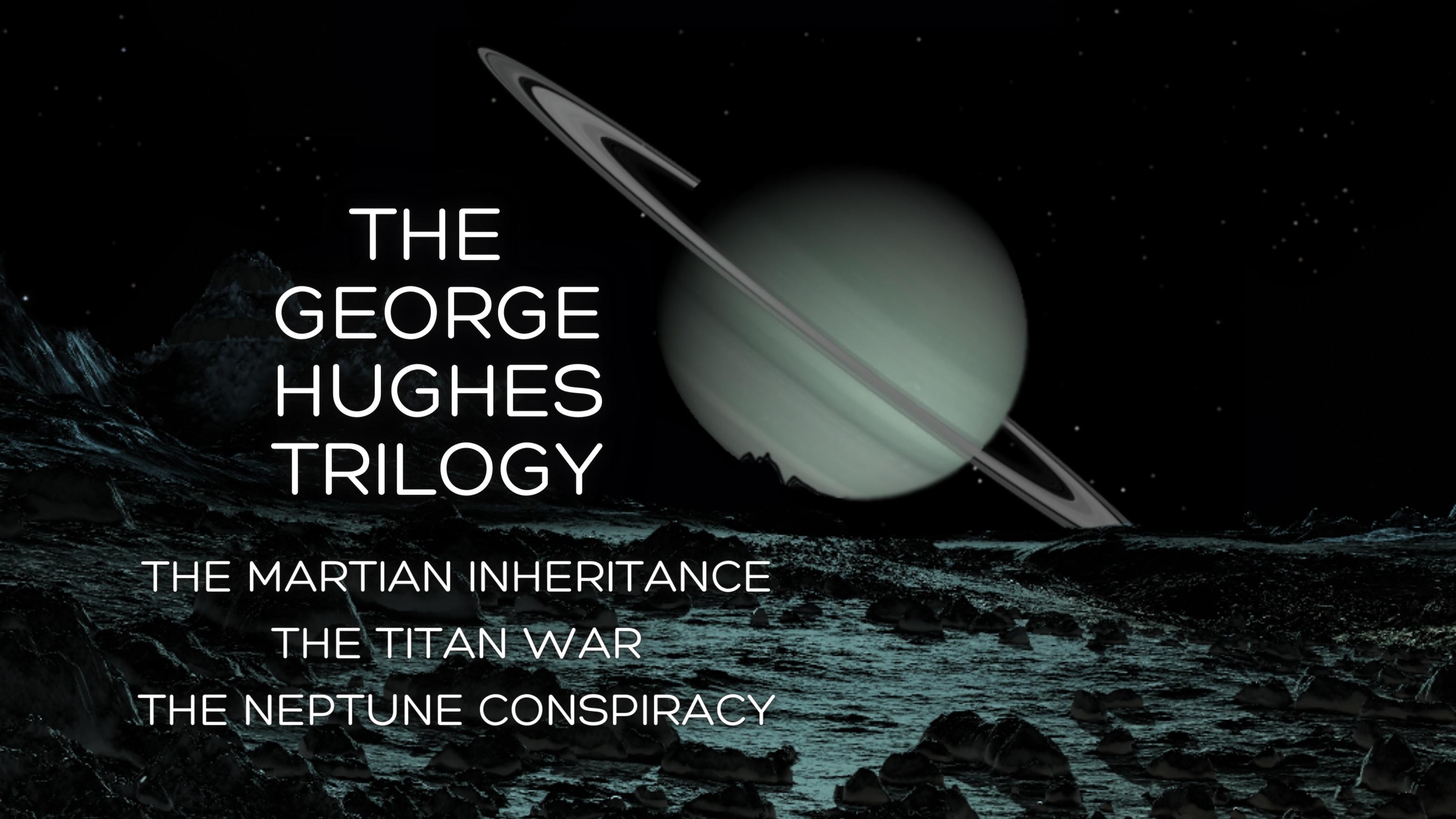
One of the reasons I didn’t publish a short story anthology this year is because I chose instead to focus on the rewrite, retitling, and rerelease of The George Hughes Trilogy. As I’ve explained elsewhere on my blog, this trilogy of sci-fi adventure novels were originally titled George Goes to Mars, George Goes to Titan, and George Goes to Neptune, but I decided to withdraw them because I felt the titles didn’t do them justice (they sounded too much like picture books for very young children). I also wanted to polish the manuscripts up to my current standards, as the first novel, in particular, needed a shakedown, having been written well over fifteen years ago (I’ve improved a lot as a writer since then).
I rolled my sleeves up and did a big push on rewrites. The new titles are The Martian Inheritance, The Titan War, and The Neptune Conspiracy, each of which I much prefer. I’m enormously proud of these three stories, and always have been (the stories themselves haven’t changed). I designed new covers too. As a result, I’m doing a big push on these stories at the moment, as you’ve probably noticed. I have also released all three novels in a special omnibus volume that’s three for the price of two.
Finally, I decided to launch a Patreon page this year, to help with funding my writing endeavours. I offer people the chance to support me at four different levels (Ally of the Dillon Empire, Free Citizen of the Dillon Empire, Knight of the Dillon Empire, and General of the Dillon Empire), and so far, I’ve had over ten supporters. I post exclusive material for supporters, including exclusive sneak peeks at covers, images, title announcements, and so on, plus early access to short stories and novel samples, writing updates, video updates, film of the month recommendations, interesting deleted segments, and more. At present, for Knight of the Dillon Empire support level and higher, I’m serialising the draft version of my thriller novel The Balliol Conspiracy (the title may change if it is ever released).
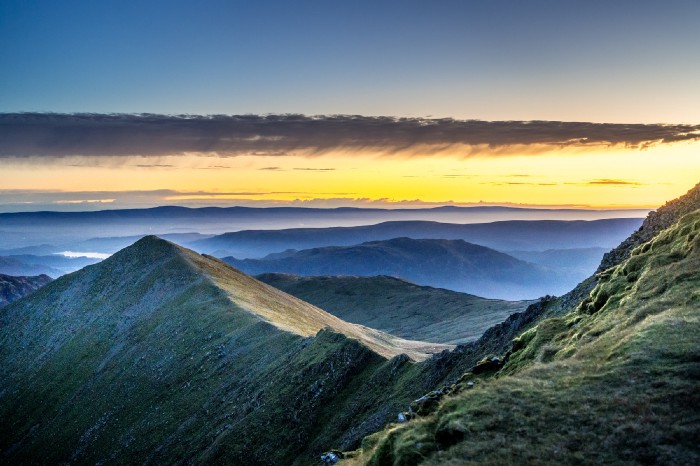
Please have a look at my Patreon page here and consider supporting me. If nothing else, check out the hilariously awkward video of me at the edge of Wistman’s wood on Dartmoor last September, in desperate need of a haircut.
As you can see, I’ve certainly been busy during the last twelve months. I’m taking it a bit easier throughout the rest of December, as I’ve been rather flat out this year and could do with the break. What are my goals for 2023? I shall expound on that further on New Year’s Day. Watch this space.
It only remains for me to wish you all a Merry Christmas.
My latest novel, Peaceful Quiet Lives, involved just as much research as usual, though this time into many unexpected areas.
Given the authoritarian political states in the novel, a certain amount of investigation into those with extreme views was inevitable. I looked at a lot of the more cult-like leaders on the US evangelical right-wing, as well as extremists on the left, and their groups and organisations. I also read up on so-called “incel” groups and those who believe they can have loving relationships with an android. At first, I feared the ideas for my novel would be too ridiculous even for a satire, but real life was always three steps ahead of me.
After researching several US cities and states, I took the decision to not name any real city or geographic location in the novel, other than to talk in vague terms about east and west (with California and the west coast having fallen into the sea, following the “big one” earthquake). Apart from anything else, I didn’t like to assign particular social, political, or religious ideologies to any one city, so it seemed best, on balance, to have the cities in the novel remain nameless. It’s also worth mentioning that several parts of the novel deal with news media organisations, for which I drew on my own television experience. This was more for the personalities and their attitudes than the technical side, though I should stress no characters are directly based on real people.
The plot came to me fully formed in early 2018, in a strange “download”. At first, I expected my protagonist Sam to be American, but then I realised I needed an “outsider” perspective for this story, so made him an English refugee (in the novel, an unspecified “Catastrophe” has rendered the UK and Europe uninhabitable). As I wrote the story, little changed from the original outline in terms of characters and events, but I did ruthlessly prune everything I considered “preachy”, I hope successfully. Peaceful Quiet Lives is not intended to be a political statement of any kind, and I wanted the events to speak for themselves, without editorialising.
I also cut a number of lengthy sequences, especially in part two. A chapter where Sam and Eve attend an illegal gathering was removed, largely because it felt superfluous in light of the Halloween party they attend earlier. This gathering involved people indulging in all manner of “rebellious” activity; not just unregistered (and therefore legally “unconsenting”) sexual activity, but also free and frank political and spiritual discussion, without fear of state punishment for expressing undesirable views. In that draft, the priest from the final chapter made an earlier appearance, discussing his resistance work in both nations with Sam. I liked this section of the novel, but took it out because it felt a little on the nose, as well as being unnecessary. I revised the novel so Sam only meets the priest in the final chapter.
If you’ve not yet read Peaceful Quiet Lives, why not give it a go? Here’s the blurb from the back of the book:
Two Nations Under God. Can their love survive in either nation?
Life, love, liberty, and the pursuit of happiness are a distant dream for Sam and Eve. Their forbidden love falls foul of laws in both nations born from the ashes of the Second American Civil War.
A satire of political and religious fears, Peaceful Quiet Lives is a thought-provoking and powerful dystopian future shock.
Peaceful Quiet Lives is available as a download or paperback from Amazon. Order your copy here (in the UK), or here (in the US). You can also order from Smashwords here.







 Simon Dillon Books
You must be logged in to post a comment.