Exciting news! My new fantasy anthology, The Dark Forest Within, is released next week. A selection of novellas and short stories packed with adventure, romance, darkness, danger, magic, monsters, mystery, triumph, tragedy, and a sprinkling of humour. Some of these tales have previously been published online to subscribers on Medium or Substack, but others are exclusive to this volume.
After last week’s tease, here’s a proper cover reveal.
Created by author in Canva.
Conceived as a thematic companion piece to my novel Ravenseed, this collection includes two tales that function as direct prequels featuring characters from that novel. But if you’ve not read Ravenseed, don’t worry. No prior knowledge is required, and each of these stories stands alone.
The centrepiece is a 27,000-word novella entitled Wulfric’s Quest, which can potentially be interpreted as a sequel to Ravenseed, though featuring entirely different characters. Again, reading Ravenseed first is not required, and it won’t spoil the novel if you read this anthology first. That’s all the detail I’ll give for now, but watch this space for further announcements and articles over the next few weeks on each of the stories in the collection.
The Dark Forest Within is released on Monday the 2nd of June. You can pre-order this anthology on Kindle via Amazon here (in the UK) and here (in the US). For Draft2Digital and its various ebook outlets, pre-order here. Print copies will be available from the 2nd of June.
A rather forced smile makes me look a bit evil by the Christmas tree.
The first and most important thing to say in opening this lookback over 2024 in my fiction writing is thank you to everyone who has bought my novels and short stories or reviewed them (or both). I’m also thankful to everyone who has supported me in other ways, whether via Patreon, or through Medium, or by subscribing to read my work on Substack. I’m extremely grateful to all of you. I know this is already sounding like an Oscar acceptance speech, so before it degenerates into such nausea, I’ll move on with a quick glide through my fiction work in 2024.
New Novel Release: Ravenseed
After years of dithering, I finally released my first-ever fantasy novel: Ravenseed. An epic adventure of love, lust, betrayal, and vengeance primarily set in the Dark Ages, with a parallel plot in the present, this novel has been warmly received so far. I’m extremely proud of this story, and I’m thrilled to finally have dipped a toe into the world of fantasy, as it is such a difficult genre to get right. For years I was scared of putting off non-fantasy readers, whilst not getting it right for those who eat, sleep, and breathe such tales. But it turned out well in the end. Ravenseed represents what I’m most proud of in my fiction writing this year.
Ravenseed is available on Kindle or paperback from Amazon here or from Draft2Digital and other outlets here.
New Novel First Draft Written: False Witness (not the real title)
This year, I’m also extremely pleased to have written the first draft of a new novel. It’s not really called False Witness (too generic, and too many other novels already have that title). I’m keeping the real title a secret for the time being, but that will do as a placeholder to discuss it in public. The plot concerns a prank that goes wrong, as well as a dark secret in the protagonist’s past that comes back to haunt her present. And yes, I know that’s vague and could apply to pretty much every thriller I’ve ever written, but I really don’t want to say too much more at this stage. Just believe me when I say this dark secret is exceptionally dark.
New Novel Rewritten: A Thorn in Winter
I originally wrote this mystery thriller in 2023. I’d intended to prepare the second draft this year, so that was another annual goal duly ticked off. I plan to submit it to mainstream agents and publishers probably next year in the hope of finally cracking into bigger markets (I have been traditionally published before, but with smaller indie publishers). So far, feedback on this novel has been positive, so who knows? Perhaps this will be the one. The story? It’s still mostly under wraps for now, but I will reveal the first act features a tangled web of blackmail, before a decades-old unsolved murder comes into the picture.
Novel Submitted to Agents and Publishers: The Hobbford Giant
You’ll get to see this horror-thriller novel pretty soon, I daresay. Why? Because I will almost certainly release it next year – unless the remaining mainstream agents and publishers I’m waiting to hear back from snap it up. I’ve had some hugely encouraging feedback about The Hobbford Giant, but it is now looking unlikely that it will land a traditional publisher. I’m not discouraged, as I have many other novels lined up to try. Besides, this way you’ll get your hands on it sooner. What’s it about? Here’s part of the pitch I’ve been using:
Is it sometimes better not to know the truth? This question lies at the heart of The Hobbford Giant. Set in 1997, it concerns a young journalist investigating an unusual archaeological dig, an abuse scandal at a former children’s home, an ancient folklore legend, and a dark family secret that connects her to all three. The story also explores repressed memories, childhood trauma, and what happens when lies are covered by more lies. A tagline for the novel: “Some secrets can claim your soul.”
Against the wishes of her parents, Mira Webb moves in with her estranged uncle, after getting a job at the local paper in the southwest town of Hobbford. Her first assignment involves a piece on archaeologists digging in the grounds of a children’s home closed years previously in the aftermath of an abuse scandal. Their discoveries may shed light on the legend of a giant that once menaced the area, but after she experiences ghostly visitations, and the archaeologists start winding up in comas, Mira comes to believe an ancient curse may be at work; a curse to which she has a horrifying personal connection.
I hope that whets your appetite. More on this novel soon.
Short Stories
In between writing, rewriting, or submitting novels, I’ve penned half a dozen short stories and novellas. Some of these were published on Medium and Substack, as well as a couple I wrote last year which were held over for this year. Here’s a complete rundown of those released this year. The titles link to Medium. Links to subsequent parts are included at the end of every instalment. Each story is also available on Substack.
Horror. At a private girls school, an English teacher fond of shoplifting and married men stages a cursed play linked to a centuries-old ghost story. Also available on Substack.
Fantasy. A young woman tries to contact her comatose father on a spiritual plane between life and death. Also available on Substack.
Other Achievements This Year
You may have noticed I’ve slightly changed things on this site. I’ve made some visual tweaks, and I’ve also disabled comments. It is easy to interact with me on other platforms – on the Simon Dillon Books Facebook page, Medium, Substack, and Patreon, for instance – so I felt this site ought to be more like a brochure, showcasing my fiction work.
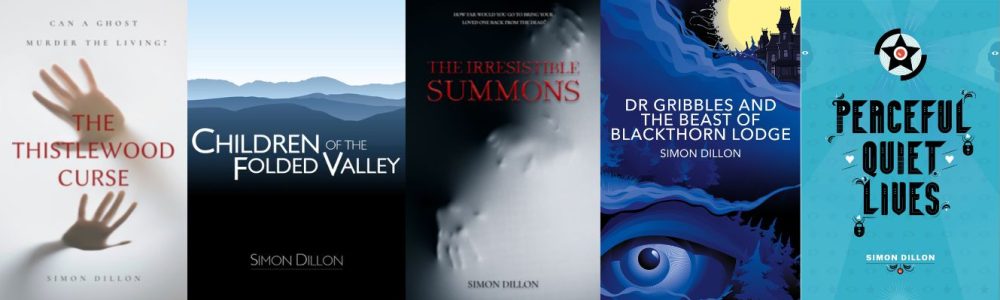
On the subject of Substack and Patreon, I’ve started running exclusives on the former, with monthly videos, and the serialising of my supernatural thriller novel The Thistlewood Curse available to those paying $5 per month. For that, paid subscribers also get access to my full film review archive, plus classic film analysis, top tens, and more besides. There’s a free subscription level too, purely for new release film reviews, but those disappear behind a paywall after four weeks. If you’re considering subscribing to my Substack page, but haven’t done so yet, take a closer look here.
As for Patreon, here I offer exclusive early access to short stories, sneak previews of artwork, exclusive insights into my writing processes, video updates, novel draft previews (including serialised unpublished novels), interviews with some of my characters, deleted scenes (sometimes entire chapters), and other material found nowhere else. Level of access depends on whether you become an Ally of the Dillon Empire, Free Citizen of the Dillon Empire, Knight of the Dillon Empire, or General of the Dillon Empire. Check out my Patreon page here, for more information.
All things considered, 2024 has been a challenging and fulfilling year, with many (though not all) of my annual goals achieved. As usual, I’m taking a short break over Christmas, but as per my tradition, I’ll reveal my goals for 2024 on New Years Day. Watch this space.
It only remains for me to thank you again and wish you all a Merry Christmas.
(All images by author or created by author in Canva, unless otherwise stated.)
What have I been up to lately? Well, I’ve been enjoying my holidays, taking a bit of time off having done a lot of promotion for my recent fantasy novel Ravenseed. But what have I done when I’ve not been taking time off? Mostly writing short stories. I’ve written two of these, plus a novella. Here’s a little bit about each.
35 Chestnut Terrace
This is a mystery thriller directly inspired by a Sherlock Holmes short story. I shan’t say which, as I wouldn’t want to spoil your enjoyment either of my story, or of Sir Arthur Conan Doyle’s (in case for some absurd reason you’ve not read every Sherlock Holmes story already). The title pertains to the scene of a dreadful crime. The plot? A young woman tries to exonerate her fiancé of a horrific murder, but is he innocent?
35 Chestnut Terrace will be serialised in four parts on Medium and Substack this September.
Rachael
A spooky, supernatural tale, about which I remain fairly tight-lipped for now. It’s set in a private girl’s school, and the protagonist is a teacher. The plot involves a play, an ancient curse, and a ghost. I had a lot of fun writing the main character for this one, as she’s not the most well-behaved of my protagonists.
Rachael will be serialised in five parts on Medium and Substack this October.
Wulfric’s Quest
The title may change, but this novella is a second companion piece to Ravenseed, set in a kind of parallel universe Dark Ages Britain. I’m not giving any plot details at this point, but thematically, this is very much cut from the same cloth as both Ravenseed and the other companion piece novella I wrote, Bloodmire. Between the novel and its two supporting tales, I’ve probably written quite enough material set in the Dark Ages, for the time being at least. When will this one be published? I’m not sure. I might hang on to it as an exclusive for an upcoming fantasy anthology.
Ravenseed is available from Amazon on Kindle or paperback here (in the UK) and here (in the US). It is also available from Draft2Digital and their associated outlets here.
In case you were unaware, I’ve recently released and have been extensively promoting my new dystopian sci-fi anthology Love and Other Punishments. Now available in ebook or paperback from Amazon, Smashwords, and associated outlets, this selection of novellas and short stories is proving a hit with readers. Featuring futuristic satire, technological speculation, alternative realities, and melancholy obsessions, Love and Other Punishments is a compelling compliment to my earlier dystopian novels Children of the Folded Valley and Peaceful Quiet Lives.
Some of these stories had previously been available on Medium (all except one are now removed), but three are brand new and exclusive to this volume. Two never-before-seen novellas of about 20,000 and 18,000 words each, and one new short story at around 12,000 words, have been added to the other earlier novellas and stories earmarked for inclusion. The total word count for the volume is around 85,000 words. Not bad value for £2.99 (or $3.99, in the US).
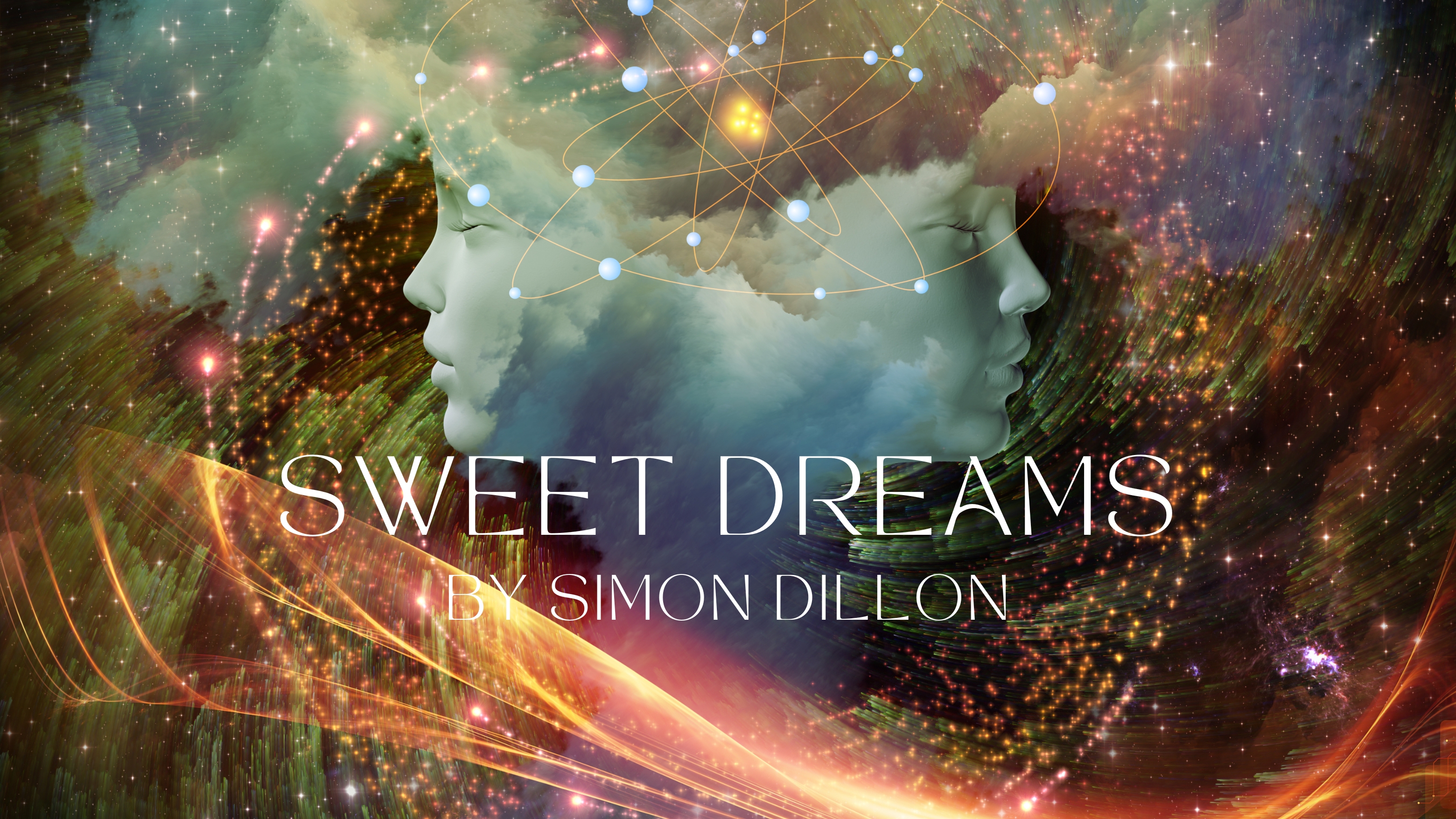
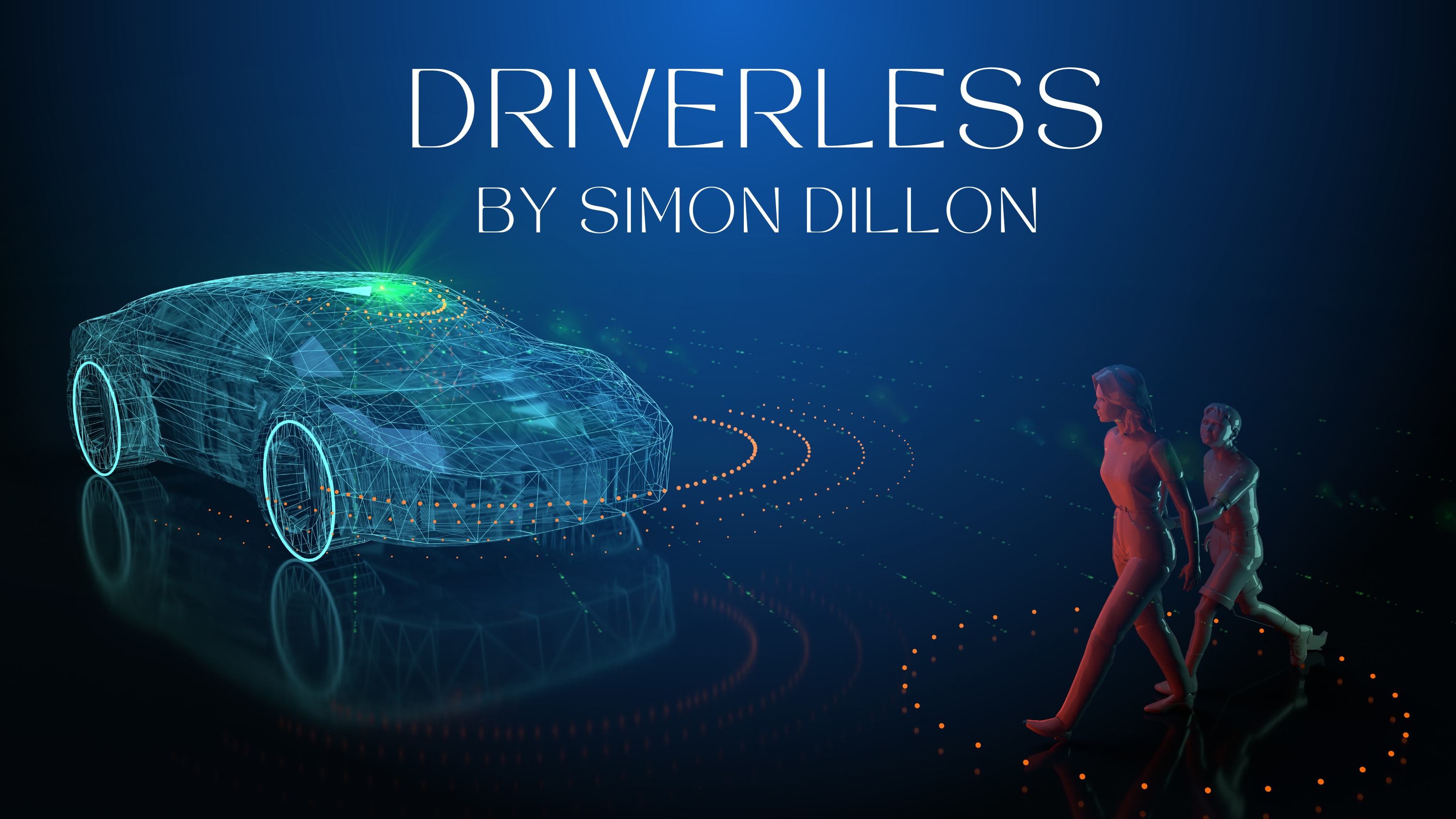
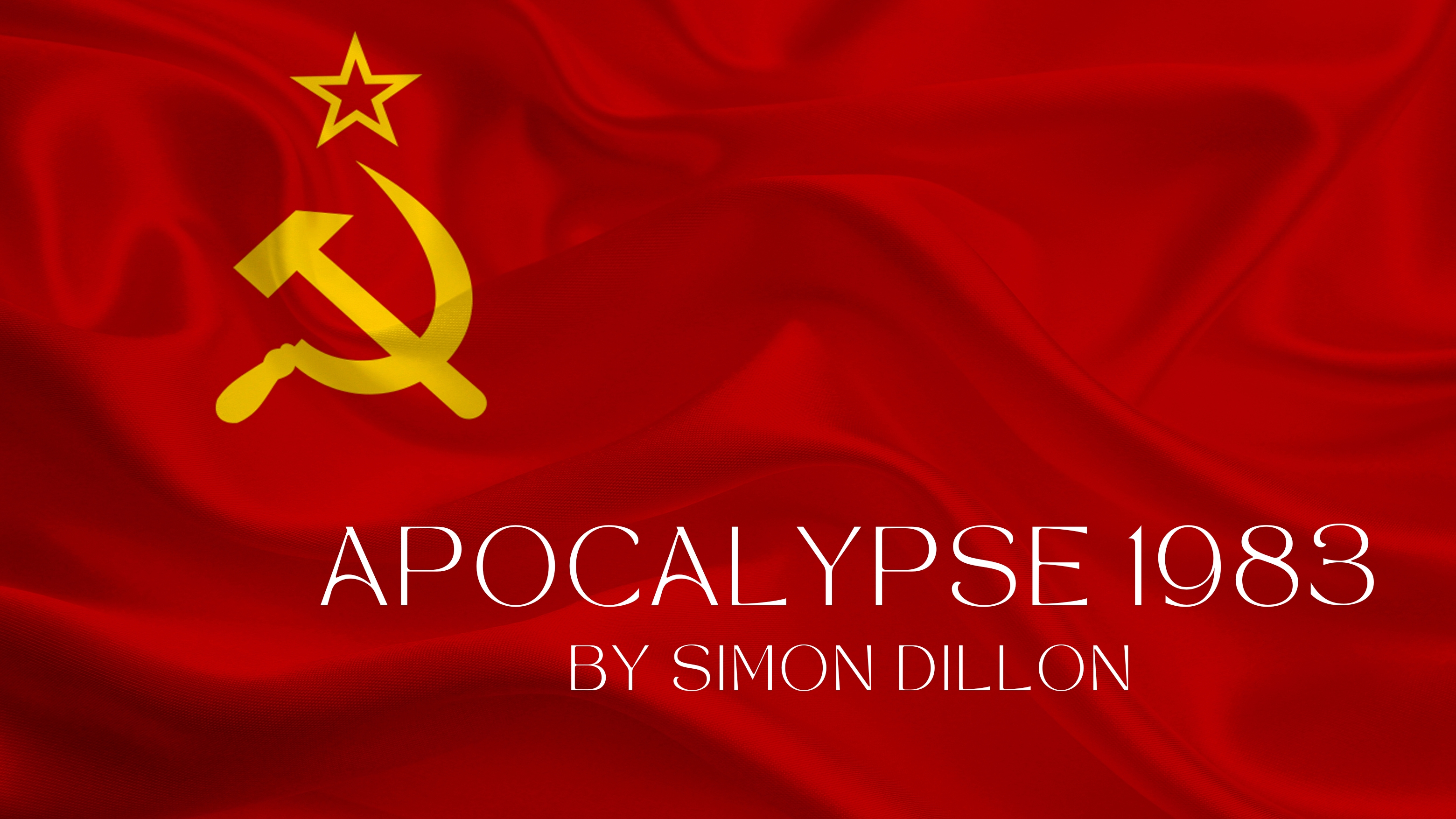
Here’s a plot taster for each story, plus the accompanying graphics. For more detail on the story and what inspired it, click on the link to the appropriate specific article on this blog.
Sweet Dreams
A journalist investigates a tech company manufacturing nightmare suppressing nanotech for children. “Sweet Dreams” refers to the technology involved, which the journalist comes to believe may be linked to an increase in suicidal tendencies among young people. Her investigations uncover conspiracies, cover-ups, and eventually murder.
For more about this story, click here. Also, if you want a taster of this collection, all five parts of Sweet Dreams are currently available on Medium, beginning here (each instalment contains a link to subsequent parts).
The Thought Improvement Plan
In a world where thought monitoring brain implants are standard employment practice, a man and woman conduct a secret workplace romance against company policy. Together they find devious ways to fool their thought supervisor by providing false brain metrics. New and exclusive to this volume. For more about this story, click here.
Driverless
When terrorists hack the Driverless Vehicle Network, threatening to crash cars unless their demands are met by the British government, a civil servant begins to suspect there may have been an inside job. New and exclusive to this volume. For more about this story, click here.
Bleed with Me
In the not-too-distant future, ghost sightings are found to be “quantum contamination” or “memory bleeds” that can be easily disposed of via scientific means. A quantum contamination cleaner becomes secretly obsessed with the unsolved murder of a young woman whose memory bleeds occupy his home. New and exclusive to this volume. For more about this story click here.
The Traffic Warden
A curious IT technician discovers a surreal, sinister truth about traffic wardens. I almost left this darkly comic tale out of the volume, but ultimately felt it made a nice a palate cleanser following the emotionally intense finale of Bleed with Me. Exclusive to this volume, previously available on Medium. For more about this story click here.
Apocalypse 1983
In a parallel universe, a Soviet Air Force officer holds the fate of the world in his hands. Inspired by the real-life 1983 Soviet nuclear false alarm incident, in which Stanislav Petrov essentially saved the world from nuclear annihilation. Exclusive to this volume, previously available on Medium. For more about this story click here.
Love and Other Punishments
In a fascistic future London, a widowed salesman begins to suspect he has repressed memories when he encounters a mysterious woman. Exclusive to this volume, previously available on Medium. For more about this story click here.
To order a copy of the Love and Other Punishments anthology, click here (for Amazon in the US), or here (for Amazon in the UK). Digital versions are also available from Smashwords and associated outlets here.
Over the past few weeks on the blog, I’m delved into the seven short stories and novellas contained within my recently released Love and Other Punishments dystopian sci-fi anthology. This week, I draw this series to a close with the titular novella itself.
Love and Other Punishments is a dystopian romantic mystery concerning, Shaun Harrison, a bereaved insurance salesman living in a not-too-distant future fascist London. Shaun’s wife and two children were murdered, and the grief has crushed him. The killer, Christopher Chapman, was sentenced to experience being stabbed in perpetuity, within a virtual reality matrix that continually resets itself. But such high-tech attempts at making the punishment fit the crime aren’t a comfort amid Shaun’s miserable existence.
Shaun begins to believe he has repressed memories when he encounters a mysterious woman, Lara Taylor. There is something familiar about her, but Shaun can’t put his finger on it. Images of a beach return to his mind, but he can’t place them. He and Lara become romantically involved, and for the first time in years, glimmers of happiness begin to return to Shaun. However, the mystery surrounding Lara deepens. Shaun is determined to discover the truth, but sometimes, the truth is best left undiscovered.
This story was inspired by an overthink on the nature of justice, and what Britain might look like in the future if it was run by the Daily Mail reading hang ‘em and flog ‘em brigade. At the same time, it’s a love story about memory and whether sometimes ignorance is bliss. I can’t say much more than that without getting into spoilers, but this final story in the collection is one of which I am most proud.
To order a copy of the Love and Other Punishments anthology, click here (for Amazon in the US), or here (for Amazon in the UK). Digital versions are also available from Smashwords (and their various outlets) here.
Over the next few weeks on the blog, I’m delving into the seven short stories and novellas contained within my recently released Love and Other Punishments dystopian sci-fi anthology.
This week: Apocalypse 1983
Soviet Russia, 1983. Colonel Andrei Fedorov is assigned to replace Colonel Stanislav Petrov for his shift at Serpukhov-15 bunker, monitoring the Oko nuclear strike early warning system, as Colonel Petrov is ill. Fedorov takes over this dull assignment from Colonel Komorovksy. The pair exchange remarks about the contraband Variety magazine Komorovksy had been reading, concerning the recent David Lynch-directed third instalment in the Star Wars trilogy, Revenge of the Jedi. Komorovksy departs. Federov watches, reflecting that lately, he hasn’t spent enough time with his wife and daughter.
Then, the unthinkable happens.
The Revenge of the Jedi remarks makes clear this story takes place in a parallel universe. David Lynch really was once offered the job of directing what became Return of the Jedi (Revenge of the Jedi was the working title George Lucas later changed). A far bigger difference between this history of our universe and that of Colonel Fedorov is also about to become apparent because in our universe, Colonel Stanislav Petrov – a real figure from history – was on duty on the fateful day I describe.
This story was inspired by the real-life 1983 Soviet nuclear false alarm incident, in which Petrov, an officer of the Soviet Air Defence Forces, chose to ignore an alarm indicating the presence of incoming American nuclear missiles. Standing orders were to alert his superiors to wait for corroborating evidence; an instruction Petrov deliberately disregarded, as he knew this would cause the button to be pushed. When no such evidence arrived, he correctly concluded the warning had been a false alarm, caused by errors in the satellite warning system.
Petrov’s instincts are widely credited for having averted a full-scale nuclear war between the USA and USSR. Furthermore, Petrov subsequently stated that had someone else been on duty that night, a nuclear strike would almost certainly have occurred, as the other duty officers did not have a civilian background, and their military mindset would have meant orders were followed to the letter. Petrov was not rewarded for his heroic actions, but he was reprimanded by his superiors for improper filing of paperwork.
The inspiration for Apocalypse 1983 was simply to imagine what might have happened had Petrov not been on duty. Thinking about how close we came to a nuclear apocalypse freezes my blood. As for the story’s place in this collection, at a brisk 2,000 words, it acts as a palate cleanser between the suspense thrills of Sweet Dreams, and the enigmatic romantic mystery of Love and Other Punishments, the final novella in the collection.
To order a copy of the Love and Other Punishments anthology, click here (for Amazon in the US), or here (for Amazon in the UK). Digital versions are also available from Smashwords (and their various outlets) here.
Over the next few weeks on the blog, I’m delving into the seven short stories and novellas contained within my recently released Love and Other Punishments dystopian sci-fi anthology.
This week: Sweet Dreams
Ali, a young journalist, investigates tech company Astral, which manufactures nightmare-suppressing nanotech for children. “Sweet Dreams” is the name of the software, which is injected into babies at birth, and is now as commonplace as routine vaccinations. A generation has grown up since parents started implanting Sweet Dreams into their children. As a result, teenagers now expect nightmares at the onset of puberty, along with other bodily changes, as the nanotech is programmed to disintegrate at that time.
However, in a small handful of cases, the nanotech remains in operation, as nightmares are not forthcoming. Ali is one such person, as she has never had a nightmare. By contrast, her boyfriend Malcolm is an “anti-Sweet”: a child raised without Sweet Dreams nanotech by parents who had scruples about the software. Such people are a tiny minority, but with an apparent rise in suicides among those who failed to get nightmares at puberty has led to political controversy, hence Ali’s investigation into Astral.
Murder and more murder soon follow, with Ali realising she may be in over her head in a web of paranoia, conspiracy, and cover-ups. But how high up does the conspiracy go? Who can she trust?
Themes of playing God and the dangers of mollycoddling are inherent in the subject matter, but quite honestly Sweet Dreams isn’t meant to be terribly deep. My main motivation in writing was to create a gripping tech-murder mystery novella. One thing I will add is that this absolutely and emphatically is not intended as an anti-vaccination metaphor, however much some readers may be determined to read that into it.
That said, the prospect of putting nanotech and microchips in our brains is another matter entirely. It does alarm me when I read of people who’d be quite willing to embrace such technology without any qualms. Also, what parents do in this story, attempting in a very literal sense to protect their children from bad dreams, perhaps drew inspiration from overprotective parents I’ve encountered in real life. When they don’t let their children read scary books or see scary films (despite children’s inherent curiosity about such things), I think this can be developmentally stifling and potentially unhealthy. Then again, you’d doubtless expect nothing less than an opinion like this from a parent like me, given the nature of some of my writing (including my children’s novels). My views on such matters are well-documented.
To order a copy of the Love and Other Punishments anthology, click here (for Amazon in the US), or here (for Amazon in the UK). Digital versions are also available from Smashwords (and their various outlets) here.
Over the next few weeks on the blog, I’m delving into the seven short stories and novellas contained within my recently released Love and Other Punishments dystopian sci-fi anthology.
This week: The Traffic Warden
Do you know anyone who is a traffic warden? Or anyone who will admit to being one? Some years ago, I had a highly amusing speculative conversation at my former workplace, with colleagues who proposed wildly imaginative theories about whether traffic wardens were genetically engineered, or androids, or even aliens, since no one knew or knew of anyone who knew a traffic warden. Are those in this much-loathed profession cloaked in a veil of secrecy? Could someone you know secretly be a traffic warden?
When I contributed to this debate with my own darkly absurd theory on the origins of traffic wardens, it was suggested to me that I turn this into a short story. I did, never intending it for publication. It was meant as mere blackly comic whimsy and a joke for my colleagues (who all read the story). However, it did take some inspiration from genuine traffic warden behaviour I’d witnessed.
For example, I have seen traffic wardens lurking in wait for persecuted parents trying to drop their children at school having parked in a perfectly safe fashion (but on double yellow lines) and running to slap tickets on their cars for the few seconds whilst they are escorting the children inside. These parents really did have nowhere else to park, and once the council added the double yellow lines (I suspect not for safety reasons, but to raise cash), these parents were rather stuffed. Many of them were forced to add parking fines into their monthly budgeting (as was reported in a news broadcast at the time).
On another occasion, I’ll never forget the diabolical behaviour I witnessed from traffic wardens outside Kings Cross station in London, as they circled parked cars like vultures, awaiting the seconds to tick down to 7am when parking restrictions came into force. I daresay they are paid on commission, which encourages this lunacy. One particularly overzealous warden placed a ticket on a parked car at 6:57am, just as the owner came to collect it. A furious argument ensued, in which all manner of officious nonsense about not being able to withdraw the ticket once it had been issued was spouted, that the time on the ticket read 7:01am, and that if the car owner wanted to lodge a protest and argue the toss, he’d have to go through official channels. I was so incensed at this traffic warden’s bureaucratic cruelty that I offered to be a witness if required, as I had seen the car owner return to his vehicle before 7am, as I had done.
I’d even heard on the news (though not personally witnessed) how another driver had purchased a permit to park in a restricted space, clearly displayed it in his windscreen, only for a traffic warden to ticket him anyway, as overnight frost had covered the car windows. In such circumstances, traffic wardens damn well ought to give the benefit of the doubt, but of course, that would require a scenario in which they aren’t operating due to hypnotic conditioning and brainwashing, as per my short story.
The Traffic Warden is very short and intended as little more than a palate cleanser between Bleed with Me and the next novella in the volume, Sweet Dreams. Because it is so slight and whimsical, I almost didn’t include it. But on reflection, I decided it was needed to provide a brief chuckle after the melancholia of Bleed with Me, and before the dark mystery at the heart of Sweet Dreams.
To order a copy of the Love and Other Punishments anthology, click here (for Amazon in the US), or here (for Amazon in the UK). Digital versions are also available from Smashwords (and their various outlets) here.
Over the next few weeks on the blog, I’m delving into the seven short stories and novellas contained within my recently released Love and Other Punishments dystopian sci-fi anthology.
This week: Bleed with Me
In a near future, when Hadron Collider experiments and the like are in full swing, ghostly apparitions of people who suffered violent or sudden deaths are increasingly common. These are scientifically explained as “memory bleeds” or “quantum contamination”: Images from the past bleeding through into the present. Scott Murray is a qualified quantum contamination cleaner who uses scientific apparatus to locate the source of the contamination and neutralise the quantum particles. He is often used as a police consultant in murder cases when quantum contamination offers clues.
One such case particularly interests Scott. Police were unable to find the killer of Judy Armstrong, but he purchased the house in which she lived, without cleaning the quantum contamination. Every day, he watches her regular ghostly appearances, trying to put together what happened, becoming increasingly obsessed. Then, in a peculiar twist of fate, he encounters another young woman, Lena Meadow, who is the spitting image of Judy. There doesn’t seem to be a connection between the two, but Scott is determined to find one, believing they must be long-lost twins. Are they? Or is there an even more unsettling explanation?
I think Bleed with Me could well be my favourite story in this volume. It’s a 20,000-word novella in seven parts, and although it sounds like a ghost story, it’s firmly planted in the science fiction tradition of something like Minority Report rather than anything in the horror genre. That said, it has been influenced by classic mystery films such as Otto Preminger’s film noir Laura, and Alfred Hitchcock’s masterpiece Vertigo, in its musings on obsession and how sometimes, it is better not to know the truth (another idea explored quite a lot in my writing).
Bleed with Me is a brooding, melancholy tale, which also explores self-fulfilling prophecies, and the dangers of accepting our projections of who we think a person is. What inspired it? I’m honestly not sure. It just occurred to me in a sudden download of inspiration one morning. Not for the first time, as I outlined the story, something seemed to take over, as though I were getting the story from something outside of myself. I know other writers claim similar things happen to them, so at least I’m not alone in sounding a little bonkers.
To order an ebook or paperback of the Love and Other Punishments anthology, click here (for Amazon in the US), or here (for Amazon in the UK). Digital versions are also available from Smashwords (and their various outlets) here.
Over the next few weeks on the blog, I’m delving into the seven short stories and novellas contained within my recently released Love and Other Punishments dystopian sci-fi anthology.
This week: Driverless
Linda Wheeler is a civil servant working at the central headquarters of the Driverless Vehicle Network in London. One morning, she is summoned to an emergency confidential briefing to learn terrorists have hacked their systems. They have already demonstrated their power by causing one crash, and are threatening to crash many more vehicles, with increasing severity, unless their demands are met. As the staff at the DVN try to regain control of their systems, Linda finds a rabbit trail of evidence and begins to suspect an insider may have assisted the terrorists in their attack. But who can be trusted? Nail-biting shenanigans ensue.
I intended Driverless as nothing more than an old-fashioned thriller with dystopian sci-fi trimmings. There’s lots of page-turning suspense, and I was influenced by everyone from Michael Crichton to Alfred Hitchcock. Of all the short stories in this volume, this is the one I most hope makes it to the big screen one day, as I reckon it could be expanded in a number of fascinating ways, including beyond the ending. But I rather like it in this shorter, tighter form too.
It’s worth adding that the previous novella The Thought Improvement Plan is referenced in an “Easter egg” during Driverless. As you may recall, Belinda Barrymore’s mother Jackie is hit by what appears to be a malfunctioning driverless car in The Thought Improvement Plan, causing her to wind up in hospital during the latter part of that story. Here, Jackie is namedropped again during the initial briefing, only it is revealed the malfunctioning car in question was deliberately crashed by the terrorists. So yes, this story takes place in the same universe in a concurrent time frame.
What inspired Driverless? Just how appalled I am at the whole idea of it, to be honest. Driverless vehicles are so rife with the potential for disaster (not just potential terrorist hackers) that I can’t understand why anyone would be crazy enough to get into one of those things. Call me a Luddite if you like, but there it is. Still, perhaps it will never come to pass in the ways we might fear. As former Top Gear presenters Jeremy Clarkson, Richard Hammond, and James May once pointed out, the idea of driverless cars on some of the world’s most dangerous roads – including Bolivia’s notorious “Death Road” through the mountains – is utterly preposterous.
To order an ebook or paperback of the Love and Other Punishments anthology, click here (for Amazon in the US), or here (for Amazon in the UK). Digital versions are also available from Smashwords (and their various outlets) here.






 Simon Dillon Books
You must be logged in to post a comment.