
When submitting my manuscript for Phantom Audition, I told my editor at Dragon Soul Press that this one wasn’t as scary as my previous gothic mysteries. However, her response was, to paraphrase, “maybe less scary, but it messed with my head a lot more”. I was pleased with that reaction, because with this novel, I absolutely wanted to mess with the reader’s head. Unlike the comparatively clear-cut plot twists in The Irresistible Summons or Spectre of Springwell Forest, I felt Phantom Audition became less satisfying the more I tried to spell out answers. Therefore, despite considering several different endings, I ultimately stuck with what I had written in my original outline, which allows for a wide range of interpretation.
Some of my favourite novels (and also films) have a vital ingredient missing: the reader (or viewer). What they bring to the story essentially completes it, although that may make the story different for every reader. The protagonist in Phantom Audition, Mia Yardley, is a small-time actress recently widowed from much more famous actor Steven Yardley, who committed suicide in mysterious circumstances. Her subsequent investigations into his death, wherein she discovers he only took acting roles on advice from a psychic medium, lead her not only deep into a sinister mystery, but also deeper into herself. However, in a sense, the novel is also meant to delve deeper into the reader, and what they bring to the text.
To achieve this, I added a hefty dose of the A-word: ambiguity. However, ambiguity is a dangerous tool that needs to be deployed sparingly, and only in the right context. For example, an Agatha Christie whodunnit would not benefit from an ambiguous ending where Hercule Poirot or Miss Marple never discover the killer. I tested an early draft of Phantom Audition on my wife, who isn’t a big fan of ambiguous endings. To my surprise and delight, she thought the ambiguity in Phantom Audition worked well because to her mind, by the time you get to the ending, the answer to the original mystery is essentially irrelevant, as it has been superceded by deeper questions.
This view is reflected in many of the rave reviews I’ve received. Here are a sample:
“A novel that stole my sleep for two nights. I know I’ll be thinking about so many of the characters, twists and turns, and emotions I came across on this reading adventure… I can’t say that I’ve ever read anything remotely similar to this plot. Originality, being captivating to the reader, and giving me moments of goosebumps and multiple frightened starts, earned all 5 stars.” – Kelli Pizarro, Goodreads.
“I love this story with all of its puzzles and strong emotion. Mia is a complex main character lost in grief after her husband’s death. She is searching not only for answers, but also to be able to own her own skin again. She feels lost in her husband’s shadow, and is determined to come into her own… One of the best mysteries I have read in a long time.” – Rowan Thalia, Amazon.
“Grief does strange things to the mind. Mia mourns the loss of her husband Steven, a renowned actor whose drug-overdose death is out of character for him. But not out of character for the role he’s most recently undertaken. Could it be that the chillingly realistic embodiment Steven gave, an Oscar-worthy portrayal of a famous artist, was so realistic because he received help from beyond the grave? Mia wants answers. But each answer only raises new questions… Some questions are, as she was warned, better left unanswered… A compelling read with an unexpected conclusion. It left me wanting to re-read it right away.” – Sara, Goodreads.
“An extremely well-written mystery thriller novel that kept you guessing at what was going on. After the death of her husband young Mia is left alone and feeling that nothing is truly as it seems. Was her husband’s death an accident or was it something more sinister? The search for answers is haunting and might even come close to being deadly.” – Arien/Sloan, Goodreads.
“Simon Dillon has done it again with this intriguing mystery. You will find yourself caught up in this page turner trying to figure out if the mysterious death of Steven was a murder or a suicide. I had no idea how it was going to end, and I like a mystery that isn’t easily figured out early on in the novel. An excellent read!” – PD Dennison, Goodreads.
“A beautifully written thriller about grief and how it affects the mind.” – Jennifer J, Goodreads.
“A thrilling supernatural mystery that will have you guessing until the very end. Filled with page-turning suspense, jaw-dropping visuals, and spine-tingling events, Phantom Audition grips you from start to finish… I also loved the last chapter, the epilogue of sorts. It was beautifully written, with wonderful detail, and left me thinking.” – RA Rivera, Amazon.
“An excellent thriller that leaves you questioning everything.” – Amazon reader.
Intrigued as to what you might bring to Phantom Audition? Pick up a copy here (in the UK) or here (in the US). It is also available in other regional Amazon sites. To further whet your appetite, here’s a little trailer my publisher put together for the novel.

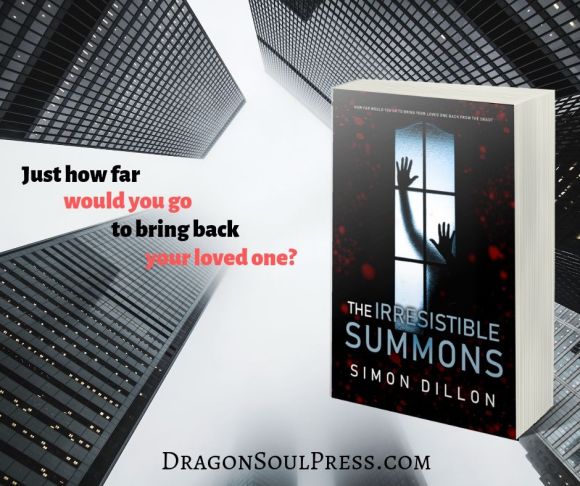
 Genre fiction writers are often accused of writing “formulaic” stories. It may surprise you to know I plead guilty as charged. My children’s adventure novels contain many well-worn tropes. My gothic mystery/horror thrillers likewise. Why? Because the reader expects them, and would be disappointed if I didn’t deliver.
 It is vital, especially in genre fiction, to give the reader what they want but not the way they expect it. Genre writers understand this. Agatha Christie’s novels and crime fiction in general is hugely formulaic, but also fiendishly difficult to write well. Like most genre fiction, they are an easy target for literary snobs.
 Imperilled heroine – All these books feature a tenacious, insatiably curious, likeable but flawed heroine, who is dealing with some kind of trauma either in the recent or distant past.
 Supernatural elements – Ghosts, demons, witchcraft, astral projection… These are often (but not always) explored.
 Villain/antagonist with similar goals to the protagonist – I am fascinated by stories where protagonist and antagonist essentially want the same thing. Of my gothic mysteries, The Irresistible Summons explores this with particular potency.
 Big twist ending – This needs no explanation. I love a good twist ending, but only when it comes off as both inevitable and unexpected. It’s no good pulling out the rug from under the reader without laying the necessary groundwork, or it won’t feel satisfying. I don’t always do this (I’ve always maintained there’s a
  Horror fans yet to discover Indian writer Neil D’Silva are in for a treat. His unique, Hindu folklore infused tales are grippingly gruesome, and never disappoint in the scares department. However, his novel Yakshini deserves a wider readership than just gore hounds. Incisive, challenging social commentaries about modern India bubble underneath. More on those in a moment, but first I must do my duty as a horror evangelist and urge those who consider the genre disreputable to look closer. A futile endeavour perhaps, but one D’Silva has much sympathy with.
 A supernatural thriller infused with Indian mythology, Yakshini concerns the eponymous immortal demi-goddess banished from her celestial dwelling. She is doomed to share the body of a human girl named Meenakshi, causing her to lead a curious, Jekyll/Hyde existence. Unable to bear Meenakshi’s rural patriarchal society, the Yakshini lashes out against lustful males, seeking bloody revenge. Serious problems ensue for Meenakshi, even leading her to be branded as a witch.
 Increasingly famous in his own country, D’Silva’s status as a significant new literary talent among Indian writers registered immediately, as his first, self-published novel Maya’s New Husband shot to number one in Amazon India’s horror bestsellers. It remained in the top ten for close to two years, which landed him attention from literary agency The Book Bakers and then traditional publishers, as well as a loyal and growing readership that has now expanded beyond India. He since quit his teaching job to write full-time. With nine books to his name, at publishers including Penguin Random House, Rupa, and Hachette India, Yakshini is one of three novels currently in development for a film adaptation. But D’Silva is particularly excited about an adaptation of his non-fiction book, Haunted: Real-life Encounters with Ghosts and Spirits.
 When pushed on whether he has ever had a supernatural experience of his own, D’Silva is more guarded, though he does relay one scary childhood story. “I grew up in a colony that was rumoured to be built on a graveyard. Of course, we had no evidence of it at all and it might all have been the kind of juvenile poppycock teenagers indulge in, but it did give rise to several hair-raising moments that led to my imaginative mind taking great leaps, fuelled by the stories I had heard. On one occasion, I saw a woman dressed in a white saree walking on the ledge of the terrace of the four-story building opposite ours in the middle of the night. The woman was just walking along, precariously, maintaining her balance somehow, singing something softly. At one point, I felt she had sensed my presence and was turning to look at me, but before that, I ducked into my covers and shut my eyes.
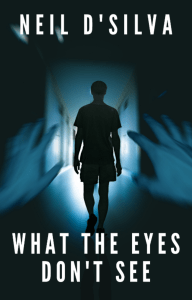 What The Eyes Don’t See, D’Silva’s most recent novel, launched today; exclusively on Wattpad. This paranormal horror thriller has already been covered by key publications including Mid-day and The Times of India. It reached 7000 reads on the very first day of release, an indication of growing and dedicated fandom. D’Silva describes the nifty premise with glee; a clever reversal on the no-one-can-see-it-but-the-protagonist ghost story trope.
 “We spend our adult lives trying to regain what we lost in childhood.
 “In spite of the peculiar circumstances surrounding the death of Jacob Price, Detective Sergeant Laura Buchan had all but convinced herself there was no foul play. That he died as the result of a bizarre accident had become the accepted version of events for her and most of her colleagues. Only the senior investigating officer, Detective Inspector Ethan Roland, had any further inkling that Price’s demise was in any way suspicious.
 “Max Bradley didn’t like to climb trees.




You must be logged in to post a comment.