Peaceful Quiet Lives: Influences and Inspirations

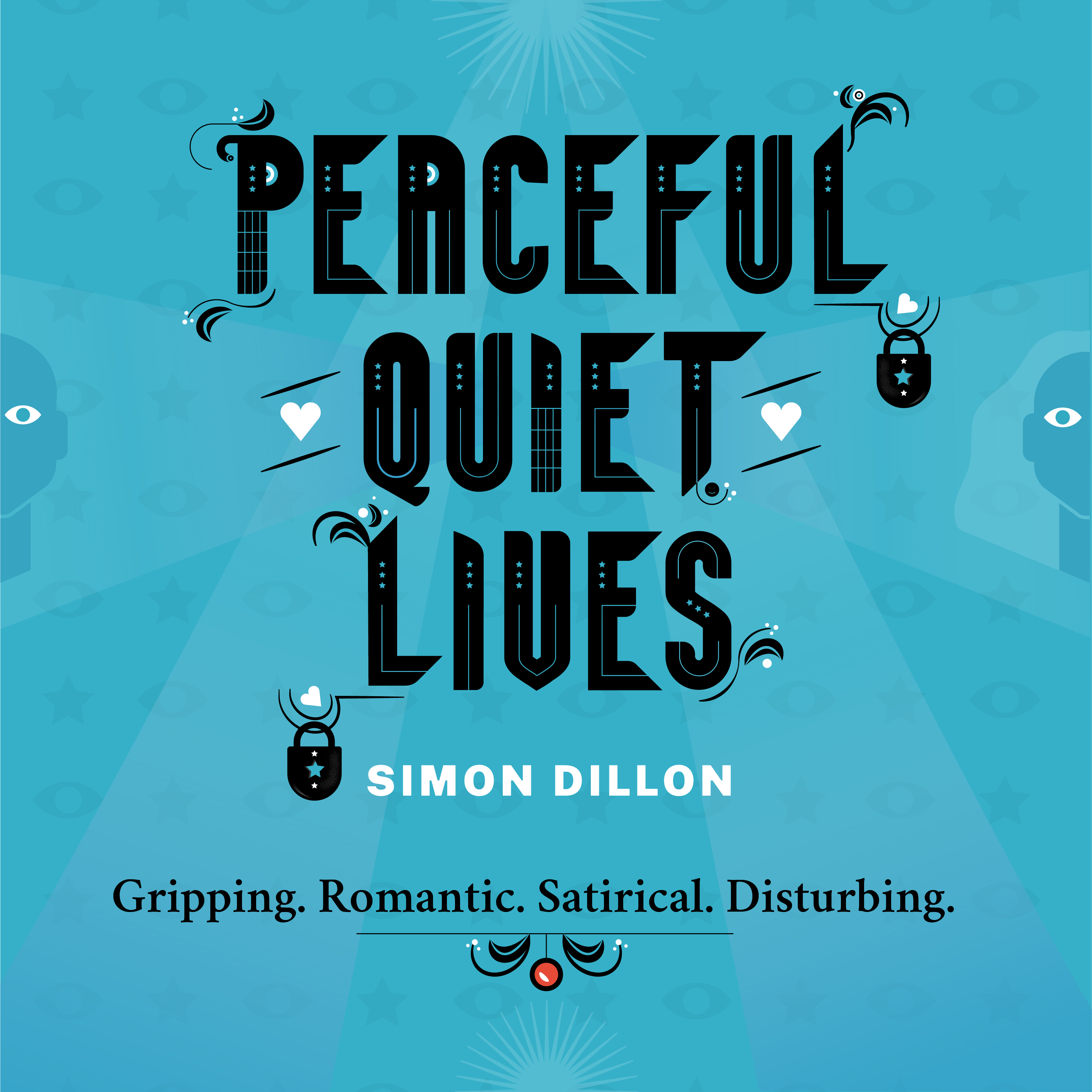
My latest novel, Peaceful Quiet Lives, is informed by a number of classic novels, whilst also being very much its own unique story. Here are five texts that were influential in some way.

Nineteen Eighty-Four (George Orwell) – Orwell’s masterpiece casts a long shadow over all modern dystopian fiction, and to not acknowledge it would be disingenuous. The Winston and Julia romance informs some of what Sam and Eve experience, as does their suffering at the hands of the authorities. However, the central relationship has a very different purpose and outcome in my novel. There are also parallels between the censorship of Nineteen Eight-Four (including “newspeak”) and the censorship rules in both nations in my novel, which operate at opposite political extremes. However, once again, the kind of censorship is very different.

The Handmaid’s Tale (Margaret Atwood) – The religious oppression of the Gilead regime to a degree did inform the oppression of women in the NPAR (New Puritan American Republic), in my novel. However, there are vitally important differences. For one thing, there is no population crisis, and women are not forced into marriages for breeding purposes in the NPAR. However, women are strictly controlled in terms of the lives they can lead, the careers they can pursue, and so forth. Furthermore, marriages have to authorised by religious authorities.

A Clockwork Orange (Anthony Burgess) – The brainwashing of young Alex to “cure” him of his wicked ways did in some way influence the torment Eve suffers at the hands of interrogators in the DEAR (Democratically Enlightened American Republic), in my novel. However, unlike Alex, Eve is a far less contentious subject, nor is the reader invited to feel torn or backed into a corner over her treatment. I expect and indeed hope that unambiguous sympathy is the reader’s response in her case.

Fahrenheit 451 (Ray Bradbury) – A state where all books are banned is the horrifying premise of Bradbury’s most notorious novel (the title refers to the temperature at which paper burns). Not all books are banned in the two nations of my novel, but many are. Sometimes the same novel is banned in both states, but for entirely different reasons. For example, a novel banned for sexual content in the NPAR could also be banned for perceived sexism in the DEAR.

The Trial (Franz Kafka) – Like the protagonist of Kafka’s novel, Sam finds himself chewed up by the inexplicable and unfair machinery of legal processes in both the NPAR and the DEAR. The prosecutions he faces are nonsensical, but are intended as a satire of the fears often expressed by extremists on both ends of the left/right political spectrum. In particular, the trial in the latter part of the second section of the novel reaches an absurdity of hair-clutching proportions, but I shan’t explain how, for fear of spoilers.

Peaceful Quiet Lives was also informed, to a lesser degree, by Gulliver’s Travels, Brave New World, The Hunger Games, and even satirical BBC classic comedy series Yes Minister. Here’s the blurb from the back of the book to whet your appetite:

Two Nations Under God. Can their love survive in either nation?

Life, love, liberty, and the pursuit of happiness are a distant dream for Sam and Eve. Their forbidden love falls foul of laws in both nations born from the ashes of the Second American Civil War.

A satire of political and religious fears, Peaceful Quiet Lives is a thought-provoking and powerful dystopian future shock.

Peaceful Quiet Lives is available as a download or paperback from Amazon. Order your copy here (in the UK) or here (in the US). It is also available at Smashwords here.

Peaceful Quiet Lives: Themes

There can be no doubt that my latest novel, Peaceful Quiet Lives, has been informed by the ongoing so-called culture wars in America. These culture wars, whether social, political, or religious have been a simmering division in America as far back as I can remember, and in one sense, are nothing remarkable in a western democracy.

However, in recent years, these divisions have become a lot more exacerbated. I’ve also noticed a militant tendency in the language and behaviour of extremists on both sides that is remarkably similar. This militancy, fuelled by social media, television news, and opportunistic politicians, has stirred up some serious unpleasantness. One need only look at the aftermath of the recent US election for evidence.

Let me be absolutely clear: Peaceful Quiet Lives is not a political statement of any kind. It came to me in a strange download in early 2018, whilst writing my (as yet unreleased) Dark Ages set romantic fantasy tale Ravenseed. After getting this download, I wrote Peaceful Quiet Lives purely because I thought it was a good story. I had no political agenda at all.

The central idea – regarding opposite extreme authoritarian states being two sides of the same militant coin – I thought would make an intriguing backdrop for a doomed romance. But I also wanted the novel to be a satire of the worst fears of both sides in the US culture wars. The first half of the novel plays on fears that the US could turn into a religious theocracy. The second half sends up fears that the US is headed for a “woke” dystopia. The novel isn’t so much intended as a warning against both scenarios, neither is it an attempt to lash out in despair at the current problems in America, but rather it is an exercise in absurdity. I hope the tragic lunacy of such a future is inherent within the text, and that as a result, perhaps the fears of both sides will be eased, just a little.

Despite such grandiose ambitions, I hope people enjoy the novel as simply a damn good read.

By the way, the title derives from a couple of New Testament verses; one urging people to live a quiet life and mind our own business (in 1 Thessalonians chapter 4), and another passage urging prayer for those in authority, that we might live peaceful and quiet lives (in 1 Timothy chapter 2). The title is ironic on a number of levels, since events in lives of Sam and Eve are neither peaceful nor quiet.

Here is the blurb from the back of Peaceful Quiet Lives:

Two Nations Under God. Can their love survive in either nation?

Life, love, liberty, and the pursuit of happiness are a distant dream for Sam and Eve. Their forbidden love falls foul of laws in both nations born from the ashes of the Second American Civil War.

A satire of political and religious fears, Peaceful Quiet Lives is a thought-provoking and powerful dystopian future shock.

Peaceful Quiet Lives is available as a download or paperback from Amazon. Order your copy here (in the UK) or here (in the US). It is also available from Smashwords here.

Peaceful Quiet Lives: Initial Reviews

Reviews have started to come in for my latest novel Peaceful Quiet Lives. So far, all are positive five-star raves, but what most surprised me is how different facets of the novel are standing out to different people, depending on the personality, temperament, and background of the reader.

For example, one reviewer on Amazon called it “political science fiction on a very high level”, citing “parallels between the societies in the book, and the current political climate, where you are labelled as a traitor for having a deferring opinion”. He goes on to call the book “deadly serious”, saying it sends shivers down his spine.

By contrast, one reviewer on Goodreads said the novel had “several laugh out loud moments”, calling it “thought-provoking, disturbing, and at times hilarious”. He goes on to label the novel “an awesome thought experiment concerning what extremes of left and right ideology could lead to, should freedom of speech disintegrate in our post-modern era”.

Another five-star review on Amazon commented: “Who doesn’t love a great love story?”, focussing on the romantic plight of protagonists Sam and Eve, who are chewed up by the political machinery of the narrative.

Why not give Peaceful Quiet Lives a read yourself, and discover how you respond to it? Here’s the blurb from the back of the book to whet your appetite:

Two Nations Under God. Can their love survive in either nation?

Life, love, liberty, and the pursuit of happiness are a distant dream for Sam and Eve. Their forbidden love falls foul of laws in both nations born from the ashes of the Second American Civil War.

A satire of political and religious fears, Peaceful Quiet Lives is a thought-provoking and powerful dystopian future shock.

Peaceful Quiet Lives is available as a download or paperback from Amazon. Order your copy here (in the UK) or here (in the US). It can also be ordered from Smashwords here.

Peaceful Quiet Lives: The First 400 Words

My latest novel, Peaceful Quiet Lives, is out now.

Here’s the first 400ish words, as a taster.

The morality inspectors are late.

  I glance at my watch. 7:37am. They were supposed to be here seven minutes ago. Typically a morality inspection of a premises the size of my apartment takes a good twenty minutes, not allowing for nervous small talk, or, if you know the inspectors well, salacious tales of impounded illegal political materials, banned books, films, drugs, alcohol, pornography, and so forth.

  Morality inspectors are usually punctual to a fault, but if they don’t turn up soon, I’ll have to re-book my bi-annual inspection, or I’ll end up missing the train and be late for work.

  I peer at the cloudy skies above the city. My apartment lies within a tall grey high-rise building, on the ninth floor, and I have a good view to the south. The streets are already busy, filled with rushing commuters getting on buses, entering metro stations, or driving their vehicles. The crowds are bad enough as it is in the morning, but they’ll be even worse if I end up leaving later due to tardy morality inspectors.

  Tardy. That’s a word I never used back in England before the Catastrophe. I’ve picked up many words living the last twenty years in the New Puritan American Republic. Other words I’ve had to stop using. Not unless I want an on-the-spot fine for contravening the Profanity Act.

  A knock at the door indicates the morality inspectors have finally arrived. 7:39am. A full nine minutes late. Shaking my head and tutting, I open the door to find Inspector Chuck Willis red faced and quite flustered, alongside two younger men in their early twenties.

  ‘I’m so sorry Sam,’ Chuck says. ‘I know we’re running late. Contraband incident in the apartment we inspected before yours. Do you still want to do this now? Or do you want to reschedule?’

  ‘No, best to get it over with,’ I say, indicating for Chuck to come in.

  Chuck and the two younger men enter my apartment. They are dressed in the austere manner of all morality inspectors, as though attending a funeral: black trousers, ties, shoes, and jackets, embossed with a lapel depicting a black crucifix on a white background surrounded by the black outline of a five pointed star; the NPAR flag. The only difference is like all government officials, they are required to carry handguns.

Intrigued? Here’s the blurb from the back of the book.

Two Nations Under God. Can their love survive in either nation?

Life, love, liberty, and the pursuit of happiness are a distant dream for Sam and Eve. Their forbidden love falls foul of laws in both nations born from the ashes of the Second American Civil War.

A satire of political and religious fears, Peaceful Quiet Lives is a thought-provoking and powerful dystopian future shock.

Peaceful Quiet Lives is available as a download or paperback from Amazon. Order your copy here (in the UK) or here (in the US). Alternatively, it can be ordered from Smashwords here.

NEW NOVEL OUT NOW: Peaceful Quiet Lives

My latest novel, Peaceful Quiet Lives, has been released. Not “dropped”, as one often hears these days, but “released”. “Dropped” just sounds careless and irresponsible, and presumably could lead to breakages.

Anyway, I have released this novel as a surprise, with no real build up, even though I have been dropping hints in posts like this one, and announcing it indirectly by interviewing one of the supporting characters, who ends up threatening me (see my post earlier this week).

Here is the blurb from the back of the book:

Two Nations Under God. Can their love survive in either nation?

Life, love, liberty, and the pursuit of happiness are a distant dream for Sam and Eve. Their forbidden love falls foul of laws in both nations born from the ashes of the Second American Civil War.

A satire of political and religious fears, Peaceful Quiet Lives is a thought-provoking and powerful dystopian future shock.

Because Peaceful Quiet Lives sits outside my usual genre writing of mainly gothic mysteries and children’s adventure novels, I decided to self-publish the novel rather than approach publishers. I’ve not released anything in 2020, so I wanted to surprise my readers with something new. On top of that, it seemed timely, given current events in the US.

I’ll be talking more about the novel on the blog in the coming weeks.

Peaceful Quiet Lives is available as a download or paperback from Amazon. Order your copy here (in the UK) or here (in the US).

What My Villains Reveal About Me

In storytelling, a great antagonist is as important as a great protagonist. The most satisfying narratives feature determined, active characters facing off against equally determined opposing forces.

A recent article on this blog listed ten of my favourite literary villains. Here are three antagonists from my own novels that I suspect, in retrospect, personify what I take a dim view of, drawn from personal experience, as well as political and spiritual outlook. Whilst some villains in my stories must remain anonymous, for fear of spoilers (particularly those in my gothic mystery horror/thriller novels), these three I can talk about upfront, without ruining the plot.

Graham Brooks (The Birds Began to Sing) – Although he isn’t the main villain, and only appears in one chapter during the first act, Graham Brooks is small-minded, petty, power-crazed, two-faced, and vindictive. He represents everything I despise about modern business management, with his meaningless targets, character assassination performance reviews, ghastly corporate lingo, and utterly phoney belief in so-called “teamwork”. I also took the opportunity to depict how much I loathe people who insist “problems” are “opportunities” (see what I did there?). As my protagonist Alice observes, alcoholics don’t have drinking opportunities.

Imalik (Echo and the White Howl) – Imalik is an ambitious and extremely dangerous wolf, who enters into a Faustian deal with a mysterious and malevolent supernatural force. He murders the pack Alpha, and forces other packs in the surrounding land into a union by systematically slaughtering the elk, moose, and other prey in their terrain, thus making them dependant on him for food. Imalik’s totalitarian dictatorship can be read as an allegory of any fascist state you care to name, especially those that have deliberately created food scarcity as a means of control. I didn’t intend Echo and the White Howl as anything more than an adventure story about wolves in Alaska, but in retrospect, some of my despair at short sighted political stupidity and greed over issues like overfishing may have crept in.

Benjamin Smiley (Children of the Folded Valley) – Of the many villainous faces of religious oppression in my stories, none are more diabolical than Benjamin Smiley. Exactly how he came to lead the mysterious Folded Valley Fellowship can’t be revealed here, suffice to say he is a master manipulator who preys on the weak and emotionally vulnerable, as per all cult leaders. His apparently miraculous powers of healing hold his congregation rapt, ensuring his more dubious activities (including assertion of sexual rights over whomever he chooses) go unquestioned. Benjamin Smiley is based on a number of real people I encountered during childhood, adolescence, teenage years, and even adulthood. Abuse of religious power remains the number one theme I return to in my novels, time and time again.

Best read in the run-up to Christmas: Spectre of Springwell Forest

Gripping gothic horror mysteries are best read at this time of year, when leaves are falling, and nights are drawing in. As it gets colder in the approach to Christmas, nothing beats snuggling up in front of the fireplace with a mug of tea, and a sinister, nail-biting ghost story.

Concluding this two-part series, I pick the second of my published novels best read in the run-up to Christmas: Spectre of Springwell Forest.

The novel opens in Exeter, 2010. Lily Parker learns that her daughter Olivia is to move to the village of Springwell, near Plymouth. To the surprise of her husband Andy, this sends Lily into terrified despair. She tells him that Olivia must not move to Springwell, under any circumstances. Andy wants to know why, and Lily tells him what happened to her many decades previously, in 1979, warning him that she has a horrifying secret that she had previously hoped to take with her to the grave.

In 1979, Lily and her then six-year-old daughter Olivia, along with her first husband Tom Henderson, move to the sleepy village of Springwell. Here they meet a tight- lipped community of secretive villagers who seem to have something to hide. Lily then discovers a painting of an abandoned railway tunnel in her attic, by a local artist, Alison Merrifield. Lily is strangely drawn to the painting, particularly the dark maw of the tunnel, and ends up hanging the picture in her hallway.

After meeting her neighbour and other mothers dropping their children at the local primary school, Lily is surprised to learn they all have similar paintings in their homes, all of them painted by Alison Merrifield, all of them showing the same abandoned railway tunnel. The other mothers dismiss this as something of a village in-joke, and when Lily visits Alison in her local craft shop, Alison herself insists she cannot understand why the paintings of the abandoned tunnel are so popular. But Lily senses she is being lied to.

Shortly afterwards, when Lily and Olivia go for a walk in the local forest, they come across a fenced off area in the heart of the woods where the barbed wire has been mysteriously torn apart. Investigating further inside the fenced off section, they discover the very same abandoned railway tunnel of the painting and enter the tunnel. A disturbing incident follows (which I won’t spoil).

After this incident, Lily starts to make out a mysterious figure in the painting of the railway tunnel. As time passes, the eerie figure becomes more and more clearly defined, but Lily is disturbed to discover no-one can see it but her. Worse still, as the sinister figure is revealed, Olivia starts to behave in an increasingly alarming manner.

Intrigued? Here’s what a few Amazon reviewers had to say:

“As a horror fanatic, it takes a lot to scare me in writing. Very few books manage to do it, but Simon Dillon’s Spectre of Springwell Forest gave me nightmares! After reading this book, you will never look at a painting of a tunnel the same way again… I can’t recommend the book enough, if you want something well-written, believable, and scary for a cold, dark night.”

“You cannot shake off the feeling that something is constantly watching you… But the biggest pull for the book is the climactic revelation. Here, the author deserves full points.”

“A darkly intense and intriguing horror story full of mystery, Spectre of Springwell Forest will have you on the edge of your seat. My jaw literally dropped in shock. Enter Springwell Forest if you dare, but be prepared for the consequences.”

“A wonderful horror/thriller. Creeping sense of unease starts almost immediately. Even before you know what is to come, you are shouting at Lily to leave well alone. Dillon writes excellently and believably as a 1st person female protagonist. The story is tightly written with little preamble, which has a pleasingly sudden way of throwing you into this strange and disturbing village.”

“Spine-chilling, terrifying, absolutely gripping. A fantastic read.”

Spectre of Springwell Forest is available in paperback or on Kindle from Amazon here (in the UK) and here (in the US).

Best read in the run-up to Christmas: The Birds Began to Sing

Let’s face it: gripping gothic mysteries are best read at this time of year, when leaves are falling and nights are drawing in. As it gets colder in the approach to Christmas, nothing beats snuggling up in front of the fireplace with a mug of tea, and a sinister, spooky thriller.

In the first of a two-part series, I pick two of my published novels that are best read in the run-up to Christmas, beginning with The Birds Began to Sing. It concerns Alice Darnell, a struggling, not-yet published author, who has suffered the usual setbacks faced by wannabe authors, namely rejection from agents and publishers. Yes, I know this already sounds self-indulgent, but bear with me.

Alice is ambitious, but she isn’t an insufferable narcissist. Significant past trauma, including drug addiction, has left her with psychological scars, an occasional tendency to slip into delusion, as well as a peculiar bird phobia. A couple of incidents in the opening act – one involving an apparent stalking on the London underground, and a misunderstanding during a work performance review – underline her potentially fragile psyche.

When Alice finally acquires a literary agent, he enters her into a mysterious writing competition at Blackwood House on Dartmoor. Alice has been chosen, along with other candidates, to write the final act of an unfinished manuscript, penned by the late, great Sasha Hawkins; a bestselling author of popular thrillers, who died at a tragically young age, in a car crash. Blackwood House is the ancestral family home of Sasha Hawkins, and her former publishers have persuaded her family to host the competition.

The winner of the competition will have their ending selected for publication, as well as their own novel. However, a number of peculiar rules must be strictly observed. Competitors have to stay at Blackwood House for two weeks, where they must write the ending cut off from all contact with the outside world. Intrigued and somewhat bemused, Alice agrees to join in, excited at the potential opportunity.

However, once she arrives at Blackwood House, and the competition gets underway, strange things starts to happen. Alice is unsure who to trust, as she is drawn into a labyrinth of deceit, revenge, and perhaps even murder. But the biggest secret of all is more shocking than Alice could have possibly imagined.

The Birds Began to Sing draws inspiration from mystery classics such as Daphne Du Maurier’s Rebecca, to Agatha Christie whodunnits, specifically Sleeping Murder, and also the gothic literature of the Bronte sisters, particularly Jane Eyre. There’s even a bit of Michael Crichton or Dan Brown style conspiracy thriller in the mix, and a dash of Arthur Conan Doyle, most obviously The Hound of the Baskervilles. But The Birds Began to Sing is also a unique and nail-biting thriller in its own right.

Intrigued? Here’s what a few Amazon reviewers had to say:

“I loved this! Absolutely awesome read clever plot and ruddy brilliant twist! If you love a good mystery and a bit of a thriller this is for you!”

“An excellent psychological thriller… kept me turning pages right to the end.”

“A maze of spooky encounters… Full of exciting twists and turns.”

“A memorable lead character, mystery, suspense, eerie settings, a couple of genuine surprises, all sprinkled in with a healthy dose of wit.”

“A terrific read for lovers of suspense and mystery.”

“A great read and I loved the twist. Did not expect it at all.”

I should add that the bulk of the narrative (from act two onward) is set during the run-up to Christmas.

The Birds Began to Sing is available in paperback or on Kindle from Amazon here (in the UK) and here (in the US).

Coming Soon, Later, and Perhaps Never: October 2020 Update

A couple of years ago, I posted an article with the same title, expounding on exactly where I was at with my novels, in their varying states of disrepair. Here’s a full update, sort-of divided by genre. Bear in mind one of these will be released very soon, almost certainly before the end of the year.

Fantasy

Ravenseed – This Dark Ages set fantasy novel is now on its third draft, having received largely positive feedback from various sources. It’s a brooding, melancholy tale of knights, sorcerers, and enchantment, simmering with love, lust, betrayal, and revenge. Alongside the Dark Ages story is a parallel framing story set in the present.

The Faerie Gate – My long-delayed, horror-story-for-children is now on its fourth draft. Originally written in 2015, it’s definitely the scariest novel I’ve written that is primarily aimed at children, and it really pushes the envelope in that respect. But this dark fairy tale is also a very compassionate story, about a young adolescent coming to terms with the separation of her parents. I’m also planning an epic sequel which may end up being more than one sequel, set in the same universe. The sequel(s) might be aimed at a more “young adult” readership. I’ll know more once I start writing this next year.

The Deviant Prophet – Another dark fairy tale, but this time for adults. Fantasy and reality clash in a disturbing tale of religious oppression, amid a vivid and surreal world parallel to our own. The initial inspiration for this came from a close friend’s extraordinary dreams. I finished a third draft earlier this year.

Goldeweed – This is an epic, three volume fantasy saga I have been shaping on and off for almost eighteen years. Set in a vast imagined realm on many different planes of reality, it details three love stories that play out against an apocalyptic backdrop at the end of an era. Currently longer than War and Peace, it’s a tale I have rewritten and tinkered with for some time, and I’m still not entirely happy with it.

Gothic Mystery Thriller/Horror

The White Nest – This novel is something of a culmination for me; a summing up of all the tropes, themes, and ideas I have explored in earlier gothic mystery novels. But although there is an element of Now-That’s-What-I-Call-a-Simon-Dillon-Gothic-Mystery about this novel, it is also radically different in two ways. Firstly, it features a male protagonist. Secondly, it is the most intensely personal novel I’ve written since Children of the Folded Valley. Yes, I know all writing is “personal”, but this one really jabbed raw nerves in an ultimately cathartic way, tapping into traumatic fears regarding siblings, parental fears, false guilt, and more. It is also something of a coming of age novel, despite the genre trappings. One more point: The White Nest refers to something sinister in the story, but it’s only a placeholder title. I’m keeping the real title secret for now.

Wormcutter – From something I wrote in 2020, to something I wrote in 2007 (from an idea I had researched on and off since 1996), this detective thriller/horror hybrid begins as an apparently open and shut murder investigation, then escalates into a humdinger of a conspiracy, involving the Freemasons and much more… until it ends up in the most disturbing territory I have ever explored in a novel (definitely 18 certificate stuff). Currently on its fourth draft, and due for another polish.

Miscellaneous

The Balliol Conspiracy – This somewhat old-fashioned, Hitchcockian romantic spy thriller is a conspiracy story of a different kind (much more PG territory, unlike Wormcutter), and proved a real change of pace for me when I wrote it. A strong, suspenseful central mystery results in an historic, fact-based treasure hunt, leading to a new lease of life for the bereaved protagonist. I don’t want to say too much more, except that yes, it does involve Balliol College in Oxford (see above picture). I also wanted to write a grown-up book that, for once, my mother would be able to read without having nightmares. Currently on its second draft, its actually grown on me quite a bit since I first wrote it, and my wife thinks I should attempt more stories of this kind. But I suspect it is a one-off. We’ll see.

Peaceful Quiet Lives – This dystopian tale imagines a bleak American future, satirising the worst fears of both sides in the so-called culture wars. At the same time, it is also a love story, featuring protagonists who fall foul of political extremists of all persuasions. This novel is currently on its fourth draft, and represents a real oddity for me, as it is quite unlike anything I’ve ever written. Like Children of the Folded Valley and The White Nest, it is also a highly “personal” novel.

A Statement of Disbelief – Another satirical novel, this time set in the dubious world of Christian television fundraising. It’s only had one draft, but quite honestly, I’m not sure it will ever see the light of day. However, I will confess it was great fun to write.

Short Stories – It’s also worth mentioning that I’ve written quite a collection of short stories, mostly horror and science fiction (including one of novella length). I may publish a volume of these at some point.

To reiterate, one of the above will almost certainly be released before the end of the year. Can you guess which one? Watch this space for an imminent announcement.

Phantom Audition: Why I wanted to mess with your head

When submitting my manuscript for Phantom Audition, I told my editor at Dragon Soul Press that this one wasn’t as scary as my previous gothic mysteries. However, her response was, to paraphrase, “maybe less scary, but it messed with my head a lot more”. I was pleased with that reaction, because with this novel, I absolutely wanted to mess with the reader’s head. Unlike the comparatively clear-cut plot twists in The Irresistible Summons or Spectre of Springwell Forest, I felt Phantom Audition became less satisfying the more I tried to spell out answers. Therefore, despite considering several different endings, I ultimately stuck with what I had written in my original outline, which allows for a wide range of interpretation.

Some of my favourite novels (and also films) have a vital ingredient missing: the reader (or viewer). What they bring to the story essentially completes it, although that may make the story different for every reader. The protagonist in Phantom Audition, Mia Yardley, is a small-time actress recently widowed from much more famous actor Steven Yardley, who committed suicide in mysterious circumstances. Her subsequent investigations into his death, wherein she discovers he only took acting roles on advice from a psychic medium, lead her not only deep into a sinister mystery, but also deeper into herself. However, in a sense, the novel is also meant to delve deeper into the reader, and what they bring to the text.

To achieve this, I added a hefty dose of the A-word: ambiguity. However, ambiguity is a dangerous tool that needs to be deployed sparingly, and only in the right context. For example, an Agatha Christie whodunnit would not benefit from an ambiguous ending where Hercule Poirot or Miss Marple never discover the killer. I tested an early draft of Phantom Audition on my wife, who isn’t a big fan of ambiguous endings. To my surprise and delight, she thought the ambiguity in Phantom Audition worked well because to her mind, by the time you get to the ending, the answer to the original mystery is essentially irrelevant, as it has been superceded by deeper questions.

This view is reflected in many of the rave reviews I’ve received. Here are a sample:

“A novel that stole my sleep for two nights. I know I’ll be thinking about so many of the characters, twists and turns, and emotions I came across on this reading adventure… I can’t say that I’ve ever read anything remotely similar to this plot. Originality, being captivating to the reader, and giving me moments of goosebumps and multiple frightened starts, earned all 5 stars.” – Kelli Pizarro, Goodreads.

“I love this story with all of its puzzles and strong emotion. Mia is a complex main character lost in grief after her husband’s death. She is searching not only for answers, but also to be able to own her own skin again. She feels lost in her husband’s shadow, and is determined to come into her own… One of the best mysteries I have read in a long time.” – Rowan Thalia, Amazon.

“Grief does strange things to the mind. Mia mourns the loss of her husband Steven, a renowned actor whose drug-overdose death is out of character for him. But not out of character for the role he’s most recently undertaken. Could it be that the chillingly realistic embodiment Steven gave, an Oscar-worthy portrayal of a famous artist, was so realistic because he received help from beyond the grave? Mia wants answers. But each answer only raises new questions… Some questions are, as she was warned, better left unanswered… A compelling read with an unexpected conclusion. It left me wanting to re-read it right away.” – Sara, Goodreads.

“An extremely well-written mystery thriller novel that kept you guessing at what was going on. After the death of her husband young Mia is left alone and feeling that nothing is truly as it seems. Was her husband’s death an accident or was it something more sinister? The search for answers is haunting and might even come close to being deadly.” – Arien/Sloan, Goodreads.

“Simon Dillon has done it again with this intriguing mystery. You will find yourself caught up in this page turner trying to figure out if the mysterious death of Steven was a murder or a suicide. I had no idea how it was going to end, and I like a mystery that isn’t easily figured out early on in the novel. An excellent read!” – PD Dennison, Goodreads.

“A beautifully written thriller about grief and how it affects the mind.” – Jennifer J, Goodreads.

“A thrilling supernatural mystery that will have you guessing until the very end. Filled with page-turning suspense, jaw-dropping visuals, and spine-tingling events, Phantom Audition grips you from start to finish… I also loved the last chapter, the epilogue of sorts. It was beautifully written, with wonderful detail, and left me thinking.” – RA Rivera, Amazon.

“An excellent thriller that leaves you questioning everything.” – Amazon reader.

Intrigued as to what you might bring to Phantom Audition? Pick up a copy here (in the UK) or here (in the US). It is also available in other regional Amazon sites. To further whet your appetite, here’s a little trailer my publisher put together for the novel.