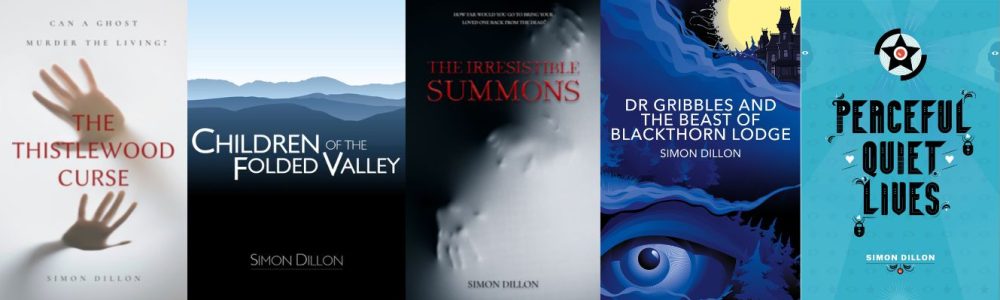
Managing Metaphors

Sometimes metaphors in novels can seem crass and unwieldy. Other times they can be sublime. But what is the difference between good and bad use?
Folded Valley cover

My general rule of thumb is that deliberate metaphors should only be included if they are also a vital part of the narrative. For example, in my novel Uncle Flynn, when Max is stalked by the panther, it is an essential ongoing element of the story, without which the plot would fall apart. But the panther is also a metaphor for Max’s fears, and his responses to the panther illustrate his progress in this respect.

In Children of the Folded Valley, the trains form an equally essential part of the story. Without them the plot would simply cease to exist. And yet, the trains take on an increasingly metaphorical role as the novel progresses; lost childhood, the passing of time, the end of an era and so on.

There are a number of excellent metaphors in JK Rowling’s Harry Potter series that adhere to my above principle. For example, in Harry Potter and the Prisoner of Azkaban, Dementors are essential to the plot, but are also a metaphor for depression. In the same novel, the hippogriff Buckbeak, unjustly sentenced to death, is a metaphor for another character who has also suffered a miscarriage of justice. Again, Buckbeak is pivotal in the climax. In the final novel, Harry Potter and the Deathly Hallows, one character’s silver doe patronus symbolises their ongoing love for a deceased character – a very poignant metaphor. Patronuses are, of course, an ongoing and vital part of the series.

There are exceptions to the above rule from time to time, but generally I get irritated when a metaphor takes me out of the story and draws attention to itself when the plot could exist perfectly well without it. When that happens, I feel as though the author is deliberately popping up in the middle of the narrative to announce how clever they are. I have had many an eye-roll for this reason, often when reading critically acclaimed high-brow literature.

Download the entire George Hughes trilogy FREE – for five days only!

The George Hughes trilogy is a thrilling, action-packed space tale set just over a hundred years in the future. Each story is a stand-alone adventure, but I recommend reading the novels in order nonetheless, as they do follow on from one another.

All three can be downloaded FREE from Amazon Kindle during the next five days.

Also, I must emphasise, these books are not just for children. Adult readers have found plenty to enjoy too (especially those who have picked up on some of the subtexts).

Here is the blurb from the back of George goes to Mars:

When George Hughes discovers he has inherited the planet Mars, he goes from poverty to becoming the richest boy on Earth overnight.

Accompanied by his new guardian, a mysterious secret agent and a crew of astronauts, George voyages to Mars to sell land to celebrities wanting to build interplanetary holiday homes. But sabotage, assassination attempts and the possibility of an alien threat plunge him into a deadly adventure…

Here is the blurb from the back of George goes to Titan:

The thrilling sequel to George goes to Mars…

A year on from his adventures on Mars, George Hughes faces an even deadlier peril as he travels to Titan on an urgent rescue mission. The mysterious Giles returns to help him, but assassins are once again on his tail, and a new, far greater alien menace lurks in the shadows waiting to strike.

Here is the blurb from the back of George goes to Neptune:

In this spectacular sequel to George goes to Mars and George goes to Titan, George Hughes faces his most dangerous adventure yet.

Following the Titanian invasion, a deadly and very personal threat forces George to undertake a voyage to a top secret Martian research base on Neptune.

On this remote outpost, he uncovers a diabolical plot. But George is too late to prevent the catastrophe.

A catastrophe that will change his life forever…

Here are a couple of reviews from adults:

“A thoroughly enjoyable read” – Mark, Amazon.

“Reading like a cross between one of Edgar Rice Burroughs’ pulpy Mars adventures and a Robert Heinlein ‘juvenile’, this improbable yarn (just how many “saved in the nick of time” coincidences can one novel contain?) about a rags-to-riches-to-hero boy named George was nonetheless page-turningly entertaining. Perfect rainy day/sick day reading.” – Elizabeth Olson, Goodreads.

And here some thoughts from the target audience (at least I assume so, given the tone of their reviews):

“This was totally amazing! Involves space ships, aliens and more! A totally exciting adventure you’ll love!” – Anonymous, Barnes and Noble.

“Pure awesomeness! Packed with suspense and adventure, as well as LOTS of action!” – Anonymous, Barnes and Noble.

“Best book ever!” – Anonymous, Barnes and Noble.

The George Hughes trilogy can be downloaded FREE here

Print copies (not free, alas) can be ordered here (book 1), here (book 2) and here (book 3).


The Limitations of Allegory

lotr

JRR Tolkien famously wrote about his dislike of allegory in the foreword to The Lord of the Rings. Here is what he had to say:

“I cordially dislike allegory in all its manifestations, and always have done so since grew old and wary enough to detect its presence. I much prefer history – true or feigned – with its varied applicability to the thought and experience of readers. I think that many confuse applicability with allegory, but the one resides in the freedom of the reader, and the other in the purposed domination of the author.”

I don’t have quite the same issue with allegory that Tolkien had, since I think part of his problem came with the insistence of readers that The Lord of the Rings was an allegory of World War II (amongst other things). I maintain that it is intellectually lazy to read allegory into any literary work unless it is the stated purpose of the author. For example, CS Lewis intended The Lion, the Witch and the Wardrobe to be an allegory about Christianity. George Orwell intended Animal Farm as an allegory of Soviet Russia. However, The Lord of the Rings was never intended as an allegory of anything.

Conversely, it is true that Tolkien’s experiences – particularly of encroaching industrialisation destroying the countryside, as well as World Wars I and II – informed the writing of The Lord of the Rings. His Catholicism was also a key factor, and Tolkien admitted as such in later letters, claiming that in retrospect he could see how these life experiences had influenced his work, regardless of the fact that he never intended it as an allegory.

Therefore, his remark about applicability to my mind makes perfect sense.

In my own writing, I have not written any deliberate allegories. But I know readers have made all manner of metaphorical applications, sometimes confusing them as allegory. For example, George goes to Mars has been read as a pro-feminist, anti-Islamic fundamentalist allegory. I certainly didn’t have that in mind when I wrote it. I simply wanted to write a thrilling science fiction adventure story for children and young-at-heart adults. Yet it is true that my own views are often inherent in my work, and can be detected to a greater or lesser extent. Equally they can sometimes be misconstrued, and that begs the question as to whether or not I have failed as an author. The bottom line is readers will interpret George goes to Mars (or any of my novels) any way they please, perhaps in ways I might even disapprove of.

I have almost finished an animal fiction adventure novel about wolves in Alaska, which I may well decide to fast track for release later this year. Reading back over my first draft, I suspect some may well read political allegories into it. But again, I must emphasise this is not my direct intention, and therefore it is not an allegory, however much readers may wish to label it as such. I do not wish to reduce my work to a single message or lesson, claiming it as allegory, since that would be reductive. Rather, I would prefer the reader to decide what to make of the story, and allow for multiple interpretations.

Download Dr Gribbles and the Beast of Blackthorn Lodge – for five days only!

My novel Dr Gribbles and the Beast of Blackthorn Lodge is available to download FREE from Amazon Kindle for five days only.

Of all the novels I have published, Dr Gribbles and the Beast of Blackthorn Lodge remains the one that seems to have singularly failed to find a readership or generate reviews. Besides the obvious possibility that people simply don’t want to read it, I suspect there are a number of factors as to why:

It’s primarily a children’s book. 

I am amazed how many readers are put off for that reason alone, especially as my children’s novels are designed for all readers, not just children. Like all the best children’s books I try to appeal to all ages, and take the CS Lewis view that a great story for children isn’t a great story for children unless it can also be appreciated by adults.

Children’s books (at least mine) don’t seem to find an audience on Kindle in the same way as grown-up books.

This is speculation on my part, but I suspect it is a factor.

I haven’t marketed the novel properly.

This is a given, as I am no businessman or marketing expert. However, I think it is perhaps true that, given how protective I am of the twists and turns in this story, I have perhaps been more reticent to discuss the plot than was wise. I shall therefore attempt to remedy this situation a little in this article.

The plot of Dr Gribbles and the Beast of Blackthorn Lodge begins with a haunted house, a monster, and a mad scientist – and that’s just chapter one! Our hero, the intelligent Tim Rawlings, is then drawn into a thrilling, scary adventure involving spies towards the end of the Cold War.

Tim’s path crosses with the eccentric but mysterious Dr Gribbles. Together they are forced to undertake a dangerous hunt on Dartmoor. Along the way spies British, Russian and American help and hinder, or sometimes both. One such spy is Dr Gribbles’s feisty daughter Emily, who plays an absolutely pivotal role in the story.

Thrills galore ensue, including helicopter chases, monstrous encounters and all manner of narrow escapes, including a nightmarish encounter with a room filled with wasps and a nuclear detonation. Secrets are revealed, characters are double crossed, and ultimately spies of all nationalities prove untrustworthy.

The nail-biting final act includes a homage to one of my favourite fairy tales. I cannot say which, although it might be guessable. At any rate, the overall tone is one of fun and adventure, with some scares (particularly in the first act), and plenty of humour.

In short, I think it is a shame Dr Gribbles and the Beast of Blackthorn Lodge hasn’t had more readers as I think it is a rattling good adventure yarn. The book also features my favourite cover of any of my novels and is even dedicated to my youngest son Thomas, since it was primarily inspired by a very imaginative nightmare he had when he was three.

In short, why not give it a go? Download your FREE copy of Dr Gribbles and the Beast of Blackthorn Lodge here.

Too much realism

I am not a fan of realism for the sake of realism. Nor was legendary film director David Lean, who once said films should feel like dreams. I would argue the same should be true for novels, and I am not a fan of stories that strive for realism at the expense of dramatic satisfaction, regardless of the genre.

As a reader I find it deeply frustrating when interesting dramatic situations and conflicts are swept aside in an unsatisfactory way in the name of realism, often in critically acclaimed novels. Atonement is a good example of this. Just because in real life the lead characters could easily have died in a sudden bombing that intrudes on the narrative mid-plot – before certain injustices could be properly explored and resolved – doesn’t make it a good dramatic choice. That may have been the point, but if so it’s a deeply frustrating one.

Charles Dickens had the right idea. He loaded his books with relevant, challenging social themes, making them “realistic” in the sense that you could feel the grime under the fingernails of Victorian Britain. But at the same time his works are deeply satisfying, superbly crafted tales that do not place “realism” above all else.

Some argue that whether or not a novel or film should submit to realism depends on subject matter, but I don’t think that is true. Lawrence of Arabia is about historic fact, but nonetheless feels like a dream, in accordance with the ideals of its director David Lean. The appalling Victorian social injustices exposed by Charles Dickens in Oliver Twist are wrapped within the framework of a narrative that feels almost like a fairy tale.

As an aside, I find that large doses of realism actually work very well in fantasy writing. The shocking sudden deaths in Phillip Pullman’s His Dark Materials trilogy are a good example of this. The film Pan’s Labyrinth is another example, with the gritty realism of the Franco’s war against communist guerillas providing a backdrop to the fantasy elements. They may seem like oil and water but in fact they compliment one another perfectly.

In my own writing, I am currently penning an animal fiction novel about wolves in Alaska that combines elements of realism with more metaphysical elements. Time will tell whether or not I succeed in this, but at no point in any of my writing do I strive for realism at the expense of all else. Like David Lean, I want my stories to have a magic to them, regardless of the subject matter. I want them to feel like dreams.

Download Love vs Honour FREE – for five days only!

Continuing my summer giveaways, Love vs Honour is available for the next five days as a free download from Amazon Kindle.

LvsHonour 1600 x 2400

After falling in love, teenagers Johnny and Sabina pretend to convert to Islam and Christianity respectively, to placate the disapproval of both sets of parents. Then it gets complicated as their elaborate deceptions unravel in unexpected ways…

Yes, I know teenage romantic fiction isn’t really a thing I normally write, but rest assured this novel has the dark edges and challenging/controversial themes found in my other works so it really isn’t exclusively for the young adult readership. If you haven’t read it, why not give it a go?

Here are a few review snippets:

“You may find, as I did, it becomes a hard book to put down. The premise of a Christian and a Muslim pretending to convert to each other’s religion to be with each other for the sake of pure, unadulterated love creates a strangely addictive narrative.” – Graeme Stevenson, Amazon.

“This book is one of the few that made me cry. I love it. If you are a fan of emotional books then I urge you to read it. I give it 5 stars.” – Splufic, Goodreads.

“The ending of the book really made the whole thing.” – A Critical Reader, Amazon.

And just for balance, not everyone loved the ending. Check out this “bad” review from I_love_books on Goodreads:

“No… Just No…
I hate such endings…
Wtf….
When the story got interesting then the author has to shock us?
No…
That’s bad…”

Why not decide for yourself if you like the ending? Download Love vs Honour FREE here.

The Birds Began to Sing FREE from Amazon Kindle – for five days only!

Since it’s summer, here is the first in a series of giveaways on most of my presently published novels.

Beginning today, for just five days, you can download The Birds Began to Sing absolutely FREE from Amazon Kindle.

The Birds Began to Sing is a mystery novel with shades of Agatha Christie, Daphne Du Maurier and Sir Arthur Conan Doyle, a dash of Susan Hill, a pinch of the Bronte Sisters and sprinkling of Michael Crichton. Actually, it isn’t really any of those things, but it is a damn good and highly original thriller in its own right, even though I say so myself.

Here is the blurb from the back of the novel:

When aspiring novelist Alice Darnell enters a competition to write the ending for an unfinished manuscript by late, world famous author Sasha Hawkins, it appears she might have her big break at last.

However, upon arrival at Sasha’s former home – the sinister Blackwood House – Alice is unsettled by peculiar competition rules, mysterious dreams and inexplicable ghostly visions. She begins to question her sanity as she is drawn into a terrifying web of deceit, revenge and murder.

Some review snippets:

“Mystery, drama, conspiracy theory, and some supernatural intrigue. A real page turner!” – Anonymous, Barnes and Noble.

“Well written, poetic in places, funny at times and with a plot that will keep you turning the pages…” – Al Gibson, Amazon.

“This was really a great read and I loved the twist. Did not expect it at all.” – Jennifer, Amazon.

The Birds Began to Sing can be downloaded from Amazon Kindle FREE here (you can also buy a print copy here).

The Thistlewood Curse – early reviews

The first reviews for The Thistlewood Curse continue to trickle in, and so far they have all been very positive.

THE THISTLEWOOD CURSE Cover (JPG Print version)

For example, one reviewer on Goodreads spoke of “chilling moments”, “an unusual premise” and that although it was “not what I’d usually choose… I was kept guessing to the end”.

There have been also been five star reviews on the US and UK Amazon sites respectively. One stated “Simon Dillon’s streak continues with another cracking book! The author’s storytelling is top notch with the twists, turns and suspense covering the book with glue, that is to say, you can’t put it down.”

Another said “This one will certainly leave you with “novel hangover,” still reeling from the emotional storm that just picked you up and spit you out. It was engaging, captivating, and immersive from the very beginning, and the plot twists were a pleasant surprise.”

I’m also very pleased people are seeing past the murder mystery/horror elements into the deeper stuff. For example, one reviewer commented “The characters are built up and written so well, you feel you know them and connect with them. For that reason, when they go through an ordeal, you go through it with them.” The reviewer went on to state that this was “a book with real depth, personal struggle and a test of faith—in more ways than one.”

To all those that have left reviews for this or any of my other novels, thank you so much. I really appreciate your support.

If you have read and enjoyed The Thistlewood Curse, please, please do leave a review on Amazon. It need not be long. Even just a one-liner saying “I enjoyed it” is fine. All such reviews are a great help to independent self-published authors such as yours truly – not because we require endless affirmation, but because the more reviews are published on Amazon, the more Amazon shows the fruits of our hard work to other customers.

Thank you.

Are my novels one big existential crisis?

The other day, my wife made an observation about my body of work; namely that virtually all my novels, either peripherally or directly, concern an existential crisis. I thought about this, and have come to the conclusion that she is correct.

Notions of identity, delusion and not being able to trust reality are definitely a running theme in my work, along with other mainstays such as abuse of power, religious oppression and so forth. Here are some examples from the novels I have published thus far (avoiding major spoilers): 

George goes to Neptune – Admittedly the first two novels don’t deal with an existential crisis, but the third in the George Hughes trilogy definitely does. George’s highly unusual battle with his dark side is what inspired me to write this third novel and complete the trilogy.

Uncle Flynn – The question of who is Uncle Flynn runs throughout the entire novel, particularly during the hunt for the hidden treasure. Throughout much of the story, police pursue him and his nephew Max across Dartmoor, for mysterious unknown reasons.

Dr Gribbles and the Beast of Blackthorn Lodge – An identity crisis of sorts lies at the heart of this story, involving Dr Gribbles’s daughter Emily and the Beast itself.

Children of the Folded Valley – Quantum physics and the nature of reality are a theme behind this story, still my most successful novel to date.

The Birds Began to Sing – From the very first chapter, it is clear that Alice’s perceptions of reality should be questioned. The suspense in many of the events that follow hinges on the question of whether or not what Alice is seeing is real or a delusion.

Love vs Honour – Spiritual identity crises form the heart of my attempt at teenage romantic drama.

Most recently, my supernatural thriller cum horror story The Thistlewood Curse pulls the rug out from the reader in a variety of existential crises involving ghosts, astral projection and more. You can download or buy a print copy of The Thistlewood Curse here.

Existential crisis remains a theme in virtually all my (as yet) unpublished novels, and this will no doubt continue to be the case.

Genre blending

Blending genres can be a fiendishly tricky exercise yet sometimes it can work brilliantly, against the odds, even if conventional wisdom says these genres would mix like oil and water.

The film Colossal is a good recent example of this. It blends indie drama elements with that of the monster movie tin a surprisingly effective way. TV series Twin Peaks is another genre blender, and one that is very difficult to define in conventional terms. The programme contains elements of soap opera, offbeat dark comedy, whodunit detective drama and supernatural horror with an avant-garde surrealism that is continually pulls the rug out from under the viewer in ways that both delight and infuriate.

I have a personal passion for films that start out in one genre, but then evolve into full blown horror. Kill List begins as social realist hitman thriller but becomes Grand Guignol occult horror. Bone Tomahawk is essentially a western that gets gatecrashed by cannibal horror. Most effectively of all, the massively underrated Angel Heart begins as private detective noir but ends in Faustian horror.

My recent novel, The Thistlewood Curse, attempts to emulate this genre evolution, from detective whodunit, to supernatural thriller and then full-on horror, hopefully in a fairly gradual build-up. There are risks of course. It can be difficult to categorise and promote. But ultimately the story is what it is. I hope readers take a risk and give it a go regardless. So far the feedback I have heard has been very positive.

THE THISTLEWOOD CURSE Cover (JPG Print version)

You can download or buy print copies of The Thistlewood Curse from Amazon here.