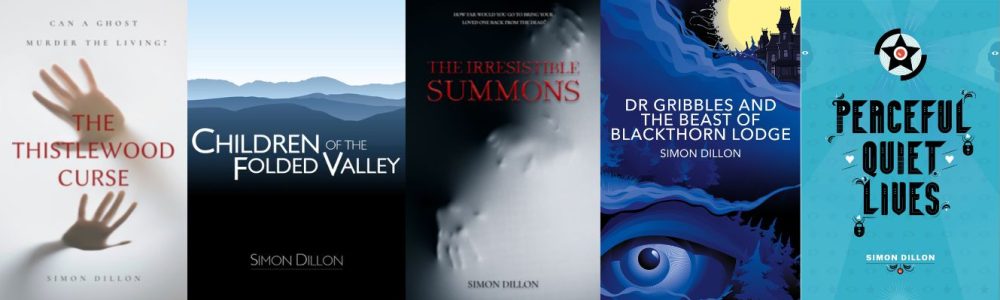
 My new gothic mystery novel Phantom Audition is out now, and messing with the heads of readers to agreeable effect, judging by the plethora of five star rave reviews currently gracing sites like Goodreads and Amazon. I’m very pleased, as I put a lot of work into this book.
Preparation for writing any story of this kind involves research into a number of fields, but in this case I was able to draw on a lot of my own knowledge regarding film. Having worked in television, and had some limited involvement in film productions (including making my own short films on various occasions), I drew on what I already knew in many cases, but also investigated a number of fascinating facts from film history.
For example, the idea of a famous actor consulting a medium about whether or not they should take a role is directly inspired by the late, great Peter Sellers, who did exactly that. Rather more unhappily, cases of actors burying themselves in parts with alarming effects on their mental health are not uncommon. Perhaps the most notorious and tragic relatively recent example is found in Heath Ledger, who died of a drug overdose after finishing work on The Dark Knight, where he played the Joker. Heath Ledger posthumously won an Oscar, again something that directly inspired the story in Phantom Audition.

Settings also play a key role in the novel, which briefly takes in Wardour Street in London – home to many film and television production houses – as well as Boars Hill in Oxford, where I used to live. However, the most notable location is the Jacobean mansion at the heart of the story. In Jacobean buildings, there really are sometimes priest holes from the times when Catholics were persecuted by the ruling Protestant monarchs in England. Said Catholics would often hide in these places to avoid arrest. Baddesley Clinton House in Warwickshire is one example, and another is Oxburgh Hall in Norfolk. Both are owned by the National Trust and are open to the public.

Here is one final point of interest not about research or locations, and more about the writing process itself. Unlike my previous novel The Irresistible Summons, which had huge swathes of plot, subplot, and characters excised (almost 20,000 words) from first to final draft, Phantom Audition survived largely intact, aside from the usual editorial nips and tucks, with one key exception. Originally Mia’s best friend Bronwyn and hired help Verity were one and the same character. I did this to try and condense characters, but in this case it proved a condensation too far, and made the finale too implausible. It felt a lot more believable to separate the characters, so I undertook a significant rewrite to change that element of the plot.
Phantom Audition is published by Dragon Soul Press, and is available now in paperback or on Kindle. Click here to get your copy.
 The Little Stranger – Sarah Waters’s sublime gothic mystery was a key tonal influence. Throughout the promotion of Phantom Audition, I’ve been very keen to emphasise that this isn’t a story that’s interested in terrifying the living daylights out of readers like some of my more overt horror stories. It that respect, it is akin to the psychological drama of this very clever ghost story, which whilst being page-turningly gripping, isn’t necessarily going to cause nightmares. The ghost story here belongs to a more old-school tradition, wherein the protagonist entering the haunted house ultimately discovers themselves within, in a manner of speaking.
 Jane Eyre – Charlotte Bronte’s masterpiece is a clear inspiration in many areas, most tellingly in the way Thornfield Hall intimidates Jane, and has hidden secrets. In my novel, the dark secrets of Steven Yardley (a sort-of Rochester figure) haunt the protagonist Mia from beyond his grave. His Jacobean family mansion also intimidates Mia, and holds a few hidden secrets of its own.
 Don’t Look Now – Daphne Du Maurier’s stunning short story (and Nic Roeg’s equally stunning film adaptation) were definite thematic inspirations. Don’t Look Now’s themes of grief and obsession are mirrored in my novel, along with certain plot themes (including the mediums). Incidentally, Du Maurier’s Rebecca was also an influence, but then again, that novel has influenced so many of my works that it’s getting a bit tedious to keep listing it.
 Sleeping Murder – Act one of this Agatha Christie mystery remains a superbly unsettling opener, as a young married woman finds her dream home was once laid out with the exact refurbishments she wants to undertake. Every detail – from garden landscaping, to where she would put a door, to her chosen wallpaper – are already there, beneath the surface. This mess-with-your-head mystery is tonally something I adopted in my novel.
 A Fantastic Woman – This Chilean film, which won Best Foreign Film at the 2018 Oscars, might at first appear an odd choice as an influence on Phantom Audition. Nonetheless, it actually provided the initial inspiration. The story concerns a transgender woman dealing with the death of her partner, and finding herself isolated and ostracised by his family. The film has a dreamlike, magical realist quality to it, and even at times becomes a bit like a thriller (there’s a mysterious key which her partner left, for example). Moreover, there is something of a descent into the underworld/death and rebirth metaphor in the film, a story arc which is very much echoed in my novel. One image particularly leapt out at me – that of a ghostly vision of the dead partner staring out at her from a crowded nightclub dance floor amid strobe lights. It’s an image I actually nicked, sorry, “paid homage” to.
 Death and the Maiden – Another Chilean influence of sorts, in that Chilean playwright Ariel Dorfman wrote this blinder of a stage play (later adapted into a film by Roman Polanski). The plot concerns a woman called Paulina Escobar who becomes convinced her husband’s house guest is actually the man who kidnapped, tortured, and raped her several years previously. Paulina’s lawyer husband isn’t convinced, but she is determined to torture a confession out of the man who might be her former tormentor. However if he confesses, is his confession true, or simply a desperate attempt at escaping his predicament by telling her what she wants to hear? How this play influenced my novel, I will not explain, but it will become apparent when you read it.
 Much of my recent focus has been on my latest novel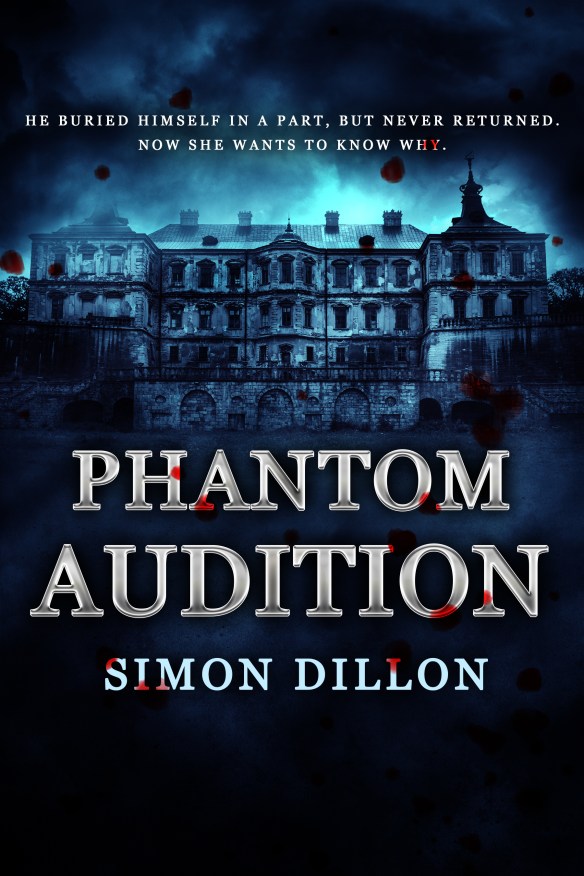

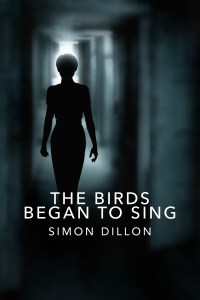 More psychological thriller/mystery than horror, and if it were a film, probably wouldn’t be rated stronger than 12A (that’s PG-13 for our American cousins). Yes, there is plenty of page-turning suspense, with our imperilled heroine wandering spooky corridors at night, but let’s put it this way; my notoriously easy-to-scare mother braved it, and managed to reach the ending unscathed. It’s only a notch up from something like Daphne Du Maurier’s Rebecca.
 This begins more like a whodunnit, develops into a supernatural thriller, and really only segues into horror during the finale, in quite a gradual slow-burn. Yes, the bodies do pile up a bit, but in scariness, only a notch or so up from The Birds Began to Sing.
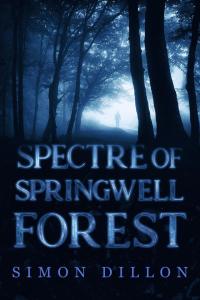 A properly full-blown ghostly gothic horror mystery, most akin to something like an MR James short story, or The Woman in Black. It is a slow-burn, but it does build to a properly spine-chilling finale that will test the nerves, so I’m giving this one a higher scariness rating.
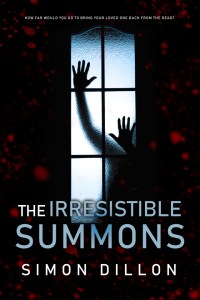 For the most part, I’d argue this is a supernatural conspiracy thriller. However, the final act is undoubtedly in clear horror territory, in a pretty full-on manner. Comparison texts would be something like Coma crossed with the more horrific elements of Lars von Trier’s The Kingdom.
 Simon Dillon Books
You must be logged in to post a comment.