Following on from my list of ten great literary villains, here are ten great literary protagonists. I should be clear upfront that these aren’t characters I necessarily consider the definitive ten greatest, but they are ten favourites. More specifically, they are ten protagonists I personally relate to in some way. Here they are, in no particular order of merit.
Harry Potter (the Harry Potter series by JK Rowling) – I don’t know anyone whose favourite character in Harry Potter is Harry Potter. My own favourite in JK Rowling’s saga is the enigmatic Severus Snape, with whom I also have something of an affinity. However, Harry is the protagonist, and I’ve decided to include him here for a number of reasons. He is deliberately written as something of an everyman – an access point for the reader to the magical world – but there are key elements about his character that I very much relate to. His hatred of bullies, for instance. Or his fondness for oddballs like Luna Lovegood or Neville Longbottom. Like Harry, I also had something of a reputation for breaking rules at school.
Jane Eyre (Jane Eyre by Charlotte Bronte) – Jane Eyre casts a huge shadow of influence over many of the imperilled heroines of my own gothic mysteries. Abused and downtrodden as a child, and subjected to mistreatment inflicted by hypocritical religious oppressors, Jane nonetheless rises above her painful past, despite the many dark turns in her tumultuous romance with Rochester. I admire Jane’s indomitable courage and ability to pass through suffering and trials. However, because my own childhood featured a plethora of run-ins with cruel religious hypocrites, I find that element of her story particularly relatable.
Matilda (Matilda by Roald Dahl) – Typically the protagonists in Roald Dahl’s novels are overshadowed by more outrageous characters (Willy Wonka and The BFG are both more interesting than Charlie and Sophie, for instance). However, in the case of Matilda, her intelligence and telekinetic powers make her a delightful exception. Obviously, I relate to her love of books, and also her disdain for boorish grown-ups with no appreciation for beauty, literature, or art in general. In that respect, Matilda’s family are truly monstrous.
Bilbo Baggins (The Hobbit by JRR Tolkien) – My identification with Bilbo begins with his love of routine, home comforts, and being left in peace and quiet. Like Bilbo, I don’t much care for the idea of adventurous travels, but I tend to enjoy them once I reluctantly undertake them. Most of all, I greatly admire the way Bilbo tries to find a peaceful solution to the foolish stand-off between Thorin, the Elves and the people of Laketown. His efforts are doomed, and ultimately irrelevant once the goblins attack, but I like to think I would also try to be a peacemaker in such circumstances.
Hazel (Watership Down by Richard Adams) – This classic of animal fiction involves rabbit Hazel leading a group of refugee rabbits in a dangerous search for a new home, following the apocalyptic visions of his friend Fiver. This leporine quest culminates in a confrontation with Stalin-esque General Woundwort. Why do I relate to Hazel? Mainly because of the way he is thrown in at the deep end, becoming a reluctant leader through guesswork and mistakes. Leadership is a key theme of the novel, and Hazel’s desire for freedom and genuine care for those under his protection contrasts with the fascist attitudes of Woundwort. Hazel is also a rabbit of great vision, who in a key moment of the novel, proposes a peaceful solution to General Woundwort. As with Bilbo in The Hobbit, I’m a big believer in finding common ground and making peace.
Sherlock Holmes (Various Sherlock Holmes short stories and novels by Arthur Conan Doyle) – I am not anything like as clever as Sherlock Holmes, but I include him here not for his intelligence but for the occasional flashes of deep, humane compassion beneath the logical exterior; something I hugely admire. Stories such as The Blue Carbuncle, The Devil’s Foot, and The Abbey Grange feature him allowing guilty parties to get away with their crimes due to extenuating circumstances, and I must say I cannot fault his decisions. He has the wisdom to realise sometimes the rigid parameters of mere human law cannot bring justice. Conversely, when Holmes has himself inadvertently become the instrument of justice, I cannot fault him there either. The superb conclusion of The Speckled Band is a case in point, where he says his actions (which led to the death of the villain) are unlikely to weigh very heavily on his conscience. Furthermore, like Holmes, I can be hugely obsessive to the exclusion of all else when pursuing a goal.
Winston (1984 by George Orwell) – I could imagine myself ending up much like Winston, if I lived in the kind of totalitarian regime Orwell envisioned in this seminal work. As it is, I’m already rather world-weary and cynical; particular about politics (on both the left and right), authoritarian ideologies, causes, activism, foolish self-appointed revolutionaries, delusional cultists and fanatics, and Orwellian notions such as so-called cancel culture. I’ve also included Winston because of some of his unworthier impulses, lest the more virtuous characters on this list paint me in an inaccurately sanctimonious light.
Pip (Great Expectations by Charles Dickens) – I don’t include Pip in this list so much for his kind actions to runaway convict Magwich; a deed that ultimately results in him obtaining great wealth. I include Pip for more negative reasons. I confess that I relate to some of the snobbery he exhibits in the story, and the way he pays a bitter price for it. As Dickens so astutely writes: “All other swindlers on earth are nothing to the self-swindlers, and with such pretences did I cheat myself.” I also relate to Pip’s painful romantic obsessiveness; a trait I also confess I once shared.
Jo March (Little Women by Louisa May Alcott) – Jo March is on this list because she is a writer, and so am I. Many incidents in the novel chime with my own “journey” (if you’ll forgive my use of an obscenity) as an author. For example, being the recipient of blunt constructive criticism. Or perhaps the scene where Amy burns her manuscript (still unforgivable, as far as I’m concerned) is akin to when my computer dies, and my work hasn’t been backed up. I swear my computer can be just as vindictive as Amy, and has a vendetta against me because of my somewhat Luddite attitudes and technological ineptitude. At any rate, I love Little Women, but I particularly love Jo.
Winnie the Pooh (Winnie-the-Pooh by AA Milne) – I have a deep personal sympathy for the bear of little brain, mainly in view of his obsessive love of food; a love shared by yours truly. His inner monologues about how he eats a little honey, goes away and thinks about it, eats a little more, and so on, are so utterly delightful, and are deeply resonant. The absolute pinnacle of Pooh’s hilarious honey habit surely comes in the story where he and Piglet try to catch a heffalump. Amid the hilarious farce that ensues, there’s a wonderful section where Pooh sniffs the jar of honey intended to snare the heffalump, to test if it really is honey. He then tastes a bit, just to make sure (after all, he had seen cheese a similar colour, and heffalumps might not like cheese). Having established the honey is indeed genuine, Pooh decides to eat a little more, just to make sure it is honey all the way to the bottom of the jar. Then the jar gets stuck on his head, and a terrified Piglet mistakes him for a heffalump. Marvellous stuff. Silly old bear.


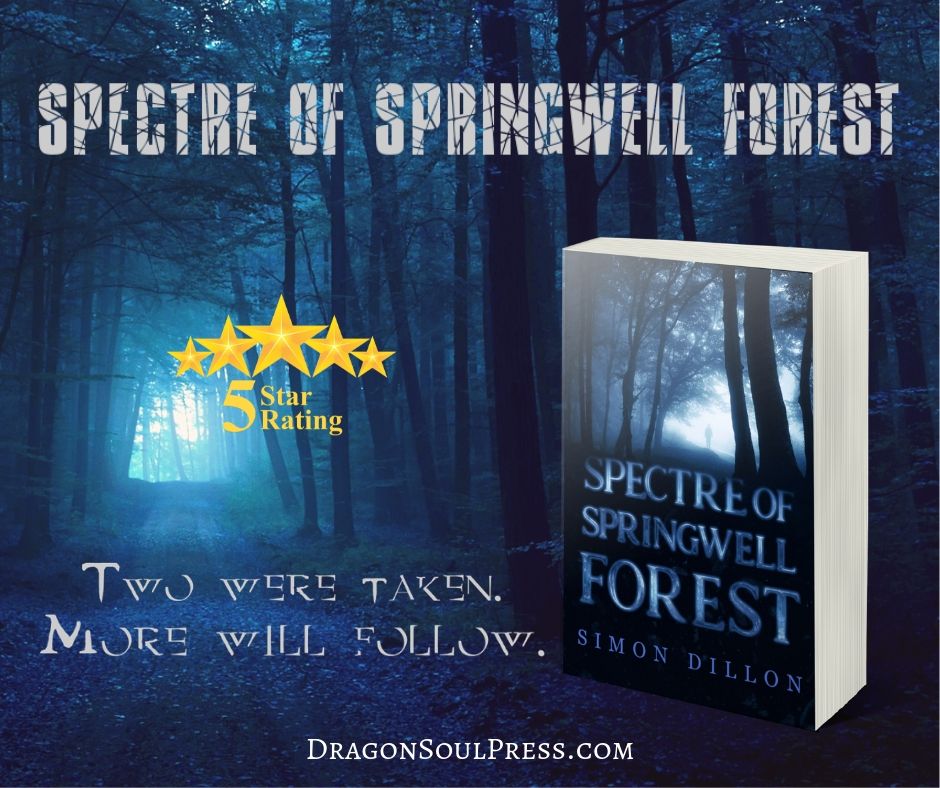


 Genre fiction writers are often accused of writing “formulaic” stories. It may surprise you to know I plead guilty as charged. My children’s adventure novels contain many well-worn tropes. My gothic mystery/horror thrillers likewise. Why? Because the reader expects them, and would be disappointed if I didn’t deliver.
 It is vital, especially in genre fiction, to give the reader what they want but not the way they expect it. Genre writers understand this. Agatha Christie’s novels and crime fiction in general is hugely formulaic, but also fiendishly difficult to write well. Like most genre fiction, they are an easy target for literary snobs.
 Imperilled heroine – All these books feature a tenacious, insatiably curious, likeable but flawed heroine, who is dealing with some kind of trauma either in the recent or distant past.
 Supernatural elements – Ghosts, demons, witchcraft, astral projection… These are often (but not always) explored.
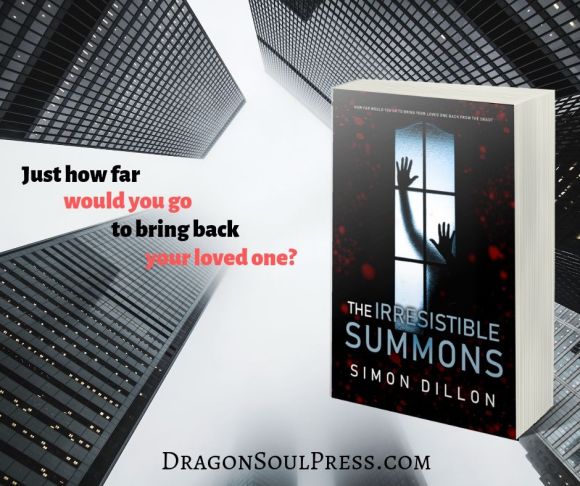
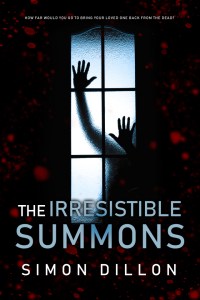
 Villain/antagonist with similar goals to the protagonist – I am fascinated by stories where protagonist and antagonist essentially want the same thing. Of my gothic mysteries, The Irresistible Summons explores this with particular potency.
 Big twist ending – This needs no explanation. I love a good twist ending, but only when it comes off as both inevitable and unexpected. It’s no good pulling out the rug from under the reader without laying the necessary groundwork, or it won’t feel satisfying. I don’t always do this (I’ve always maintained there’s a
  Horror fans yet to discover Indian writer Neil D’Silva are in for a treat. His unique, Hindu folklore infused tales are grippingly gruesome, and never disappoint in the scares department. However, his novel Yakshini deserves a wider readership than just gore hounds. Incisive, challenging social commentaries about modern India bubble underneath. More on those in a moment, but first I must do my duty as a horror evangelist and urge those who consider the genre disreputable to look closer. A futile endeavour perhaps, but one D’Silva has much sympathy with.
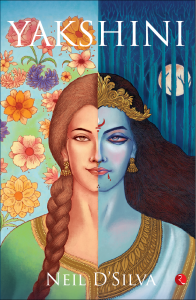 A supernatural thriller infused with Indian mythology, Yakshini concerns the eponymous immortal demi-goddess banished from her celestial dwelling. She is doomed to share the body of a human girl named Meenakshi, causing her to lead a curious, Jekyll/Hyde existence. Unable to bear Meenakshi’s rural patriarchal society, the Yakshini lashes out against lustful males, seeking bloody revenge. Serious problems ensue for Meenakshi, even leading her to be branded as a witch.
 Increasingly famous in his own country, D’Silva’s status as a significant new literary talent among Indian writers registered immediately, as his first, self-published novel Maya’s New Husband shot to number one in Amazon India’s horror bestsellers. It remained in the top ten for close to two years, which landed him attention from literary agency The Book Bakers and then traditional publishers, as well as a loyal and growing readership that has now expanded beyond India. He since quit his teaching job to write full-time. With nine books to his name, at publishers including Penguin Random House, Rupa, and Hachette India, Yakshini is one of three novels currently in development for a film adaptation. But D’Silva is particularly excited about an adaptation of his non-fiction book, Haunted: Real-life Encounters with Ghosts and Spirits.
 When pushed on whether he has ever had a supernatural experience of his own, D’Silva is more guarded, though he does relay one scary childhood story. “I grew up in a colony that was rumoured to be built on a graveyard. Of course, we had no evidence of it at all and it might all have been the kind of juvenile poppycock teenagers indulge in, but it did give rise to several hair-raising moments that led to my imaginative mind taking great leaps, fuelled by the stories I had heard. On one occasion, I saw a woman dressed in a white saree walking on the ledge of the terrace of the four-story building opposite ours in the middle of the night. The woman was just walking along, precariously, maintaining her balance somehow, singing something softly. At one point, I felt she had sensed my presence and was turning to look at me, but before that, I ducked into my covers and shut my eyes.
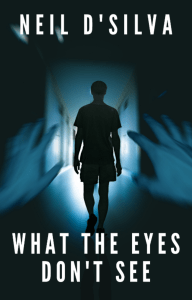 What The Eyes Don’t See, D’Silva’s most recent novel, launched today; exclusively on Wattpad. This paranormal horror thriller has already been covered by key publications including Mid-day and The Times of India. It reached 7000 reads on the very first day of release, an indication of growing and dedicated fandom. D’Silva describes the nifty premise with glee; a clever reversal on the no-one-can-see-it-but-the-protagonist ghost story trope.
 “We spend our adult lives trying to regain what we lost in childhood.
 “In spite of the peculiar circumstances surrounding the death of Jacob Price, Detective Sergeant Laura Buchan had all but convinced herself there was no foul play. That he died as the result of a bizarre accident had become the accepted version of events for her and most of her colleagues. Only the senior investigating officer, Detective Inspector Ethan Roland, had any further inkling that Price’s demise was in any way suspicious.
 “Max Bradley didn’t like to climb trees.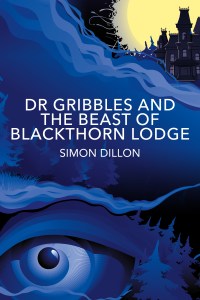

 Simon Dillon Books
You must be logged in to post a comment.