This month on Medium, I’m showcasing some of the opening chapters from my novels. These will be primarily from my gothic mysteries, though there may be one or two others. This week I feature the first part of gothic psychological thriller Phantom Audition, which begins like this:
What Mia noticed most was the silence.
She kept expecting to hear Steven’s voice, or the insistent thud of his feet, as he rehearsed his lines, pacing up and down. She expected to hear him on the phone to his agent, publicist, or to a director.
In the mornings, she no longer heard his absurd singing in the shower. His seat at the breakfast table stood empty. Mia would avert her eyes, unable to bear staring at the space he should occupy. He should be sipping his tea, scrolling through his phone, crunching his cereal… Silence chewed the room instead, like wind and rain gnawing an eroding landscape.
At nights, Mia would awaken and roll over, hoping to warm herself on his body. But Steven wasn’t there, and he wasn’t coming back. He had been replaced with the same terrible silence that screamed, clawed, and tore at her mind whenever she entered the rooms that still had his smell. The memory of her husband had stained the entire house.
Mia had always thought the mansion ludicrously big for the pair of them, but now more than ever she felt the size of the place. A curious unease lingered, as though the carpets, furniture, paintings, and ornaments had turned against her. She felt like a stranger in her own home, imagining everything around her glared in frowning disapproval. Perhaps her presence was a desecration.
One Monday morning a month after the funeral, the unpleasant sensation of feeling watched by the house became too much, and Mia yelled out into the silence.
‘It’s my bloody home too!’
The house responded without mercy, making every tiny tick of the clock an intolerable cacophony. Mia put her hands over her ears. She knew her behaviour was absurd, but the curious mixture of anger and fear that stirred within her had taken her by surprise. Sadness at Steven’s passing was to be expected, but she had not expected to feel so defensive or fearful. Perhaps bewilderment at the events leading up to his suicide by drug overdose still had her on edge.
From Phantom Audition by Simon Dillon.
You can read the whole of the chapter here, and read my companion piece article on this series here. Alternatively, to purchase a copy of Phantom Audition (ebook or paperback) click here (for the UK), here (for the US), or here, if you wish to purchase via Smashwords.
I don’t want to say too much about the plot at this stage, but here are a few titbits. As previously stated, it concerns a young journalist, who investigates a local mystery with links to her past in the fictional town of Hobbford. There are variations on a few typically gothic locations, including a large spooky house and a sinister forest. In the background of the narrative is an archaeological dig taking place on the site of a now-closed children’s home, following a major abuse scandal. The protagonist’s mysterious estranged uncle is also a key character. He runs an expensive mental health clinic for rich clients.
As for the title, it refers to Hobbford folklore. On a nearby hill, is the chalk outline of a giant figure, somewhat akin to the real-life Cerne Abbas Giant in Dorset (see below). In my story, local legend states this giant was sent by a witch to take revenge, after the witch in question was persecuted. The giant was slain, and the body supposedly buried inside the hill. How does this have a bearing on the plot? I wouldn’t dream of spoiling the surprise.
Credit: Wikipedia Commons. Nigel Mykura / Cerne Abbas Giant / CC BY-SA 2.0
What else can I tell you about the book? It took about three months to complete the first draft (working from a thoroughly researched and plotted outline I prepared last year), and in the process, the story became rather darker than I originally intended. Although the essentials of the plot didn’t change, I realised whilst writing that the subject matter and tone veered more towards the horror end of my oeuvre than I originally thought. I’d expected this to read as more a thriller, like The Birds Began to Sing. But it ended up closer in tone to Spectre of Springwell Forest, though to my mind not quite as frightening. Perhaps The Thistlewood Curse is my closest point of comparison, as that one also sits at the mid-point between horror and thriller.
Thematically, this story deals with hidden secrets, as with all good gothic mysteries. More specifically, it concerns what happens when lies are told and perpetuated, and how these lies act as a kind of black hole, sucking in others when they chose to keep silent out of fear and intimidation, rather than bringing the truth into the light. I didn’t set out to write anything particularly profound, but looking back over the first draft, I can see more, in retrospect, what must have been lurking in my subconscious whilst writing this: Lies and cover-ups, however well-intended, are never a good thing.
I will now be following my standard procedure of sitting on the novel for a while, before redrafting with fresh eyes anywhere between six months to a year from now. At that point, I will start the process of showing the manuscript to beta readers, and then think about publication possibilities. I’m excited about this novel and look forward to sharing it with you in due course.
Here’s the first part of the first chapter of my recently re-released gothic mystery novel Phantom Audition:
What Mia noticed most was the silence.
She kept expecting to hear Steven’s voice, or the insistent thud of his feet, as he rehearsed his lines, pacing up and down. She expected to hear him on the phone to his agent, publicist, or to a director.
In the mornings, she no longer heard his absurd singing in the shower. His seat at the breakfast table stood empty. Mia would avert her eyes, unable to bear staring at the space he should occupy. He should be sipping his tea, scrolling through his phone, crunching his cereal… Silence chewed the room instead, like wind and rain gnawing an eroding landscape.
At nights, Mia would awaken and roll over, hoping to warm herself on his body. But Steven wasn’t there, and he wasn’t coming back. He had been replaced with the same terrible silence that screamed, clawed, and tore at her mind whenever she entered the rooms that still had his smell. The memory of her husband had stained the entire house.
Mia had always thought the mansion ludicrously big for the pair of them, but now more than ever she felt the size of the place. A curious unease lingered, as though the carpets, furniture, paintings, and ornaments had turned against her. She felt like a stranger in her own home, imagining everything around her glared in frowning disapproval. Perhaps her presence was a desecration.
One Monday morning a month after the funeral, the unpleasant sensation of feeling watched by the house became too much, and Mia yelled out into the silence.
‘It’s my bloody home too!’
The house responded without mercy, making every tiny tick of the clock an intolerable cacophony. Mia put her hands over her ears. She knew her behaviour was absurd, but the curious mixture of anger and fear that stirred within her had taken her by surprise. Sadness at Steven’s passing was to be expected, but she had not expected to feel so defensive or fearful. Perhaps bewilderment at the events leading up to his suicide by drug overdose still had her on edge.
Even though she still wore her dressing gown, Mia continued to sit in the morning room, on an ornate Elizabethan chair that matched other antique furniture in the room from the same period. Occupying this chair felt like a strangely defiant act, as though she were challenging the house itself. Steven’s ancestors glared down at her from portraits on the wall. His home was now hers, and sooner or later, the ancestors would just have to accept it.
‘It’s my bloody home,’ Mia muttered. ‘Deal with it.’
‘A-hem!’
Mia leapt out of the chair and spun towards the doorway. A middle-aged woman in a maid’s uniform stood there, her face unsmiling and severe.
‘Liza… Good God, you made me jump!’
‘Ma’am,’ said Liza. ‘I apologise for startling you. I know I’m a little early.’
‘Yes, yes, of course… Is it Monday already?’
Liza didn’t reply. Her eyes bored into Mia.
‘Of course it’s Monday.’
Mia looked down, avoiding Liza’s glare. Eventually the maid spoke again.
‘I can come back to this room later if you like, ma’am.’
‘No, no, that’s fine. I’ll get out of your way. I need to have a shower really.’
Mia scurried out of the morning room and headed back up the main staircase to the west wing. She locked herself in her bathroom, feeling very foolish. Her heart beat a little faster as she tried to get a grip on herself, staring into the mirror.
‘It’s my bloody home. Mine.’
But it didn’t feel like her home. Liza Richards, a hired cleaner who came in on most days, had been employed by the Yardley family for years, and her demeanour was more like that of a proud, old-school housekeeper. That Mia had leapt out of the Elizabethan chair when challenged by Liza, as though she were some disobedient child, underscored to Mia yet again that she felt threatened by Elm House, the ancestral home of her late husband, the renowned actor Steven Yardley.
Renowned actor.
Renowned.
Perhaps that was the problem. Steven had been renowned in many ways. Rich family. Successful acting career. What was she in comparison? Mia recalled the whispers when they had married three years previously, that she was little more than a gold-digging, hack bit-part actress. Such rumours never bothered her whilst Steven had been alive, for they were utterly false. She and Steven had loved one another with an enviable passion. Their marriage had been one made for the right reasons. What did it matter what anyone else thought?
However, since Steven’s death, after inheriting everything, it had been impossible not to feel this resentment amid icy stares at the funeral, and at the reading of the will.
‘My bloody home…’
Tears streamed down Mia’s face as she stared into the mirror. She felt utterly pathetic. A part of her wanted to return downstairs to the morning room. She wanted to place herself in that Elizabethan chair with her arms folded, reading the paper, and glaring at Liza as she went about her cleaning duties. But she felt so utterly defeated. Her stomach twisted, and she felt sick. She slumped to the floor, bent double, sobbing.
‘Steven… Steven…’
She allowed herself a moment to cry. But after a couple of minutes of anguish, Mia took a deep breath, wiped her face, and stood up again. She couldn’t allow Liza to see her like this. She had to be strong.
Mia took a shower then headed to her bedroom to get dressed. For a moment, she toyed with the idea of lurking upstairs until Liza had finished, but part of her despised such a cowardly notion. Why should she want to avoid Liza? She was an employee. Besides, the gardener was due to arrive soon, and she had to give him instructions.
Mia returned downstairs to the kitchen. She made herself a cup of tea and sat at the kitchen table for a few minutes. Still the silence taunted, but Mia ignored it.
Outside, the mid-February drizzle threatened to become a downpour. Staring out of the window towards the driveway, her eyes came to rest on a large horse chestnut tree amid the extensive gardens. The branches were stark and bare right now, but Mia recalled Steven’s fondness for that particular tree, and the significance it had held for him throughout his entire life. Mia briefly closed her eyes, remembering a summer’s day when they had sat beneath the horse chestnut tree in the warm afternoon sun, with the lingering scent of freshly cut grass and white roses. She could still taste the honey on her lips and his. She recalled the wasp sting that had rudely interrupted their passionate kiss. Placing her hand to her arm, she rubbed the place where the wasp had struck. Was it her imagination or was there still a scar?
For more, pick up your copy of Phantom Audition in paperback or ebook here (in the UK), and here (in the US). Or you can click here, to download the book from Smashwords.
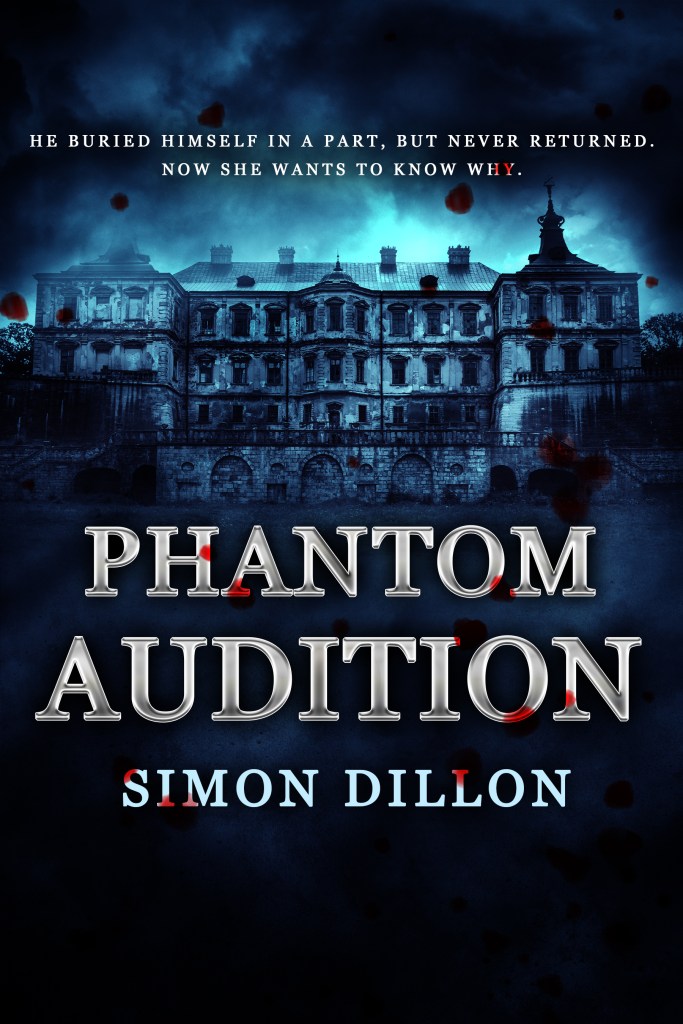
Three of my gothic mystery horror/thriller novels have recently been unavailable, for tedious legal reasons not worth wringing my hands over in this blog post. However, the good news is they are back, having received a make-over with new covers, courtesy of the brilliant Yasmine Nuoraho.
Here are each of the new covers, with an introduction to each novel, to whet your appetite.
Spectre of Springwell Forest
Exeter, 2010. Lily Parker learns that her daughter Olivia is to move to the village of Springwell, near Plymouth. To the surprise of her husband Andy, this sends Lily into terrified despair. She tells him that Olivia must not move to Springwell, under any circumstances. Andy wants to know why, and Lily tells him what happened to her many decades previously, in 1979, warning him that she has a horrifying secret that she had previously hoped to take with her to the grave.
In 1979, Lily and her then six-year-old daughter Olivia, along with her first husband Tom Henderson, move to the sleepy village of Springwell. Here they meet a tight- lipped community of secretive villagers who seem to have something to hide. Lily discovers a painting of an abandoned railway tunnel in her attic, by a local artist, Alison Merrifield. Lily is strangely drawn to the painting, particularly the dark maw of the tunnel, and ends up hanging the picture in her hallway.
After meeting her neighbour and other mothers dropping their children at the local primary school, Lily is surprised to learn they all have similar paintings in their homes, all of them painted by Alison Merrifield, all of them showing the same abandoned railway tunnel. The other mothers dismiss this as something of a village in-joke, and when Lily visits Alison in her local craft shop, Alison herself insists she cannot understand why the paintings of the abandoned tunnel are so popular. But Lily senses she is being lied to.
Shortly afterwards, when Lily and Olivia go for a walk in the local forest, they come across a fenced off area in the heart of the woods where the barbed wire has been mysteriously torn apart. Investigating further inside the fenced off section, they discover the very same abandoned railway tunnel of the painting and enter the tunnel. A disturbing incident follows (which I won’t spoil).
After this incident, back home, Lily starts to make out a mysterious figure emerging from the railway tunnel in the painting. As time passes, the eerie figure becomes more clearly defined, but Lily is disturbed to discover no-one can see it but her. Worse still, as the sinister figure is revealed, Olivia starts to behave in an increasingly alarming manner.
To pick up your copy of Spectre of Springwell Forest in paperback or ebook click here (in the UK), and here (in the US). Or you can click here, to download the book from Smashwords.
Phantom Audition
Small-time actress Mia Yardley, recently widowed wife of renowned actor Steven Yardley, grieves in his ancestral family home, Elm House, near Plymouth. Her husband’s inexplicable suicide left her in possession of a considerable fortune, but she is unsettled. Her sister-in-law Jemima is openly hostile, and Mia also senses disapproval from hired staff, especially de facto housekeeper Liza. Only Verity, a part-time maid, is friendly to Mia, seeming genuinely sorry about the death of Steven.
Mia discovers Steven’s secret acting diary. It details appointments made with a psychic medium, Etta, who advised Steven on which roles to take. Mia visits Etta to question her over mysterious diary entries that hint at a more supernatural reason for Steven’s demise. Etta rejects such claims, but Mia senses she is hiding something, and explains as much to her best friend Bronwyn, when they go out horse riding. Mia also begins to see manifestations of what she believes to be Steven’s ghost in and around Elm House, and also at a nightclub.
Mia’s therapist tells her the visions of Steven are psychological, not spiritual. But Mia isn’t convinced, and begins an investigation into her husband’s death that gradually becomes an obsession. She uncovers the alarming story behind the last role her husband took, but every answer leads to more questions, opening dangerous doors to a labyrinthine world of terrible secrets. The deeper Mia digs into they mystery, the deeper she disappears inside her own inner darkness, crossing thresholds from which there can be no return.
To pick up your copy of Phantom Audition in paperback or ebook click here (in the UK), and here (in the US). Or you can click here, to download the book from Smashwords.
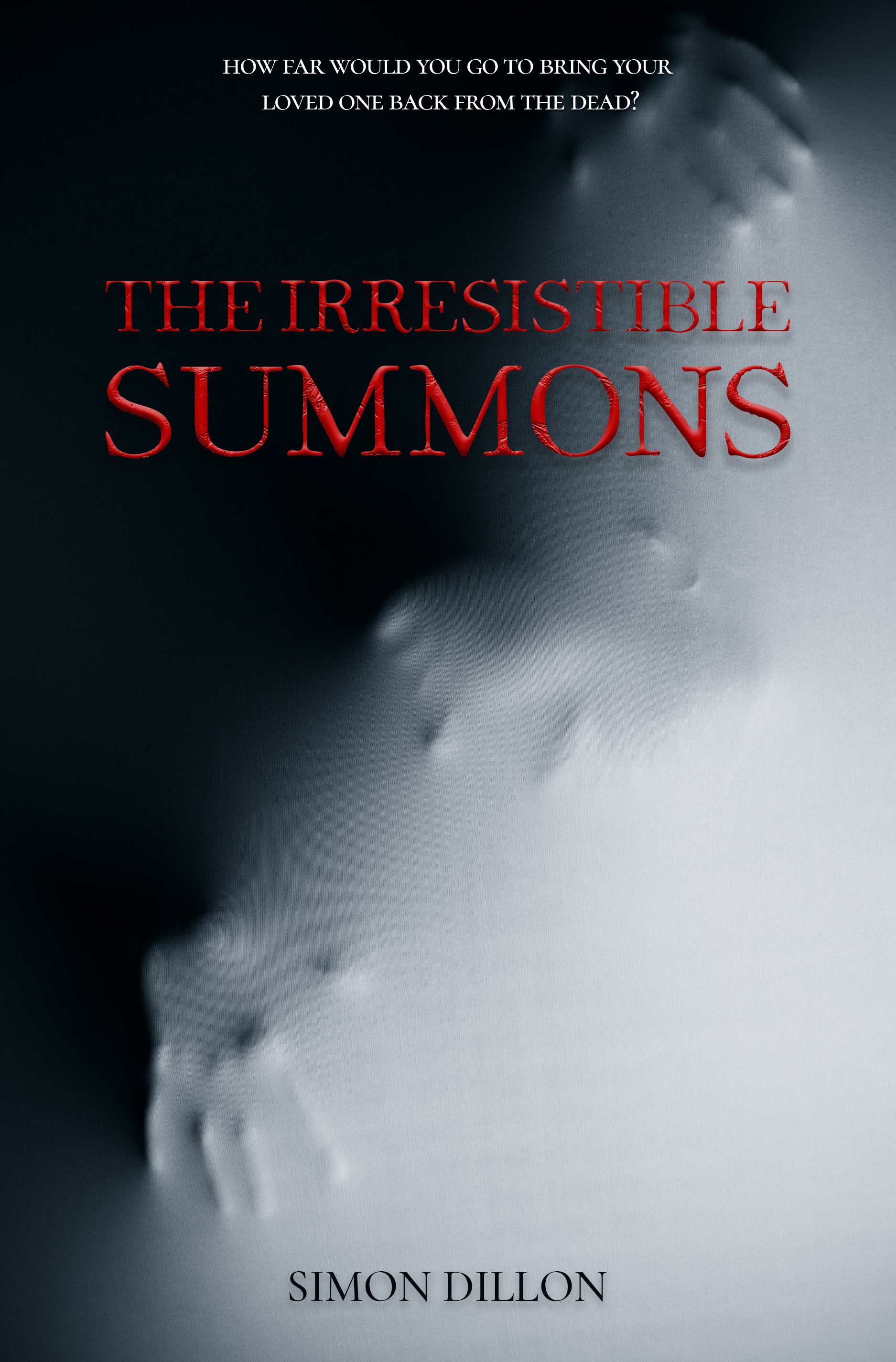
The Irresistible Summons
Teenager Naomi Levinson laments the death of her boyfriend, Toby Lane. Toby and his entire family perished in a mysterious house fire, which Naomi comes to believe may have been started deliberately.
Several years later, Naomi is now an accomplished television producer making documentaries debunking the supernatural. When a shoot interviewing a possibly possessed killer in prison goes terribly wrong, the production company Naomi works for faces a lawsuit and possible closure.
Offered what could be her last job, Naomi is initially reluctant to take on filming a promotional video for computer game company Persephone. She considers the task beneath her talents. However, after production gets underway at the Persephone office block on London’s Canary Wharf, strange things begin to happen.
One member of staff inexplicably disappears. Ghosts are sighted, one of whom appears to be Toby. This re-opens old emotional wounds for Naomi, bringing back bittersweet memories of her strictly religious messianic Jewish parents, who disapproved of her teenage lover.
A horrifying conspiracy is gradually revealed. Cutting edge technology and ancient evil meet, leading to the discovery of a shocking and terrifying secret – one that could change the nature of life and death as we know it.
To pick up your copy of The Irresistible Summons in paperback or ebook click here (in the UK), and here (in the US). Or you can click here, to download the book from Smashwords.
Let’s face it: gripping gothic mysteries are best read at this time of year, when leaves are falling and nights are drawing in. As it gets colder in the approach to Christmas, nothing beats snuggling up in front of the fireplace with a mug of tea, and a sinister, spooky thriller.
In the first of a two-part series, I pick two of my published novels that are best read in the run-up to Christmas, beginning with The Birds Began to Sing. It concerns Alice Darnell, a struggling, not-yet published author, who has suffered the usual setbacks faced by wannabe authors, namely rejection from agents and publishers. Yes, I know this already sounds self-indulgent, but bear with me.
Alice is ambitious, but she isn’t an insufferable narcissist. Significant past trauma, including drug addiction, has left her with psychological scars, an occasional tendency to slip into delusion, as well as a peculiar bird phobia. A couple of incidents in the opening act – one involving an apparent stalking on the London underground, and a misunderstanding during a work performance review – underline her potentially fragile psyche.
When Alice finally acquires a literary agent, he enters her into a mysterious writing competition at Blackwood House on Dartmoor. Alice has been chosen, along with other candidates, to write the final act of an unfinished manuscript, penned by the late, great Sasha Hawkins; a bestselling author of popular thrillers, who died at a tragically young age, in a car crash. Blackwood House is the ancestral family home of Sasha Hawkins, and her former publishers have persuaded her family to host the competition.
The winner of the competition will have their ending selected for publication, as well as their own novel. However, a number of peculiar rules must be strictly observed. Competitors have to stay at Blackwood House for two weeks, where they must write the ending cut off from all contact with the outside world. Intrigued and somewhat bemused, Alice agrees to join in, excited at the potential opportunity.
However, once she arrives at Blackwood House, and the competition gets underway, strange things starts to happen. Alice is unsure who to trust, as she is drawn into a labyrinth of deceit, revenge, and perhaps even murder. But the biggest secret of all is more shocking than Alice could have possibly imagined.
The Birds Began to Singdraws inspiration from mystery classics such as Daphne Du Maurier’s Rebecca, to Agatha Christie whodunnits, specifically Sleeping Murder, and also the gothic literature of the Bronte sisters, particularly Jane Eyre. There’s even a bit of Michael Crichton or Dan Brown style conspiracy thriller in the mix, and a dash of Arthur Conan Doyle, most obviously The Hound of the Baskervilles. But The Birds Began to Sing is also a unique and nail-biting thriller in its own right.
Intrigued? Here’s what a few Amazon reviewers had to say:
“I loved this! Absolutely awesome read clever plot and ruddy brilliant twist! If you love a good mystery and a bit of a thriller this is for you!”
“An excellent psychological thriller… kept me turning pages right to the end.”
“A maze of spooky encounters… Full of exciting twists and turns.”
“A memorable lead character, mystery, suspense, eerie settings, a couple of genuine surprises, all sprinkled in with a healthy dose of wit.”
“A terrific read for lovers of suspense and mystery.”
“A great read and I loved the twist. Did not expect it at all.”
I should add that the bulk of the narrative (from act two onward) is set during the run-up to Christmas.
The Birds Began to Sing is available in paperback or on Kindle from Amazon here (in the UK) and here (in the US).
A couple of years ago, I posted an article with the same title, expounding on exactly where I was at with my novels, in their varying states of disrepair. Here’s a full update, sort-of divided by genre. Bear in mind one of these will be released very soon, almost certainly before the end of the year.
Fantasy
Ravenseed – This Dark Ages set fantasy novel is now on its third draft, having received largely positive feedback from various sources. It’s a brooding, melancholy tale of knights, sorcerers, and enchantment, simmering with love, lust, betrayal, and revenge. Alongside the Dark Ages story is a parallel framing story set in the present.
The Faerie Gate – My long-delayed, horror-story-for-children is now on its fourth draft. Originally written in 2015, it’s definitely the scariest novel I’ve written that is primarily aimed at children, and it really pushes the envelope in that respect. But this dark fairy tale is also a very compassionate story, about a young adolescent coming to terms with the separation of her parents. I’m also planning an epic sequel which may end up being more than one sequel, set in the same universe. The sequel(s) might be aimed at a more “young adult” readership. I’ll know more once I start writing this next year.
The Deviant Prophet – Another dark fairy tale, but this time for adults. Fantasy and reality clash in a disturbing tale of religious oppression, amid a vivid and surreal world parallel to our own. The initial inspiration for this came from a close friend’s extraordinary dreams. I finished a third draft earlier this year.
Goldeweed – This is an epic, three volume fantasy saga I have been shaping on and off for almost eighteen years. Set in a vast imagined realm on many different planes of reality, it details three love stories that play out against an apocalyptic backdrop at the end of an era. Currently longer than War and Peace, it’s a tale I have rewritten and tinkered with for some time, and I’m still not entirely happy with it.
Gothic Mystery Thriller/Horror
The White Nest – This novel is something of a culmination for me; a summing up of all the tropes, themes, and ideas I have explored in earlier gothic mystery novels. But although there is an element of Now-That’s-What-I-Call-a-Simon-Dillon-Gothic-Mystery about this novel, it is also radically different in two ways. Firstly, it features a male protagonist. Secondly, it is the most intensely personal novel I’ve written since Children of the Folded Valley. Yes, I know all writing is “personal”, but this one really jabbed raw nerves in an ultimately cathartic way, tapping into traumatic fears regarding siblings, parental fears, false guilt, and more. It is also something of a coming of age novel, despite the genre trappings. One more point: The White Nest refers to something sinister in the story, but it’s only a placeholder title. I’m keeping the real title secret for now.
Wormcutter – From something I wrote in 2020, to something I wrote in 2007 (from an idea I had researched on and off since 1996), this detective thriller/horror hybrid begins as an apparently open and shut murder investigation, then escalates into a humdinger of a conspiracy, involving the Freemasons and much more… until it ends up in the most disturbing territory I have ever explored in a novel (definitely 18 certificate stuff). Currently on its fourth draft, and due for another polish.
Miscellaneous
The Balliol Conspiracy – This somewhat old-fashioned, Hitchcockian romantic spy thriller is a conspiracy story of a different kind (much more PG territory, unlike Wormcutter), and proved a real change of pace for me when I wrote it. A strong, suspenseful central mystery results in an historic, fact-based treasure hunt, leading to a new lease of life for the bereaved protagonist. I don’t want to say too much more, except that yes, it does involve Balliol College in Oxford (see above picture). I also wanted to write a grown-up book that, for once, my mother would be able to read without having nightmares. Currently on its second draft, its actually grown on me quite a bit since I first wrote it, and my wife thinks I should attempt more stories of this kind. But I suspect it is a one-off. We’ll see.
Peaceful Quiet Lives – This dystopian tale imagines a bleak American future, satirising the worst fears of both sides in the so-called culture wars. At the same time, it is also a love story, featuring protagonists who fall foul of political extremists of all persuasions. This novel is currently on its fourth draft, and represents a real oddity for me, as it is quite unlike anything I’ve ever written. Like Children of the Folded Valleyand The White Nest, it is also a highly “personal” novel.
A Statement of Disbelief – Another satirical novel, this time set in the dubious world of Christian television fundraising. It’s only had one draft, but quite honestly, I’m not sure it will ever see the light of day. However, I will confess it was great fun to write.
Short Stories – It’s also worth mentioning that I’ve written quite a collection of short stories, mostly horror and science fiction (including one of novella length). I may publish a volume of these at some point.
To reiterate, one of the above will almost certainly be released before the end of the year. Can you guess which one? Watch this space for an imminent announcement.
Genre fiction writers are often accused of writing “formulaic” stories. It may surprise you to know I plead guilty as charged. My children’s adventure novels contain many well-worn tropes. My gothic mystery/horror thrillers likewise. Why? Because the reader expects them, and would be disappointed if I didn’t deliver.
It is vital, especially in genre fiction, to give the reader what they want but not the way they expect it. Genre writers understand this. Agatha Christie’s novels and crime fiction in general is hugely formulaic, but also fiendishly difficult to write well. Like most genre fiction, they are an easy target for literary snobs.
In short, I have a trope (several in fact), and I’m not afraid to use them. However, I aim to use them in interesting and original ways. Here are ten tropes used in my quintet of gothic mystery horror/thrillers.
Imperilled heroine – All these books feature a tenacious, insatiably curious, likeable but flawed heroine, who is dealing with some kind of trauma either in the recent or distant past.
Big central mystery – Spooky paintings, sinister writing competitions, inexplicable sudden deaths, apparent messages from ghosts, and murderous cover-ups all feature in these narratives.
Haunted locations – Creepy forests, castles, mansions, or office blocks, are key locations in these stories.
Supernatural elements – Ghosts, demons, witchcraft, astral projection… These are often (but not always) explored.
Hidden labyrinths – Again, these novels frequently include mysterious and sinister secret passages, caves, mazes, closed off wings in mansions, and – in one case – abandoned tube train tunnels.
Cults and/or secret societies – I seem to come back to this trope time and time again. Obscure religious movements and/or clandestine organisations pulling strings behind the scenes are an important part in many of my narratives. Often said organisations are revealed in secret rooms at the heart of the afore-mentioned labyrinths.
Villain/antagonist with similar goals to the protagonist – I am fascinated by stories where protagonist and antagonist essentially want the same thing. Of my gothic mysteries, The Irresistible Summons explores this with particular potency.
Melodramatic overdrive – With gothic horror, I have no shame in dialling up the melodrama when called for, with all the blood, thunder, and passion evident in the greats of the genre.
Religious Oppression – My protagonists sometimes have a religiously abusive past, or else the issue is relevant in the present. This isn’t so much a trope, as a theme I find myself exploring again and again, along with abuse of power. I expect this is a result of my background, upbringing, and personal experience of such things. I suppose this is no bad thing, as many famous authors wrote their greatest works around the same theme. For instance, Charles Dickens, whose father was imprisoned for debt, wrote again and again about lost families and fathers. In my case, I seem to write again and again about oppressive religious environments. This is true of The Irresistible Summons and The Thistlewood Curse, but outside of my gothic mysteries, I explore these themes in novels including Love vs Honour, and particularly Children of the Folded Valley (by far my most “personal” novel to date).
Big twist ending – This needs no explanation. I love a good twist ending, but only when it comes off as both inevitable and unexpected. It’s no good pulling out the rug from under the reader without laying the necessary groundwork, or it won’t feel satisfying. I don’t always do this (I’ve always maintained there’s a big difference between a twist ending, and an unexpected plot turn) but twist endings can be great fun to write, when they are appropriate.
Check out my published works here. If you want to try before you buy, to see if you care for my writing style, by all means take a look at a couple of short stories I’ve made FREE to download here.
Concluding the “vital statistics” series on my gothic mysteries, here’s a taster of my most recent novel, Phantom Audition.
Title:Phantom Audition
Plot: He buried himself in a part, but never returned. Now she wants to know why.
Small-time actress Mia Yardley, recently widowed wife of renowned actor Steven Yardley, discovers her late husband’s secret acting diary.
The diary details appointments made with a psychic medium, who advised Steven on which roles to take. It also raises questions about his mysterious and inexplicable suicide.
Seeking answers, Mia speaks to the medium, but in doing so is drawn into an ever- deepening mystery about what happened to her husband during the final days of his life. Eventually, she is forced to ask the terrible question: was Steven Yardley murdered by a vengeful evil from beyond the grave?
Expect: A psychological mystery with empowering catharsis, and a rug-pulling finale guaranteed to mess with the mind.
Scariness rating: 4/10. This one really isn’t that scary. My notoriously scare-averse mother could probably read it. But it is suspenseful, gripping, mind-bending, and teasingly ambiguous, with an ending that is very open to interpretation.
Read if you enjoyed:The Little Stranger (Sarah Waters), Jane Eyre (Charlotte Bronte), Don’t Look Now (Daphne Du Maurier), or the play Death and the Maiden (Ariel Dorfman), and the film A Fantastic Woman.
For your copy of Phantom Audition, click here (for the UK) and here (for the US).
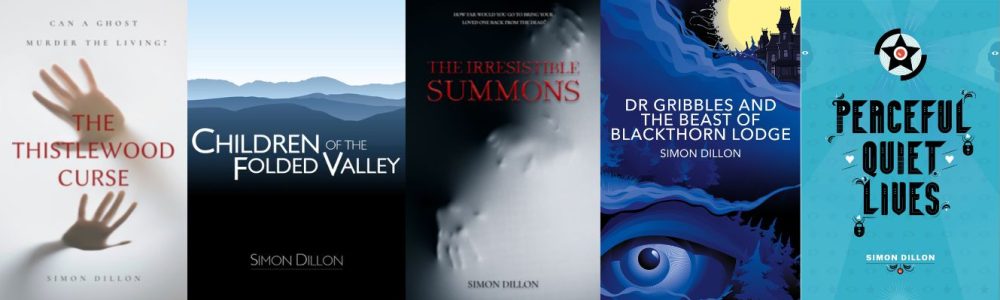
Fancy a gripping, page-turning supernatural mystery? Why not check out any of the five novels below.
I refer to them collectively as the “Spooky Quintet” (a silly collective term, I know). Each one features a nail-biting central mystery, a tenacious imperilled heroine, sinister secret orders, shock twists, and plenty of wandering around gothic labyrinths of one kind or another.
I’ve recently been interviewed on a number of blogs, mainly to promote my latest gothic mystery novel Phantom Audition, but also to discuss my writing in general. Here are some of those interviews.
The Dark Phantom
What do you love most about being an author?
“There is also no better feeling in the world than knowing you’ve delivered a gripping, thrilling, scary, surprising, satisfying, moving, and transcendent narrative to a reader.”
What kind of advice would you give other gothic horror/thriller authors?
“This may seem like odd advice considering the genre, but don’t try too hard to scare people – at least not at first. You want to draw them in, lulling them into the narrative, seducing them into your world… until they cannot escape.”
What message are you trying to get across with your book?
“I’m not a fan of consciously trying to for a “message” into my novels in a sordid, self-important way. Grinding the social, religious, or political axe is for preachers, politicians, activists, and so on – not authors writing spooky mysteries. I greatly dislike being preached at in fiction, and am increasingly intolerant of it, the older and warier I get.”






 Genre fiction writers are often accused of writing “formulaic” stories. It may surprise you to know I plead guilty as charged. My children’s adventure novels contain many well-worn tropes. My gothic mystery/horror thrillers likewise. Why? Because the reader expects them, and would be disappointed if I didn’t deliver.
 It is vital, especially in genre fiction, to give the reader what they want but not the way they expect it. Genre writers understand this. Agatha Christie’s novels and crime fiction in general is hugely formulaic, but also fiendishly difficult to write well. Like most genre fiction, they are an easy target for literary snobs.
 Imperilled heroine – All these books feature a tenacious, insatiably curious, likeable but flawed heroine, who is dealing with some kind of trauma either in the recent or distant past.
 Supernatural elements – Ghosts, demons, witchcraft, astral projection… These are often (but not always) explored.
 Villain/antagonist with similar goals to the protagonist – I am fascinated by stories where protagonist and antagonist essentially want the same thing. Of my gothic mysteries, The Irresistible Summons explores this with particular potency.
 Big twist ending – This needs no explanation. I love a good twist ending, but only when it comes off as both inevitable and unexpected. It’s no good pulling out the rug from under the reader without laying the necessary groundwork, or it won’t feel satisfying. I don’t always do this (I’ve always maintained there’s a


 Simon Dillon Books
You must be logged in to post a comment.