Coming Soon, Later, and Perhaps Never: October 2020 Update

A couple of years ago, I posted an article with the same title, expounding on exactly where I was at with my novels, in their varying states of disrepair. Here’s a full update, sort-of divided by genre. Bear in mind one of these will be released very soon, almost certainly before the end of the year.

Fantasy

Ravenseed – This Dark Ages set fantasy novel is now on its third draft, having received largely positive feedback from various sources. It’s a brooding, melancholy tale of knights, sorcerers, and enchantment, simmering with love, lust, betrayal, and revenge. Alongside the Dark Ages story is a parallel framing story set in the present.

The Faerie Gate – My long-delayed, horror-story-for-children is now on its fourth draft. Originally written in 2015, it’s definitely the scariest novel I’ve written that is primarily aimed at children, and it really pushes the envelope in that respect. But this dark fairy tale is also a very compassionate story, about a young adolescent coming to terms with the separation of her parents. I’m also planning an epic sequel which may end up being more than one sequel, set in the same universe. The sequel(s) might be aimed at a more “young adult” readership. I’ll know more once I start writing this next year.

The Deviant Prophet – Another dark fairy tale, but this time for adults. Fantasy and reality clash in a disturbing tale of religious oppression, amid a vivid and surreal world parallel to our own. The initial inspiration for this came from a close friend’s extraordinary dreams. I finished a third draft earlier this year.

Goldeweed – This is an epic, three volume fantasy saga I have been shaping on and off for almost eighteen years. Set in a vast imagined realm on many different planes of reality, it details three love stories that play out against an apocalyptic backdrop at the end of an era. Currently longer than War and Peace, it’s a tale I have rewritten and tinkered with for some time, and I’m still not entirely happy with it.

Gothic Mystery Thriller/Horror

The White Nest – This novel is something of a culmination for me; a summing up of all the tropes, themes, and ideas I have explored in earlier gothic mystery novels. But although there is an element of Now-That’s-What-I-Call-a-Simon-Dillon-Gothic-Mystery about this novel, it is also radically different in two ways. Firstly, it features a male protagonist. Secondly, it is the most intensely personal novel I’ve written since Children of the Folded Valley. Yes, I know all writing is “personal”, but this one really jabbed raw nerves in an ultimately cathartic way, tapping into traumatic fears regarding siblings, parental fears, false guilt, and more. It is also something of a coming of age novel, despite the genre trappings. One more point: The White Nest refers to something sinister in the story, but it’s only a placeholder title. I’m keeping the real title secret for now.

Wormcutter – From something I wrote in 2020, to something I wrote in 2007 (from an idea I had researched on and off since 1996), this detective thriller/horror hybrid begins as an apparently open and shut murder investigation, then escalates into a humdinger of a conspiracy, involving the Freemasons and much more… until it ends up in the most disturbing territory I have ever explored in a novel (definitely 18 certificate stuff). Currently on its fourth draft, and due for another polish.

Miscellaneous

The Balliol Conspiracy – This somewhat old-fashioned, Hitchcockian romantic spy thriller is a conspiracy story of a different kind (much more PG territory, unlike Wormcutter), and proved a real change of pace for me when I wrote it. A strong, suspenseful central mystery results in an historic, fact-based treasure hunt, leading to a new lease of life for the bereaved protagonist. I don’t want to say too much more, except that yes, it does involve Balliol College in Oxford (see above picture). I also wanted to write a grown-up book that, for once, my mother would be able to read without having nightmares. Currently on its second draft, its actually grown on me quite a bit since I first wrote it, and my wife thinks I should attempt more stories of this kind. But I suspect it is a one-off. We’ll see.

Peaceful Quiet Lives – This dystopian tale imagines a bleak American future, satirising the worst fears of both sides in the so-called culture wars. At the same time, it is also a love story, featuring protagonists who fall foul of political extremists of all persuasions. This novel is currently on its fourth draft, and represents a real oddity for me, as it is quite unlike anything I’ve ever written. Like Children of the Folded Valley and The White Nest, it is also a highly “personal” novel.

A Statement of Disbelief – Another satirical novel, this time set in the dubious world of Christian television fundraising. It’s only had one draft, but quite honestly, I’m not sure it will ever see the light of day. However, I will confess it was great fun to write.

Short Stories – It’s also worth mentioning that I’ve written quite a collection of short stories, mostly horror and science fiction (including one of novella length). I may publish a volume of these at some point.

To reiterate, one of the above will almost certainly be released before the end of the year. Can you guess which one? Watch this space for an imminent announcement.

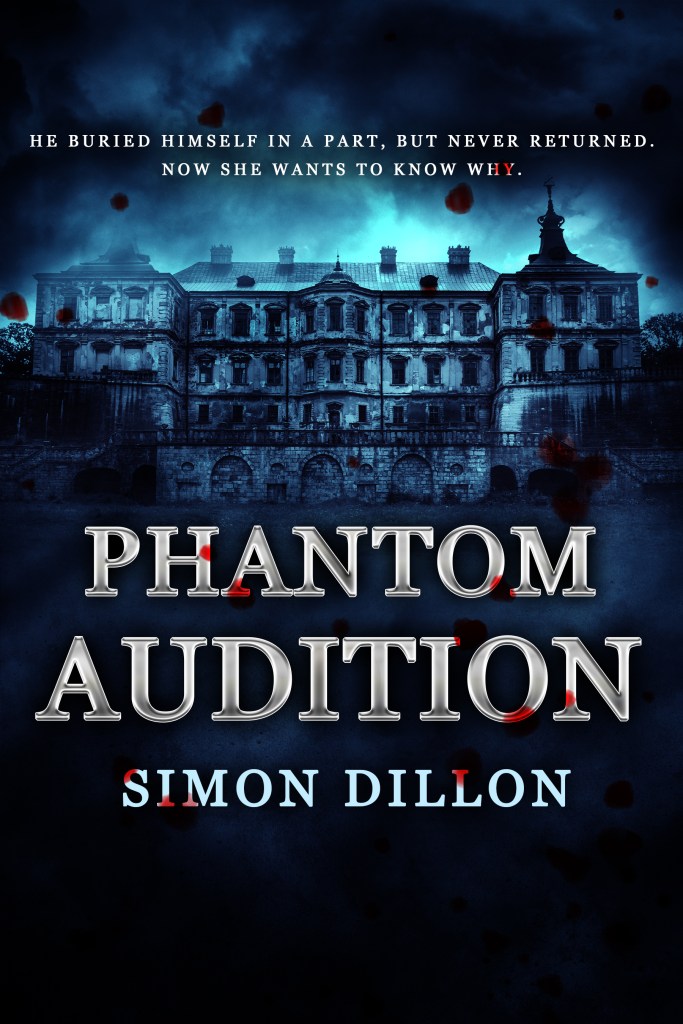
Phantom Audition: Why I wanted to mess with your head

When submitting my manuscript for Phantom Audition, I told my editor at Dragon Soul Press that this one wasn’t as scary as my previous gothic mysteries. However, her response was, to paraphrase, “maybe less scary, but it messed with my head a lot more”. I was pleased with that reaction, because with this novel, I absolutely wanted to mess with the reader’s head. Unlike the comparatively clear-cut plot twists in The Irresistible Summons or Spectre of Springwell Forest, I felt Phantom Audition became less satisfying the more I tried to spell out answers. Therefore, despite considering several different endings, I ultimately stuck with what I had written in my original outline, which allows for a wide range of interpretation.

Some of my favourite novels (and also films) have a vital ingredient missing: the reader (or viewer). What they bring to the story essentially completes it, although that may make the story different for every reader. The protagonist in Phantom Audition, Mia Yardley, is a small-time actress recently widowed from much more famous actor Steven Yardley, who committed suicide in mysterious circumstances. Her subsequent investigations into his death, wherein she discovers he only took acting roles on advice from a psychic medium, lead her not only deep into a sinister mystery, but also deeper into herself. However, in a sense, the novel is also meant to delve deeper into the reader, and what they bring to the text.

To achieve this, I added a hefty dose of the A-word: ambiguity. However, ambiguity is a dangerous tool that needs to be deployed sparingly, and only in the right context. For example, an Agatha Christie whodunnit would not benefit from an ambiguous ending where Hercule Poirot or Miss Marple never discover the killer. I tested an early draft of Phantom Audition on my wife, who isn’t a big fan of ambiguous endings. To my surprise and delight, she thought the ambiguity in Phantom Audition worked well because to her mind, by the time you get to the ending, the answer to the original mystery is essentially irrelevant, as it has been superceded by deeper questions.

This view is reflected in many of the rave reviews I’ve received. Here are a sample:

“A novel that stole my sleep for two nights. I know I’ll be thinking about so many of the characters, twists and turns, and emotions I came across on this reading adventure… I can’t say that I’ve ever read anything remotely similar to this plot. Originality, being captivating to the reader, and giving me moments of goosebumps and multiple frightened starts, earned all 5 stars.” – Kelli Pizarro, Goodreads.

“I love this story with all of its puzzles and strong emotion. Mia is a complex main character lost in grief after her husband’s death. She is searching not only for answers, but also to be able to own her own skin again. She feels lost in her husband’s shadow, and is determined to come into her own… One of the best mysteries I have read in a long time.” – Rowan Thalia, Amazon.

“Grief does strange things to the mind. Mia mourns the loss of her husband Steven, a renowned actor whose drug-overdose death is out of character for him. But not out of character for the role he’s most recently undertaken. Could it be that the chillingly realistic embodiment Steven gave, an Oscar-worthy portrayal of a famous artist, was so realistic because he received help from beyond the grave? Mia wants answers. But each answer only raises new questions… Some questions are, as she was warned, better left unanswered… A compelling read with an unexpected conclusion. It left me wanting to re-read it right away.” – Sara, Goodreads.

“An extremely well-written mystery thriller novel that kept you guessing at what was going on. After the death of her husband young Mia is left alone and feeling that nothing is truly as it seems. Was her husband’s death an accident or was it something more sinister? The search for answers is haunting and might even come close to being deadly.” – Arien/Sloan, Goodreads.

“Simon Dillon has done it again with this intriguing mystery. You will find yourself caught up in this page turner trying to figure out if the mysterious death of Steven was a murder or a suicide. I had no idea how it was going to end, and I like a mystery that isn’t easily figured out early on in the novel. An excellent read!” – PD Dennison, Goodreads.

“A beautifully written thriller about grief and how it affects the mind.” – Jennifer J, Goodreads.

“A thrilling supernatural mystery that will have you guessing until the very end. Filled with page-turning suspense, jaw-dropping visuals, and spine-tingling events, Phantom Audition grips you from start to finish… I also loved the last chapter, the epilogue of sorts. It was beautifully written, with wonderful detail, and left me thinking.” – RA Rivera, Amazon.

“An excellent thriller that leaves you questioning everything.” – Amazon reader.

Intrigued as to what you might bring to Phantom Audition? Pick up a copy here (in the UK) or here (in the US). It is also available in other regional Amazon sites. To further whet your appetite, here’s a little trailer my publisher put together for the novel.

The Irresistible Summons: My scariest novel?

“Naomi believes she wants to see what is on the other side, but doesn’t realise it’s the other side that wants to see what is inside of her…” – Aaron Channel, Warhol Publishing Reviews.

Feedback for my supernatural horror/thriller novel The Irresistible Summons has 1) been consistently great, and 2) consistently told me it is the scariest, most disturbing novel I have released. I am surprised, as I personally think Spectre of Springwell Forest is a lot more unsettling. However, reviews suggest otherwise. Here are a sample from around the internet, including a couple from fellow authors Claus Holm and Galina Trefil.

“A wonderful mix of old-fashioned ghost story, religious horror, drama, and a dash of sci-fi. We follow a young woman who, after suffering a devastating loss as a teenager, grew up to become a film producer making documentaries debunking supernatural stories. After an incredibly scary event, she’s re-assigned to a new project – a haunted high-rise in central London. But it’s not just ghosts that haunts the building… Simon Dillon has a wonderful way of describing environments. The Dartmoor landscape, Central London, and the scary underground tunnels of abandoned tube stations are described in such detail that I could almost see them, and at the same time he does very well with action scenes. There are some very cinematic fight scenes, but most importantly, the book is genuinely scary. I loved Naomi, the main character, but I was even more enamoured with Raven, the wonderful cameraperson on her team. I pray she gets a spin-off in her own book, because she was one of the highlights. I can’t recommend this book highly enough – if you’re into horror and spooky stories, you should definitely pick this one up.” – Claus Holm, Goodreads.

“Dillon’s talent for somehow making already-creepy settings, (abandoned tube stations, tunnels, moonlit moors,) even creepier, dirtier, more decrepit, and claustrophobic presents itself proudly in this poignant story of innocent, young love gone a very gory wrong. Demons, ghosts, witches, high-powered businessmen… this book has almost every possible form of monster, (not to mention some gnarly mutilations) to make the hair prickle on the back of the audience’s neck. The only question is, of all the multiple baddies to choose from, which one will ultimately wind up being the biggest threat, and will they be formidable enough to take down Dillon’s badass, axe-wielding heroine? Evil may be powerful, but it’s in for one hell of a fight.” – Galina Trefil, Amazon.

“Regarding horror aspects, the book starts surprisingly slow, sprinkling in a few particularly unsettling scenes here and there, but not pushing the macabre envelope overly. Then… boom! Suddenly, the pace picks up, and picks up fast. Dillon incorporates some of the classic elements that catapulted films like The Exorcist and Rosemary’s Baby into horror history, but he does so with a series of modern, technological twists. With surprising ease, when the complete set-up of the plot finally reveals itself, Dillon’s take on these beloved scream queen tropes turns them into something wholly original.” – Aaron Channel, Warhol Publishing Reviews.

“Fabulous creepiness and building feelings of discomfort reaching a delightful peak.” – Daniel, Amazon.

“Legitimately terrifying read, with the great elements to make a scary story.” – Amazon reader.

Curious? Here’s the blurb from the back of the novel:

Television producer Naomi Levinson makes documentaries debunking the supernatural.

When asked to film a promotional video for computer game company Persephone, she considers the task beneath her talents. But as production gets underway at the Persephone office block on London’s Canary Wharf, a mysterious disappearance, ghostly sightings, and lingering tragedy from Naomi’s past lead her to believe she might have stumbled into a genuine haunting.

As Naomi continues to investigate, past and present collide in a horrifying conspiracy. Cutting edge technology and ancient evil meet, leading to the discovery of a shocking and terrifying secret that could change the nature of life and death as we know it.

How far would you go to bring the one you love back from the dead?

Still curious? Pick up your copy of The Irresistible Summons here (in the UK) and here (in the US).

I’ve Got a Trope and I’m Not Afraid to Use It

PHANTOM AUDITIONGenre fiction writers are often accused of writing “formulaic” stories. It may surprise you to know I plead guilty as charged. My children’s adventure novels contain many well-worn tropes. My gothic mystery/horror thrillers likewise. Why? Because the reader expects them, and would be disappointed if I didn’t deliver.

simon-dillon-irresistible-summons-full-resIt is vital, especially in genre fiction, to give the reader what they want but not the way they expect it. Genre writers understand this. Agatha Christie’s novels and crime fiction in general is hugely formulaic, but also fiendishly difficult to write well. Like most genre fiction, they are an easy target for literary snobs.

In short, I have a trope (several in fact), and I’m not afraid to use them. However, I aim to use them in interesting and original ways. Here are ten tropes used in my quintet of gothic mystery horror/thrillers.

tumblr_p8fwjgL6LI1sxnnxgo1_400Imperilled heroine – All these books feature a tenacious, insatiably curious, likeable but flawed heroine, who is dealing with some kind of trauma either in the recent or distant past.

Big central mystery – Spooky paintings, sinister writing competitions, inexplicable sudden deaths, apparent messages from ghosts, and murderous cover-ups all feature in these narratives.

Haunted locations – Creepy forests, castles, mansions, or office blocks, are key locations in these stories.

5Supernatural elements – Ghosts, demons, witchcraft, astral projection… These are often (but not always) explored.

Hidden labyrinths – Again, these novels frequently include mysterious and sinister secret passages, caves, mazes, closed off wings in mansions, and – in one case – abandoned tube train tunnels.

Cults and/or secret societies – I seem to come back to this trope time and time again. Obscure religious movements and/or clandestine organisations pulling strings behind the scenes are an important part in many of my narratives. Often said organisations are revealed in secret rooms at the heart of the afore-mentioned labyrinths.

TheAshTreeIllustrationByGeorgeChastain565Villain/antagonist with similar goals to the protagonist – I am fascinated by stories where protagonist and antagonist essentially want the same thing. Of my gothic mysteries, The Irresistible Summons explores this with particular potency.

Melodramatic overdrive – With gothic horror, I have no shame in dialling up the melodrama when called for, with all the blood, thunder, and passion evident in the greats of the genre.

Religious Oppression – My protagonists sometimes have a religiously abusive past, or else the issue is relevant in the present. This isn’t so much a trope, as a theme I find myself exploring again and again, along with abuse of power. I expect this is a result of my background, upbringing, and personal experience of such things. I suppose this is no bad thing, as many famous authors wrote their greatest works around the same theme. For instance, Charles Dickens, whose father was imprisoned for debt, wrote again and again about lost families and fathers. In my case, I seem to write again and again about oppressive religious environments. This is true of The Irresistible Summons and The Thistlewood Curse, but outside of my gothic mysteries, I explore these themes in novels including Love vs Honour, and particularly Children of the Folded Valley (by far my most “personal” novel to date).

CultBig twist ending – This needs no explanation. I love a good twist ending, but only when it comes off as both inevitable and unexpected. It’s no good pulling out the rug from under the reader without laying the necessary groundwork, or it won’t feel satisfying. I don’t always do this (I’ve always maintained there’s a big difference between a twist ending, and an unexpected plot turn) but twist endings can be great fun to write, when they are appropriate.

Check out my published works here. If you want to try before you buy, to see if you care for my writing style, by all means take a look at a couple of short stories I’ve made FREE to download here.

Neil D’Silva: Folklore Horror and Social Realism

Neil D'SilvaHorror fans yet to discover Indian writer Neil D’Silva are in for a treat. His unique, Hindu folklore infused tales are grippingly gruesome, and never disappoint in the scares department. However, his novel Yakshini deserves a wider readership than just gore hounds. Incisive, challenging social commentaries about modern India bubble underneath. More on those in a moment, but first I must do my duty as a horror evangelist and urge those who consider the genre disreputable to look closer. A futile endeavour perhaps, but one D’Silva has much sympathy with.

“We are drawn to horror stories because the unknown has fascinated us since time immemorial,’ he says. “A lot of us acknowledge the “seen” world is not the only world. Our collective knowledge is just a small fraction of everything out there. We have all sensed things in the darkness and solitude… That’s what brings most of us to horror. I was quite a cowardly child, but as I began writing horror, I found myself scaling new boundaries within my phobias. There are fears that I have overcome through my writing and also reading, and I am grateful to the horror genre for that.”

I too, have found catharsis in horror, especially when it mixes supernatural elements with grounded realism (other examples include the novels of Ania Ahlborn, or Under the Shadow and The Babadook in the film world). They may sound unlikely bedfellows, but this technique is very effectively adopted by D’Silva in his writing. Yet whilst delivering the genre goods, I detected an urgency to the social issues highlighted in Yakshini, regarding rural arranged marriages, and the recent high-profile rape cases that shook India. When asked about the latter, D’Silva admits the infamous Nirbhaya case in Delhi cast a shadow over the book.

“The brutality was out there for everyone to read in the papers. When I read about it, and similar rape cases that happened in its aftermath, it both terrified and angered me. How could humans be so depraved as to brutalise another fellow human in that heinous manner? It opened in my mind a chain of thought. What if the woman in question had something in her, a kind of power, that would have helped her fight back, and mete out the same treatment to her brutalisers? But while that sort of thing sounds great on paper, it opens up another can of worms – that of moral policing, victim-shaming, and expecting women to behave in a particular manner. If women indeed did have the agency to fight back, our patriarchal system would still make her the culprit. That is the issue I addressed in Yakshini. Can a woman easily fight back the injustice meted out to her? Sadly, no. Often, we have seen that the victim is victimised more. That suffocating and infuriating thought led to the birth of Yakshini.”
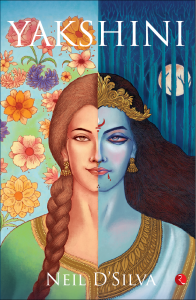
Yakshini_updatedA supernatural thriller infused with Indian mythology, Yakshini concerns the eponymous immortal demi-goddess banished from her celestial dwelling. She is doomed to share the body of a human girl named Meenakshi, causing her to lead a curious, Jekyll/Hyde existence. Unable to bear Meenakshi’s rural patriarchal society, the Yakshini lashes out against lustful males, seeking bloody revenge. Serious problems ensue for Meenakshi, even leading her to be branded as a witch.

D’Silva also acknowledges the contrasting aspects of Indian society reflected within his writing, especially the differences in city and country. “Life in the urban areas of India, especially Mumbai, is very different from life in the rural zones. The urban centres have a broader worldview and, though we believe in strong family ties, the concept of individual freedom is better understood. The rural villages and small towns are infused in rich traditional values, which gives them a distinct flavour.

“Speaking specifically about the practice of arranged marriages, those are still prevalent in both small towns and huge metropolises. Marriages have always been a family affair in India and often the couple will get to know each other only briefly before they are betrothed. However, this is changing rapidly in the metros, especially Mumbai, with more and more people marrying out of love rather than a family arrangement. The sense of individual freedom has set in, but the beauty of our culture is that even in that, the value of familial ties is never forgotten.”

Despite the issues raised by the book, D’Silva is keen we don’t overthink it. “While Yakshini was strongly influenced by a particular rape case, I did not really start out with the intention of giving any kind of message. I just wanted to tell a story that would shake us from our state of complacency. But my readers have perceived it as a strongly feminist story, for which I am quite grateful. India’s leading feminist community, SheThePeople, was kind to feature Yakshini on their website, and even have me speak at their lit-fest. A few other reading clubs had discussion events around Yakshini where the feminism in the book was studied and analysed.”

Some have branded Yakshini as “the Indian Carrie” but I find Stephen King comparisons unhelpful and unfair. D’Silva’s work stands in its own right, especially in the way he fuses folklore and the supernatural with more grounded issues. Besides, when questioned on influences, D’Silva doesn’t even mention King.

“I learnt my scares and atmosphere from Edgar Allan Poe, Bram Stoker, and Mary Shelley, at a very early age. I learnt how to tell stories through conversations from Agatha Christie and Arthur Conan Doyle. I learnt how to write riveting prose from Jeffrey Archer, and other contemporaries. I was impressed by the writing of many Indian writers such as Ruskin Bond, Khushwant Singh, R. K. Narayan, and Munshi Premchand, who could bring out the essence of India with simple and yet evocative words.”

Raised in a rich literary environment courtesy of his book hoarding father, who worked translating Indian films from Hindi to English, D’Silva honed his English skills by working as an assistant. “Sitting next to him, I’d see him hack away at his Remington typewriter, and was soon fascinated about how deftly he translated those stories. I would read the scripts to him, and those stories fascinated me. I owe a lot to my father… I don’t know if he actually read the hundreds of books that he collected. But that did rub off on me. I’d spend lonely afternoons swallowing book after book.”

MNH Final Cover PageIncreasingly famous in his own country, D’Silva’s status as a significant new literary talent among Indian writers registered immediately, as his first, self-published novel Maya’s New Husband shot to number one in Amazon India’s horror bestsellers. It remained in the top ten for close to two years, which landed him attention from literary agency The Book Bakers and then traditional publishers, as well as a loyal and growing readership that has now expanded beyond India. He since quit his teaching job to write full-time. With nine books to his name, at publishers including Penguin Random House, Rupa, and Hachette India, Yakshini is one of three novels currently in development for a film adaptation. But D’Silva is particularly excited about an adaptation of his non-fiction book, Haunted: Real-life Encounters with Ghosts and Spirits.

“This book was co-authored with paranormal investigator, Jay Alani, and tells his experiences in ten of the most haunted locations in India,” D’Silva explains, “including the Bhangarh fort, the abandoned Kuldhara village, the “black magic” village of Mayong, and others. The book, published by Penguin Random House, was quite hair-raising to say the least, because these were true experiences. We have now scored a major web series deal on this book with Juggernaut Productions.”

Haunted (1)When pushed on whether he has ever had a supernatural experience of his own, D’Silva is more guarded, though he does relay one scary childhood story. “I grew up in a colony that was rumoured to be built on a graveyard. Of course, we had no evidence of it at all and it might all have been the kind of juvenile poppycock teenagers indulge in, but it did give rise to several hair-raising moments that led to my imaginative mind taking great leaps, fuelled by the stories I had heard. On one occasion, I saw a woman dressed in a white saree walking on the ledge of the terrace of the four-story building opposite ours in the middle of the night. The woman was just walking along, precariously, maintaining her balance somehow, singing something softly. At one point, I felt she had sensed my presence and was turning to look at me, but before that, I ducked into my covers and shut my eyes.

“The next morning, the watchman of our colony had never shown up. When people visited his house, there were five finger marks on his face. The poor watchman said that he had been patrolling the building in the night when a woman clad in a white saree had approached him from behind, tapped on his shoulder, and when he turned, struck him right across the face and vanished. No one could find out who the woman was. That incident still shakes me badly.”
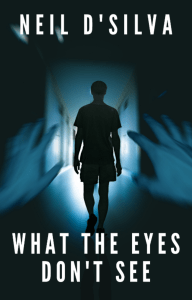
WTEDS_finalWhat The Eyes Don’t See, D’Silva’s most recent novel, launched today; exclusively on Wattpad. This paranormal horror thriller has already been covered by key publications including Mid-day and The Times of India. It reached 7000 reads on the very first day of release, an indication of growing and dedicated fandom. D’Silva describes the nifty premise with glee; a clever reversal on the no-one-can-see-it-but-the-protagonist ghost story trope.

What The Eyes Don’t See… tells the tale of Anay Ghosh, a young man in the city of Mumbai who has everything going for him, until a paranormal entity enters his life. This entity, whom everyone around Anay can see but him, is bent on destroying everything he has.”

Neil D’Silva’s self-made success story has made him something of an online guru to other writers wishing to repeat the trick. His Facebook group For Writers, By Authors has over 21,000 members. In addition, he has recently started a You Tube channel featuring contributions from other authors and industry specialists. By remaining friendly and approachable to all, he has made himself immensely popular, though given his exponential success, I wonder just how long he’ll be able to keep all those plates spinning.

“I love promoting good literature,” he says. “It’s my biggest motivation in keeping my various activities going on. My YouTube channel as well as my Facebook group are geared towards giving rise to new literary talent, and I find time to do it. On a more practical note, I spend a few hours each day to keep up with my social activities. It still gives me a fair amount of time to do my primary job, i.e. to write. I also feel I owe a lot to the social media writers’ community because that was where I learnt a lot about publishing and marketing books. In a way, I am just paying it forward.”

Neil D’Silva’s official website is here, his Facebook page is here, his Twitter page here, his YouTube channel can be found here, and you can check out his books here.
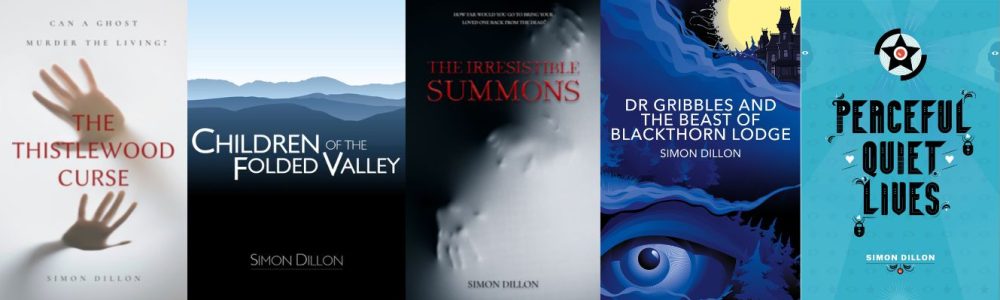
My Top Five Most Reviewed Novels

Every so often, I write an email, social media post, or blog urging my wonderful readers to please, please, please, take a minute to leave a review of my novels (or short stories) if they enjoy them.

Why do I ask this? Online reviews are absolutely essential to writers, especially little-known authors like yours truly who either self-publish, or more recently publish through a small indie publisher. We don’t crave reviews because we are insecure and require constant affirmation; we crave them because the more there are, the more algorithms show our work to more people. Reviews are an author’s lifeblood, and in many cases help us (indirectly) put food on the table.

Reviews don’t need to be long or eloquent. “I enjoyed it” is absolutely fine. If you can add that on Amazon and/or Goodreads, you will have been an immense help. Thank you very much to everyone who has left reviews. It is hugely appreciated.

With that rather begging (but continually necessary) appeal out of the way, here are my top five most reviewed novels (current combined totals taken from both Amazon and Goodreads). Most of these are four or five star reviews; which is nice, obviously.

PHANTOM AUDITION5. Phantom Audition (20 reviews) – My personal favourite of the novels on this list. A gripping and sinister psychological gothic mystery, it concerns a bereaved actress, who lived in the shadow of her much more famous actor husband, prior to his death. A series of unsettling discoveries lead her to believe her husband may have rather buried himself in his final role. Did it have a bearing on his apparent suicide? Was it murder? Could he even have been influenced by vengeful supernatural forces? Phantom Audition is a page-turner that messes with the mind of the reader as much as it’s imperilled heroine.

SSF cover4. Spectre of Springwell Forest (21 reviews) – A full-blooded gothic ghost story, guaranteed to send shivers down the spine. Easily the scariest novel on this list, Spectre of Springwell Forest concerns a young woman called Lily who moves to a sleepy village near Dartmoor, with her husband and young daughter. Lily discovers a sinister painting in her attic that shows the mouth of a mysterious abandoned railway tunnel in a forest. She is unsettled to discover other villagers have paintings (by a local artist) of the same image in their homes, though they remain tight-lipped as to why. Later, after discovering the real abandoned railway tunnel in a local forest, a mysterious spectral figure appears in the paintings that only Lily can see. The figure gradually becomes visible at the mouth of the tunnel, then slowly emerges, getting closer and closer as time passes. At the same time, Lily’s daughter begins to exhibit strange and disturbing behaviour. Intrigued? Read it if you dare…

The Birds Began to Sing_1600x2400_Front Cover3. The Birds Began to Sing (27 reviews) – Another gothic thriller, this one features a huge twist ending. The story largely takes place in a sinister country mansion that once belonged to the late, great author Sasha Hawkins. Several wannabe authors arrive at the mansion to take part in a mysterious writing competition, to pen the finale to an unpublished Hawkins manuscript. Among these is Alice Darnell, who is hoping this will finally lead to her big break. However, peculiar competition rules, enigmatic dreams, and ghostly apparitions lead her to question her sanity, as she is drawn into a tangled web of deceit, revenge, and murder.

uncle-flynn_cover2. Uncle Flynn (75 reviews) – The first novel I published is an old-fashioned treasure hunt story aimed at the young and young at heart. It concerns an anxious boy called Max who is plagued by fears and panic attacks. He is visited by his archaeologist uncle, and together they set about uncovering the truth behind local legends of buried treasure on Dartmoor, with roots going back to the time of Henry VIII’s sacking of Catholic monasteries. With rival villainous treasure hunters on their tail, can they get to the treasure first? More unsettlingly, why are the police also after Max’s uncle? Dedicated to my eldest son, this novel is first and foremost intended as a gripping and mysterious adventure, but it also features themes of overcoming fear and the dangers of mollycoddling – especially in the twist ending (yes, I do enjoy writing a good twist ending).

Folded Valley cover1. Children of the Folded Valley (259 reviews) – Still my most popular novel by a huge margin, this tale of a man looking back on his life growing up amid a mysterious cult clearly struck a chord among readers. It’s a mysterious and melancholy dystopian tale, with themes of religious oppression, loss of innocence, disillusionment, coming of age, rebellion, uprising, and the haunting power of traumatic memory.

Very loosely informed by some of my own childhood experiences, perhaps it is my most “personal” novel to date. Having said that, all writing is personal to some degree, so regardless of how many raw nerves I decided to jab with this book, I can’t attribute its (relative) popularity to that alone. I also like to think my writing has improved a lot since I penned Children of the Folded Valley as there are one or two sections I’d definitely approach differently if I wrote it today.

I completed the first draft in 2011; a fact I constantly point to, in order to dismiss those who view the novel as a cathartic response to the sudden death of my father in 2012. In fact, my father helped shape the final version. I spoke over the phone with him after he read the initial draft, and he made one particular suggestion that he felt would tip the story from “good” to “great”. Hugely excited at his idea, I thanked him profusely, and told him I would definitely adopt it. He seemed very pleased.

That was the last time I ever spoke to him.

Children of the Folded Valley is dedicated to both my parents.

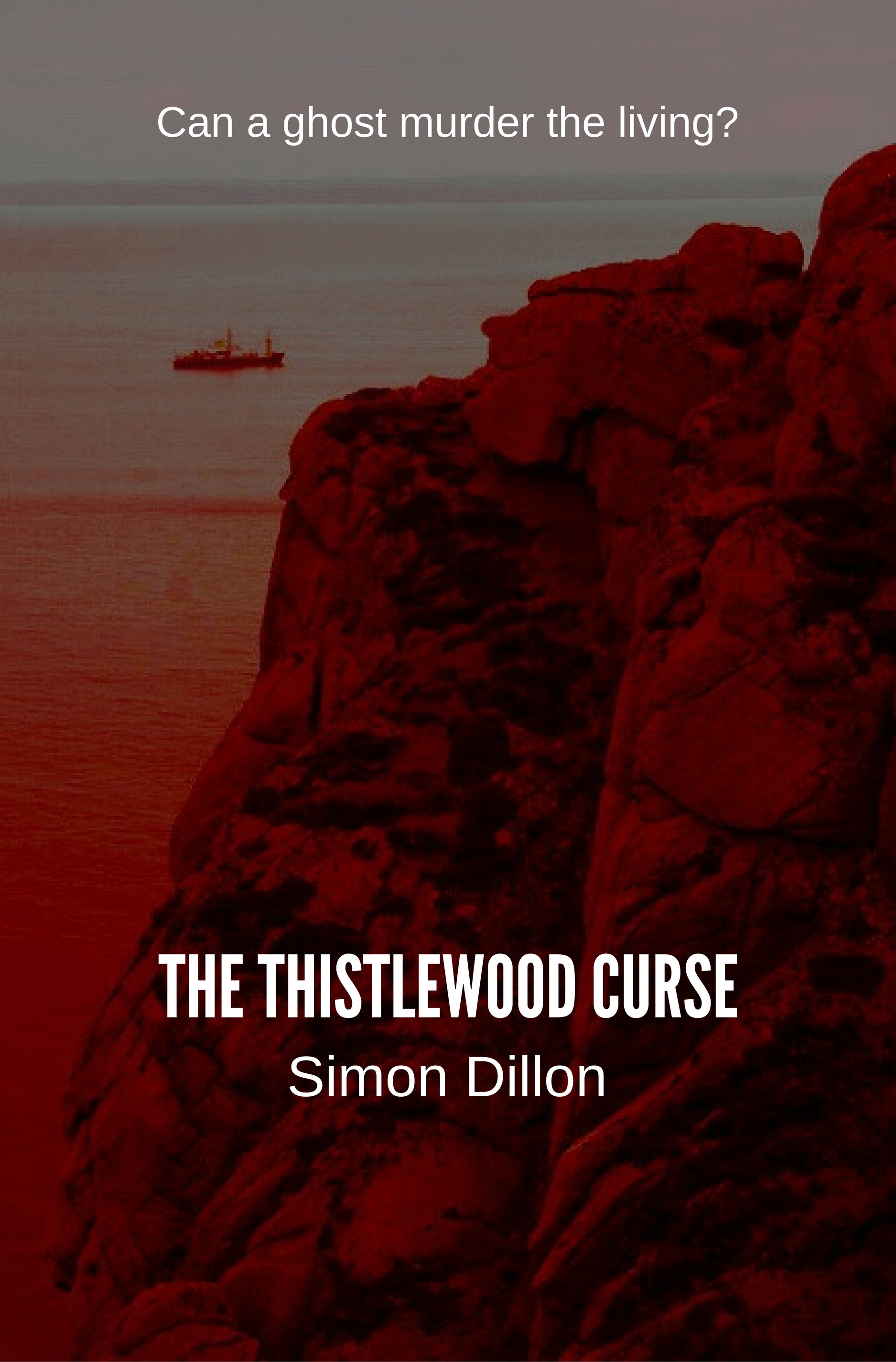
Vital Statistics: The Thistlewood Curse

Continuing my series on the “vital statistics” series of my each of my gothic mystery novels, this week, I’m delving into The Thistlewood Curse.

Title: The Thistlewood Curse

THE THISTLEWOOD CURSE Cover (JPG Print version)

Plot: Can a ghost murder the living?

Lawrence Crane’s powers of astral projection are put to the ultimate test when he and his lifelong friend Detective Laura Buchan investigate a mysterious death on Lundy Island.

Sensing a dark power at work, they attempt to identify a human assassin under the control of supernatural evil.

But can they escape a terrifying, centuries-old curse?

Expect: A denouement that really ought to be obvious, yet somehow you fail to spot it (I’ve yet to come across anyone who predicts the ending).

Wordcount: 99,000.

Current Amazon reviews: 5 five-star reviews, 2 four-star reviews.

Current Goodreads reviews: 3 five-star reviews, 3 four-star reviews, 1 three-star review.

Scariness rating: 6/10. A halfway house between thriller and horror. It begins as a supernaturally tinged murder mystery (if indeed it is murder), develops into a ghost story, and gradually escalates from there.

Read if you enjoyed: The Murder of Roger Ackroyd (Agatha Christie), The Speckled Band (Sir Arthur Conan Doyle), or if you enjoyed films such as Angel Heart or The Exorcist (or the books they are based on for that matter).

To pick up a copy click here (for the UK) and here (for the US).

Vital Statistics: The Birds Began to Sing

For the next few weeks, I’m running a “vital statistics” series on my each of my gothic mystery novels, beginning with The Birds Began to Sing.

Title: The Birds Began to Sing

The Birds Began to Sing_1600x2400_Front Cover

Plot: When aspiring novelist Alice Darnell enters a competition to write the ending for an unfinished manuscript by late, world famous author Sasha Hawkins, it appears she might have her big break at last.

However, upon arrival at Sasha’s former home – the sinister Blackwood House – Alice is unsettled by peculiar competition rules, mysterious dreams and inexplicable ghostly visions. She begins to question her sanity as she is drawn into a terrifying web of deceit, revenge and murder.

Expect: A big twist ending.

Wordcount: 89,000.

Current Amazon reviews: 12 five star reviews, 1 four star review.

Current Goodreads reviews: 5 five star reviews, 8 four star reviews, 1 three star review.

Scariness rating: 4/10. More psychological thriller/mystery than horror, and if it were a film, probably wouldn’t be rated stronger than 12A (that’s PG-13 for our American cousins). Yes, there is plenty of page-turning suspense, with our imperilled heroine wandering spooky corridors at night, but let’s put it this way; my notoriously easy-to-scare mother braved it, and managed to reach the ending unscathed.

Read if you enjoyed: Rebecca (Daphne Du Maurier), Jane Eyre (Charlotte Bronte), Sleeping Murder (Agatha Christie).

To pick up a copy click here (for the UK) and here (for the US).

Writing Update: “The White Nest”

To say 2020 hasn’t gone the way I expected so far would be an understatement. However, in one respect it has gone to plan: I have just finished the first draft of my latest novel.

I won’t announce the title just yet, so let’s call it The White Nest for now. That won’t be the final title, but the White Nest is an element of the narrative. What is the White Nest? Is it something sinister? Obviously. This is a gripping gothic mystery akin to all my previous endeavours in that genre, including The Birds Began to Sing, The Irresistible Summons, Spectre of Springwell Forest, The Thistlewood Curse, and Phantom Audition.

The White Nest has a full checklist of my favourite gothic tropes, including a sleepy south-west England village, haunted forest, eerie mansion, secret tunnels, dubious secret experimental facilities, occult secret societies, ghosts, demons, curses, mysterious disappearances, childhood memories buried by trauma, rug-pulling twist ending… you name it. You could even call this novel Now That’s What I Call A Simon Dillon Gothic Mystery if you really wanted to, as it is something of a compilation of my preoccupations, genre wise.

Like some of my earlier novels, this one also straddles the borders between mystery thriller and supernatural horror. However, one key trope has changed. Instead of a tenacious imperilled heroine at the centre of the drama, this story features a male protagonist. In fact, this novel is different in a number of ways, because it is a highly personal work. Yes, I know, all writing is personal to some degree, but this one really does jab some of my raw nerves in the themes it explores – including the challenges in sibling relationships, parental fears, false guilt, coming of age, and more. In that respect, it is my most “personal” work since Children of the Folded Valley.

The actual plot? Sorry, that remains top secret for now. It’s likely to remain top secret for some time too, as I need the dust to settle on this one, before I return to it with a fresh eye. Although presently a hefty 105,000 words or so, I hope to shave about 10,000 words from that length, deleting a few less essential subplots and/or characters, much like what happened with The Irresistible Summons.

As for what I’ll be writing next, I do have a nifty idea for a fantasy novel, based on a rather strange dream I had last year. When I shared this dream with a colleague, she said that if I didn’t turn it into a book, she would! At any rate, I hope to begin at least outlining this one soon.

In between planning, I’ll probably pen the odd short spooky story, including one (or possibly two) set during the present pandemic. Watch this space.

Fancy a gripping read?

Fancy a gripping, page-turning supernatural mystery? Why not check out any of the five novels below.

The Birds Began to Sing_1600x2400_Front Cover THE THISTLEWOOD CURSE Cover (JPG Print version) SSF cover

simon-dillon-irresistible-summons-full-res PHANTOM AUDITION

I refer to them collectively as the “Spooky Quintet” (a silly collective term, I know). Each one features a nail-biting central mystery, a tenacious imperilled heroine, sinister secret orders, shock twists, and plenty of wandering around gothic labyrinths of one kind or another.

To get your copy, simply click on the covers.