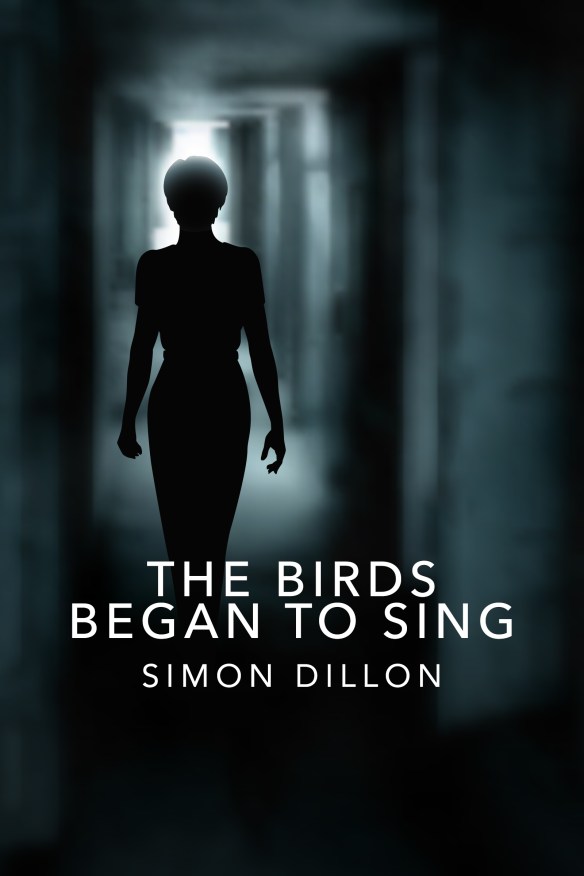
Download The Birds Began to Sing FREE – for five days only

Love a gripping, page-turning psychological thriller? Download my novel The Birds Began to Sing absolutely FREE – for five days only!

Here is the blurb from the back of the novel:

When aspiring novelist Alice Darnell enters a competition to write the ending for an unfinished manuscript by late, world famous author Sasha Hawkins, it appears she might have her big break at last.

However, upon arrival at Sasha’s former home – the sinister Blackwood House – Alice is unsettled by peculiar competition rules, mysterious dreams and inexplicable ghostly visions. She begins to question her sanity as she is drawn into a terrifying web of deceit, revenge and murder.

Some review snippets:

“Mystery, drama, conspiracy theory, and some supernatural intrigue. A real page turner!” – Anonymous, Barnes and Noble.

“Well written, poetic in places, funny at times and with a plot that will keep you turning the pages…” – Al Gibson, Amazon.

“What a magical work of art! You’re really missing out if you don’t read this one.” – A Critical Reader, Amazon.

“Absolutely loved this. Properly chilling.” – Alice R Brewer, Amazon.

“This was really a great read and I loved the twist. Did not expect it at all.” – Jennifer, Amazon.

“A terrific read for lovers of suspense and mystery. Big thumbs up!” – Mickey, Amazon.

The Birds Began to Sing can be downloaded from Amazon Kindle FREE here – for five days only.

Life, Death, and Iceland: An interview with Zena Shapter

Award-winning author Zena Shapter has just had her new novel – a gripping, speculative fiction techno-thriller entitled Towards White – released by IFGW Publishing. Here’s the blurb from the back cover:

They know what’s going to happen to you… after you die.

Scientists in Iceland think they’ve figured out one of our greatest mysteries – where the electrical energy in our brains goes after we die. According to the laws of physics, one form of energy must always become another form. So the electrical energy in our brains and nervous system can’t simply disappear…

When ex-lawyer Becky Dales travels to Iceland to track down her missing brother, she doesn’t care about the groundbreaking discoveries, or the positive-thinking practiced by the Icelanders – she just wants her brother back. Having stumbled on something she thinks the Icelandic government wants covered up, Becky must piece together the answers fast… before she becomes a victim herself.

In this post I interview Zena, discussing the novel and all things writing, as well as her inspirations, metaphysical matters and more.

What inspired Towards White?

I grew up around elderly people, for whom death was never far away, and loved studying science at school, so knew all about the energy and nitrogen life cycles. As a teenager, I also enjoyed philosophical contemplations – wherever I could get them! So when I was about eighteen – home from University where I was reading English – I was up late one night philosophising with friends about life after death and I found myself layering our discussion with my scientific background. The conservation of energy theory states that one form of energy must always become another form of energy, energy cannot simply disappear. Our brains are powered by electricity, so I simply made the leap to wondering what happened to it after death. Our bodies go to the worms, what about our electricity? It can’t simply disappear, and it’s far too efficient an energy to simply dissipate, or entropy, as heat. I dwelled on the idea, pondered it, and extended it as far as I could. What if… what if that was the answer to one of man’s greatest mysteries: life after death?

Over the years I played with the idea but it wasn’t until I went to Iceland in 2001 that the story that would become Towards White took shape. I fell in love with the country’s austere beauty and inspiration simply poured into my brain from there. There were some delays along the way – moving to Australia, marriage, two children, a new career and finding the right publisher – but the story evolved so much it demanded to be told, and finally it’s here!

Is the protagonist Becky based on you in any way?

I try to put a little of myself into every story, not only because it helps make characters more authentic, but because I read to connect with others, their stories and challenges, and assume others do too. So when I’m writing, I like to offer readers the opportunity to spend time in another person’s shoes, and to do that I have to search through my own closet of shoes and find the right pair to offer up (BTW I don’t actually have a closet for shoes, my shoes are bundled up on wardrobe shelves!). Once I’ve found an experience I might be able to share, I imagine what it would be like to intensify that experience and go through it in extreme conditions, and once I know what those conditions might be, I build my character. During character development, I also think of friends and family who resemble my character in some way, and borrow bits of them to add into the mix. So there’s a bit of me in Becky Dales, there are bits from a few lawyer friends I know, but Becky’s also herself because none of us have ever been in her situation in Towards White – I’m sure we wouldn’t want to be either! We all fall apart sometimes, face the darkest of dark hours, question the essence of our being, then seek a way back to ‘normal’ life. Unfortunately for Becky, she faces having to do this during a crisis. Sometimes when it rains, it pours!

Becky has some strong views on those in the legal profession. Is that inspired by personal experience?

No comment (he he!).

Does Towards White hint at your personal philosophy of the afterlife, or are you simply speculating during the metaphysical aspects of the novel?

Since I like to write stories in first person from a single character’s perspective, I need to understand everything I can about that character before I write – where they come from, what they think and why they do the things they do, what they want to do in the future. This allows me to know them so well they start to take over the plot I’ve created for them and do things I hadn’t planned for them to do. I love it when that happens! This also means that, when I’m writing, I believe what they believe 100% – their personal philosophies become mine, I make discoveries with them, I wonder at life the same as they do. Their personal philosophies become mine. But when I switch to a new story, I leave those philosophies behind me and immerse myself in a new character.

Outside of that process I’m an agnostic atheist who speculates a lot!

Did any other personal experiences inform the novel?

My love of Iceland! There’s something magical about Iceland. Nothing can prepare you for the stark beauty of its geography – its lonely lava plains, steamy natural springs, volcanoes, glaciers, geysers, waterfalls and auroras. Once you’re exploring, you can’t help but develop a profound connection with the landscape. It’s also an incredibly friendly and open-minded place and, when I was there in 2001, this led me to think of it as a kind of utopia. I guess that’s why I then asked myself ‘what if’, added my life-after-death theories, and went from there.

Do the Heimspeki philosophy and the Sannlitro-Volva technology have any basis in fact?

Of course! Once I knew I wanted to write a story based on my scientific ideas set in Iceland, I thoroughly researched those ideas. For the scientific side of things, I went to libraries in the UK and over here in Sydney, read online and asked scientist friends, putting together a folder of research and ideas about energy. I researched all kinds of other relevant things too like gravity and electromagnetism, how colour works, magnetic field therapy, Reiki, astronomy, genes, artic phenomena, the auroras, the constitution and history of Iceland, and of course the brain and nervous system, including brain death and methods of execution. I also bought an Icelandic dictionary and got to know the language as best as I could, including famous cultural quotes and swearing. Many of these ideas have been ingrained in the story from the very first draft back in 2002, but I cut out a lot of the language as my writing technique developed because it didn’t bring anything to the story but ambiguity. Some of the research I cut too because it was too lengthy – but I still have it all somewhere! So there are tons of facts and figures behind the creation of both the Heimspeki philosophy and Sannlitro-Volva technology – that’s why they’re intriguing so many people!

Human corruption interfering with what could be a perfect system lies at the core of the questions raised by Towards White. Were a device akin to the Sannlitro-Volva come about in reality, to what extent should we be suspicious and distrustful of such a major scientific advance?

One of my favourite movie quotes of all time is by Dr Ian Malcolm in Jurassic Park: “Your scientists were so preoccupied with whether or not they could, they didn’t stop to think if they should.” We should always be sceptical and distrustful of major scientific advances.

How difficult was it to get from initial draft to final draft on Towards White?

Enormously. I finished my first draft in late 2003 though, at that time, hadn’t yet developed my writing voice. Between raising two kids as a full-time mum, developing a full-time creative support business and moving continents, twice, it took me another nine years to find my voice. In late 2012, an Australian agent signed Towards White after absolutely falling in love with it. I was so excited! Little did I know how downward the Australian publishing market would turn over the next few years. It came extremely close several times, but it wasn’t until mid-2016 that I actually sold it – and at that time I had a choice of two publishers at once, typical! Copy edits and proofreading happened mid-2017, publication late 2017. Finally, yay!

Zena Shapter Towards White Pull Up Banner

What is the best thing about being a writer?

The best thing about being a writer is the creativity. A blank page can be a difficult landscape to navigate, but when you fill it with delicious words you create something that didn’t exist before. That creative process gives me an enormous sense of achievement, no matter what I ultimately do with my words. I love it!

What is the worst thing about being a writer?

There isn’t a worst thing! There are plenty of challenges of course, including isolation, persevering through rejection, and diversifying your skills to support yourself financially. But those can be overcome. As long as you enjoy writing, which of course I do, and you’re doing something you enjoy, it’s never too much trouble to make it work somehow. Every job has its ups and downs.

Oh okay, more money would be nice. The worst thing about being a writer is that it’s a very low-paid job!!

To what extent do you agree with the statement “write what you know”?

When you first start writing, it’s easier to develop your writing technique if you do write what you know, which means writing from a perspective already familiar to you – that way you can focus on developing your writer’s voice. As you progress as a writer, however, you can branch out and write from different perspectives, as long as you make yourself familiar enough with that perspective that you can represent it accurately and sensitively. If you can do that, you don’t have to write only ‘what you know’.

Are you promiscuous or monogamous with your choice of genre?

Promiscuous. For me ‘story’ is paramount, over and above what shelf my book may be stocked on in a bookstore or library. I focus on character, the challenges they face and the changes they must make. After I’ve finished a story I look at genre and at finding an audience. Every well-told story has an audience. If you write specifically for that audience you may find yourself predicting their expectations, and writing something they’ve already read before. However if you write a story simply because it needs to be told, you’ve a greater chance of being original and offering readers something different or even unique. That said, I often have a primary genre in the back of my mind when I start a story, because the concept itself is likely to fall into one category or another.

Which writers inspire you?

I read widely and enjoy a huge range of writers. However, these writers definitely inspired me in some shape or form over the years:

  • Cormac McCarthy, “The Road”
  • Margaret Atwood, “The Handmaid’s Tale”
  • Laura Ingalls Wilder, “Little House on the Prairie” series
  • Malory, “Morte d’Arthur”
  • Daniel Defore, “Robinson Crusoe”
  • Mary Shelley, “Frankenstein”
  • H. G. Wells, “The War of the Worlds”
  • Salman Rushdie, “Haroun and the Sea of Stories”
  • Veronica Roth, “Divergent”
  • Suzanne Collins, “The Hunger Games”
  • Stephen King, “The Green Mile”
  • John Grisham, “The Firm”
  • Shakespeare, “Hamlet”
  • Mark Haddon, “The Curious Incident of the Dog in the Night-time”

How important is social media if you are a writer?

It can be useful as a resource for information and as a support group, especially if you work from home and need the interaction/encouragement. So far, however, it’s been my writing that’s helped me stand out in the crowd. Nothing is as important as having an incredible manuscript to offer publishers. Social media can also drain you of valuable time and, if you encounter any trolls, energy. So – writer beware!

What are your future writing plans?

My immediate plans involve editing a novel I’ve written, following a course I took earlier this year on ‘Writing Inclusive Fiction’. Beyond that, I’m planning writing world domination of course!

What advice would you give to any writer searching for mainstream publication?

Be prepared for a long-haul journey. Publishing is a slow business. It can take months and months for mainstream editors to read your work, take it to acquisitions, negotiate a contract, and then you have to join a queue of authors whose books are already scheduled for print. It also takes time to perfect your writing style and voice. So the key is not to get downhearted or frustrated. Set yourself realistic goals but be tenacious. Push onwards and upwards, constantly. To keep motivated, be sure to enjoy the highlights as they happen too – it’s so easy to always focus on what you’re yet to do rather than acknowledge what you’ve already achieved.

Towards White is out now. Copies can be ordered here.

The Birds Began to Sing FREE from Amazon Kindle – for five days only!

Since it’s summer, here is the first in a series of giveaways on most of my presently published novels.

Beginning today, for just five days, you can download The Birds Began to Sing absolutely FREE from Amazon Kindle.

The Birds Began to Sing is a mystery novel with shades of Agatha Christie, Daphne Du Maurier and Sir Arthur Conan Doyle, a dash of Susan Hill, a pinch of the Bronte Sisters and sprinkling of Michael Crichton. Actually, it isn’t really any of those things, but it is a damn good and highly original thriller in its own right, even though I say so myself.

Here is the blurb from the back of the novel:

When aspiring novelist Alice Darnell enters a competition to write the ending for an unfinished manuscript by late, world famous author Sasha Hawkins, it appears she might have her big break at last.

However, upon arrival at Sasha’s former home – the sinister Blackwood House – Alice is unsettled by peculiar competition rules, mysterious dreams and inexplicable ghostly visions. She begins to question her sanity as she is drawn into a terrifying web of deceit, revenge and murder.

Some review snippets:

“Mystery, drama, conspiracy theory, and some supernatural intrigue. A real page turner!” – Anonymous, Barnes and Noble.

“Well written, poetic in places, funny at times and with a plot that will keep you turning the pages…” – Al Gibson, Amazon.

“This was really a great read and I loved the twist. Did not expect it at all.” – Jennifer, Amazon.

The Birds Began to Sing can be downloaded from Amazon Kindle FREE here (you can also buy a print copy here).

The Thistlewood Curse – early reviews

The first reviews for The Thistlewood Curse continue to trickle in, and so far they have all been very positive.

THE THISTLEWOOD CURSE Cover (JPG Print version)

For example, one reviewer on Goodreads spoke of “chilling moments”, “an unusual premise” and that although it was “not what I’d usually choose… I was kept guessing to the end”.

There have been also been five star reviews on the US and UK Amazon sites respectively. One stated “Simon Dillon’s streak continues with another cracking book! The author’s storytelling is top notch with the twists, turns and suspense covering the book with glue, that is to say, you can’t put it down.”

Another said “This one will certainly leave you with “novel hangover,” still reeling from the emotional storm that just picked you up and spit you out. It was engaging, captivating, and immersive from the very beginning, and the plot twists were a pleasant surprise.”

I’m also very pleased people are seeing past the murder mystery/horror elements into the deeper stuff. For example, one reviewer commented “The characters are built up and written so well, you feel you know them and connect with them. For that reason, when they go through an ordeal, you go through it with them.” The reviewer went on to state that this was “a book with real depth, personal struggle and a test of faith—in more ways than one.”

To all those that have left reviews for this or any of my other novels, thank you so much. I really appreciate your support.

If you have read and enjoyed The Thistlewood Curse, please, please do leave a review on Amazon. It need not be long. Even just a one-liner saying “I enjoyed it” is fine. All such reviews are a great help to independent self-published authors such as yours truly – not because we require endless affirmation, but because the more reviews are published on Amazon, the more Amazon shows the fruits of our hard work to other customers.

Thank you.

Genre blending

Blending genres can be a fiendishly tricky exercise yet sometimes it can work brilliantly, against the odds, even if conventional wisdom says these genres would mix like oil and water.

The film Colossal is a good recent example of this. It blends indie drama elements with that of the monster movie tin a surprisingly effective way. TV series Twin Peaks is another genre blender, and one that is very difficult to define in conventional terms. The programme contains elements of soap opera, offbeat dark comedy, whodunit detective drama and supernatural horror with an avant-garde surrealism that is continually pulls the rug out from under the viewer in ways that both delight and infuriate.

I have a personal passion for films that start out in one genre, but then evolve into full blown horror. Kill List begins as social realist hitman thriller but becomes Grand Guignol occult horror. Bone Tomahawk is essentially a western that gets gatecrashed by cannibal horror. Most effectively of all, the massively underrated Angel Heart begins as private detective noir but ends in Faustian horror.

My recent novel, The Thistlewood Curse, attempts to emulate this genre evolution, from detective whodunit, to supernatural thriller and then full-on horror, hopefully in a fairly gradual build-up. There are risks of course. It can be difficult to categorise and promote. But ultimately the story is what it is. I hope readers take a risk and give it a go regardless. So far the feedback I have heard has been very positive.

THE THISTLEWOOD CURSE Cover (JPG Print version)

You can download or buy print copies of The Thistlewood Curse from Amazon here.

The Thistlewood Curse: What’s it really about?

Over the past few weeks, I’ve talked at length about my latest novel The Thistlewood Curse; what inspired it, the history behind it, short excerpts, discussion on the cover, and so forth.

THE THISTLEWOOD CURSE Cover (JPG Print version)

This article will focus on the themes of the story. What was I trying to explore, or to say, in The Thistlewood Curse?

The most honest answer would be nothing at all. I don’t believe any story should be written with an intentional message. Such endeavours tend to come off as tedious, condescending sermons. Instead, the primary motive for writing the novel was to create a suspenseful, gripping tale of supernatural mystery and horror.

That said, what is important to any writer will be inherent in the stories they tell. I had initially thought The Thistlewood Curse to be a tale of terror, but as the writing progressed it became less deliberately frightening and bloody (although there is still plenty of that), and more reflective, more melancholic, more sombre and ultimately more a tale of faith and coming to terms with grief in the face of the inexplicable.

The novel also flirts with contemporary concerns such as human trafficking, although more as a springboard exploring how the sins of past generations can be revisited upon the present in classic Greek tragedy style, rather than a deep expose of a very serious current problem. Themes of witchcraft also crop up, though again more as a plot device rather than a serious look at what goes on in covens. I doubt very much that astral projection could be used in real life the way it is used in The Thistlewood Curse, but who knows?

In subsequent drafts, the story evolved further, adding an element of religious oppression into the mix in a backstory I had originally intended to keep a mystery. However, my amazing and brilliantly honest wife persuaded me that these elements were needed to provide stronger emotional context for what was otherwise a clever but somewhat cold supernatural whodunit. I was happy to add these chapters into a now extended act one, because religious oppression is a key recurrent theme in my work in any case, and I can now see that keeping that part out for the sake of getting to the main plot quicker would have been a mistake. In fact, the reverse is true. I believe with this element now in the novel it makes the mystery all the more compelling, because the reader now cares far more about the two main characters.

Here is the blurb from the back of The Thistlewood Curse:

Can a ghost murder the living?

Lawrence Crane’s powers of astral projection are put to the ultimate test when he and his lifelong friend Detective Laura Buchan investigate a mysterious death on Lundy Island.

Sensing a dark power at work, they attempt to identify a human assassin under the control of supernatural evil.

But can they escape a terrifying, centuries-old curse?

You can download or buy print copies of The Thistlewood Curse from Amazon here.

Some facts behind The Thistlewood Curse

Following on from my recent post about what inspired my latest novel The Thistlewood Curse, here are some points of interest on the history, geography and other facts that are either directly or peripherally relevant to the novel. Obviously to avoid spoilers I won’t explain exactly how these tie into the supernatural narrative, but as with Uncle Flynn and various other (as yet unpublished) novels, local history and geography provided a fertile ground for my imagination.

THE THISTLEWOOD CURSE Cover (JPG Print version)

Lundy Island is a real place in the Bristol Channel, about twelve miles off the north coast of Devon. The island is small – about 3.5 miles long and 1.5 miles at its widest point. It has a population of about thirty, and many visitors who go to see the wildlife, especially puffins and other birds. The Oldenburg is a real vessel that ferries passengers to and from the island on a regular basis.

Lundy-island

As per the novel, the island is bereft of trees, and most of the settlements lie in the south, including the Marisco Tavern and Lundy (or Marisco) Castle, both of which are real places. However, in the novel Lundy Castle is substantially larger and privately owned, whereas in real life the castle has been broken down into self-catering accommodation. The history of the castle as described in the novel (involving Henry III and so forth) is also mostly true. Surrounding the island are spectacular cliffs, which can be better appreciated on boat trips. The only place to land a boat safely is in the south.

devon - Marisco Castle

Both lighthouses mentioned in the novel are real, along with Quarter wall, Halfway wall and Three-Quarter wall. It is true that supplies of electricity are only in use during certain hours, and that mobile phone signal is all but non-existent. Also, there really is a Tibbet’s Hill on the island, possibly a location where people were indeed hanged, which brings me neatly onto my next point.

As per the novel, the history of Lundy includes tales of pirates and slave traders, and it proved a very difficult place to govern. For example, Barbary Pirates from the Republic of Sale occupied Lundy from 1627 to 1632. These North African invaders, under the command of renegade Dutchman Jan Janszoon, flew an Ottoman Empire flag over the island. They captured Europeans and held them on Lundy before sending them to Algiers as slaves.

Finally, on a more arcane note, the Lundy cabbage is a genuine vegetable (see yellow flowered plant below), though I am fairly certain it has not been used as an ingredient for deadly poison. That however is sailing very close to spoiler territory, so I’ll just leave it there for now…

166660362

Here is the blurb from the back of The Thistlewood Curse:

Can a ghost murder the living?

Lawrence Crane’s powers of astral projection are put to the ultimate test when he and his lifelong friend Detective Laura Buchan investigate a mysterious death on Lundy Island.

Sensing a dark power at work, they attempt to identify a human assassin under the control of supernatural evil.

But can they escape a terrifying, centuries-old curse?

You can download or buy print copies of The Thistlewood Curse from Amazon here.

What inspired The Thistlewood Curse?

What inspired my latest novel, The Thistlewood Curse?

THE THISTLEWOOD CURSE Cover (JPG Print version)

A colleague of mine told me of a paranormal experience she once had. This experience gave me an intriguing story idea which would combine a conventional mystery whodunit with supernatural themes, including astral projection. I wrote a brief outline of the plot (the big twist ending was foreseen from the outset), but wondered about where to set it.

Subsequently, when my mother-in-law visited Lundy Island, she returned to show me her extensive photographic survey, along with the various guidebooks and maps she had picked up. I then realised I had the ideal setting for my novel, which would evolve from detective story to supernatural mystery thriller, culminating in an under siege horror finale, as the characters are trapped on the island in the midst of a fierce night storm.

As I set about writing the novel, there were various influences in the back of my mind, including Sherlock Holmes short stories like The Speckled Band and Agatha Christie’s Sleeping Murder, as well as films like Angel Heart, The Exorcist and television series Twin Peaks. However, I do hope the novel is distinctive and original in its own right too.

Here is the blurb from the back of The Thistlewood Curse:

Can a ghost murder the living?

Lawrence Crane’s powers of astral projection are put to the ultimate test when he and his lifelong friend Detective Laura Buchan investigate a mysterious death on Lundy Island.

Sensing a dark power at work, they attempt to identify a human assassin under the control of supernatural evil.

But can they escape a terrifying, centuries-old curse?

You can download or buy print copies of The Thistlewood Curse from Amazon here.

The Thistlewood Curse – cover design

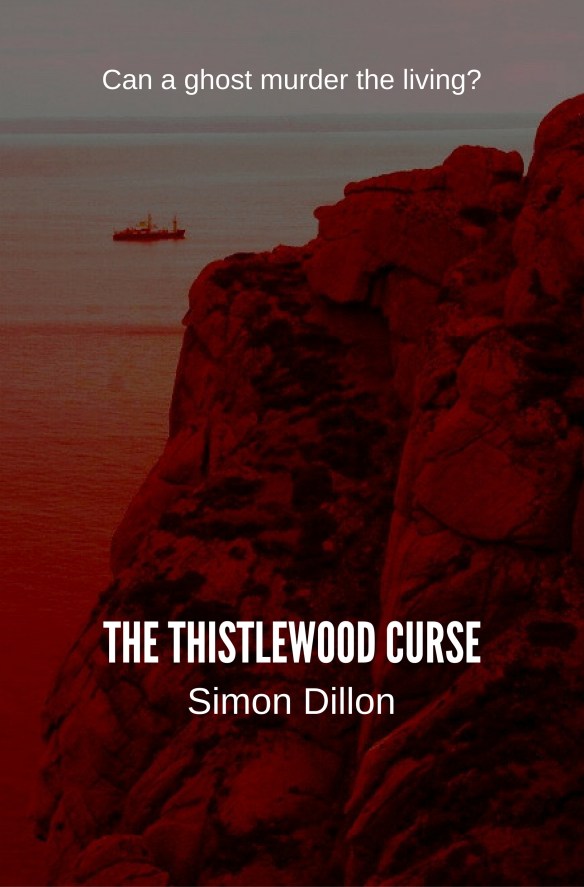
The cover for my latest novel, The Thistlewood Curse, was designed by my wife Zara, derived from an image taken by her photographer mother, Frances Belsham. Frances’s original image showed a rugged Lundy cliff-face overlooking the Bristol Channel. Zara took this image, and made it appear as though the island itself were bleeding.

THE THISTLEWOOD CURSE Cover (JPG Print version)

I particularly liked this visual concept for multiple reasons. Firstly, it speaks of the initial death which puts the main plot in motion. Also, on a metaphorical level it hints at the dark, brutal, secret history gradually uncovered in the story, as well as the bloodbath that ensues in the finale.

I cannot say too much more, for fear of spoilers, but needless to say I am very pleased with the result. This is the first cover Zara has prepared for me, and I expect it will not be the last. Incidentally, she also designed my current blog header and I couldn’t be more pleased with the results.

Here is the blurb from the back of The Thistlewood Curse:

From the author of Children of the Folded Valley and The Birds Began to Sing

Can a ghost murder the living?

Lawrence Crane’s powers of astral projection are put to the ultimate test when he and his lifelong friend Detective Laura Buchan investigate a mysterious death on Lundy Island.

Sensing a dark power at work, they attempt to identify a human assassin under the control of supernatural evil.

But can they escape a terrifying, centuries-old curse?

You can download or buy print copies of The Thistlewood Curse from Amazon here.

Another excerpt from The Thistlewood Curse

Here’s a second, slightly longer excerpt from my new supernatural thriller The Thistlewood Curse.

THE THISTLEWOOD CURSE Cover (JPG Print version)

Once on Lundy Island, Detective Sergeant Laura Buchan and her paranormal investigator friend Lawrence Crane are joined by Sally Thistlewood, another old friend, exploring the terrain, quietly looking for clues regarding the mysterious and sudden death of Sally’s husband Charles. They begin to sense an evil presence.

“As soon as they left the castle, Laura was glad she had wrapped up warm. Although the wind had dropped an icy chill lingered. Thick dark cloud covered the skies, and great rolling mists moved like ghosts through the cottages of Lundy village. They walked for a while in silence, trudging along the path past the Marisco Tavern and shop, past holiday homes and farm buildings, and out into open country.

Sally led Laura and Crane along a path that passed the Old Lighthouse, the airfield and Ackland’s Moor to the left. They reached the Quarter Wall shortly afterwards and passed through a gate into the fields beyond. Seagulls cawed amid the sounds of waves crashing against cliffs in the distance, and as they continued the mist gradually cleared, leaving only occasional patches of coastline gripped by thick fingers of fog.

Shivering, Laura once again sensed the same oppressive presence she had felt the previous day at the Old Lighthouse. As they continued their journey north along the paths and cliff tops, that presence seemed to get stronger. She glanced at Crane, who nodded silently, confirming that he felt the same.

To distract herself from the feeling of being watched by an invisible, malevolent entity, Laura made light conversation with Sally; mostly reminiscing about their past together, their time at school, University, old friends, places they had visited, parties they had been to… anything to distract from the present. There was a feeling of desperation in the exchanges, particularly on Sally’s part. No doubt she felt trapped both by her grief and her belief that the death of Charles was merely the start of something that was only going to get worse. Talking about the frivolous, care-free past wasn’t merely friends recalling good times. It was a dedicated, concerted effort at deflecting the oppression of the present.

But in spite of such efforts, the intangible feeling of malice inherent in the atmosphere only increased the further they walked… Lundy was a bleak but beautiful place, yet something had taken possession of it.

‘Can you feel it?’ Laura asked presently, giving up all pretence at light conversation.

Sally nodded. ‘It’s getting stronger all the time.’”

You can download or buy print copies of The Thistlewood Curse here.